Kirjojen hintavertailu. Mukana 12 595 353 kirjaa ja 12 kauppaa.
Kirjailija
Ben S. Bernanke
Kirjat ja teokset yhdessä paikassa: 15 kirjaa, julkaisuja vuosilta 2001-2025, suosituimpien joukossa Inflation Targeting. Vertaile teosten hintoja ja tarkista saatavuus suomalaisista kirjakaupoista.
How should governments and central banks use monetary policy to create a healthy economy? Traditionally, policymakers have used such strategies as controlling the growth of the money supply or pegging the exchange rate to a stable currency. In recent years a promising new approach has emerged: publicly announcing and pursuing specific targets for the rate of inflation. This book is the first in-depth study of inflation targeting. Combining penetrating theoretical analysis with detailed empirical studies of countries where inflation targeting has been adopted, the authors show that the strategy has clear advantages over traditional policies. They argue that the U.S. Federal Reserve and the European Central Bank should adopt this strategy, and they make specific proposals for doing so. The book begins by explaining the unique features and advantages of inflation targeting. The authors argue that the simplicity and openness of inflation targeting make it far easier for the public to understand the intent and effects of monetary policy. This strategy also increases policymakers' accountability for inflation performance and can accommodate flexible, even "discretionary," monetary policy actions without sacrificing central banks' credibility. The authors examine how well variants of this approach have worked in nine countries: Germany and Switzerland (which employ a money-focused form of inflation targeting), New Zealand, Canada, the United Kingdom, Sweden, Israel, Spain, and Australia. They show that these countries have typically seen lower inflation, lower inflation expectations, and lower nominal interest rates, and have found that one-time shocks to the price level have less of a "pass-through" effect on inflation. These effects, in turn, are improving the climate for economic growth. The authors warn, however, that the success of inflation targeting depends on operational details, such as how the targets are defined and when they are announced. They also show that inflation targeting is not a panacea that can make inflation perfectly predictable or reduce it without economic costs. Clear, balanced, and authoritative, Inflation Targeting is a groundbreaking study that will have a major impact on the debate over the right monetary strategy for the coming decades. As a unique comparative study of what central banks actually do in different countries around the world, this book will also be invaluable to anyone interested in how economic policy is made.
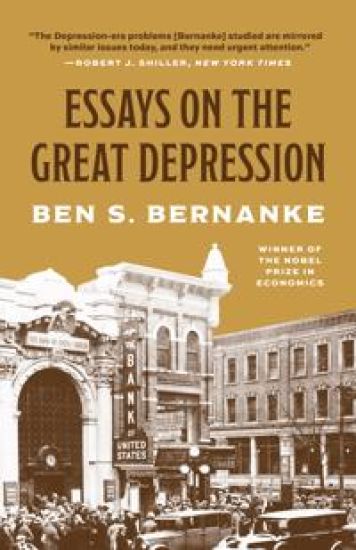
From the Nobel Prize–winning economist and former chair of the U.S. Federal Reserve, a landmark book that provides vital lessons for understanding financial crises and their sometimes-catastrophic economic effectsAs chair of the U.S. Federal Reserve during the Global Financial Crisis, Ben Bernanke helped avert a greater financial disaster than the Great Depression. And he did so by drawing directly on what he had learned from years of studying the causes of the economic catastrophe of the 1930s—work for which he was later awarded the Nobel Prize. Essays on the Great Depression brings together Bernanke’s influential work on the origins and economic lessons of the Depression, and this new edition also includes his Nobel Prize lecture.
In response to the economic impact of the COVID-19 pandemic, the US Federal Reserve and central banks worldwide have deployed tools that past policymakers and economists might have considered radical. Programmes like large-scale securities purchases and a new policy framework remain a source of confusion for investors, journalists and ordinary citizens alike. Twenty-First Century Monetary Policy demystifies these opaque techniques to reveal how economic ideas, historical events and political forces have transformed the Fed’s policies over several decades. From the stagflation of the 1970s to the Great Recession and the recent pandemic, Ben S. Bernanke masterfully examines how the Fed’s policies—and the institution itself—may change as it grapples with persistently low interest rates, systemic financial risk, rapid technological change and polarised politics. With unparalleled depth of expertise and robust historical sweep, Twenty-First Century Monetary Policy is a must-read for anyone interested in understanding modern finance, investments or US economic policy.
In response to the economic impact of the COVID-19 pandemic, the U.S. Federal Reserve and central banks worldwide have deployed tools that past policymakers and economists might have considered radical. Programmes like large-scale securities purchases and a new policy framework remain a source of confusion for investors, journalists and ordinary citizens alike. Twenty-First Century Monetary Policy demystifies these opaque techniques to reveal how economic ideas, historical events and political forces have transformed the Fed’s policies over several decades. From the stagflation of the 1970s to the Great Recession and the recent pandemic, Ben S. Bernanke masterfully examines how the Fed’s policies—and the institution itself—may change as it grapples with persistently low interest rates, systemic financial risk, rapid technological change and polarised politics. With unparalleled depth of expertise and robust historical sweep, Twenty-First Century Monetary Policy is a must-read for anyone interested in understanding modern finance, investments or U.S. economic policy.
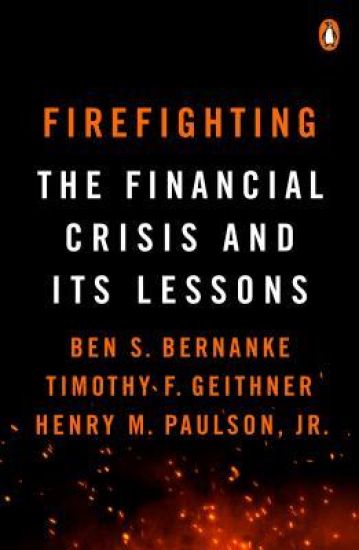
"I learned much from this book I had not previously known. Its cautions for the future should be required reading for all policy makers." - Warren Buffett 2008 saw one of the worst financial crises in generations, the global implications of which are still being felt today. Ten years later Ben Bernanke, Timothy Geithner and Hank Paulson reflect on the causes of the crisis, why it was so damaging, and what it ultimately took to prevent a second Great Depression. All three had crucial roles in the government's response- Ben S. Bernanke as chairman of the Federal Reserve; Henry M. Paulson, Jr., as secretary of the Treasury under President George W. Bush; Timothy F. Geithner as president of the Federal Reserve Bank of New York during the Bush years and then Treasury secretary under President Barack Obama. A powerful, warts and all account told with unprecedented clarity; from the flawed human response to the necessity to learn from the past and help firefighters of the future protect economies from the ravages of financial crises. Firefighting is a vital account of a defining moment in modern history and an inspiring lesson on leadership through crisis.
"Should be required reading for all policy makers." --Warren Buffett From the three primary architects of the American policy response to the worst economic catastrophe since the Great Depression, a magnificent big-picture synthesis--from why it happened to where we are now. In 2018, Ben Bernanke, Tim Geithner, and Hank Paulson came together to reflect on the lessons of the 2008 financial crisis ten years on. Recognizing that, as Ben put it, "the enemy is forgetting," they examine the causes of the crisis, why it was so damaging, and what it ultimately took to prevent a second Great Depression. And they provide to their successors in the United States and the finance ministers and central bank governors of other countries a valuable playbook for reducing the damage from future financial crises. Firefighting provides a candid and powerful account of the choices they and their teams made during the crisis, working under two presidents and with the leaders of Congress.
In 2006, Ben S. Bernanke was appointed chairman of the Federal Reserve, capping a meteoric trajectory from a rural South Carolina childhood to professorships at Stanford and Princeton, to public service in Washington’s halls of power. There would be no time to celebrate, however—the burst of the housing bubble in 2007 set off a domino effect that would bring the global financial system to the brink of meltdown. In The Courage to Act, Ben Bernanke pulls back the curtain on the tireless and ultimately successful efforts to prevent a mass economic failure. Working with two US presidents and two Treasury secretaries, Bernanke and his colleagues used every Fed capability, no matter how arcane, to keep the US economy afloat. From his arrival in Washington in 2002 and his experiences before the crisis, to the intense days and weeks of the crisis itself, and through the Great Recession that followed, Bernanke gives readers an unequalled perspective on the American economy. This narrative will reveal for the first time how the creativity and decisiveness of a few key leaders prevented an economic collapse of unimaginable scale. Bernanke explains the inspiration behind the book’s title, saying, “When the economic well-being of their nation demanded a strong and creative response, my colleagues at the Federal Reserve, policymakers and staff alike, mustered the moral courage to do what was necessary, often in the face of bitter criticism and condemnation. I am grateful to all of them and proud to have been part of the global effort to contain the most dangerous economic crisis of our time.”
In 2012, Ben Bernanke, chairman of the U.S. Federal Reserve, gave a series of lectures about the Federal Reserve and the 2008 financial crisis, as part of a course at George Washington University on the role of the Federal Reserve in the economy. In this unusual event, Bernanke revealed important background and insights into the central bank's crucial actions during the worst financial crisis since the Great Depression. Taken directly from these historic talks, The Federal Reserve and the Financial Crisis offers insight into the guiding principles behind the Fed's activities and the lessons to be learned from its handling of recent economic challenges. Bernanke traces the origins of the Federal Reserve, from its inception in 1914 through the Second World War, and he looks at the Fed post-1945, when it began operating independently from other governmental departments such as the Treasury. During this time the Fed grappled with episodes of high inflation, finally tamed by then-chairman Paul Volcker. Bernanke also explores the period under his predecessor, Alan Greenspan, known as the Great Moderation. Bernanke then delves into the Fed's reaction to the recent financial crisis, focusing on the central bank's role as the lender of last resort and discussing efforts that injected liquidity into the banking system. Bernanke points out that monetary policies alone cannot revive the economy, and he describes ongoing structural and regulatory problems that need to be addressed. Providing first-hand knowledge of how problems in the financial system were handled, The Federal Reserve and the Financial Crisis will long be studied by those interested in this critical moment in history.
Few periods in history compare to the Great Depression. Stock market crashes, bread lines, bank runs, and wild currency speculation were worldwide phenomena--all occurring with war looming in the background. This period has provided economists with a marvelous laboratory for studying the links between economic policies and institutions and economic performance. Here, Ben Bernanke has gathered together his essays on why the Great Depression was so devastating. This broad view shows us that while the Great Depression was an unparalleled disaster, some economies pulled up faster than others, and some made an opportunity out of it. By comparing and contrasting the economic strategies and statistics of the world's nations as they struggled to survive economically, the fundamental lessons of macroeconomics stand out in bold relief against a background of immense human suffering. The essays in this volume present a uniquely coherent view of the economic causes and worldwide propagation of the depression.