Kirjojen hintavertailu. Mukana 12 595 353 kirjaa ja 12 kauppaa.

Kirjailija

Ben Shneiderman

Kirjat ja teokset yhdessä paikassa: 10 kirjaa, julkaisuja vuosilta 2014-2025, suosituimpien joukossa Analyzing Social Media Networks with NodeXL. Vertaile teosten hintoja ja tarkista saatavuus suomalaisista kirjakaupoista.

10 kirjaa

Kirjojen julkaisuhaarukka 2014-2025.

Analyzing Social Media Networks with NodeXL

Analyzing Social Media Networks with NodeXL

Derek Hansen; Ben Shneiderman; Marc A. Smith; Itai Himelboim

Morgan Kaufmann Publishers In
2019
nidottu
Analyzing Social Media Networks with NodeXL: Insights from a Connected World, Second Edition, provides readers with a thorough, practical and updated guide to NodeXL, the open-source social network analysis (SNA) plug-in for use with Excel. The book analyzes social media, provides a NodeXL tutorial, and presents network analysis case studies, all of which are revised to reflect the latest developments. Sections cover history and concepts, mapping and modeling, the detailed operation of NodeXL, and case studies, including e-mail, Twitter, Facebook, Flickr and YouTube. In addition, there are descriptions of each system and types of analysis for identifying people, documents, groups and events. This book is perfect for use as a course text in social network analysis or as a guide for practicing NodeXL users.
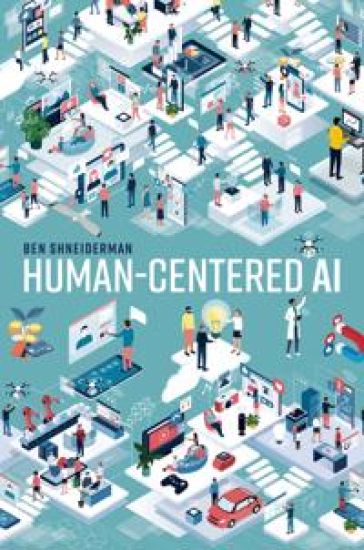
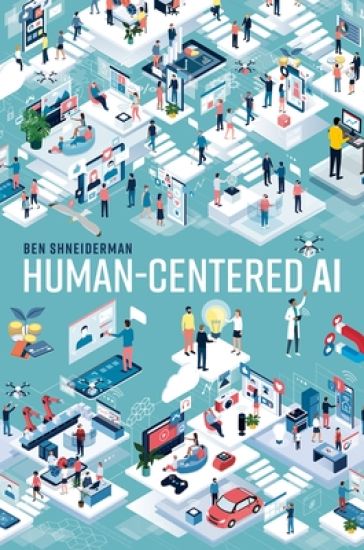
Human-Centered AI

Human-Centered AI

Ben Shneiderman

Oxford University Press
2025
nidottu
A HUMAN-CENTERED APPROACH TO ARTIFICIAL INTELLIGENCE WILL ENSURE HUMAN CONTROL OVER POWERFUL AND HELPFUL FUTURE MOBILE DEVICES AND SERVICES Researchers, developers, business leaders, policy makers, and others are expanding the technology-centered scope of artificial intelligence (AI) to include human-centered AI (HCAI) ways of thinking. This expansion from an algorithm-focused view to embrace a human-centered perspective can shape the future of technology to better serve human needs. The remarkable progress in algorithms for machine and deep learning have opened the doors to new opportunities, and some dark possibilities. However, as many technology companies and thought leaders have said, the goal is not to replace people, but to empower them by making design choices that give humans control over technology. In Human-Centered AI, Professor Ben Shneiderman aims to produce an optimistic, realistic, guide to how artificial intelligence can be used to augment and enhance humans' lives. This project bridges the gap between ethical considerations and practical realities to make successful, reliable systems. Digital cameras, communications services, and navigation apps are just the beginning. Shneiderman shows how future applications will support health and wellness, improve education, accelerate business, and connect people in reliable, safe, and trustworthy ways that respect human values, rights, justice, and dignity.
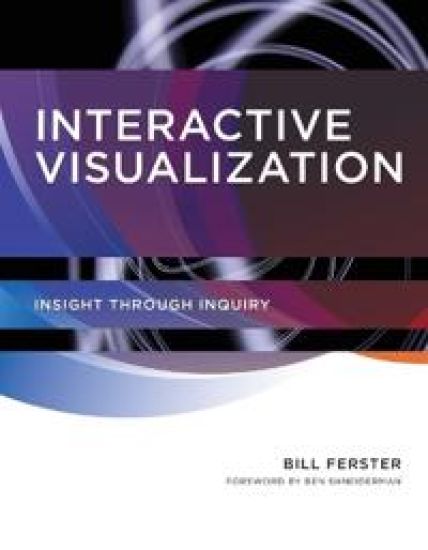
Interactive Visualization

Interactive Visualization

Bill Ferster; Ben Shneiderman

MIT PRESS LTD
2023
pokkari
A guide to fundamental issues in designing interactive visualizations, exploring ideas of inquiry, design, structured data, and usability. Interactive visualization is emerging as a vibrant new form of communication, providing compelling presentations that allow viewers to interact directly with information in order to construct their own understandings of it. Building on a long tradition of print-based information visualization, interactive visualization utilizes the technological capabilities of computers, the Internet, and computer graphics to marshal multifaceted information in the service of making a point visually. This book offers an introduction to the field, presenting a framework for exploring historical, theoretical, and practical issues. It is not a "how-to" book tied to specific and soon-to-be-outdated software tools, but a guide to the concepts that are central to building interactive visualization projects whatever their ultimate form. The framework the book presents (known as the ASSERT model, developed by the author), allows the reader to explore the process of interactive visualization in terms of choosing good questions to ask; finding appropriate data for answering them; structuring that information; exploring and analyzing the data; representing the data visually; and telling a story using the data. Interactive visualization draws on many disciplines to inform the final representation, and the book reflects this, covering basic principles of inquiry, data structuring, information design, statistics, cognitive theory, usability, working with spreadsheets, the Internet, and storytelling.
Human-Centered AI

Human-Centered AI

Ben Shneiderman

Oxford University Press
2022
sidottu
The remarkable progress in algorithms for machine and deep learning have opened the doors to new opportunities, and some dark possibilities. However, a bright future awaits those who build on their working methods by including HCAI strategies of design and testing. As many technology companies and thought leaders have argued, the goal is not to replace people, but to empower them by making design choices that give humans control over technology. In Human-Centered AI, Professor Ben Shneiderman offers an optimistic realist's guide to how artificial intelligence can be used to augment and enhance humans' lives. This project bridges the gap between ethical considerations and practical realities to offer a road map for successful, reliable systems. Digital cameras, communications services, and navigation apps are just the beginning. Shneiderman shows how future applications will support health and wellness, improve education, accelerate business, and connect people in reliable, safe, and trustworthy ways that respect human values, rights, justice, and dignity.
Encounters with HCI Pioneers

Encounters with HCI Pioneers

Ben Shneiderman

Springer International Publishing AG
2019
nidottu
The huge success of personal computing technologies has brought astonishing benefits to individuals, families, communities, businesses, and government, transforming human life, largely for the better. These democratizing transformations happened because a small group of researchers saw the opportunities to convert sophisticated computational tools into appealing personal devices offering valued services by way of easy-to-use interfaces. Along the way, there were challenges to their agenda of human-centered design by: (1) traditional computer scientists who were focused on computation rather than people-oriented services and (2) those who sought to build anthropomorphic agents or robots based on excessively autonomous scenarios. The easy-to-learn and easy-to-use interfaces based on direct manipulation became the dominant form of interaction for more than six billion people. This book gives my personal history of the intellectual arguments and the key personalities I encountered. I believe that the lessons of how the discipline of Human-Computer Interaction (HCI) and the profession of User Experience Design (UXD) were launched can guide others in forming new disciplines and professions. The stories and photos of the 60 HCI pioneers, engaged in discussions and presentations, capture the human drama of collaboration and competition that invigorated the encounters among these bold, creative, generous, and impassioned individuals.
Twin-Win Research

Twin-Win Research

Ben Shneiderman

Springer International Publishing AG
2018
nidottu
The thrill of discovery and the excitement of innovation mean that research is often immensely satisfying. But beyond the personal satisfaction, the goal of research is to improve the lives of people everywhere by driving revolutionary advances in healthcare, education, business, and government. This guidebook's strategies will help you shape your research and energize your campus so as to achieve the Twin Win: a breakthrough theory that's published and a validated solution that's ready for dissemination. The action-oriented paths in this guidebook resemble a backpacker's guide to hiking. It suggests paths and gives you enough information to get started, while providing enough flexibility to take side treks and enough confidence to find your own way. Short-term projects include inviting speakers to campus, choosing appropriate research projects, and developing networking skills. Middle-term include seeking funding from government agencies and philanthropic foundations, sharpening your writing and speaking skills, and promoting teamwork in research groups. Long-term missions include changing tenure policies, expanding collaboration with business and civic partners, and encouraging programs that combine theory and practice.
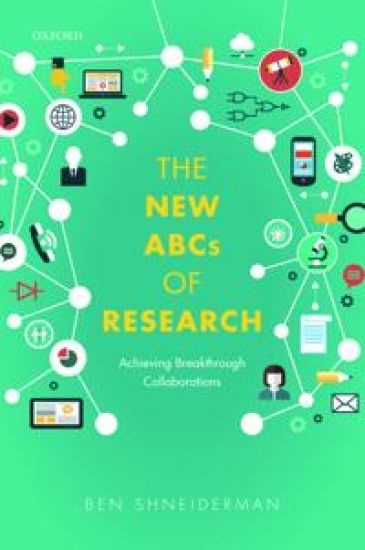
The New ABCs of Research

The New ABCs of Research

Ben Shneiderman

Oxford University Press
2017
nidottu
The problems we face in the 21st century require innovative thinking from all of us. Be it students, academics, business researchers of government policy makers. Hopes for improving our healthcare, food supply, community safety and environmental sustainability depend on the pervasive application of research solutions. The research heroes who take on the immense problems of our time face bigger than ever challenges, but if they adopt potent guiding principles and effective research lifecycle strategies, they can produce the advances that will enhance the lives of many people. These inspirational research leaders will break free from traditional thinking, disciplinary boundaries, and narrow aspirations. They will be bold innovators and engaged collaborators, who are ready to lead, yet open to new ideas, self-confident, yet empathetic to others. In this book, Ben Shneiderman recognizes the unbounded nature of human creativity, the multiplicative power of teamwork, and the catalytic effects of innovation. He reports on the growing number of initiatives to promote more integrated approaches to research so as to promote the expansion of these efforts. It is meant as a guide to students and junior researchers, as well as a manifesto for senior researchers and policy makers, challenging widely-held beliefs about how applied innovations evolve and how basic breakthroughs are made, and helping to plot the course towards tomorrow's great advancements.
Designing the User Interface: Strategies for Effective Human-Computer Interaction, Global Edition

Designing the User Interface: Strategies for Effective Human-Computer Interaction, Global Edition

Ben Shneiderman; Catherine Plaisant; Maxine Cohen; Steven Jacobs; Niklas Elmqvist; Nicholas Diakopoulos

Pearson Education Limited
2017
muu
For courses in Human-Computer Interaction The Sixth Edition of Designing the User Interface provides a comprehensive, authoritative, and up-to-date introduction to the dynamic field of human-computer interaction (HCI) and user experience (UX) design. This classic book has defined and charted the astonishing evolution of user interfaces for three decades. Students and professionals learn practical principles and guidelines needed to develop high quality interface designs that users can understand, predict, and control. The book covers theoretical foundations and design processes such as expert reviews and usability testing. By presenting current research and innovations in human-computer interaction, the authors strive to inspire students, guide designers, and provoke researchers to seek solutions that improve the experiences of novice and expert users, while achieving universal usability. The authors also provide balanced presentations on controversial topics such as augmented and virtual reality, voice and natural language interfaces, and information visualisation. Updates include current HCI design methods, new design examples, and totally revamped coverage of social media, search and voice interaction. Major revisions were made to EVERY chapter, changing almost every figure (170 new colour figures) and substantially updating the references.
Designing the User Interface

Designing the User Interface

Ben Shneiderman; Catherine Plaisant; Maxine Cohen; Steven Jacobs; Niklas Elmqvist; Nicholas Diakopoulos

Pearson
2016
sidottu
For courses in Human-Computer Interaction The Sixth Edition of Designing the User Interface provides a comprehensive, authoritative, and up-to-date introduction to the dynamic field of human-computer interaction (HCI) and user experience (UX) design. This classic book has defined and charted the astonishing evolution of user interfaces for three decades. Students and professionals learn practical principles and guidelines needed to develop high quality interface designs that users can understand, predict, and control. The book covers theoretical foundations and design processes such as expert reviews and usability testing. By presenting current research and innovations in human-computer interaction, the authors strive to inspire students, guide designers, and provoke researchers to seek solutions that improve the experiences of novice and expert users, while achieving universal usability. The authors also provide balanced presentations on controversial topics such as augmented and virtual reality, voice and natural language interfaces, and information visualization. Updates include current HCI design methods, new design examples, and totally revamped coverage of social media, search and voice interaction. Major revisions were made to EVERY chapter, changing almost every figure (170 new color figures) and substantially updating the references.
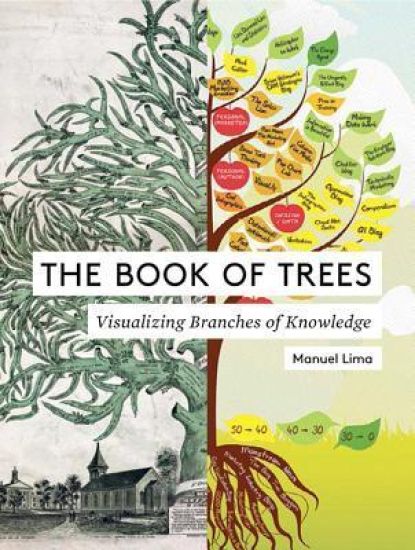
The Book of Trees

The Book of Trees

Manuel Lima; Ben Shneiderman

Princeton Architectural Press
2014
sidottu
Trees are in nature but also in our minds. Their shape have influenced how we communicate via diagrams, link ideas together and illustrate deeper human thoughts in art throughout history. Trees have been a recurrent metaphor for mapping information in numerous scientific domains, such as biology, genetics, sociology and linguistics and information visualisation is a growing area of interest amongst a variety of business practices. This book will expose our long-lasting obsession with trees, as metaphors for organising and representing hierarchical information, and provide a broad visual framework for the various types of executions, many dating back hundreds of years.