Kirjojen hintavertailu. Mukana 12 657 676 kirjaa ja 12 kauppaa.
Kirjailija
Ben Witherington
Kirjat ja teokset yhdessä paikassa: 57 kirjaa, julkaisuja vuosilta 1994-2026, suosituimpien joukossa Paul of Arabia. Vertaile teosten hintoja ja tarkista saatavuus suomalaisista kirjakaupoista.
Witherington and Myers provide a much-needed introduction to the ancient art of persuasion and its use within the various New Testament documents. More than just an exploration of the use of the ancient rhetorical tools and devices, this guide introduces the reader to all that went into convincing an audience about some subject. Witherington and Myers make the case that rhetorical criticism is a more fruitful approach to the NT epistles than the oft-employed approaches of literary and discourse criticism. Familiarity with the art of rhetoric also helps the reader explore non-epistolary genres. In addition to the general introduction to rhetorical criticism, the book guides readers through the many and varied uses of rhetoric in most NT documents--not only telling readers about rhetoric in the NT, but showing them the way it was employed. This brief guide book is intended to provide the reader with an entrance into understanding the rhetorical analysis of various parts of the NT, the value such studies bring for understanding what is being proclaimed and defended in the NT, and how Christ is presented in ways that would be considered persuasive in antiquity. - from the introduction
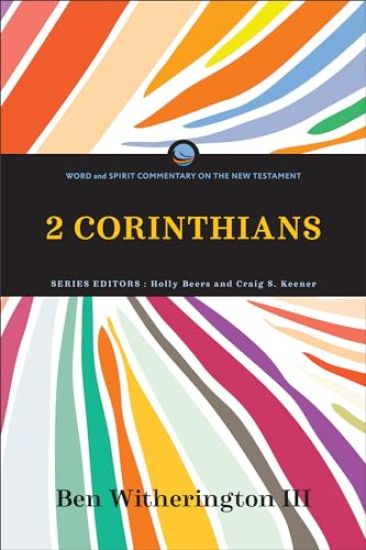
A balanced, accessible commentary for Spirit-filled ChristiansThe Spirit who inspired the authors of the New Testament is at work today around the globe, as evidenced by the explosive growth of pentecostal, charismatic, and renewalist movements; the number of adherents is now estimated at more than half a billion.The Word and Spirit Commentary on the New Testament meets the need for a balanced, affordable, and accessible commentary series aimed at Christians who identify as Spirit-filled.Features include:· Written by pastorally sensitive biblical scholars from the Spirit-filled tradition· Paragraph-by-paragraph commentary· Images, illustrations, and sidebars on pentecostal/charismatic/revival history or insights· Engages biblical books in their ancient setting· Emphasizes how we listen alongside ancient audiences for the Spirit's voice in our time and contextsSeries volumes explore how God works in the biblical texts and how Christians can expect God to work today, even if in new or culturally surprising ways. Series editors are Holly Beers, Westmont College, and Craig S. Keener, Asbury Theological Seminary.
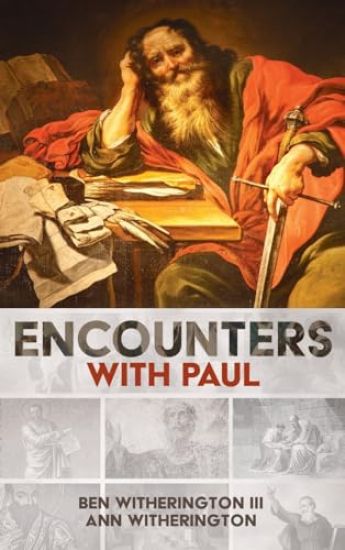
As a New Testament character of note, the Apostle Paul is second only to Jesus. In this companion volume to Encounters with Jesus, Ben and Ann Witherington draw on the biblical text and deep knowledge of historical context to bring alive the reactions of several contemporaries to the famous apostle and his words and deeds. Here we hear from friends and companions as well as passing acquaintances and outright enemies of Paul. Including many photos and illustrations, this book helps us to see Paul from many vivid points of view that all up add to a compelling and revealing portrait.
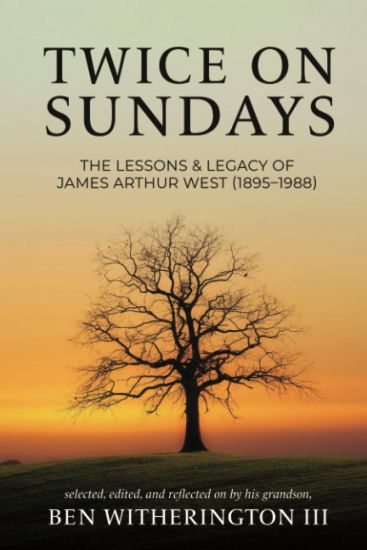
Created by James Arthur West, the grandfather of Ben Witherington III, Twice on Sundays is a remarkable series of biblical lessons, two for each Sunday of the year. Originally given in a Baptist Sunday school in Wilmington, North Carolina, these reflections and questions for thought comprise a survey of various facets of biblical theology and ethics. Whether used for devotions, personal study, quiet time, or preparation for teaching, fresh insights and clear exposition in devotion to the Scriptures characterize this probing and soul-nourishing book.Ben Witherington III is Amos Professor of New Testament for Doctoral Studies at Asbury Theological Seminary and is professor emeritus at St. Andrews University in Scotland. A graduate of UNC at Chapel Hill, he received an MDiv from Gordon-Conwell Theological Seminary and a PhD from the University of Durham in England. Witherington has written more than sixty books, including The Jesus Quest and The Paul Quest, both of which were selected as top biblical studies works by Christianity Today. He also writes for many church and scholarly publications and is a frequent contributor to the Patheos website.
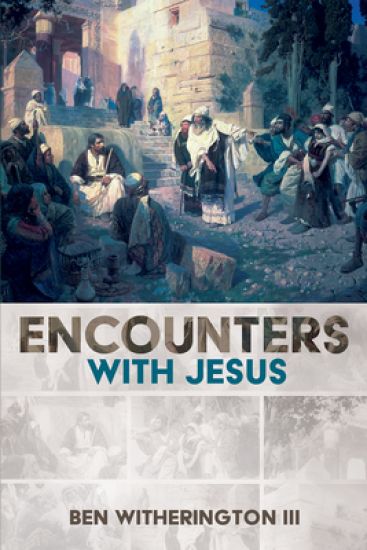
The impact Jesus had on numerous lives during his earthly ministry is obvious from the Gospel records themselves. But what we do not have is personal testimonies by those persons whom Jesus helped, healed, befriended, or recruited as disciples. In this creative exploration of what sort of testimonies those original encounters might have produced, Ben Witherington paints a picture for us of what the well known and the less well known eyewitnesses might have said had they been asked. Drawing on his extensive knowledge of the historical context in which Jesus operated, Witherington brings these men and women out of the shadows and into the light of day.
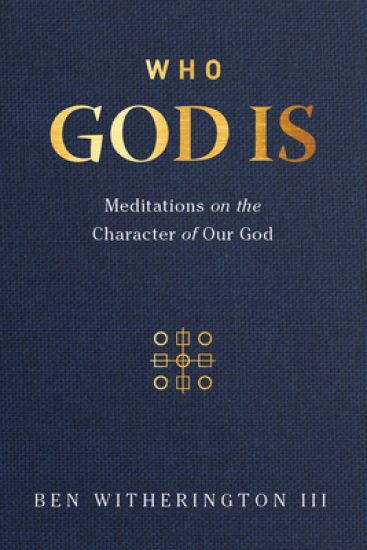
Do you know the character of our God--do you know who God is? What does it mean to say that God is love, light, life, and spirit? In Who God Is, world-renowned New Testament scholar Ben Witherington III explores the nature and character of the God of the Bible by focusing specifically on the nouns used to describe who God is. This rich exploration has its foundation in a deep reading of the biblical text. Reflecting on these descriptions of God gives us a fresh understanding of the beauty and uniqueness of the character of our God.
Reading the books of the Law, the Pentateuch, in their original context is the crucial prerequisite for reading their citation and use in later interpretation, including the New Testament writings, argues Ben Witherington III. Here, he offers pastors, teachers, and students an accessible commentary on the Pentateuch, as well as a reasoned consideration of how these books were heard and read in early Christianity. By reading "forward and backward," Witherington advances the scholarly discussion of intertextuality and opens a new avenue for biblical theology.
Identifying the ""scenes"" of written texts is a critical skill for following the course set by an author. Even a small variation in course heading can result in compounding an error over time with regard to one's intended destination. Perhaps nowhere is this more important than in the opening unit of Mark's Gospel. In this book, Brad Johnson sets out to follow the course prescribed by the author of the second Gospel. Making use of the principles of Inductive Bible Study, rhetorical criticism, and a study of ancient prologues, Johnson makes a twofold case that Mark's opening unit (the first fifteen verses) demonstrates a formal integrity and performs a rhetorical function. As such, the Markan prologue situates the public life and ministry of Jesus within the broader context of an epic drama. A failure to acknowledge the unique contribution of Mark as author in this regard will likely result in a destination the author never intended. ""Brad Johnson's carefully argued book is a significant contribution to biblical studies in three ways: it offers new insights into the structure of Mark's Gospel; it demonstrates the value of ancient rhetoric for Gospel studies; and it offers a fresh and convincing interpretation of the prologue to Mark's Gospel. Few books provide so much interpretive reward to the reader."" --David R. Bauer, Beeson Professor of Inductive Biblical Studies, Dean of the School of Biblical Interpretation, Asbury Theological Seminary ""This book on the prologue of Mark's Gospel is 'must reading' for students and scholars of Mark. Johnson's aim is to define the limits of Mark's prologue (1:1-15) and to determine the role it plays within the Gospel. His careful summary of how various modern literary methods and ancient rhetorical approaches lead the reader of Mark to understand its prologue is itself worth the price of his book. Johnson concludes that Mark was acquainted with elementary Greco-Roman rhetoric even while he places it within a Jewish framework of rhetorical discourse. The purpose of the prologue is to legitimate Jesus as the anointed and powerful Son of God who is nevertheless destined to suffer at the hands of humans. Johnson makes his case in a style that is both interesting and accessible to the reader."" --Jack Dean Kingsbury, Aubrey Lee Brooks Professor emeritus of Biblical Theology, Union Presbyterian Seminary, Richmond, VA Brad Johnson is Affiliate Professor at Asbury Theological Seminary in Wilmore, Kentucky, and the pastor of Wesley Chapel United Methodist Church near Wilmore. He is the author of The Gospel of Mark in the OneBook Daily-Weekly Series (2017).
In C. K. Barrett, we meet a beloved biblical scholar and gifted preacher who never lost touch with his Wesleyan heritage. In the wake of discovering Barrett's sermon notebooks, it became immediately apparent to Dr. Ben Witherington that these sermons were of immense value for, not only students of modern Methodism, but also for theologians and pastors who want to see how a master interweaves insightful biblical exposition and Wesleyan theology.
"A rare treasure ...a triumph!" (Philip Jenkins, Baylor University)"A gold mine of exegetically-grounded biblical theology." (Craig Evans, Houston Baptist University)Reading the Book of Psalms in its original context is the crucial prerequisite for reading its citation and use in later interpretation, including the New Testament writings, argues Ben Witherington III. Here he offers pastors, teachers, and students an accessible commentary to the Psalms, as well as a reasoned consideration of how they were heard and read in early Christianity. By reading "forward and backward," Witherington advances the scholarly discussion of intertextuality and opens a new avenue for biblical theology.