Kirjojen hintavertailu. Mukana 12 390 323 kirjaa ja 12 kauppaa.

Kirjailija

Benita Parry

Kirjat ja teokset yhdessä paikassa: 5 kirjaa, julkaisuja vuosilta 1998-2015, suosituimpien joukossa Combined and Uneven Development. Vertaile teosten hintoja ja tarkista saatavuus suomalaisista kirjakaupoista.

5 kirjaa

Kirjojen julkaisuhaarukka 1998-2015.

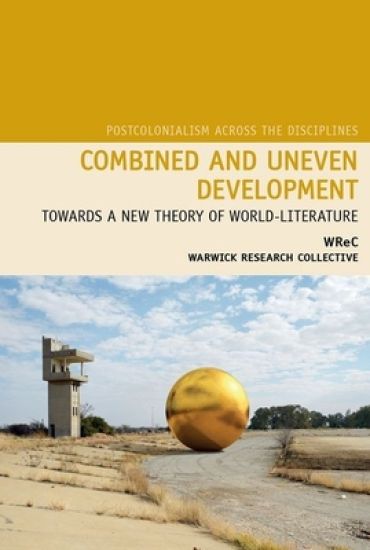
Combined and Uneven Development

Combined and Uneven Development

Sharae Deckard; Nicholas Lawrence; Neil Lazarus; Graeme Macdonald; Upamanyu Pablo Mukherjee; Benita Parry; Stephen Shapiro

Liverpool University Press
2015
sidottu
The ambition of this book is to resituate the problem of ‘world literature’, considered as a revived category of theoretical enquiry, by pursuing the literary-cultural implications of the theory of combined and uneven development. This theory has a long pedigree in the social sciences, where it continues to stimulate debate. But its implications for cultural analysis have received less attention, even though the theory might be said to draw attention to a central – perhaps the central – arc or trajectory of modern(ist) production in literature and the other arts worldwide. It is in the conjuncture of combined and uneven development, on the one hand, and the recently interrogated and expanded categories of ‘world literature’ and ‘modernism’, on the other, that this book looks for its specific contours. In the two theoretical chapters that frame the book, the authors argue for a single, but radically uneven world-system; a singular modernity, combined and uneven; and a literature that variously registers this combined unevenness in both its form and content to reveal itself as, properly speaking, world-literature. In the four substantive chapters that then follow, the authors explore a selection of modern-era fictions in which the potential of their method of comparativism seems to be most dramatically highlighted. They treat the novel paradigmatically, not exemplarily, as a literary form in which combined and uneven development is manifested with particular salience, due in no small part to its fundamental association with the rise of capitalism and its status in peripheral and semi-peripheral societies as a ‘modernising’ import. The peculiar plasticity and hybridity of the novel form enables it to incorporate not only multiple literary levels, genres and modes, but also other non-literary and archaic cultural forms – so that, for example, realist elements might be mixed with more experimental modes of narration, or older literary devices might be reactivated in juxtaposition with more contemporary frames.
Postcolonial Studies

Postcolonial Studies

Benita Parry

Routledge
2004
nidottu
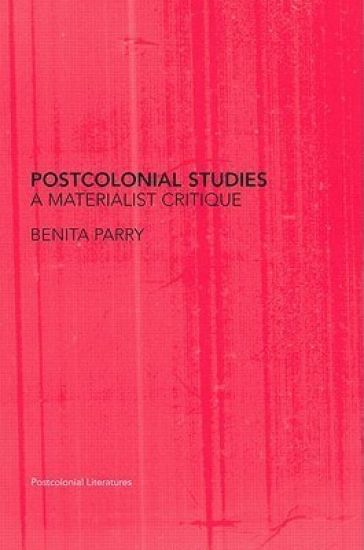
This powerful selection of essays proposes practices of reading and criticism to make the field of postcolonial studies more fully attentive to historical circumstances and socio-material conditions. Benita Parry points to 'directions and dead ends' in the discipline she has helped to shape, with a first series of essays vigorously challenging colonial discourse theory and postcolonialism as we have known them. She then turns to literature with a series of detailed readings that not only demonstrate her theoretical position at work, but also give new dimensions to widely studied texts by Rudyard Kipling, Joseph Conrad, H. G. Wells and E. M. Forster. Parry argues throughout that the material impulses of colonialism, its appropriation of physical resources, exploitation of human labour and institutional repression have too long been allowed to recede from view.
Postcolonial Studies

Postcolonial Studies

Benita Parry

Routledge
2004
sidottu
This powerful selection of essays proposes practices of reading and criticism to make the field of postcolonial studies more fully attentive to historical circumstances and socio-material conditions. Benita Parry points to 'directions and dead ends' in the discipline she has helped to shape, with a first series of essays vigorously challenging colonial discourse theory and postcolonialism as we have known them. She then turns to literature with a series of detailed readings that not only demonstrate her theoretical position at work, but also give new dimensions to widely studied texts by Rudyard Kipling, Joseph Conrad, H. G. Wells and E. M. Forster. Parry argues throughout that the material impulses of colonialism, its appropriation of physical resources, exploitation of human labour and institutional repression have too long been allowed to recede from view.
Combined and Uneven Development

Combined and Uneven Development

Sharae Deckard; Nicholas Lawrence; Neil Lazarus; Graeme Macdonald; Upamanyu Pablo Mukherjee; Benita Parry; Stephen Shapiro

Liverpool University Press
2015
nidottu
The ambition of this book is to resituate the problem of ‘world literature’, considered as a revived category of theoretical enquiry, by pursuing the literary-cultural implications of the theory of combined and uneven development. This theory has a long pedigree in the social sciences, where it continues to stimulate debate. But its implications for cultural analysis have received less attention, even though the theory might be said to draw attention to a central – perhaps the central – arc or trajectory of modern(ist) production in literature and the other arts worldwide. It is in the conjuncture of combined and uneven development, on the one hand, and the recently interrogated and expanded categories of ‘world literature’ and ‘modernism’, on the other, that this book looks for its specific contours. In the two theoretical chapters that frame the book, the authors argue for a single, but radically uneven world-system; a singular modernity, combined and uneven; and a literature that variously registers this combined unevenness in both its form and content to reveal itself as, properly speaking, world-literature. In the four substantive chapters that then follow, the authors explore a selection of modern-era fictions in which the potential of their method of comparativism seems to be most dramatically highlighted. They treat the novel paradigmatically, not exemplarily, as a literary form in which combined and uneven development is manifested with particular salience, due in no small part to its fundamental association with the rise of capitalism and its status in peripheral and semi-peripheral societies as a ‘modernising’ import. The peculiar plasticity and hybridity of the novel form enables it to incorporate not only multiple literary levels, genres and modes, but also other non-literary and archaic cultural forms – so that, for example, realist elements might be mixed with more experimental modes of narration, or older literary devices might be reactivated in juxtaposition with more contemporary frames.
Delusions and Discoveries

Delusions and Discoveries

Benita Parry

Verso Books
1998
nidottu
No cultural phenomenon of the 1970s and 1980s in Britain was more curious than the Raj revival, with its slew of films and fictions, its rage for memorabilia of imperial rule in India, and its strange nostalgia for a time and a world long since past. Today, with the arrival of so-called postcolonial studies, that revival lives on in a strange afterlife of critical study.Writing some years before Raj nostalgia became all the rage, and out of the rather different political and intellectual climate of 1960s national liberation struggles, Benita Parry produced what remains one of the landmark studies of British attitudes towards India. Available for the first time in Paper, Delusions and Discoveries authoritatively surveys the mix of racist and jingoistic prejudices that dominated the writings of Anglo-Indians from Flora Annie Steele and Maud Diver to Kipling and beyond. The book also includes treatments of more liberal thinkers like Edmund Candler, Edward James Thompson and E. M. Forster, as well as a new preface by the author situating her work in relation to recent studies of the culture of colony and empire.