Kirjojen hintavertailu. Mukana 12 388 111 kirjaa ja 12 kauppaa.

Kirjailija

Benjamin Beit-Hallahmi

Kirjat ja teokset yhdessä paikassa: 11 kirjaa, julkaisuja vuosilta 1996-2025, suosituimpien joukossa Flesh and Blood: Interrogating Freud on Human Sacrifice, Real and Imagined. Vertaile teosten hintoja ja tarkista saatavuus suomalaisista kirjakaupoista.

11 kirjaa

Kirjojen julkaisuhaarukka 1996-2025.

Academic Advocacy for New Religious Movements

Academic Advocacy for New Religious Movements

Benjamin Beit-Hallahmi

Springer International Publishing AG
2025
sidottu
This book explores the intersection of advocacy and academic practice within the social sciences, focusing on the ethical dimensions and potential consequences of researchers engaging in political action on behalf of the groups they study. Investigating the ethical and practical implications of advocacy in academic work, specifically within the social sciences. It examines how scholars, guided by their research and vision for social change, engage politically to support the groups they study. The book addresses the debate surrounding academic advocacy: is it harmful or a necessary pursuit? Through a detailed study of a historical advocacy movement, it analyzes the global campaign to gain legitimacy for new religious movements (NRMs) between 1980 and 2000. It is an important read for scholars of New Religious Movements and those interested in the way religion is studied.
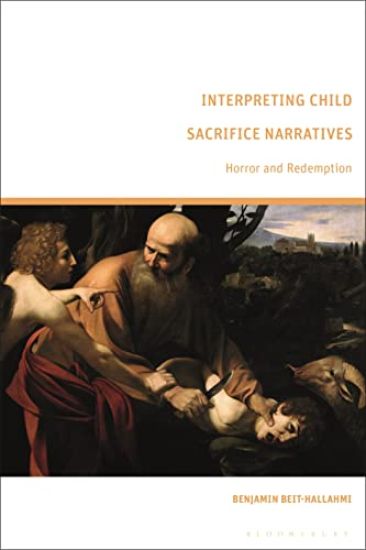
Interpreting Child Sacrifice Narratives

Interpreting Child Sacrifice Narratives

Benjamin Beit-Hallahmi

BLOOMSBURY PUBLISHING PLC
2024
nidottu
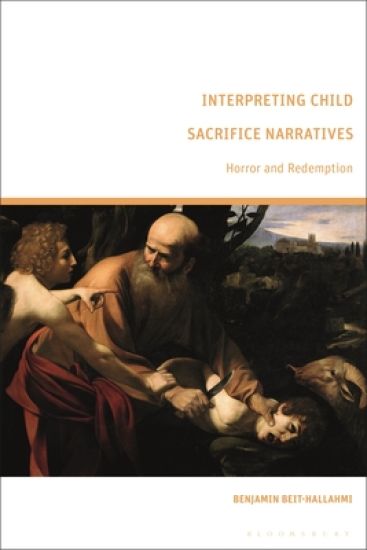
Examining the theme of child sacrifice as a psychological challenge, this book applies a unique approach to religious ideas by looking at beliefs and practices that are considered deviant, but also make up part of mainstream religious discourse in Judaism, Islam, and Christianity. Ancient religious mythology, which survives through living traditions and transmitted narratives, rituals, and writings, is filled with violent stories, often involving the targeting of children as ritual victims. Christianity offers Abraham’s sacrifice and assures us that the “only begotten son” has died, and then been resurrected. This version of the sacrifice myth has dominated the West. It is celebrated in an act of fantasy cannibalism, in which the believers share the divine son’s flesh and blood. This book makes the connection between Satanism stories in the 1980s, the Blood Libel in Europe, The Eucharist, and Eastern Mediterranean narratives of child sacrifice.
Interpreting Child Sacrifice Narratives

Interpreting Child Sacrifice Narratives

Benjamin Beit-Hallahmi

BLOOMSBURY PUBLISHING PLC
2023
sidottu
Examining the theme of child sacrifice as a psychological challenge, this book applies a unique approach to religious ideas by looking at beliefs and practices that are considered deviant, but also make up part of mainstream religious discourse in Judaism, Islam, and Christianity. Ancient religious mythology, which survives through living traditions and transmitted narratives, rituals, and writings, is filled with violent stories, often involving the targeting of children as ritual victims. Christianity offers Abraham’s sacrifice and assures us that the “only begotten son” has died, and then been resurrected. This version of the sacrifice myth has dominated the West. It is celebrated in an act of fantasy cannibalism, in which the believers share the divine son’s flesh and blood. This book makes the connection between Satanism stories in the 1980s, the Blood Libel in Europe, The Eucharist, and Eastern Mediterranean narratives of child sacrifice.
Flesh and Blood: Interrogating Freud on Human Sacrifice, Real and Imagined
Fears and stories about an underground religion devoted to Satan, which demands and carries out child sacrifice, appeared in the United States in the late twentieth century and became the subject of media reports supported by some mental health professionals. Examining these modern fantasies leads us back to ancient stories which in some cases believers consider the height of religious devotion. Horrifying ideas about human sacrifice, child sacrifice, and the offering to the gods of a beloved only son by his father appear repeatedly in Western traditions, starting with the Greeks and the Hebrews. In Flesh and Blood: Interrogating Freud on Human Sacrifice, Real and Imagined, Beit-Hallahmi focuses on rituals of violence tied to religion, both imagined and real. The main focus of this work is the meaning of blood and ritual killing in the history of religion. The book examines the encounter with the idea of child sacrifice in the context of human hopes for salvation.
The Social Psychology of Religion (Psychology Revivals)

The Social Psychology of Religion (Psychology Revivals)

Michael Argyle; Benjamin Beit-Hallahmi

Routledge
2014
nidottu
Originally published in 1975, this book is a completely rewritten, revised version of Michael Argyle’s standard work, Religious Behaviour, first published in 1958. A great deal of new research had appeared since that date, which threw new light on the nature and origins of religious behaviour, beliefs and experience.
Psychological Perspectives on Religion and Religiosity
Is religion to blame for deadly conflicts? Should religious behaviour be credited more often for acts of charity and altruism? In what ways are religious and ‘spiritual’ ideas, practices and identities surviving and changing as religion loses its political power in those parts of the world which are experiencing increasing secularization? Written by one of the world’s leading authorities on the psychology of religion and social identity, Psychological Perspectives on Religion and Religiosity offers a comprehensive and multidisciplinary review of a century of research into the origins and consequences of religious belief systems and religious behaviour. The book employs a unique theoretical framework that combines the ‘new’ cognitive-evolutionary psychology of religion, examining the origins of religious ideas, with the ‘old’ psychology of religiosity, which looks at correlates and consequences. It examines a wide range of psychological variables and their relationship with religiosity. It is also provides fresh insights into classical topics in the psychology of religion, such as religious conversion, the relevance of Freud’s ideas about religion and religiosity, the meaning of secularization, and the crucial role women play in religion. The book concludes with the author’s reflections on the future for the psychology of religion as a field.Psychological Perspectives on Religion and Religiosity will be invaluable for academic researchers in psychology, sociology, anthropology, political science, economics, and history worldwide. It will also be of great interest to advanced undergraduate students and graduate students across the social sciences.
Psychological Perspectives on Religion and Religiosity
Is religion to blame for deadly conflicts? Should religious behaviour be credited more often for acts of charity and altruism? In what ways are religious and ‘spiritual’ ideas, practices and identities surviving and changing as religion loses its political power in those parts of the world which are experiencing increasing secularization? Written by one of the world’s leading authorities on the psychology of religion and social identity, Psychological Perspectives on Religion and Religiosity offers a comprehensive and multidisciplinary review of a century of research into the origins and consequences of religious belief systems and religious behaviour. The book employs a unique theoretical framework that combines the ‘new’ cognitive-evolutionary psychology of religion, examining the origins of religious ideas, with the ‘old’ psychology of religiosity, which looks at correlates and consequences. It examines a wide range of psychological variables and their relationship with religiosity. It is also provides fresh insights into classical topics in the psychology of religion, such as religious conversion, the relevance of Freud’s ideas about religion and religiosity, the meaning of secularization, and the crucial role women play in religion. The book concludes with the author’s reflections on the future for the psychology of religion as a field.Psychological Perspectives on Religion and Religiosity will be invaluable for academic researchers in psychology, sociology, anthropology, political science, economics, and history worldwide. It will also be of great interest to advanced undergraduate students and graduate students across the social sciences.
The Social Psychology of Religion (Psychology Revivals)

The Social Psychology of Religion (Psychology Revivals)

Michael Argyle; Benjamin Beit-Hallahmi

Routledge
2013
sidottu
Originally published in 1975, this book is a completely rewritten, revised version of Michael Argyle’s standard work, Religious Behaviour, first published in 1958. A great deal of new research had appeared since that date, which threw new light on the nature and origins of religious behaviour, beliefs and experience.Trends in religious activity in Britain and the United States since 1900, and the state of religion in these two countries at the time, are examined. Evidence is presented on the origins of religious activity – including the effects of stress, drugs, meditation, evangelistic meetings, personality variables, and social class. Other studies examine the effects of religion, for example on mental and physical health, political attitudes, racial prejudice, sexual behaviour, morals, and the relation between religion and scientific and other achievements.The findings are used to test the main theories about religion which have been put forward by psychologists and other social scientists, such as Freud’s father-projection theory, cognitive need theories, and deprivation-compensation theories.
Psychoanalysis and Theism

Psychoanalysis and Theism

Benjamin Beit-Hallahmi

Jason Aronson Inc. Publishers
2010
sidottu
How should we approach the psychological study of religion, and how relevant is classical psychoanalysis, identified with the writings of Sigmund Freud, to the understanding of religion? Freud's writings on religion have been discussed often and continue to attract attention and debate. Psychoanalysis and Theism starts with an essay by Adolf Grünbaum, one of the world's leading philosophers of science and an incisive critic of Freud's work. Grünbaum looks at Freud's general claims about the psychological mechanisms involved in religion and finds them lacking. Then, in a surprising turn, Grünbaum judges some of Freud's interpretations of concrete religious ideas and practices to be not only cogent, but indispensable. When it comes to the case of the belief in Virgin Birth, Grünbaum finds an Oedipal interpretation to be our only choice. This remarkable essay is the stimulus for a symposium with nine senior scholars, coming from the fields of philosophy, psychology, sociology, and psychoanalysis, who present their critical reflections on how we should study religion, how we should treat Freud's ideas, and what the future directions in psychological research on concrete religious behavior should be. The contributors bring to this effort their varied fields of expertise, from analytical philosophy to experimental psychology. Of special interest are essays which deal with the Virgin Birth doctrine and its possible psychological sources and with the potential for future psychoanalytic studies of faith and ritual. Other essays focus on Freud's conscious and unconscious motivations for studying religion as well as the hidden biases and lacunae found in the social science literature on religious practices. This volume adds a unique combination of critical and knowledgeable voices to the debate on Sigmund Freud's legacy.
The Psychology of Religious Behaviour, Belief and Experience

The Psychology of Religious Behaviour, Belief and Experience

Benjamin Beit-Hallahmi; Michael Argyle

Routledge
1997
nidottu
Because society is increasingly secular, it may seem irrelevant to consider the psychology of religion. But the diversity of our multi-ethnic and multi-cultural society in fact makes religion more important to the social sciences than it has ever been before. What are the social consequences of religion? Every day the news is full of events that can be blamed on religion perpetrated by a range of groups from whole societies to individuals. Beit-Hallami and Argyle are renowned for their clear, analytical approach to topics and this new, state-of-the-art study of psychology and religion is no exception. It will be welcomed as an update to their previous work in the area by social psychologists, sociologists and theologians worldwide.
Psychoanalytic Studies of Religion

Psychoanalytic Studies of Religion

Benjamin Beit-Hallahmi

Greenwood Press
1996
sidottu
The first critical guide to the essential literature reflecting and expressing psychoanalytic approaches to religion, this volume's concentrates on critical assessments that steer the user toward works of lasting value. The book's first priority is to include publications clearly aimed at continuing the Freudian tradition and contributing to the psychoanalytic study of religion. The book will be of interest to scholars and students of psychology and religion as well as the general reader who is seeking works on those topics. Most of the psychoanalytic literature in English since 1920 is included and is organized in 21 topical sections. Cross-references and indexes increase the usefulness of the work.The author has tried to include every coherent effort, guided by psychoanalytic theory, to offer an explanation, understanding, or interpretation of religion or religious behavior. The work will be of interest in the fields of psychoanalysis, psychology, sociology, anthropology, history, literature, folklore, and religion. Public libraries will find this a valuable reference tool to offer the general reader who is interested in a broad spectrum of ideas.