Kirjojen hintavertailu. Mukana 12 595 353 kirjaa ja 12 kauppaa.

Kirjailija

Benjamin C. M. Fung

Kirjat ja teokset yhdessä paikassa: 4 kirjaa, julkaisuja vuosilta 2010-2021, suosituimpien joukossa Machine Learning for Authorship Attribution and Cyber Forensics. Vertaile teosten hintoja ja tarkista saatavuus suomalaisista kirjakaupoista.

Mukana myös kirjoitusasut: Benjamin C.M. Fung

4 kirjaa

Kirjojen julkaisuhaarukka 2010-2021.

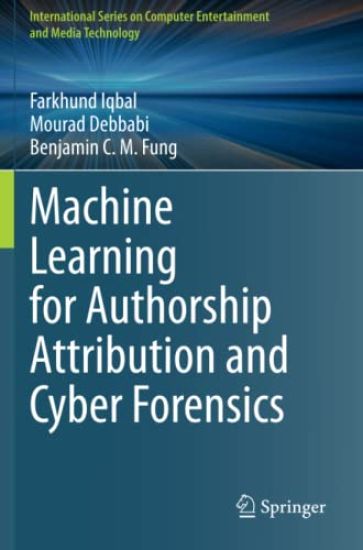
Machine Learning for Authorship Attribution and Cyber Forensics

Machine Learning for Authorship Attribution and Cyber Forensics

Farkhund Iqbal; Mourad Debbabi; Benjamin C. M. Fung

Springer Nature Switzerland AG
2021
nidottu
The book first explores the cybersecurity’s landscape and the inherent susceptibility of online communication system such as e-mail, chat conversation and social media in cybercrimes. Common sources and resources of digital crimes, their causes and effects together with the emerging threats for society are illustrated in this book. This book not only explores the growing needs of cybersecurity and digital forensics but also investigates relevant technologies and methods to meet the said needs. Knowledge discovery, machine learning and data analytics are explored for collecting cyber-intelligence and forensics evidence on cybercrimes.Online communication documents, which are the main source of cybercrimes are investigated from two perspectives: the crime and the criminal. AI and machine learning methods are applied to detect illegal and criminal activities such as bot distribution, drug trafficking and child pornography. Authorship analysis is applied to identify the potentialsuspects and their social linguistics characteristics. Deep learning together with frequent pattern mining and link mining techniques are applied to trace the potential collaborators of the identified criminals.Finally, the aim of the book is not only to investigate the crimes and identify the potential suspects but, as well, to collect solid and precise forensics evidence to prosecute the suspects in the court of law.
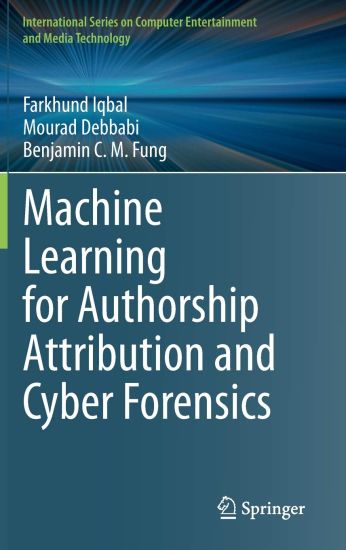
Machine Learning for Authorship Attribution and Cyber Forensics

Machine Learning for Authorship Attribution and Cyber Forensics

Farkhund Iqbal; Mourad Debbabi; Benjamin C. M. Fung

Springer Nature Switzerland AG
2020
sidottu
The book first explores the cybersecurity’s landscape and the inherent susceptibility of online communication system such as e-mail, chat conversation and social media in cybercrimes. Common sources and resources of digital crimes, their causes and effects together with the emerging threats for society are illustrated in this book. This book not only explores the growing needs of cybersecurity and digital forensics but also investigates relevant technologies and methods to meet the said needs. Knowledge discovery, machine learning and data analytics are explored for collecting cyber-intelligence and forensics evidence on cybercrimes.Online communication documents, which are the main source of cybercrimes are investigated from two perspectives: the crime and the criminal. AI and machine learning methods are applied to detect illegal and criminal activities such as bot distribution, drug trafficking and child pornography. Authorship analysis is applied to identify the potentialsuspects and their social linguistics characteristics. Deep learning together with frequent pattern mining and link mining techniques are applied to trace the potential collaborators of the identified criminals.Finally, the aim of the book is not only to investigate the crimes and identify the potential suspects but, as well, to collect solid and precise forensics evidence to prosecute the suspects in the court of law.
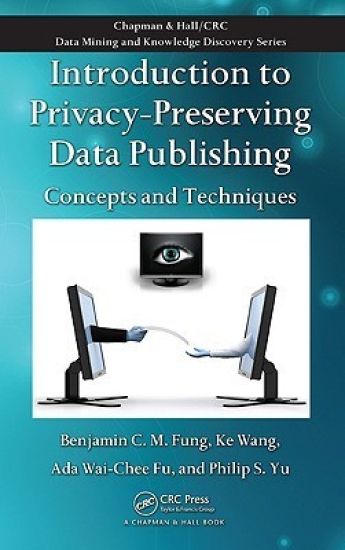
Introduction to Privacy-Preserving Data Publishing

Introduction to Privacy-Preserving Data Publishing

Benjamin C.M. Fung; Ke Wang; Ada Wai-Chee Fu; Philip S. Yu

CRC Press
2019
nidottu
Gaining access to high-quality data is a vital necessity in knowledge-based decision making. But data in its raw form often contains sensitive information about individuals. Providing solutions to this problem, the methods and tools of privacy-preserving data publishing enable the publication of useful information while protecting data privacy. Introduction to Privacy-Preserving Data Publishing: Concepts and Techniques presents state-of-the-art information sharing and data integration methods that take into account privacy and data mining requirements. The first part of the book discusses the fundamentals of the field. In the second part, the authors present anonymization methods for preserving information utility for specific data mining tasks. The third part examines the privacy issues, privacy models, and anonymization methods for realistic and challenging data publishing scenarios. While the first three parts focus on anonymizing relational data, the last part studies the privacy threats, privacy models, and anonymization methods for complex data, including transaction, trajectory, social network, and textual data.This book not only explores privacy and information utility issues but also efficiency and scalability challenges. In many chapters, the authors highlight efficient and scalable methods and provide an analytical discussion to compare the strengths and weaknesses of different solutions.
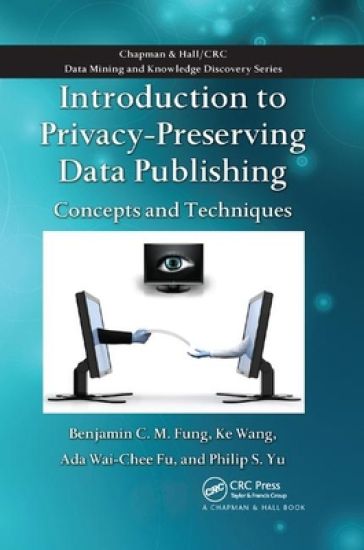
Introduction to Privacy-Preserving Data Publishing

Introduction to Privacy-Preserving Data Publishing

Benjamin C.M. Fung; Ke Wang; Ada Wai-Chee Fu; Philip S. Yu

Chapman Hall/CRC
2010
sidottu
Gaining access to high-quality data is a vital necessity in knowledge-based decision making. But data in its raw form often contains sensitive information about individuals. Providing solutions to this problem, the methods and tools of privacy-preserving data publishing enable the publication of useful information while protecting data privacy. Introduction to Privacy-Preserving Data Publishing: Concepts and Techniques presents state-of-the-art information sharing and data integration methods that take into account privacy and data mining requirements. The first part of the book discusses the fundamentals of the field. In the second part, the authors present anonymization methods for preserving information utility for specific data mining tasks. The third part examines the privacy issues, privacy models, and anonymization methods for realistic and challenging data publishing scenarios. While the first three parts focus on anonymizing relational data, the last part studies the privacy threats, privacy models, and anonymization methods for complex data, including transaction, trajectory, social network, and textual data.This book not only explores privacy and information utility issues but also efficiency and scalability challenges. In many chapters, the authors highlight efficient and scalable methods and provide an analytical discussion to compare the strengths and weaknesses of different solutions.