

Kirjailija
Benjamin Fraser
Kirjat ja teokset yhdessä paikassa: 23 kirjaa, julkaisuja vuosilta 2010-2025, suosituimpien joukossa Understanding Juan Benet. Vertaile teosten hintoja ja tarkista saatavuus suomalaisista kirjakaupoista.
23 kirjaa
Kirjojen julkaisuhaarukka 2010-2025.
Comics Beyond Text and Image conceptualizes comics as “bodies,” exploring the substance and the many movements and expressions of comics first and foremost in terms of corporeality.The book centers on the metaphor of the comics body as a way of opening up our understandings of what comics do. It begins from the position that narrative in comics is corporeal, expressed in and through the visual bodies into which the page can be divided analytically, and from the interaction of the human body with the comics body. Drawing on the philosophy of Baruch Spinoza, the author argues for the primary role of visual narration over textual narration, develops a theory of the comics text as a cohesive and variegated cartography, and shows how thought is expressed in the extensive space of the comics page. This theory is then applied in snapshots of individual comics works that each in their own way continue the philosophical discussions of embodiment.This book moves beyond traditional modes of narration or narrative and will appeal to students and scholars of comics studies, as well as to those thinking about visual narrative more broadly, and to scholars of Spinoza and Deleuze.

People with Down syndrome possess a culture. They are producers of culture. And in the 21st century, this culture is increasingly visible as a global phenomenon. Down Syndrome Culture examines Down syndrome alongside its social, cultural, and artistic representation. Author Benjamin Fraser draws upon neomaterialist and posthumanist approaches to disability as well as the work of disability theorists such as David Mitchell, Sharon Snyder, Susan Antebi, Tobin Siebers, and Stuart Murray. By particularly focusing on Down syndrome, he showcases the unique place that it holds as an intellectual and developmental disability—one that fits between the social and medical models of disability—within the disability studies field. Down Syndrome Culture also pushes the traditionally Anglophone borders of disability studies by examining examples in Spanish, Catalan, and Portuguese-language texts, and incorporating the work of thinkers in Iberian and Latin American studies. Through a close analysis of life writing, documentaries, and fiction films, the book emphasizes the central role of people with Down syndrome in contemporary cultural production. Chapters discuss the autobiography of Andy Trias Trueta, the social actors of the documentary Los niños [The Grown-Ups] (2016), dancers from Danza Mobile, and a variety of fiction films, challenging ableist understandings of disability in nuanced ways. Ultimately, this book reveals the lives, cultural work, and representations of people with trisomy 21 in an international context.

People with Down syndrome possess a culture. They are producers of culture. And in the 21st century, this culture is increasingly visible as a global phenomenon. Down Syndrome Culture examines Down syndrome alongside its social, cultural, and artistic representation. Author Benjamin Fraser draws upon neomaterialist and posthumanist approaches to disability as well as the work of disability theorists such as David Mitchell, Sharon Snyder, Susan Antebi, Tobin Siebers, and Stuart Murray. By particularly focusing on Down syndrome, he showcases the unique place that it holds as an intellectual and developmental disability—one that fits between the social and medical models of disability—within the disability studies field. Down Syndrome Culture also pushes the traditionally Anglophone borders of disability studies by examining examples in Spanish, Catalan, and Portuguese-language texts, and incorporating the work of thinkers in Iberian and Latin American studies. Through a close analysis of life writing, documentaries, and fiction films, the book emphasizes the central role of people with Down syndrome in contemporary cultural production. Chapters discuss the autobiography of Andy Trias Trueta, the social actors of the documentary Los niños [The Grown-Ups] (2016), dancers from Danza Mobile, and a variety of fiction films, challenging ableist understandings of disability in nuanced ways. Ultimately, this book reveals the lives, cultural work, and representations of people with trisomy 21 in an international context.

The recipient of a 2000 MacArthur fellowship, Ben Katchor (b. 1951) is a beloved comics artist with a career spanning four decades. Published in indie weeklies across the United States, his comics are known for evoking the sensorium of the modern metropolis. As part of the Biographix series edited by Frederick Luis Aldama, Ben Katchor offers scholars and fans a thorough overview of the artist’s career from 1988 to 2020. In some of his early strips published in the 1980s in the New York Press and Forward, Katchor introduced one of his quintessential characters, Julius Knipl, a real estate photographer. By crafting Knipl as an urban flâneur prone to wandering, Katchor was able to variously demonstrate his absurd humor and linguistic whimsy alongside narratives packed with social critique. Three volumes collecting the Julius Knipl strips, Julius Knipl, Real Estate Photographer; Cheap Novelties: The Pleasures of Urban Decay; and The Beauty Supply District, helped cement Katchor as a distinguished comics artist and social commentator. Later works, such as The Cardboard Valise, Hand-Drying in America, and The Dairy Restaurant, have diversified his comics legacy. Rooted in close analyses of the artist’s numerous series and collections, each chapter in Ben Katchor is dedicated to a distinct aspect of the urban experience. Individual pages from Katchor’s work depict not only the visual, but also the auditory, tactile, and olfactory dimensions of life in the city.

The recipient of a 2000 MacArthur fellowship, Ben Katchor (b. 1951) is a beloved comics artist with a career spanning four decades. Published in indie weeklies across the United States, his comics are known for evoking the sensorium of the modern metropolis. As part of the Biographix series edited by Frederick Luis Aldama, Ben Katchor offers scholars and fans a thorough overview of the artist’s career from 1988 to 2020. In some of his early strips published in the 1980s in the New York Press and Forward, Katchor introduced one of his quintessential characters, Julius Knipl, a real estate photographer. By crafting Knipl as an urban flâneur prone to wandering, Katchor was able to variously demonstrate his absurd humor and linguistic whimsy alongside narratives packed with social critique. Three volumes collecting the Julius Knipl strips, Julius Knipl, Real Estate Photographer; Cheap Novelties: The Pleasures of Urban Decay; and The Beauty Supply District, helped cement Katchor as a distinguished comics artist and social commentator. Later works, such as The Cardboard Valise, Hand-Drying in America, and The Dairy Restaurant, have diversified his comics legacy. Rooted in close analyses of the artist’s numerous series and collections, each chapter in Ben Katchor is dedicated to a distinct aspect of the urban experience. Individual pages from Katchor’s work depict not only the visual, but also the auditory, tactile, and olfactory dimensions of life in the city.
Few musicians shaped Iberian jazz more than pianist Vicenç "Tete" Montoliu i Massana (1933-97). Fascinated by the modernist aesthetics of mid-century jazz, Montoliu was known for a carefully crafted mix of lyricism and dissonance, a penchant for discordant crashes, and a development of highly original compositions. Over the course of his career, he boasted some 100 recordings spanning Denmark, Germany, Holland, Spain, and the United States, and performed with the most notable jazz luminaries including Lionel Hampton, Rahsaan Roland Kirk, Dexter Gordon, and Archie Shepp. In drawing from the Black American jazz form, Montoliu fashioned an adjacent critical space shaped by his experiences as a Catalan and a person with congenital visual impairment living under the dictatorship of Francisco Franco. Beyond Sketches of Spain: Tete Montoliu and the Construction of Iberian Jazz explores the artist's life, musical production, and international reception within a cultural studies framework, invoking Fumi Okiji's notion of gathering in difference. In its investigation of this impressive and often overlooked transnational jazz legend, the book moves beyond mere sketches of Spanish nationhood, challenges conventional scholarly narratives, and recovers links between the United States, Barcelona, Catalonia, Spain, and Europe.
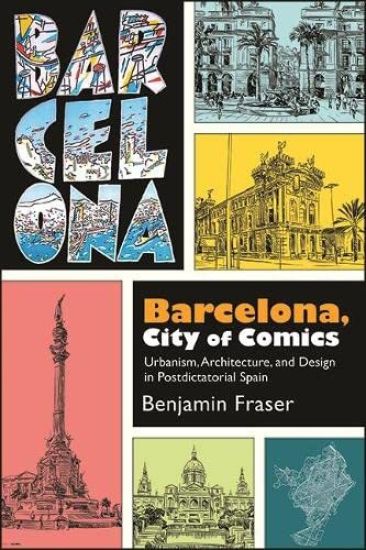
Explores the close relationship between comics and urbanism in one of Europe's most notable global cities.Barcelona, City of Comics introduces readers of English to a range of Spanish- and Catalan-language comics published after the death of dictator Francisco Franco in 1975. During this time of palpable social change, the Catalonian capital regained its reputation as the hub of comics publishing in Spain. Comics collectives such as El Rrollo and Butifarra, as well as individual artists from Montse Clavé to Mariscal, contributed to a thriving comics subculture that drew from and pushed beyond the countercultural comics tradition in the United States. As the Salón Internacional del Cómic de Barcelona (1981–) drew greater attention to the city, comics magazines teemed with graphic depictions of urban scenes. On the comics page, themes of architecture and city life were employed as social critique, while the city of Barcelona itself increasingly solidified its reputation on the global stage through urban planning. With a foreword by Pere Joan, Barcelona, City of Comics delves into the relationship between comics and urbanism in one of Europe's most notable global cities.
Explores the close relationship between comics and urbanism in one of Europe's most notable global cities.Barcelona, City of Comics introduces readers of English to a range of Spanish- and Catalan-language comics published after the death of dictator Francisco Franco in 1975. During this time of palpable social change, the Catalonian capital regained its reputation as the hub of comics publishing in Spain. Comics collectives such as El Rrollo and Butifarra, as well as individual artists from Montse Clavé to Mariscal, contributed to a thriving comics subculture that drew from and pushed beyond the countercultural comics tradition in the United States. As the Salón Internacional del Cómic de Barcelona (1981–) drew greater attention to the city, comics magazines teemed with graphic depictions of urban scenes. On the comics page, themes of architecture and city life were employed as social critique, while the city of Barcelona itself increasingly solidified its reputation on the global stage through urban planning. With a foreword by Pere Joan, Barcelona, City of Comics delves into the relationship between comics and urbanism in one of Europe's most notable global cities.
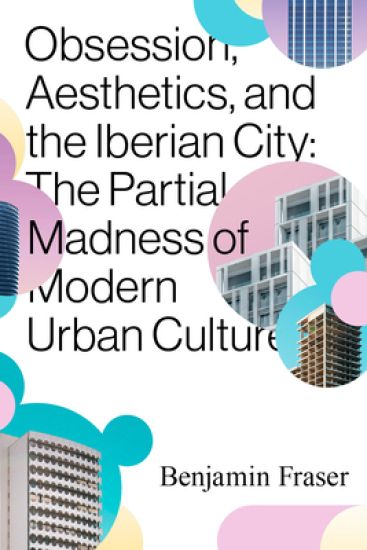
Obsession, Aesthetics, and the Iberian City
Benjamin Fraser
Vanderbilt University Press
2022
sidottu
Although many depictions of the city in prose, poetry and visual art can be found dating from earlier periods in human history, Obsession, Aesthetics, and the Iberian City emphasizes a particular phase in urban development. This is the quintessentially modern city that comes into being in the nineteenth century. In social terms, this nineteenth-century city is the product of a specialist class of planners engaged in what urban theorist Henri Lefebvre has called the bourgeois science of modern urbanism. One thinks first of the large scale and the wide boulevards of Baron Georges von Haussmann's Paris or the geometrical planning vision of Ildefons CerdÀ's Barcelona. The modern science of urban design famously inaugurates a new way of thinking the city; urban modernity is now defined by the triumph of exchange value over use value, and the lived city is eclipsed by the planned city as it is envisioned by capitalists, builders and speculators. Thus urban plans, architecture, literary prose and poetry, documentary cinema and fiction film, and comics art serve as windows into our modern obsession with urban aesthetics. Our collective cultural obsession with the urban environment has endured, from the nineteenth century through today. This book investigates the social relationships implied in our urban modernity by concentrating on four cities that are in broad strokes representative of the cultural and linguistic heterogeneity of the Iberian peninsula. Each chapter introduces but moves well beyond an identifiable urban area in a given city, noting the cultural obsession implicit in its reconstruction as well as the role of obsession in its artistic representation of the urban environment. These areas are Barcelona's Eixample district, Madrid's Linear City, Lisbon's central Baixa area, and Bilbao's Seven Streets, or Zazpikaleak. The theme of obsession-which as explored is synonymous with the concept of partial madness-provides a point of departure for understanding the interconnection of both urbanistic and artistic discourses.
Obsession, Aesthetics, and the Iberian City
Benjamin Fraser
Vanderbilt University Press
2022
nidottu
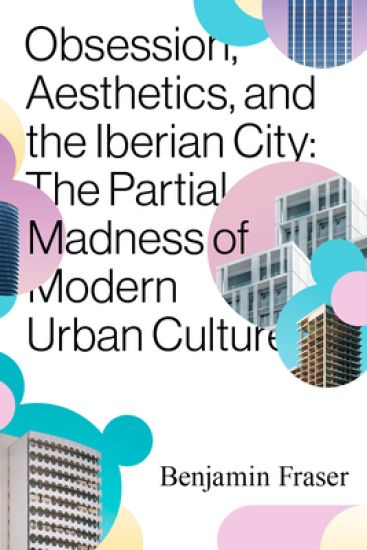
Although many depictions of the city in prose, poetry and visual art can be found dating from earlier periods in human history, Obsession, Aesthetics, and the Iberian City emphasizes a particular phase in urban development. This is the quintessentially modern city that comes into being in the nineteenth century. In social terms, this nineteenth-century city is the product of a specialist class of planners engaged in what urban theorist Henri Lefebvre has called the bourgeois science of modern urbanism. One thinks first of the large scale and the wide boulevards of Baron Georges von Haussmann's Paris or the geometrical planning vision of Ildefons CerdÀ's Barcelona. The modern science of urban design famously inaugurates a new way of thinking the city; urban modernity is now defined by the triumph of exchange value over use value, and the lived city is eclipsed by the planned city as it is envisioned by capitalists, builders and speculators. Thus urban plans, architecture, literary prose and poetry, documentary cinema and fiction film, and comics art serve as windows into our modern obsession with urban aesthetics. Our collective cultural obsession with the urban environment has endured, from the nineteenth century through today. This book investigates the social relationships implied in our urban modernity by concentrating on four cities that are in broad strokes representative of the cultural and linguistic heterogeneity of the Iberian peninsula. Each chapter introduces but moves well beyond an identifiable urban area in a given city, noting the cultural obsession implicit in its reconstruction as well as the role of obsession in its artistic representation of the urban environment. These areas are Barcelona's Eixample district, Madrid's Linear City, Lisbon's central Baixa area, and Bilbao's Seven Streets, or Zazpikaleak. The theme of obsession-which as explored is synonymous with the concept of partial madness-provides a point of departure for understanding the interconnection of both urbanistic and artistic discourses.
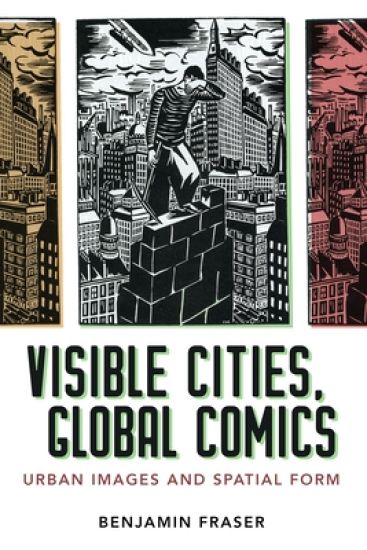
More and more people are noticing links between urban geography and the spaces within the layout of panels on the comics page. Benjamin Fraser explores the representation of the city in a range of comics from across the globe. Comics address the city as an idea, a historical fact, a social construction, a material-built environment, a shared space forged from the collective imagination, or as a social arena navigated according to personal desire. Accordingly, Fraser brings insights from urban theory to bear on specific comics. The works selected comprise a variety of international, alternative, and independent small-press comics artists, from engravings and early comics to single-panel work, graphic novels, manga, and trading cards, by artists such as Will Eisner, Tsutomu Nihei, Hariton Pushwagner, Julie Doucet, Frans Masereel, and Chris Ware. In the first monograph on this Subject, Fraser touches on many themes of modern urban life: activism, alienation, consumerism, flânerie, gentrification, the mystery story, science fiction, sexual orientation, and working-class labor. He leads readers to images of such cities as Barcelona, Buenos Aires, London, Lyon, Madrid, Montevideo, Montreal, New York, Oslo, Paris, São Paolo, and Tokyo. Through close readings, each chapter introduces readers to specific comics artists and works and investigates a range of topics related to the medium’s spatial form, stylistic variation, and cultural prominence. Mainly, Fraser mixes interest in urbanism and architecture with the creative strategies that comics artists employ to bring their urban images to life.
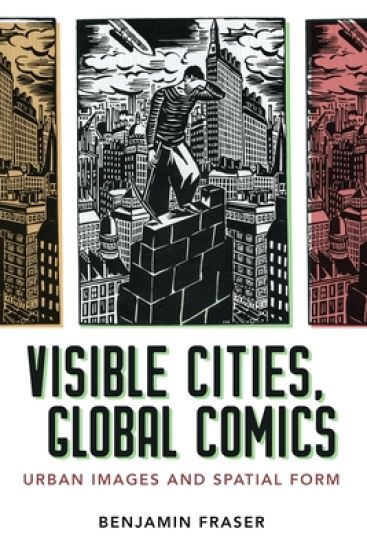
More and more people are noticing links between urban geography and the spaces within the layout of panels on the comics page. Benjamin Fraser explores the representation of the city in a range of comics from across the globe. Comics address the city as an idea, a historical fact, a social construction, a material-built environment, a shared space forged from the collective imagination, or as a social arena navigated according to personal desire. Accordingly, Fraser brings insights from urban theory to bear on specific comics. The works selected comprise a variety of international, alternative, and independent small-press comics artists, from engravings and early comics to single-panel work, graphic novels, manga, and trading cards, by artists such as Will Eisner, Tsutomu Nihei, Hariton Pushwagner, Julie Doucet, Frans Masereel, and Chris Ware. In the first monograph on this Subject, Fraser touches on many themes of modern urban life: activism, alienation, consumerism, flânerie, gentrification, the mystery story, science fiction, sexual orientation, and working-class labor. He leads readers to images of such cities as Barcelona, Buenos Aires, London, Lyon, Madrid, Montevideo, Montreal, New York, Oslo, Paris, São Paolo, and Tokyo. Through close readings, each chapter introduces readers to specific comics artists and works and investigates a range of topics related to the medium’s spatial form, stylistic variation, and cultural prominence. Mainly, Fraser mixes interest in urbanism and architecture with the creative strategies that comics artists employ to bring their urban images to life.

Born in Mallorca, Pere Joan Riera (known professionally as Pere Joan) thrived in the underground comics world, beginning in the mid-1970s with the self-published collections Baladas Urbanas and MuŽrdago, both of which were released almost immediately after the death of the dictator Francisco Franco and Spain's transition to democracy. The first monograph in English on a comics artist from Spain, The Art of Pere Joan takes a topographical approach to reading comics, applying theories of cultural and urban geography to Pere Joan’s treatment of space and landscape in his singular body of work.Balancing this goal with an exploration of specific works by Pere Joan, Benjamin Fraser demonstrates that looking at the thematic, structural, and aesthetic originality of the artist's landscape-driven work can help us begin to newly understand the representational properties of comics as a spatial medium. This in-depth examination reveals the resonance between the cultural landscapes of Mallorca and Pere Joan's metaphorical approach to both rural and urban environments in comics that weave emotional, ecological, and artistic strands in revolutionary ways.
Cognitive Disability Aesthetics explores the invisibility of cognitive disability in theoretical, historical, social, and cultural contexts. Benjamin Fraser’s cutting edge research and analysis signals a second-wave in disability studies that prioritizes cognition. Fraser expands upon previous research into physical disability representations and focuses on those disabilities that tend to be least visible in society (autism, Down syndrome, Alzheimer's disease, schizophrenia). Moving beyond established literary approaches analyzing prose representations of disability, the book explores how iconic and indexical modes of signification operate in visual texts. Taking on cognitive disability representations in a range of visual media (painting, cinema, and graphic novels), Fraser showcases the value of returning to impairment discourse. Cognitive Disability Aesthetics successfully reconfigures disability studies in the humanities and exposes the chasm that exists between Anglophone disability studies and disability studies in the Hispanic world.
Digital Cities: The Interdisciplinary Future of the Urban Geo-Humanities
Benjamin Fraser
Palgrave Pivot
2015
sidottu
This book highlights an interdisciplinary terrain where the humanities and social sciences combine with digital methods. It argues that while disciplinary frictions still condition the potential of digital projects, the nature of the urban phenomenon pushes us toward an interdisciplinary and digital future where the primacy of cities is assured.

Toward an Urban Cultural Studies is a call for a new interdisciplinary area of research and teaching. Blending Urban Studies and Cultural Studies, this book grounds readers in the extensive theory of the prolific French philosopher Henri Lefebvre.
Toward an Urban Cultural Studies is a call for a new interdisciplinary area of research and teaching. Blending Urban Studies and Cultural Studies, this book grounds readers in the extensive theory of the prolific French philosopher Henri Lefebvre.
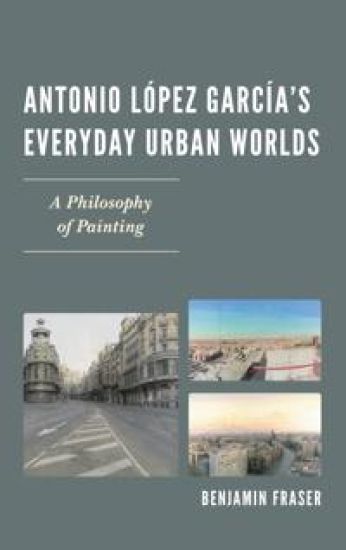
Antonio López García’s Everyday Urban Worlds: A Philosophy of Painting is the first book to give the famed Spanish artist the critical attention he deserves. Born in Tomelloso in 1936 and still living in the Spanish capital today, Antonio López has long cultivated a reputation for impressive urban scenes—but it is urban time that is his real subject. Going far beyond mere artist biography, Benjamin Fraser explores the relevance of multiple disciplines to an understanding of the painter’s large-scale canvasses. Weaving selected images together with their urban referents—and without ever straying too far from discussion of the painter’s oeuvre, method and reception by critics—Fraser pulls from disciplines as varied as philosophy, history, Spanish literature and film, cultural studies, urban geography, architecture, and city planning in his analyses. The book begins at ground level with one of the artist’s most recognizable images, the Gran Vía, which captures the urban project that sought to establish Madrid as an emblem of modernity. Here, discussion of the artist’s chosen painting style—one that has been referred to as a ‘hyperrealism’—is integrated with the central street’s history, the capital’s famous literary figures, and its filmic representations, setting up the philosophical perspective toward which the book gradually develops. Chapter two rises in altitude to focus on Madrid desde Torres Blancas, an urban image painted from the vantage point provided by an iconic high-rise in the north-central area of the city. Discussion of the Spanish capital’s northward expansion complements a broad view of the artist’s push into representations of landscape and allows for the exploration of themes such as political conflict, social inequality, and the accelerated cultural change of an increasingly mobile nation during the 1960s. Chapter three views Madrid desde la torre de bomberos de Vallecas and signals a turn toward political philosophy. Here, the size of the artist’s image itself foregrounds questions of scale, which Fraser paints in broad strokes as he blends discussions of artistry with the turbulent history of one of Madrid’s outlying districts and a continued focus on urban development and its literary and filmic resonance. Antonio López García’s Everyday Urban Worlds also includes an artist timeline, a concise introduction and an epilogue centering on the artist’s role in the Spanish film El sol del membrillo. The book’s clear style and comprehensive endnotes make it appropriate for both general readers and specialists alike.
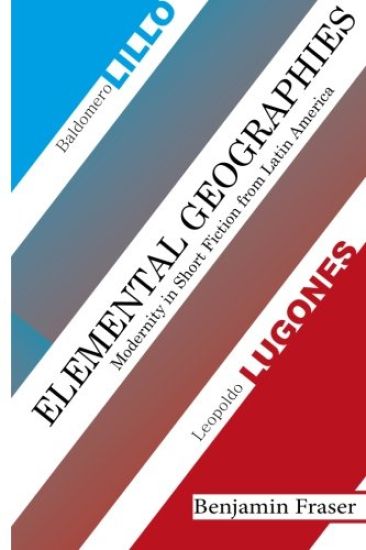
Elemental Geographies: Modernity in the Short Fiction of Baldomero Lillo and Leopoldo Lugones
Benjamin Fraser
Createspace Independent Publishing Platform
2013
nidottu