Kirjojen hintavertailu. Mukana 12 532 532 kirjaa ja 12 kauppaa.

Kirjailija

Benjamin Ginsberg

Kirjat ja teokset yhdessä paikassa: 41 kirjaa, julkaisuja vuosilta 1995-2025, suosituimpien joukossa The Fatal Embrace – Jews & the State (Paper). Vertaile teosten hintoja ja tarkista saatavuus suomalaisista kirjakaupoista.

41 kirjaa

Kirjojen julkaisuhaarukka 1995-2025.

The Imperial Presidency and American Politics
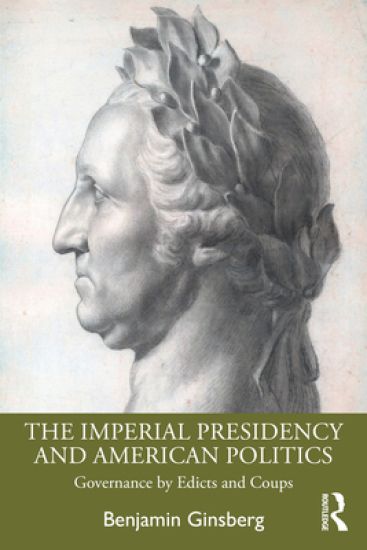
Those who saw Donald Trump as a novel threat looming over American democracy and now think the danger has passed may not have been paying much attention to the political developments of the past several decades. Trump was merely the most recent—and will surely not be the last—in a long line of presidents who expanded the powers of the office and did not hesitate to act unilaterally when so doing served their purposes. Unfortunately, Trump is also unlikely to be the last president prepared to do away with his enemies in the Congress and transform the imperial presidency from a theory to a reality. Though presidents are elected more or less democratically, the presidency is not and was never intended to be a democratic institution. The framers thought that America would be governed by its representative assembly, the Congress of the United States. Presidential power, like a dangerous pharmaceutical, might have been labelled, "to be used only when needed."Today, Congress sporadically engages in law making but the president actually governs. Congress has become more an inquisitorial than a legislative body. Presidents rule through edicts while their opponents in the Congress counter with the threat of impeachment—an action that amounts to a political, albeit nonviolent coup. The courts sputter and fume but generally back the president. This is the new separation of powers—the president exercises power and the other branches are separated from it. Where will this end? Regardless of who occupies the Oval Office, the imperial presidency is inexorably bringing down the curtain on American representative democracy.
The Imperial Presidency and American Politics
Those who saw Donald Trump as a novel threat looming over American democracy and now think the danger has passed may not have been paying much attention to the political developments of the past several decades. Trump was merely the most recent—and will surely not be the last—in a long line of presidents who expanded the powers of the office and did not hesitate to act unilaterally when so doing served their purposes. Unfortunately, Trump is also unlikely to be the last president prepared to do away with his enemies in the Congress and transform the imperial presidency from a theory to a reality. Though presidents are elected more or less democratically, the presidency is not and was never intended to be a democratic institution. The framers thought that America would be governed by its representative assembly, the Congress of the United States. Presidential power, like a dangerous pharmaceutical, might have been labelled, "to be used only when needed."Today, Congress sporadically engages in law making but the president actually governs. Congress has become more an inquisitorial than a legislative body. Presidents rule through edicts while their opponents in the Congress counter with the threat of impeachment—an action that amounts to a political, albeit nonviolent coup. The courts sputter and fume but generally back the president. This is the new separation of powers—the president exercises power and the other branches are separated from it. Where will this end? Regardless of who occupies the Oval Office, the imperial presidency is inexorably bringing down the curtain on American representative democracy.
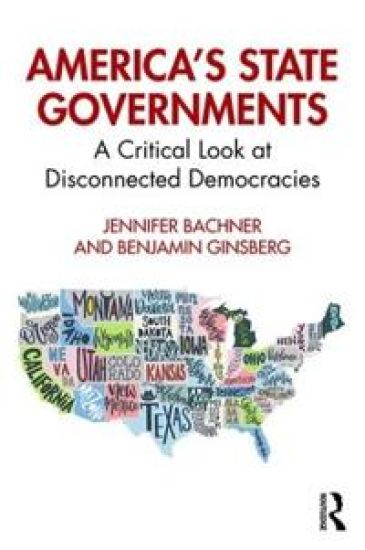
America's State Governments

America's State Governments

Jennifer Bachner; Benjamin Ginsberg

Routledge
2020
sidottu
This timely and important new work takes a critical look at government in the American states and illustrates the disconnect between state government institutions and their constituents. The text illuminates three basic political problems of state governments: weak constitutional and institutional foundations; a lack of civic engagement; and long histories of unchecked public corruption. In addition, the book explains why some states did and others did not respond promptly to the COVID-19 pandemic and examines America's long-standing problem of police and prosecutorial misconduct–providing a context for understanding the demonstrations and protests that rocked American cities in the summer of 2020. For students and citizens of state politics, the book concludes with a proposal aimed at civic literacy and action
America's State Governments

America's State Governments

Jennifer Bachner; Benjamin Ginsberg

Routledge
2020
nidottu
This timely and important new work takes a critical look at government in the American states and illustrates the disconnect between state government institutions and their constituents. The text illuminates three basic political problems of state governments: weak constitutional and institutional foundations; a lack of civic engagement; and long histories of unchecked public corruption. In addition, the book explains why some states did and others did not respond promptly to the COVID-19 pandemic and examines America's long-standing problem of police and prosecutorial misconduct–providing a context for understanding the demonstrations and protests that rocked American cities in the summer of 2020. For students and citizens of state politics, the book concludes with a proposal aimed at civic literacy and action
Downsizing Democracy

Downsizing Democracy

Matthew A. Crenson; Benjamin Ginsberg

Johns Hopkins University Press
2020
pokkari
Originally publushed in 2002. In Downsizing Democracy, Matthew A. Crenson and Benjamin Ginsberg describe how the once powerful idea of a collective citizenry has given way to a concept of personal, autonomous democracy. Today, political change is effected through litigation, lobbying, and term limits, rather than active participation in the political process, resulting in narrow special interest groups dominating state and federal decision-making. At a time when an American's investment in the democratic process has largely been reduced to an annual contribution to a political party or organization, Downsizing Democracy offers a critical reassessment of American democracy.
Congress

Congress

Benjamin Ginsberg; Kathryn Wagner Hill

Yale University Press
2019
pokkari
An introduction to the U.S. Congress, from seasoned political historians and teachers In this accessible overview of the United States Congress’s past and present, Ginsberg and Hill introduce students to the country’s most democratic institution. This text surveys Congressional elections, the internal structure of Congress, the legislative process, Congress and the President, and Congress and the courts. Congress: The First Branch offers a fresh approach to the First Branch grounded in a historical, positive frame.
Presidential Government

Presidential Government

Benjamin Ginsberg

Yale University Press
2016
pokkari
Noted political scientist Benjamin Ginsberg has written an essential text for courses on the United States presidency. An invaluable resource, Ginsberg’s comprehensive analysis emphasizes the historical, constitutional, and legal dimensions of presidential power. He explores the history and essential aspects of the office, the president’s relationship to the rest of the executive branch and to a subordinated Congress, and the evolution of the American president from policy executor to policy maker. Compelling photo essays delve into topics of special interest, including First Spouses, Presidential Eligibility, and Congressional Investigations of the White House.
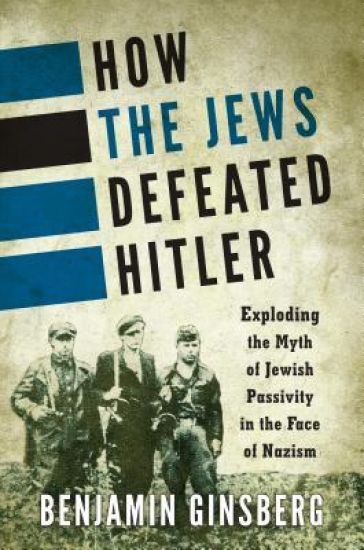
How the Jews Defeated Hitler

How the Jews Defeated Hitler

Benjamin Ginsberg

Rowman Littlefield
2016
nidottu
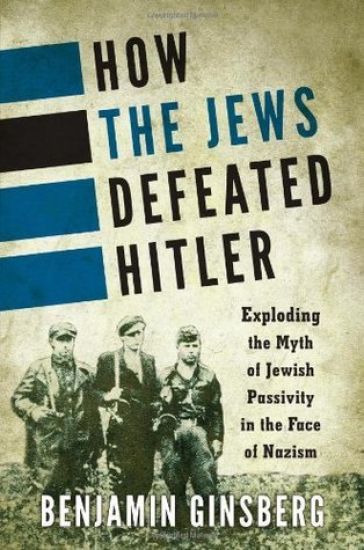
One of the most common assumptions about World War II is that the Jews did not actively or effectively resist their own extermination at the hands of the Nazis. In this powerful book, Benjamin Ginsberg convincingly argues that the Jews not only resisted the Germans but actually played a major role in the defeat of Nazi Germany. The question, he contends, is not whether the Jews fought but where and by what means. True, many Jews were poorly armed, outnumbered, and without resources, but Ginsberg shows persuasively that this myth of passivity is solely that—a myth. The author describes how Jews resisted Nazism strongly in four major venues. First, they served as members of the Soviet military and as engineers who designed and built many pivotal Soviet weapons, including the T-34 tank. Second, a number were soldiers in the U.S. armed forces, and many also played key roles in discrediting American isolationism, in providing the Roosevelt administration with the support it needed for preparing for war, and in building the atomic bomb. Third, they made vital contributions to the Allies—the Soviet Union, the United States, and Britain—in espionage and intelligence (especially cryptanalysis), and fourth, they assumed important roles in several European anti-Nazi resistance movements that often disrupted Germany’s fragile military supply lines. In this compelling, cogent history, we discover that the Jews were an important factor in Hitler’s defeat.
The Worth of War

The Worth of War

Benjamin Ginsberg

Prometheus Books
2014
sidottu
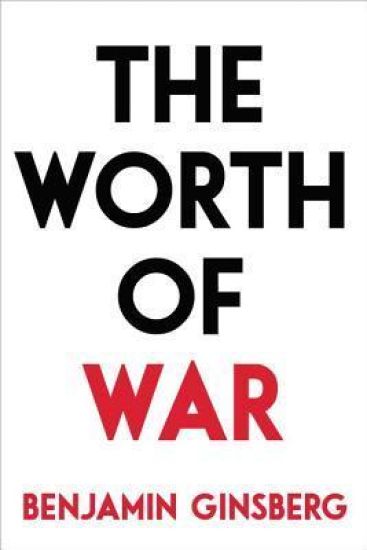
Although war is terrible and brutal, history shows that it has been a great driver of human progress. So argues political scientist Benjamin Ginsberg in this incisive, well-researched study of the benefits to civilization derived from armed conflict. Ginsberg makes a convincing case that war selects for and promotes certain features of societies that are generally held to represent progress. These include rationality, technological and economic development, and liberal forms of government. Contrary to common perceptions that war is the height of irrationality, Ginsberg persuasively demonstrates that in fact it is the ultimate test of rationality. He points out that those societies best able to assess threats from enemies rationally and objectively are usually the survivors of warfare. History also clearly reveals the technological benefits that result from war-ranging from the sundial to nuclear power. And in regard to economics, preparation for war often spurs on economic development; by the same token, nations with economic clout in peacetime usually have a huge advantage in times of war. Finally, war and the threat of war have encouraged governments to become more congenial to the needs and wants of their citizens because of the increasing reliance of governments on their citizens' full cooperation in times of war. However deplorable the realities of war are, the many fascinating examples and astute analysis in this thought-provoking book will make readers reconsider the unmistakable connection between war and progress.
The Value of Violence

The Value of Violence

Benjamin Ginsberg

Prometheus Books
2013
sidottu
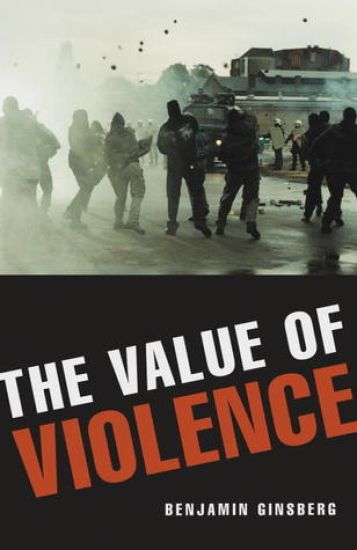
This provocative thesis calls violence the driving force not just of war, but of politics and even social stability. Though violence is commonly deplored, political scientist Ginsberg argues that in many ways it is indispensable, unavoidable, and valuable. Ginsberg sees violence manifested in society in many ways. "Law-preserving violence" (using Walter Benjamin's phrase) is the chief means by which society preserves social order. Behind the security of a stable society are the blunt instruments of the police, prisons, and the power of the bureaucratic state to coerce and manipulate. Ginsberg also discusses violence as a tool of social change, whether used in outright revolution or as a means of reform in public protests or the threat of insurrection. He notes that even groups committed to nonviolent tactics rely on the violent reactions of their opponents to achieve their ends. And to avoid the threat of unrest, modern states resort to social welfare systems (a prudent use of the carrot instead of the stick). Emphasizing the unavoidability of violence to create major change, Ginsberg points out that few today would trade our current situation for the alternative had our forefathers not resorted to the violence of the American Revolution and the Civil War.
How the Jews Defeated Hitler

How the Jews Defeated Hitler

Benjamin Ginsberg

Rowman Littlefield
2013
sidottu
One of the most common assumptions about World War II is that the Jews did not actively or effectively resist their own extermination at the hands of the Nazis. In this powerful book, Benjamin Ginsberg convincingly argues that the Jews not only resisted the Germans but actually played a major role in the defeat of Nazi Germany. The question, he contends, is not whether the Jews fought but where and by what means. True, many Jews were poorly armed, outnumbered, and without resources, but Ginsberg shows persuasively that this myth of passivity is solely that—a myth. The author describes how Jews resisted Nazism strongly in four major venues. First, they served as members of the Soviet military and as engineers who designed and built many pivotal Soviet weapons, including the T-34 tank. Second, a number were soldiers in the U.S. armed forces, and many also played key roles in discrediting American isolationism, in providing the Roosevelt administration with the support it needed for preparing for war, and in building the atomic bomb. Third, they made vital contributions to the Allies—the Soviet Union, the United States, and Britain—in espionage and intelligence (especially cryptanalysis), and fourth, they assumed important roles in several European anti-Nazi resistance movements that often disrupted Germany’s fragile military supply lines. In this compelling, cogent history, we discover that the Jews were an important factor in Hitler’s defeat.
Moses of South Carolina

Moses of South Carolina

Benjamin Ginsberg

Johns Hopkins University Press
2010
sidottu
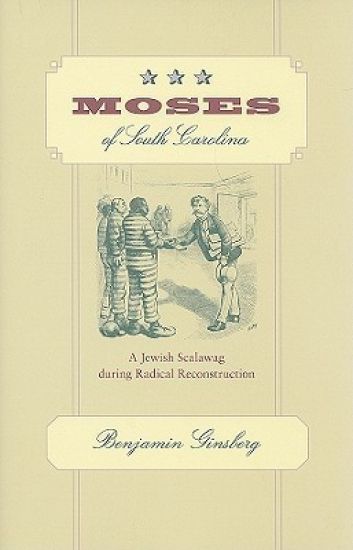
Franklin Moses Jr. is one of the great forgotten figures in American history. Scion of a distinguished Jewish family in South Carolina, he was a firebrand supporter of secession and an officer in the Confederate army. Moses then reversed course. As Reconstruction governor of South Carolina, he shocked and outraged his white constituents by championing racial equality and socializing freely with former slaves. Friends denounced him, his family disowned him, and enemies ultimately drove him from his home state. In Moses of South Carolina, Benjamin Ginsberg rescues this protean figure and his fascinating story from obscurity. Though Moses was far from a saint-he was known as the "robber governor" for his corrupt ways-Ginsberg suggests that Moses nonetheless deserves better treatment in the historical record. Despite his moral lapses, Moses launched social programs, integrated state institutions, and made it possible for blacks to attend the state university. As a Jew, Moses grew up on the fringe of southern plantation society. After the Civil War, Moses envisioned a culture different from the one in which he had been raised, one that included the newly freed slaves. From the margins of southern society, Franklin Moses built America's first black-Jewish alliance, a model, argues Ginsberg, for the coalitions that would help reshape American politics in the decades to come. Revisiting the story of the South's "most perfect scalawag," Ginsberg contributes to a broader understanding of the essential role southern Jews played during the Civil War and Reconstruction.
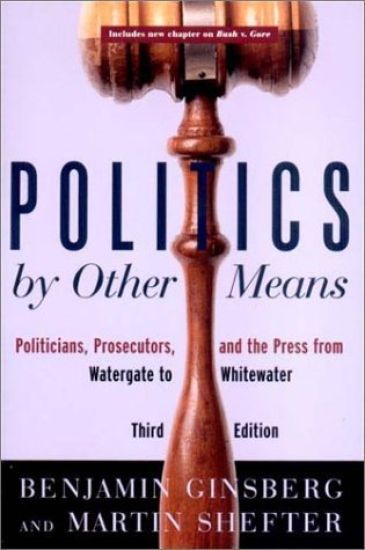
Politics by Other Means

Politics by Other Means

Benjamin Ginsberg; Martin Shefter

WW Norton Co
2002
nidottu
In a far–reaching shift of the political landscape, contenders now seek to discredit or take hostage their opponents rather than to expand the electorate or otherwise compete for votes. In this new edition, which includes a full chapter on the politics of Bush v. Gore, the authors discuss the long-term significance of the decline of electoral competition: voters are increasingly alienated, the government's effectiveness is weakened, and the democratic process is threatened.
Do Elections Matter?

Do Elections Matter?

Benjamin Ginsberg; Alan Stone

M.E. Sharpe
1995
sidottu
This text provides an analysis of the variety of consequences that elections may have for the operation of American political institutions and the formulation and administration of policy.