Kirjojen hintavertailu. Mukana 12 151 347 kirjaa ja 12 kauppaa.

Kirjailija

Benjamin J. Richardson

Kirjat ja teokset yhdessä paikassa: 12 kirjaa, julkaisuja vuosilta 2002-2026, suosituimpien joukossa Conservation Covenants and Easements. Vertaile teosten hintoja ja tarkista saatavuus suomalaisista kirjakaupoista.

Mukana myös kirjoitusasut: Benjamin J Richardson

12 kirjaa

Kirjojen julkaisuhaarukka 2002-2026.

Conservation Covenants and Easements

Conservation Covenants and Easements

Benjamin J. Richardson; Dominic Bilton; Afshin Akhtar-Khavari; Sarah Brugler; James A. Fitzsimons; Phillipa C. McCormack

Cambridge University Press
2026
sidottu
Conservation Covenants and Easements are legal mechanisms for private landholders to contribute to long-term protection of natural values. This book furnishes a unique international legal and policy study of how covenants and easements in seven jurisdictions are supporting global biodiversity goals, and it considers how they may address new challenges associated with ecosystem restoration and climate change. It compares laws in Australia, Belgium (Flanders), Canada, Chile, New Zealand, South Africa, and the United States, countries where these mechanisms are increasingly used to support national and global goals of relevance to Earth System Governance. Through interjurisdictional comparison, the book analyses key themes, including recruitment and retention of landholders into conservation agreements, climate adaptation and compliance. This study also offers practical advice on potential directions for law reform or improved implementation of existing covenants and easements law. This title is also available as Open Access on Cambridge Core.
Conservation Covenants and Easements

Conservation Covenants and Easements

Benjamin J. Richardson; Dominic Bilton; Afshin Akhtar-Khavari; Sarah Brugler; James A. Fitzsimons; Phillipa C. McCormack

Cambridge University Press
2026
nidottu
Conservation Covenants and Easements are legal mechanisms for private landholders to contribute to long-term protection of natural values. This book furnishes a unique international legal and policy study of how covenants and easements in seven jurisdictions are supporting global biodiversity goals, and it considers how they may address new challenges associated with ecosystem restoration and climate change. It compares laws in Australia, Belgium (Flanders), Canada, Chile, New Zealand, South Africa, and the United States, countries where these mechanisms are increasingly used to support national and global goals of relevance to Earth System Governance. Through interjurisdictional comparison, the book analyses key themes, including recruitment and retention of landholders into conservation agreements, climate adaptation and compliance. This study also offers practical advice on potential directions for law reform or improved implementation of existing covenants and easements law. This title is also available as Open Access on Cambridge Core.

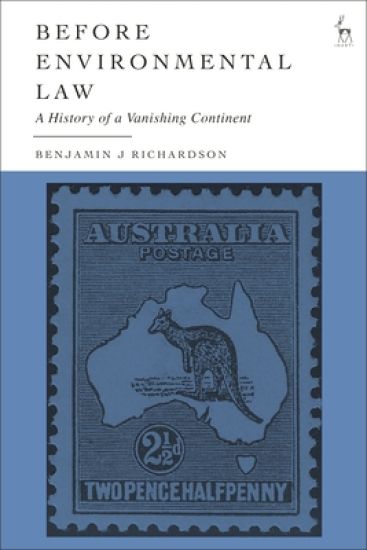
Before Environmental Law

Before Environmental Law

Benjamin J Richardson

BLOOMSBURY PUBLISHING PLC
2025
nidottu
This open access book unveils the history of defending Australia’s natural environment and examines the subject’s legal and political contexts from the birth of the nation in 1901 until the advent of the so-called modern era of environmental regulation in the late 1960s. It rejects the mythology that Australia lacked environmental law before the late 1960s in revealing how many of today’s environmental laws, from pollution control to nature conservation, emerged from precedents or events much earlier in the 20th century.This history however reveals a discrepancy between lawmakers’ greater efficacy to exploit rather than protect the environment, a discrepancy that grew as nature’s backlash intensified in a rapidly degrading continent colonised to build the Australian nation. In exploring these dynamics, the book offers a rich tapestry of case studies illustrated with historic photographs that show the origins of Australia’s environmental laws and how they borrowed from international precedents or furnished lessons for other nations.Through its multi-disciplinary enquiry, the book offers scholars and students of environmental law, legal history and the environmental humanities a unique story about the failures and successes in the making of environmental law.The ebook editions of this book are available open access under a CC BY-NC-ND 4.0 licence on bloomsburycollections.com.
Before Environmental Law

Before Environmental Law

Benjamin J Richardson

BLOOMSBURY PUBLISHING PLC
2023
sidottu
This open access book unveils the history of defending Australia’s natural environment and examines the subject’s legal and political contexts from the birth of the nation in 1901 until the advent of the so-called modern era of environmental regulation in the late 1960s. It rejects the mythology that Australia lacked environmental law before the late 1960s in revealing how many of today’s environmental laws, from pollution control to nature conservation, emerged from precedents or events much earlier in the 20th century.This history however reveals a discrepancy between lawmakers’ greater efficacy to exploit rather than protect the environment, a discrepancy that grew as nature’s backlash intensified in a rapidly degrading continent colonised to build the Australian nation. In exploring these dynamics, the book offers a rich tapestry of case studies illustrated with historic photographs that show the origins of Australia’s environmental laws and how they borrowed from international precedents or furnished lessons for other nations.Through its multi-disciplinary enquiry, the book offers scholars and students of environmental law, legal history and the environmental humanities a unique story about the failures and successes in the making of environmental law.The ebook editions of this book are available open access under a CC BY-NC-ND 4.0 licence on bloomsburycollections.com.
The Art of Environmental Law

The Art of Environmental Law

Benjamin J. Richardson

Hart Publishing
2021
nidottu
Environmental law has aesthetic dimensions. Aesthetic values have shaped the making of environmental law, and in turn such law governs many of our nature-based sensory experiences. Aesthetics is also integral to understanding the very fabric of environmental law, in its institutions, procedures and discourses. The Art of Environmental Law, the first book of its kind, brings new insights into the importance of aesthetic issues in a variety of domains of environmental governance around the world, from climate change to biodiversity conservation. It also argues for aesthetics, and relatedly the arts, to be taken more seriously in the practice of environmental law so as to improve our emotional and ethical capacities to address the upheavals of the Anthropocene.
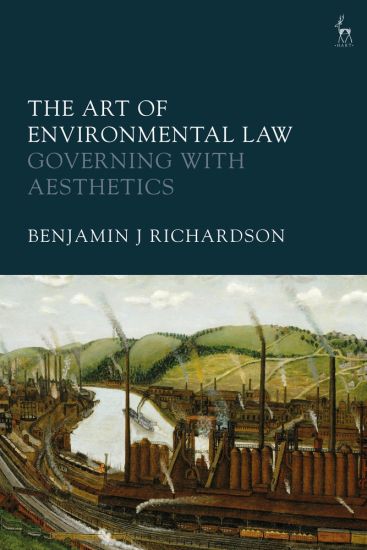
The Art of Environmental Law

The Art of Environmental Law

Benjamin J Richardson

Hart Publishing
2019
sidottu
Environmental law has aesthetic dimensions. Aesthetic values have shaped the making of environmental law, and in turn such law governs many of our nature-based sensory experiences. Aesthetics is also integral to understanding the very fabric of environmental law, in its institutions, procedures and discourses. The Art of Environmental Law, the first book of its kind, brings new insights into the importance of aesthetic issues in a variety of domains of environmental governance around the world, from climate change to biodiversity conservation. It also argues for aesthetics, and relatedly the arts, to be taken more seriously in the practice of environmental law so as to improve our emotional and ethical capacities to address the upheavals of the Anthropocene.
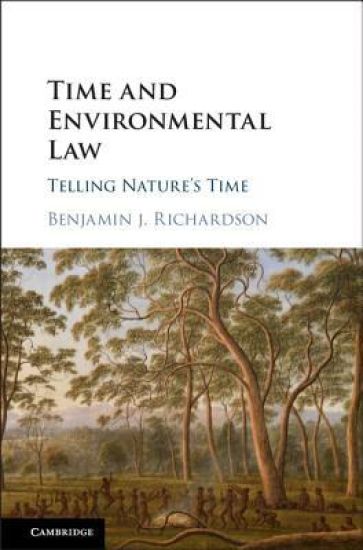
Time and Environmental Law

Time and Environmental Law

Benjamin J. Richardson

Cambridge University Press
2018
pokkari
Disciplined by industrial clock time, modern life distances people from nature's biorhythms such as its ecological, evolutionary, and climatic processes. The law is complicit in numerous ways. It compresses time through 'fast-track' legislation and accelerated resource exploitation. It suffers from temporal inertia, such as 'grandfathering' existing activities that limits the law's responsiveness to changing circumstances. Insouciance about past ecological damage, and neglect of its restoration, are equally serious temporal flaws: we cannot live sustainably while Earth remains degraded and unrepaired. Applying international and interdisciplinary perspectives on these issues, Time and Environmental Law explores how to align law with the ecological 'timescape' and enable humankind to 'tell nature's time'. Lending insight into environmental behaviour and impacts, this book pioneers a new understanding of environmental law for all societies, and makes recommendations for its reform. Minding nature, not the clock, requires regenerating Earth, adapting to its changes, and living more slowly.
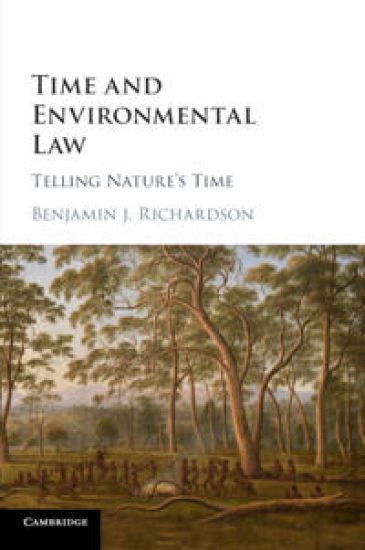
Time and Environmental Law

Time and Environmental Law

Benjamin J. Richardson

Cambridge University Press
2017
sidottu
Disciplined by industrial clock time, modern life distances people from nature's biorhythms such as its ecological, evolutionary, and climatic processes. The law is complicit in numerous ways. It compresses time through 'fast-track' legislation and accelerated resource exploitation. It suffers from temporal inertia, such as 'grandfathering' existing activities that limits the law's responsiveness to changing circumstances. Insouciance about past ecological damage, and neglect of its restoration, are equally serious temporal flaws: we cannot live sustainably while Earth remains degraded and unrepaired. Applying international and interdisciplinary perspectives on these issues, Time and Environmental Law explores how to align law with the ecological 'timescape' and enable humankind to 'tell nature's time'. Lending insight into environmental behaviour and impacts, this book pioneers a new understanding of environmental law for all societies, and makes recommendations for its reform. Minding nature, not the clock, requires regenerating Earth, adapting to its changes, and living more slowly.
Fiduciary Law and Responsible Investing

Fiduciary Law and Responsible Investing

Benjamin J. Richardson

Routledge
2015
nidottu
This book is about fiduciary law’s influence on the financial economy’s environmental performance, focusing on how the law affects responsible investing and considering possible legal reforms to shift financial markets closer towards sustainability. Fiduciary law governs how trustees, fund managers or other custodians administer the investment portfolios owned by beneficiaries. Written for a diverse audience, not just legal scholars, the book examines in a multi-jurisdictional context an array of philosophical, institutional and economic issues that have shaped the movement for responsible investing and its legal framework. Fiduciary law has acquired greater influence in the financial economy in tandem with the extraordinary recent growth of institutional funds such as pension plans and insurance company portfolios. While the fiduciary prejudice against responsible investing has somewhat waned in recent years, owing mainly to reinterpretations of fiduciary and trust law, significant barriers remain. This book advances the notion of ‘nature’s trust’ to metaphorically signal how fiduciary responsibility should accommodate society’s dependence on long-term environmental well-being. Financial institutions, managing vast investment portfolios on behalf of millions of beneficiaries, should manage those investments with regard to the broader social interest in sustaining ecological health. Even for their own financial self-interest, investors over the long-term should benefit from maintaining nature’s capital. We should expect everyone to act in nature’s trust, from individual funds to market regulators. The ancient public trust doctrine could be refashioned for stimulating this change, and sovereign wealth funds should take the lead in pioneering best practices for environmentally responsible investing.
Fiduciary Law and Responsible Investing

Fiduciary Law and Responsible Investing

Benjamin J. Richardson

Routledge
2013
sidottu
This book is about fiduciary law’s influence on the financial economy’s environmental performance, focusing on how the law affects responsible investing and considering possible legal reforms to shift financial markets closer towards sustainability. Fiduciary law governs how trustees, fund managers or other custodians administer the investment portfolios owned by beneficiaries. Written for a diverse audience, not just legal scholars, the book examines in a multi-jurisdictional context an array of philosophical, institutional and economic issues that have shaped the movement for responsible investing and its legal framework. Fiduciary law has acquired greater influence in the financial economy in tandem with the extraordinary recent growth of institutional funds such as pension plans and insurance company portfolios. While the fiduciary prejudice against responsible investing has somewhat waned in recent years, owing mainly to reinterpretations of fiduciary and trust law, significant barriers remain. This book advances the notion of ‘nature’s trust’ to metaphorically signal how fiduciary responsibility should accommodate society’s dependence on long-term environmental well-being. Financial institutions, managing vast investment portfolios on behalf of millions of beneficiaries, should manage those investments with regard to the broader social interest in sustaining ecological health. Even for their own financial self-interest, investors over the long-term should benefit from maintaining nature’s capital. We should expect everyone to act in nature’s trust, from individual funds to market regulators. The ancient public trust doctrine could be refashioned for stimulating this change, and sovereign wealth funds should take the lead in pioneering best practices for environmentally responsible investing.
Socially Responsible Investment Law

Socially Responsible Investment Law

Benjamin J Richardson

Oxford University Press Inc
2008
sidottu
Socially Responsible Investment Law shows how to improve the environmental behavior of corporate financiers, such as banks, pension plans, and mutual funds. Normally, we associate environmental harm with the front-line companies that extract, consume, and pollute, but not the financiers that sponsor and profit from these activities. Corporate financiers are the economy's "unseen polluters," and they should adopt policies and practices to avoid environmental harm that may result from their loans and capital financing investments. Benjamin Richardson proposes governance reforms to encourage Socially Responsible Investment. These include: redefining the fiduciary responsibilities of institutional investors to include the environment (specifically the precautionary principle); enhancing the strategic role of national pension funds in sustainable finance; building new forms of international cooperation for transnational financial markets; democratizing and strengthening local financing through credit unions; and, for all financiers, providing a better mix of economic incentives and informational resources for SRI.
Environmental Regulation through Financial Organisations

Environmental Regulation through Financial Organisations

Benjamin J. Richardson

Kluwer Law International
2002
sidottu
This volume examines in the industrialized nations the emerging role of banks, insurers and institutional investors as organisations for articulating and strengthening environmental law and policy. Taking a comparative perspective of practice in the European Union, North America, Japan and Australasia, the book argues that existing legal reforms to promote sustainable development are unlikely to be successful unless environmental policy can be diffused and embedded in the financial services sector. This sector plays a crucial role in creating the financial conditions that allow much economic development to proceed. Financial markets are already highly regulated in pursuance of various public policy objectives, and there is scope to adapt existing regulation to incorporate environmental aspects into the financial services sector. In terms of specific reforms, the book focuses on the role of corporate environmental reporting, economic instruments and liability rules to provide a proper context for engaging financial organisations with the environment, as well as reforms to the system of prudential regulation that currently governs this sector.Beyond the focus on the financial services sector, the book raises complex questions regarding the relationship between the state and market institutions in environmental policy, and should appeal to scholars from a wide range of disciplines interested in problems of environmental governance.