Kirjojen hintavertailu. Mukana 12 595 353 kirjaa ja 12 kauppaa.

Kirjailija

Benjamin Moser

Kirjat ja teokset yhdessä paikassa: 20 kirjaa, julkaisuja vuosilta 2012-2026, suosituimpien joukossa Liberties Journal of Culture and Politics. Vertaile teosten hintoja ja tarkista saatavuus suomalaisista kirjakaupoista.

20 kirjaa

Kirjojen julkaisuhaarukka 2012-2026.

Liberties Journal of Culture and Politics

Liberties Journal of Culture and Politics

Michael Ignatieff; Mary Gaitskill; Sergei Lebedev; Antonia Bouis; Karen Solie; Michael Walzer; David A. Bell; Justin E.H. Smith; Michael C. Kimmage; Andrew Scull; Robert Alter; Steven B. Smith; Benjamin Moser; Helen Vendler; John Hodgen; Adam Zagajewski

Liberties Journal Foundation
2023
pokkari
Liberties, a Journal of Culture and Politics, is essential reading for those engaged in the cultural and political issues of our time. In this issue of Liberties: Michael Ignatieff - The Mind’s Emancipation; Mary Gaitskill - The Trials of the Young; Sergei Lebedev - Putin’s Philosopher: A Memoir; Michael Walzer - Moral Concern; Justin E. H. Smith – The Happiness Industrial Complex; Andrew Scull – The Fashions in Trauma; David A. Bell – The Triumph of Anti-Politics in America; Michael Kimmage – A Defense of Delight in a Dark Time; Robert Alter – Proust and the Mystification of the Jews; Steven B. Smith – What is a Statesman?; Benjamin Moser – Rembrandt’s shadows; Helen Vendler – The Poetry of Charm; Celeste Marcus – Priorism, or the Joshua Katz Affair; Leon Wieseltier – Problems and Struggles; and, new poems by Karen Solie, Adam Zagajewski, and John Hodgen.Published quarterly, Liberties, is a collection of the most significant writers today as well as launching the voices of tomorrow.Liberties features serious, independent, stylish, and controversial essays by significant writers and introduces the next generation of writers and poets to inspire and impact the intellectual and creative lifeblood of today’s culture and politics. Nobel Prize winners, leading op-ed writers, well-known non-fiction writers, rising talents, and poets from around the world are part of the Liberties series.There’s a reason why engaged citizens, cultural warriors, political leaders, opinion makers, and activists from across the cultural and political spectrum read and cherish Liberties.
Liberties Journal of Culture and Politics

Liberties Journal of Culture and Politics

Giles Kepel; Ingrid Rowland; Vladimir Kara-Murza; Enrique Krauze; Paul Muldoon; Mitchell Abidor; Agnes Callard; Henri Cole; William Deresiewicz; Benjamin Moser; David Nirenberg; Peter Phillips; Becca Rothfeld; Paul Starr; David Thomson; Chaim Nacham Bialik

Liberties Journal Foundation
2021
pokkari
“A Meteor of Intelligent Substance” “Something was Missing in our Culture, and Here It Is” “Liberties sure is needed in these times.”In a short time since its launch, Liberties - A Journal of Culture and Politics, a quarterly, has become essential reading for those engaged in the cultural and political issues and causes of our time. The writers in Liberties offer deep experience from across borders, national identities, political affiliations and artistic achievements. As the introductory essay in the inaugural edition noted, “At this journal we are betting on what used to be called the common reader, who would rather reflect than belong and asks of our intellectual life more than a choice between orthodoxies.” Each issue of Liberties features original in-depth essays and compelling new poetry from some of the world's most significant writers, artists, and scholars, as well as introducing new talent, to inspire and impact the intellectual and creative lifeblood of today’s culture and politics. This spring issue of Liberties includes: Giles Kepel on the Murder of Samuel Paty; Ingrid Rowland’s Long Live the Classics!; Vladimir Kara-Murza Surviving Putin’s Poisons; Paul Starr on Reckoning with National Failure from Covid; Becca Rothfeld on Today's Sanctimony Literature; Enrique Krauze explores What is Latin America?; William Deresiewicz on Why Great Visual Art Forces Us to Think; Benjamin Moser on Rediscovering Frans Hals; David Nirenberg on What We Can Learn from Earlier Plagues; Agnes Callard’s view of Romance without Love, Love without Romance; Mitchell Abidor looks back to “Social Media” in 1895 to Understand a Crowd’s “Wisdom”; The Tallis Scholars' Peter Phillips on the Secrets of Josquin; David Thomson on Movies’ Poetic Desire; Poetry from Henri Cole, Chaim Nachman Bialik, and Paul Muldoon; and, Leon Wieseltier (editor) asks "Where Are the Americans?” and Celeste Marcus (managing editor) writes for a Pluralistic Heart.
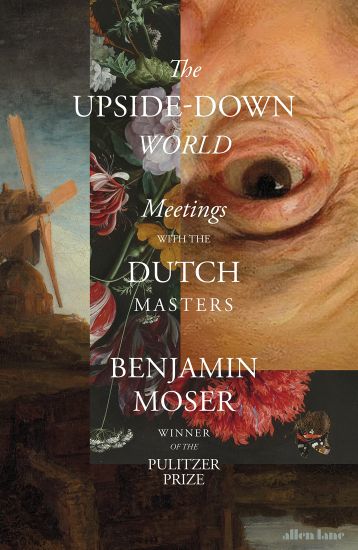
The Upside-Down World

The Upside-Down World

Benjamin Moser

PENGUIN BOOKS LTD
2025
pokkari
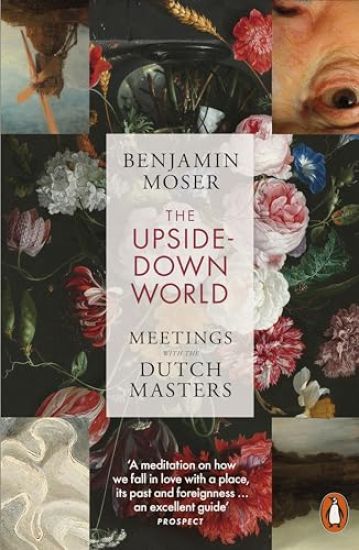
The Pulitzer Prize-winning biographer turns his eye to the seventeenth-century Dutch Golden Age Twenty years ago, Benjamin Moser followed a love affair to an ancient Dutch town. In order to make sense of this new place, he threw himself into the Dutch museums. Soon, he found himself unearthing the strange, inspiring and sometimes terrifying stories of the artists who shaped one of the most luminous moments in the history of human creativity, the Dutch Golden Age.As he explored the hidden world of the Dutch Masters (and one Mistress), Moser met a crowd of fascinating personalities: the stormy Rembrandt, the intimate Ter Borch, the mysterious Vermeer. Through their art, he got to know their country, too: from Pieter Saenredam's translucent churches to Paulus Potter's muddy barnyards, and from Pieter de Hooch's cozy hearths to Jacob van Ruisdael's tragic trees. Over the years, Moser found himself on increasingly intimate terms with these centuries-dead artists, and found that they, too, were struggling with the same questions he was. Why do we make art? What is art, anyway - and what is an artist? What does it mean to succeed as an artist, and what does it mean to fail?The Upside-Down World is an invitation to ask these questions, and to turn them on their heads: to look, and then to look again. It is a brilliant, colourful and learned book for anyone, whether lifelong scholar or curious tourist, who has ever felt the lure of the Dutch galleries. It shows us art, and artists, as we have never seen them before.
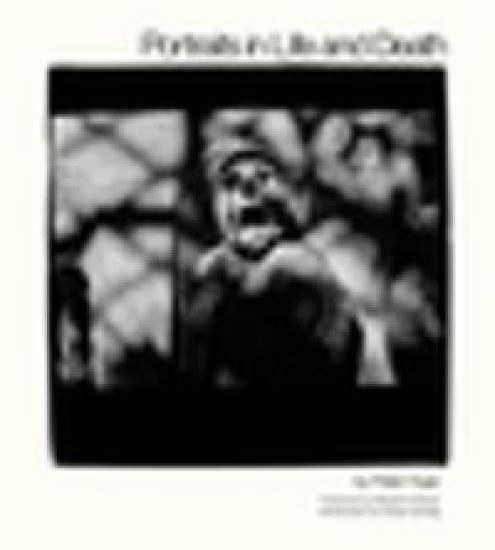
Portraits in Life and Death

Portraits in Life and Death

Peter Hujar; Benjamin Moser

WW NORTON CO
2024
sidottu
The 1976 publication of Peter Hujar’s Portraits in Life and Death, with an introduction by Susan Sontag, “was and remains one of the most somberly beautiful and influential photography collections of its era” (Holland Cotter, senior art critic of The New York Times). When Hujar passed away in 1987, his work was relatively unknown except for a small following. The importance and artistic mastery of Hujar’s photography, its tender gravity and intimacy, became recognised and canonical only after his death. The republication of this collection is composed of the original introduction by Susan Sontag and preceded by a new foreword by Benjamin Moser, with photographs presented in two sequences. A stirring ode to the flourishing downtown scene of the 1970s, this collection remains a deeply moving artefact of post-Stonewall New York City.
The Upside-Down World: Meetings with the Dutch Masters

The Upside-Down World: Meetings with the Dutch Masters

Benjamin Moser

Liveright Publishing Corporation
2023
sidottu
Arriving as a young writer in an ancient Dutch town, Benjamin Moser found himself visiting--casually at first, and then more and more obsessively--the country's great museums. Inside these old buildings, he discovered the remains of the Dutch Golden Age and began to unearth the strange, inspiring, and terrifying stories of the artists who gave shape to one of the most luminous moments in the history of human creativity. Beyond the sainted Rembrandt--who harbored a startling darkness--and the mysterious Vermeer, whose true subject, it turned out, was lurking in plain sight, Moser got to know a whole galaxy of geniuses: the doomed virtuoso Carel Fabritius, the anguished wunderkind Jan Lievens, the deaf prodigy Hendrik Avercamp. And through their artwork, he got to know their country, too: from the translucent churches of Pieter Saenredam to Paulus Potter's muddy barnyards, and from Pieter de Hooch's cozy hearths to Jacob van Ruisdael's tragic trees.Year after year, as he tried to make a life for himself in the Netherlands, Moser found friends among these centuries-dead artists. And he found that they, too, were struggling with the same questions that he was. Why do we make art? What even is art, anyway--and what is an artist? What does it mean to succeed as an artist, and what does it mean to fail? Is art a consolation--or a mortal danger? The Upside-Down World is an invitation to ask these questions, and to turn them on their heads: to look, and then to look again. This is Holland and its great artists as we've never seen them before. And it's a sumptuously illustrated, highly personal coming-of-age-story, twenty years in the making: a revealing self-portrait by one of the most acclaimed writers of his generation.
Liberties Journal of Culture and Politics

Liberties Journal of Culture and Politics

Mamtimin Ala; Richard Thompson Ford; Jaroslaw Anders; Sean Wilentz; Ange Mlinko; Benjamin Moser; Jonathan Zimmerman; Leonard Cohen; Cass R. Sunstein; Mark Lilla; Helen Vendler; Holly Brewer; Shaul Tchernikhovsky; David Thomson

Liberties Journal Foundation
2021
pokkari
“A Meteor of Intelligent Substance”“Something was Missing in our Culture, and Here It Is”"Liberties is THE place to be. Change starts in the mind."Liberties, a journal of Culture and Politics, is essential reading for those engaged in the cultural and political issues and causes of our time. Liberties features serious, independent, stylish, and controversial essays by significant writers and leaders throughout the world; new poetry; and, introduces the next generation of writers and voices to inspire and impact the intellectual and creative lifeblood of today’s culture and politics.This issue of Liberties includes: new work from Nobel Prize winner Mario Vargas Llosa; drawings by Leonard Cohen published for the first time; Mamtimin Ala’s essay on China’s genocide of the Uyghurs; Jaroslaw Anders’ analysis of the crisis in Belarus; Cass R. Sunstein on liberalism inebriated; Richard Thompson Ford on what slavery does and does not explain; Sean Wilentz on the historical strategy of the Republican Party; Benjamin Moser writes about translation as a form of tourism in literary life; Jonathan Zimmerman on the scandal of college teaching; Mark Lilla on cults of innocence and their victims; Helen Vendler on Adrienne Rich; Holly Brewer on race and enlightenment; David Thomson asks, What shall we watch now?; Celeste Marcus (managing editor) on the legend of Alice Neel; Leon Wieseltier (editor) on Zionism’s beautiful stubbornness of survival; and new poetry from Ange Mlinko and Shaul Tchernikhovsky, translated by Robert Alter.
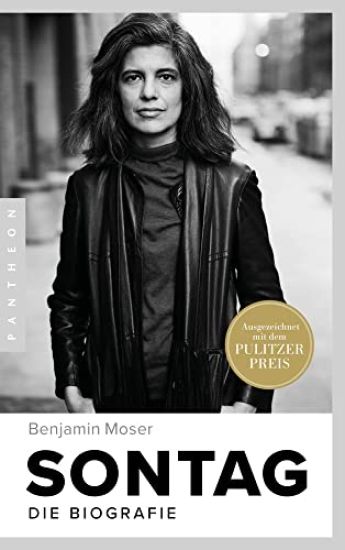
Sontag

Sontag

Benjamin Moser

Penguin Books Ltd.
2020
pokkari
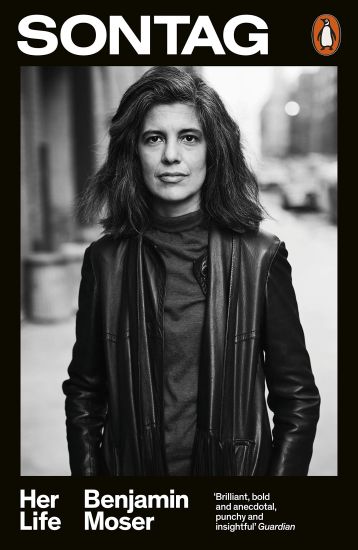
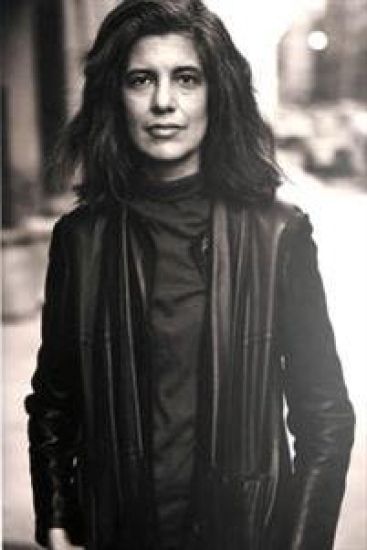
Susan Sontag was our last great literary star. Her brilliant mind, political activism and striking image made her an emblem of the seductions - and the dangers - of the twentieth-century World.Her writing on art and politics, feminism and homosexuality, celebrity and style, medicine and drugs, Fascism and Freudianism, Communism and Americanism, reflected the conflicted meanings of a most conflicted word: modernity. She was there when the Cuban Revolution began and the Berlin Wall came down, in Vietnam under American bombardment, in wartime Israel. Sontag tells these stories and examines the work upon which her reputation was based, exploring the private woman hidden behind the formidable public face.Drawing on hundreds of interviews conducted from Maui to Stockholm and from Manhattan to Sarajevo - and featuring nearly one hundred images, many never seen before - Sontag is the first book based on the writer's restricted archives, and on access to many people who have never before spoken about her, including Annie Leibovitz. It is an indelible portrait of one of the twentieth century's greatest thinkers, who lived one of that century's most romantic - and most anguished - lives.
Sontag: Her Life and Work

Sontag: Her Life and Work

Benjamin Moser

Ecco Press
2020
nidottu
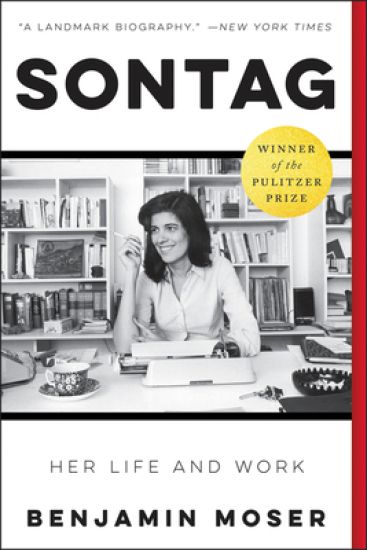
WINNER OF THE PULITZER PRIZEFinalist for the Lambda Literary AwardFinalist for the PEN/Jacqueline Bograd Weld Award for BiographyNamed one of the Best Books of the Year by: O Magazine, Milwaukee Journal Sentinel, Seattle Times The definitive portrait of one of the American Century's most towering intellectuals: her writing and her radical thought, her public activism and her hidden private faceNo writer is as emblematic of the American twentieth century as Susan Sontag. Mythologized and misunderstood, lauded and loathed, a girl from the suburbs who became a proud symbol of cosmopolitanism, Sontag left a legacy of writing on art and politics, feminism and homosexuality, celebrity and style, medicine and drugs, radicalism and Fascism and Freudianism and Communism and Americanism, that forms an indispensable key to modern culture. She was there when the Cuban Revolution began, and when the Berlin Wall came down; in Vietnam under American bombardment, in wartime Israel, in besieged Sarajevo. She was in New York when artists tried to resist the tug of money--and when many gave in. No writer negotiated as many worlds; no serious writer had as many glamorous lovers. Sontag tells these stories and examines the work upon which her reputation was based. It explores the agonizing insecurity behind the formidable public face: the broken relationships, the struggles with her sexuality, that animated--and undermined--her writing. And it shows her attempts to respond to the cruelties and absurdities of a country that had lost its way, and her conviction that fidelity to high culture was an activism of its own. Utilizing hundreds of interviews conducted from Maui to Stockholm and from London to Sarajevo--and featuring nearly one hundred images--Sontag is the first book based on the writer's restricted archives, and on access to many people who have never before spoken about Sontag, including Annie Leibovitz. It is a definitive portrait--a great American novel in the form of a biography.
Sontag: Her Life and Work

Sontag: Her Life and Work

Benjamin Moser

Ecco Press
2019
sidottu
WINNER OF THE PULITZER PRIZEFinalist for the Lambda Literary AwardFinalist for the PEN/Jacqueline Bograd Weld Award for BiographyNamed one of the Best Books of the Year by: O Magazine, Milwaukee Journal Sentinel, Seattle Times The definitive portrait of one of the American Century's most towering intellectuals: her writing and her radical thought, her public activism and her hidden private faceNo writer is as emblematic of the American twentieth century as Susan Sontag. Mythologized and misunderstood, lauded and loathed, a girl from the suburbs who became a proud symbol of cosmopolitanism, Sontag left a legacy of writing on art and politics, feminism and homosexuality, celebrity and style, medicine and drugs, radicalism and Fascism and Freudianism and Communism and Americanism, that forms an indispensable key to modern culture. She was there when the Cuban Revolution began, and when the Berlin Wall came down; in Vietnam under American bombardment, in wartime Israel, in besieged Sarajevo. She was in New York when artists tried to resist the tug of money--and when many gave in. No writer negotiated as many worlds; no serious writer had as many glamorous lovers. Sontag tells these stories and examines the work upon which her reputation was based. It explores the agonizing insecurity behind the formidable public face: the broken relationships, the struggles with her sexuality, that animated--and undermined--her writing. And it shows her attempts to respond to the cruelties and absurdities of a country that had lost its way, and her conviction that fidelity to high culture was an activism of its own. Utilizing hundreds of interviews conducted from Maui to Stockholm and from London to Sarajevo--and featuring nearly one hundred images--Sontag is the first book based on the writer's restricted archives, and on access to many people who have never before spoken about Sontag, including Annie Leibovitz. It is a definitive portrait--a great American novel in the form of a biography.
Making It

Making It

Benjamin Moser; Norman Podhoretz

The New York Review of Books, Inc
2017
nidottu
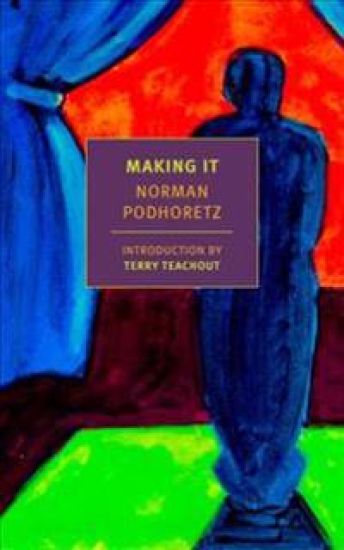
A controversial memoir about American intellectual life and academia and the relationship between politics, money, and education. Norman Podhoretz, the son of Jewish immigrants, grew up in the tough Brownsville section of Brooklyn, attended Columbia University on a scholarship, and later received degrees from the Jewish Theological Seminary and Cambridge University. Making It is his blistering account of fighting his way out of Brooklyn and into, then out of, the Ivory Tower, of his military service, and finally of his induction into the ranks of what he calls "the Family," the small group of left-wing and largely Jewish critics and writers whose opinions came to dominate and increasingly politicize the American literary scene in the fifties and sixties. It is a Balzacian story of raw talent and relentless and ruthless ambition. It is also a closely observed and in many ways still-pertinent analysis of the tense and more than a little duplicitous relationship that exists in America between intellect and imagination, money, social status, and power. The Family responded to the book with outrage, and Podhoretz soon turned no less angrily on them, becoming the fierce neoconservative he remains to this day. Fifty years after its first publication, this controversial and legendary book remains a riveting autobiography, a book that can be painfully revealing about the complex convictions and needs of a complicated man as well as a fascinating and essential document of mid-century American cultural life.
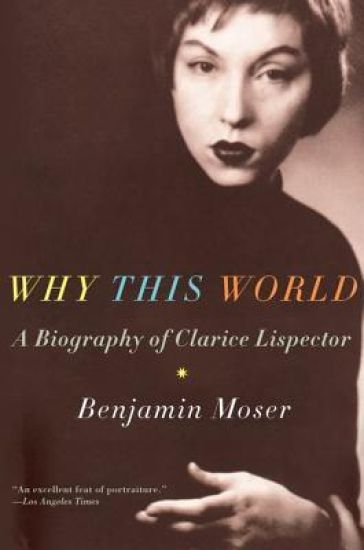
Why This World

Why This World

Benjamin Moser

Penguin Books Ltd
2014
pokkari
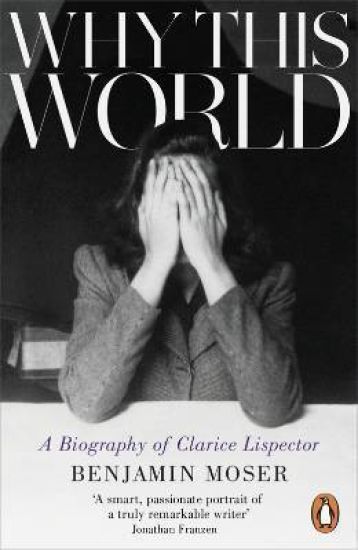
"That rare person who looked like Marlene Dietrich and wrote like Virginia Woolf," Clarice Lispector is one of the most popular but least understood of Latin American writers, and now in Why this World, after years of research on three continents, drawing on previously unknown manuscripts and dozens of interviews, Benjamin Moser demonstrates how Lispector's development as a writer was directly connected to the story of her turbulent life. Born in the nightmarish landscape of post-World War I Ukraine, Clarice became, virtually from adolescence, a person whose beauty, genius, and eccentricity intrigued Brazil. Why This World tells how this precocious girl, through long exile abroad and difficult personal struggles, matured into a great writer, and asserts, for the first time, the deep roots in the Jewish mystical tradition that make her the true heir to Kafka as well as the unlikely author of "perhaps the greatest spiritual autobiography of the twentieth century." From Chechelnik to Recife, from Naples and Bern to Washington and Rio de Janeiro, Why This World strips away the mythology surrounding this extraordinary figure and shows how Clarice Lispector transformed one woman's struggles into a universally resonant art.Benjamin Moser is the New Books columnist of Harper's Magazine. He was born in Houston in 1976 and currently lives in the Netherlands. He is a contributor to the The New York Review of Books, and he has written for Conde Nast Traveler and Newsweek, as well as many other publications.
Why This World: A Biography of Clarice Lispector

Why This World: A Biography of Clarice Lispector

Benjamin Moser

Oxford University Press
2012
nidottu
"That rare person who looked like Marlene Dietrich and wrote like Virginia Woolf," Clarice Lispector is one of the most popular but least understood of Latin American writers. Now, after years of research on three continents, drawing on previously unknown manuscripts and dozens of interviews, Benjamin Moser demonstrates how Lispector's development as a writer was directly connected to the story of her turbulent life. Born in the nightmarish landscape of post-World War I Ukraine, Clarice became, virtually from adolescence, a person whose beauty, genius, and eccentricity intrigued Brazil. Why This World tells how this precocious girl, through long exile abroad and difficult personal struggles, matured into a great writer. It also asserts, for the first time, the deep roots in the Jewish mystical tradition that make her the true heir to Kafka as well as the unlikely author of "perhaps the greatest spiritual autobiography of the twentieth century." From Chechelnik to Recife, from Naples and Berne to Washington and Rio de Janeiro, Why This World strips away the mythology surrounding this extraordinary figure and shows how Clarice Lispector transformed one woman's struggles into a universally resonant art.