Kirjojen hintavertailu. Mukana 12 390 323 kirjaa ja 12 kauppaa.

Kirjailija

Benjamin Noys

Kirjat ja teokset yhdessä paikassa: 13 kirjaa, julkaisuja vuosilta 2000-2026, suosituimpien joukossa Crisis and Criticism. Vertaile teosten hintoja ja tarkista saatavuus suomalaisista kirjakaupoista.

13 kirjaa

Kirjojen julkaisuhaarukka 2000-2026.

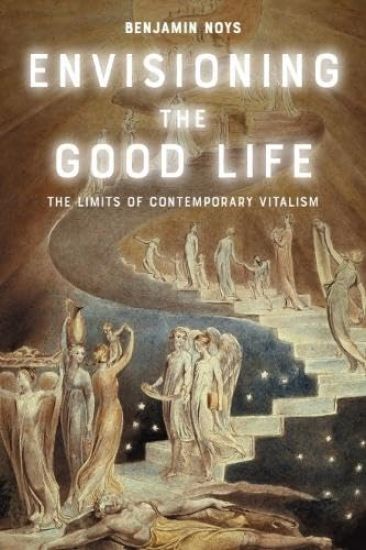
Envisioning the Good Life

Envisioning the Good Life

Benjamin Noys

EDINBURGH UNIVERSITY PRESS
2026
nidottu
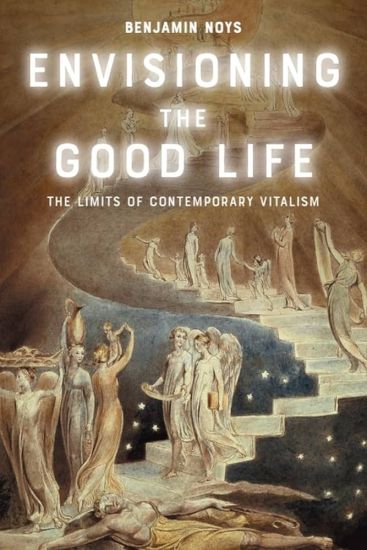
Envisioning the Good Life is a call to re-imagine our lives beyond the limits of recent understandings. While contemporary thinkers of life have promoted a vision of life as excess to escape the crises that beset the present, these vitalist visions leave life detached from reality and fragmented. Contemporary vitalism imagines life as excessive, savage life, as damaged life that flees power, and as redeemed life that forms a new dispersed community. While exploring these visions of life, this book argues for an integrated understanding of the good life. Reading against the limits of the current imaginary, Envisioning the Good Life suggests that our lives are not defined by the limits of illness, death, and finitude. This book urges us to rediscover the vision of the good life in the collective and to grasp our own powers to transform our lives and the world.
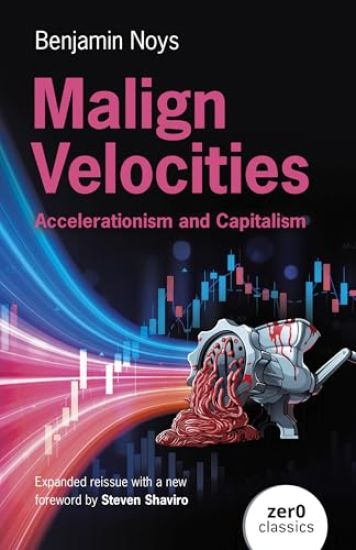
Malign Velocities

Malign Velocities

Benjamin Noys

Collective Ink
2025
nidottu
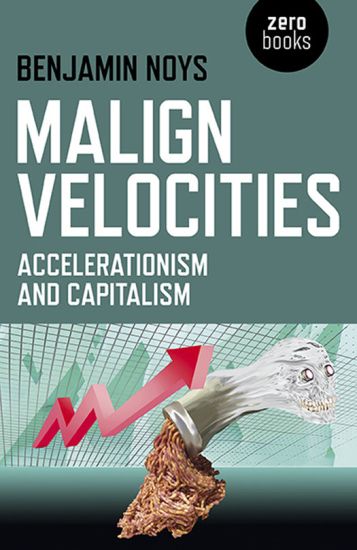
We are told our lives are too fast, subject to the accelerating demand that we innovate more, work more, enjoy more, produce more, and consume more. That?s one familiar story. Another, stranger, story is told here: of those who think we haven?t gone fast enough. Instead of rejecting the increasing tempo of capitalist production they argue that we should embrace and accelerate it. Rejecting this conclusion, Malign Velocities?tracks this 'accelerationism' as the symptom of the misery and pain of labour under capitalism. Retracing a series of historical moments of accelerationism - the Italian Futurism; communist accelerationism after the Russian Revolution; the 'cyberpunk phuturism' of the ?90s and ?00s; the unconscious fantasies of our integration with machines; the apocalyptic accelerationism of the post-2008 moment of crisis; and the terminal moment of negative accelerationism - suggests the pleasures and pains of speed signal the need to disengage, negate, and develop a new politics that truly challenges the supposed pleasures of speed.
Envisioning the Good Life

Envisioning the Good Life

Benjamin Noys

EDINBURGH UNIVERSITY PRESS
2025
sidottu
Envisioning the Good Life is a call to re-imagine our lives beyond the limits of recent understandings. While contemporary thinkers of life have promoted a vision of life as excess to escape the crises that beset the present, these vitalist visions leave life detached from reality and fragmented. Contemporary vitalism imagines life as excessive, savage life, as damaged life that flees power, and as redeemed life that forms a new dispersed community. While exploring these visions of life, this book argues for an integrated understanding of the good life. Reading against the limits of the current imaginary, Envisioning the Good Life suggests that our lives are not defined by the limits of illness, death, and finitude. This book urges us to rediscover the vision of the good life in the collective and to grasp our own powers to transform our lives and the world.
Crisis and Criticism

Crisis and Criticism

Benjamin Noys

Haymarket Books
2025
pokkari
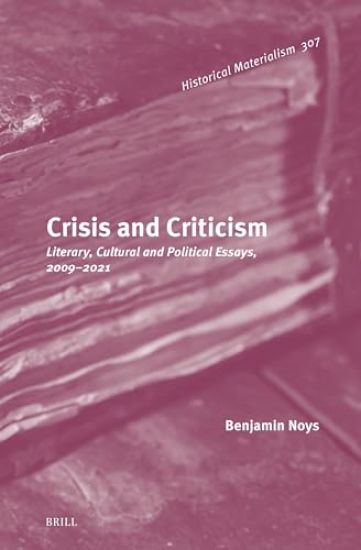
Crisis and Criticism brings together a series of interventions from 2009 to 2021 engaging with the literary, cultural and political responses to the capitalist crisis of 2007–8. Challenging the tendency to treat crisis as natural and beyond human control, Benjamin Noys interrogates our cultural understanding of crisis and suggests the necessity of ruthless criticism of the existing world. While responses to crisis have retreated from the critical, choosing to inhabit apocalyptic fantasies instead, Noys makes a rousing argument that only a critical understanding of the causes of crisis within capitalism itself can promise their eventual overcoming.
Crisis and Criticism

Crisis and Criticism

Benjamin Noys

BRILL
2024
sidottu
Crisis and Criticism is a series of interventions from 2009 to 2021 engaging with the literary, cultural and political responses to the capitalist crisis of 2007–8. Challenging the tendency to treat crisis as natural and beyond human control, this book interrogates our cultural understanding of crisis and suggests the necessity of ruthless criticism of the existing world. While responses to crisis have retreated from the critical, choosing to inhabit apocalyptic fantasies instead, only a critical understanding of the causes of crisis within capitalism itself can promise their eventual overcoming.
Critical Essays – Volume 1, 1944–1948

Critical Essays – Volume 1, 1944–1948

Georges Bataille; Chris Turner; Benjamin Noys; Alberto Toscano

SEAGULL BOOKS LONDON LTD
2023
sidottu
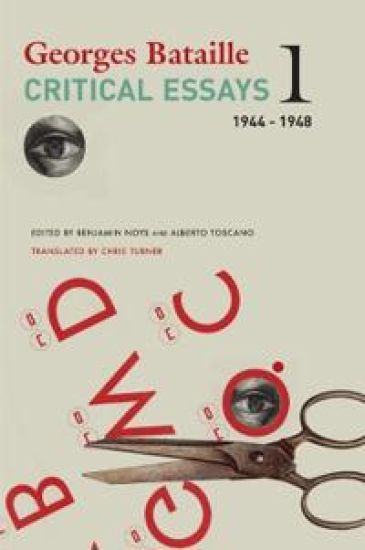
This first book in a three-volume collection of Georges Bataille’s essays introduces English readers to his philosophical and critical writings. In the aftermath of the Second World War, French thinker and writer Georges Bataille forged a singular path through the moral and political impasses of his age. In 1946, animated by “a need to live events in an increasingly conscious way,” and to reject any compartmentalization of intellectual life, Bataille founded the journal Critique. Adopting the format of the review essay, he surveyed the post-war cultural landscape while advancing his reflections on excess, non-knowledge, and the general economy. Focusing on literature as a mode of sovereign uselessness, he tackled prominent and divisive figures such as Henry Miller and Albert Camus. In keeping with Critique’s mission to explore the totality of human knowledge, Bataille’s articles did not just focus on the literary but featured important reflections on the science of sexuality, the Chinese Revolution, and historical accounts of drunkenness, among other matters. Throughout, he was attuned to how humanity would deal with the excessive forces of production and destruction it had unleashed, his aim being a way of thinking and living that would inhabit that excess. This is the first of three volumes collecting Bataille’s post-war essays. Beginning with an article on Nietzsche and fascism written shortly after the liberation of Paris and running to the end of 1948, these texts make available for the first time in English the systematic diversity of Bataille’s post-war thought.
The Matter of Language – Abstraction and Poetry

The Matter of Language – Abstraction and Poetry

Benjamin Noys

SEAGULL BOOKS LONDON LTD
2023
nidottu
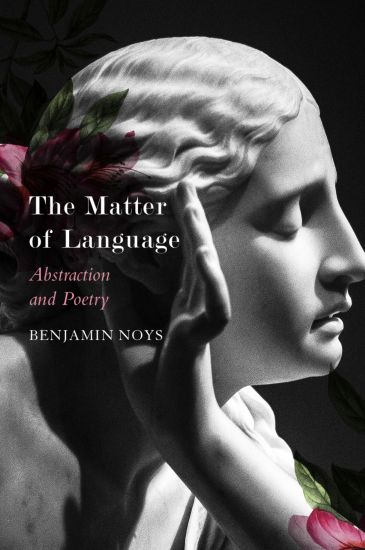
A critical intervention on the relationship between language and matter. If the twentieth century was the century in which language was at the center of thought, the twenty-first century has, so far, been the century of matter. The Matter of Language is a critical intervention that aims to return to the relationship between language and matter to think of our present moment as one dominated by abstractions that rule our lives. In a series of dated chapters, that form punctual moments of intervention, this book both rehabilitates key thinkers, like Marx, Freud, and Saussure, and engages with poetic thinking on matter in David Jones, Diane di Prima, William Blake, Leslie Kaplan, and others. It is a matter of understanding language as a site of struggle, which is intimately bound to the material but also crucial in formulating and expressing the material and the abstractions that shape language and matter. Working between theory and poetry, The Matter of Language reconceives notions of alienation and class struggle as essential modes of reading and analysis for our fractured present.
Malign Velocities – Accelerationism and Capitalism
We are told our lives are too fast, subject to the accelerating demand that we innovate more, work more, enjoy more, produce more, and consume more. That's one familiar story. Another, stranger, story is told here: of those who think we haven't gone fast enough. Instead of rejecting the increasing tempo of capitalist production they argue that we should embrace and accelerate it. Rejecting this conclusion, /Malign Velocities/ tracks this 'accelerationism' as the symptom of the misery and pain of labour under capitalism. Retracing a series of historical moments of accelerationism - the Italian Futurism; communist accelerationism after the Russian Revolution; the 'cyberpunk phuturism' of the '90s and '00s; the unconscious fantasies of our integration with machines; the apocalyptic accelerationism of the post-2008 moment of crisis; and the terminal moment of negative accelerationism - suggests the pleasures and pains of speed signal the need to disengage, negate, and develop a new politics that truly challenges the supposed pleasures of speed.
The Persistence of the Negative

The Persistence of the Negative

Benjamin Noys

Edinburgh University Press
2012
nidottu
Through a series of incisive readings of leading theoretical figures of affirmationism -- Jacques Derrida, Gilles Deleuze, Bruno Latour, Antonio Negri and Alain Badiou -- Benjamin Noys contests the tendency of recent theory to rely on affirmation, and especially an affirmative thinking of resistance. He reveals a profound current of negativity that allows theory to return to its political calling.
The Persistence of the Negative

The Persistence of the Negative

Benjamin Noys

Edinburgh University Press
2010
sidottu
Through a series of incisive readings of leading theoretical figures of affirmationism -- Jacques Derrida, Gilles Deleuze, Bruno Latour, Antonio Negri and Alain Badiou -- Benjamin Noys contests the tendency of recent theory to rely on affirmation, and especially an affirmative thinking of resistance. He reveals a profound current of negativity that allows theory to return to its political calling.
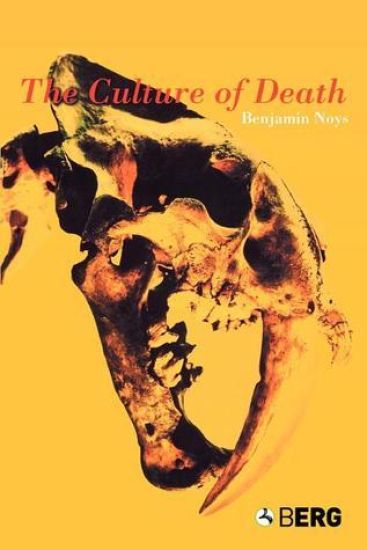
The Culture of Death

The Culture of Death

Benjamin Noys

Berg Publishers
2005
nidottu
Western culture has always been obsessed with death, but now death has taken on a new, anonymous form. The 20th Century saw the mass production of corpses through war and the triumph of technology over the human body. The new millennium has opened with global terrorism and the suspension of all human rights in far-flung prison camps. We live in an age of panic, when the fear of death at any time and in any place is present. And we live in an age of apathy towards both science and institutional politics, an age which has sanctioned the rise of techno-medical and political powers which can deny our control over our own bodies and lives and the lives of others. The Culture of Death explores this moment to analyse our exposure to death in modern culture.
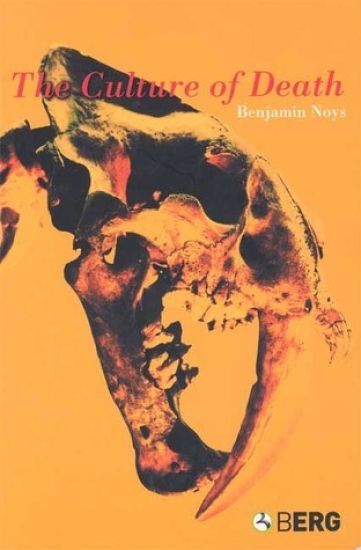
The Culture of Death

The Culture of Death

Benjamin Noys

BLOOMSBURY PUBLISHING PLC
2005
sidottu
Western culture has always been obsessed with death, but now death has taken on a new, anonymous form. The 20th Century saw the mass production of corpses through war and the triumph of technology over the human body. The new millennium has opened with global terrorism and the suspension of all human rights in far-flung prison camps. We live in an age of panic, when the fear of death at any time and in any place is present. And we live in an age of apathy towards both science and institutional politics, an age which has sanctioned the rise of techno-medical and political powers which can deny our control over our own bodies and lives and the lives of others. The Culture of Death explores this moment to analyse our exposure to death in modern culture.
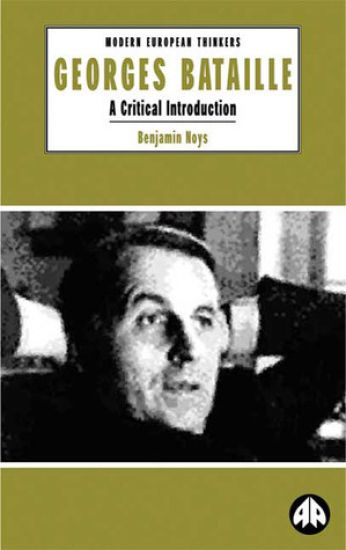
Georges Bataille

Georges Bataille

Benjamin Noys

Pluto Press
2000
pokkari
This is a guide to the life and work of the French intellectual Georges Bataille, best known as the author of the celebrated erotic novel, The Story of the Eye. Benjamin Noys introduces Bataille as a writer out of step with the dominant intellectual trends of his day - surrealism and existentialism - and shows that it was his very marginality that accounted in large part for his subsequent importance for the post-structuralists and the counterculture, in Europe and in the United States. Treating Bataille's work as a whole rather than focusing, as other studies have done, on aspects of his work (i.e. as social theory or philosophy), Noys' study is intended to be sensitive to the needs of students new to Bataille's work while at the same time drawing on the latest research on Bataille to offer new interpretations of Bataille's oeuvre for more experienced readers. This is the first clear, introductory reading of Bataille in English - challenging current reductive readings, and stressing the range of disciplines affected by Bataille's work, at a time when interest in Bataille is growing.