Kirjojen hintavertailu. Mukana 12 595 353 kirjaa ja 12 kauppaa.

Kirjailija

Benjamin P. Davis

Kirjat ja teokset yhdessä paikassa: 6 kirjaa, julkaisuja vuosilta 2023-2025, suosituimpien joukossa Another Humanity. Vertaile teosten hintoja ja tarkista saatavuus suomalaisista kirjakaupoista.

6 kirjaa

Kirjojen julkaisuhaarukka 2023-2025.

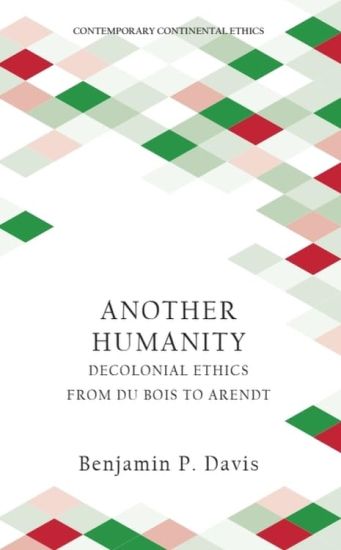
Another Humanity

Another Humanity

Benjamin P. Davis

EDINBURGH UNIVERSITY PRESS
2025
nidottu
Is there a way of being human that could invite people away from today’s models of violence and consumerism? Looking forward to a new, increasingly creolized century, in 1997 the Martinican poet and philosopher Édouard Glissant asked, ‘Do we have the right and the means to live another dimension of humanity? But how?’ Building on the defense of human rights he outlined in Choose Your Bearing, Benjamin P. Davis traces figures of 'the human' and ‘humanity' in W. E. B. Du Bois, Édouard Glissant, Sylvia Wynter and Edward Said. He concludes with a reflection on Hannah Arendt’s post-war correspondence with Karl Jaspers, which offers lessons for a new humanism as we witness ongoing wars today.
Another Humanity

Another Humanity

Benjamin P. Davis

EDINBURGH UNIVERSITY PRESS
2025
sidottu
Is there a way of being human that could invite people away from today's models of violence and consumerism? Looking forward to a new, increasingly creolized century, in 1997 the Martinican poet and philosopher douard Glissant asked, 'Do we have the right and the means to live another dimension of humanity? But how?'Building on the defense of human rights he outlined in Choose Your Bearing, Benjamin P. Davis traces figures of 'the human' and 'humanity' in W. E. B. Du Bois, douard Glissant, Sylvia Wynter and Edward Said. He concludes with a reflection on Hannah Arendt's post-war correspondence with Karl Jaspers, which offers lessons for a new humanism as we witness ongoing wars today.

Simone Weil’s Political Philosophy

Simone Weil’s Political Philosophy

Benjamin P. Davis

ROWMAN LITTLEFIELD
2024
nidottu
This book argues that Simone Weil’s short life (1909–1943) is best understood as deeply invested in and engaged with the world around her, which she knew she would leave behind sooner rather than later if she took risks on the side of the oppressed. To present Weil first and foremost as a political philosopher, Benjamin Davis places her work in conversation with feminist philosophy, decolonial philosophy, and Marxism. Against the backdrop of Weil’s commitments, Davis reads Weil into debates in contemporary Critical Theory. He argues that in the battles of today, we need to reconnect with Simone Weil’s ethical and political imagination, which offers a critique of oppression as part of a deeper attention to the world.
Choose Your Bearing

Choose Your Bearing

Benjamin P. Davis

EDINBURGH UNIVERSITY PRESS
2023
nidottu
What do we in the West owe those who grow our food, sew our clothes and produce our electronics? And what have we always owed one another, but forgotten, avoided, or simply disregarded? Looking back on nearly a century of colonial war and genocide, in 1990 the poet and philosopher Édouard Glissant appealed directly to his readers, calling them to re-orient their lives in service of the political struggles of their time: ‘You must choose your bearing.’ Informed by the prayer camps at Standing Rock, and presenting Glissant alongside Stuart Hall, Emmanuel Levinas, Simone Weil, Enrique Dussel, Gloria Anzaldúa and W. E. B. Du Bois, this book offers an urgent ethics for the present – an ethics of risk, commitment and care that together form a new sense of decolonial responsibility.
Choose Your Bearing

Choose Your Bearing

Benjamin P. Davis

EDINBURGH UNIVERSITY PRESS
2023
sidottu
One of the first readings, in English or French, of Edouard Glissant as an ethical theorist Brings together Caribbean and Latin American ethics to provide a new concept of responsibility that addresses inequities rooted in colonial projects Re-envisions contemporary human rights practice based on the duties entailed in the decolonial (third-generation) rights claims made by the dispossessed Connects Glissant's claim of a 'right to opacity' to ethical bearings, and by doing so presents a path for human rights and decolonial movements to come together What do we in the West owe those who grow our food, sew our clothes and produce our electronics? And what have we always owed one another, but forgotten, avoided, or simply disregarded? Looking back on nearly a century of colonial war and genocide, in 1990 the poet and philosopher douard Glissant appealed directly to his readers, calling them to re-orient their lives in service of the political struggles of their time: 'You must choose your bearing'. Informed by the prayer camps at Standing Rock, and presenting Glissant alongside Stuart Hall, Emmanuel Levinas, Simone Weil, Enrique Dussel, Gloria Anzald a and W. E. B. Du Bois, this book offers an urgent ethics for the present - an ethics of risk, commitment and care that together form a new sense of decolonial responsibility.
Simone Weil’s Political Philosophy

Simone Weil’s Political Philosophy

Benjamin P. Davis

BLOOMSBURY PUBLISHING PLC
2023
sidottu
Davis demonstrates how Simone Weil’s Marxism challenges current neoliberal understandings of the self and of human rights. Explaining her related critiques of colonialism and of political parties, it presents Weil as a twentieth-century political philosopher who anticipated and critically responded to the most contemporary political theory.Simone Weil’s short life (1909–1943) is best understood as deeply invested in and engaged with the world around her, one she knew she would leave behind sooner rather than later if she continued to take risks on the side of the oppressed. In this important and timely book, Benjamin P. Davis presents Simone Weil first and foremost as a political philosopher. To do so, he places Weil’s political writings in conversation with feminist philosophy, decolonial philosophy, aesthetic theory, human rights discourse, and Marxism. Against the backdrop of Weil’s commitments, Davis provides reads Weil explicitly into debates in contemporary Critical Theory. Davis argues that in the battles of today, we urgently need to reconnect with Simone Weil’s ethical and political imagination, which offers a critique of oppression as part of a deeper attention to the world.