Kirjojen hintavertailu. Mukana 12 573 695 kirjaa ja 12 kauppaa.

Kirjailija

Benjamin R. Barber

Kirjat ja teokset yhdessä paikassa: 14 kirjaa, julkaisuja vuosilta 1989-2016, suosituimpien joukossa Jihad Vs McWorld. Vertaile teosten hintoja ja tarkista saatavuus suomalaisista kirjakaupoista.

Mukana myös kirjoitusasut: Benjamin R Barber

14 kirjaa

Kirjojen julkaisuhaarukka 1989-2016.

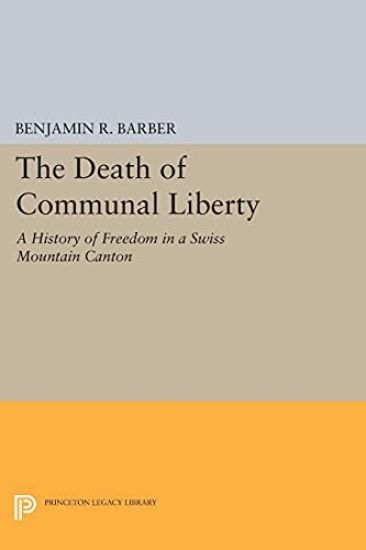
The Death of Communal Liberty

The Death of Communal Liberty

Benjamin R. Barber

Princeton University Press
2016
sidottu
Switzerland today is faced with a profound dilemma--its village life is dying, a casualty of the collision between communal norms and the need for national survival in an industrial, urbanizing world. Benjamin Barber traces the origins and evolution of communal liberty in the group of alpine villages that make up modern Canton Graubunden, and recreates their poignant thousand-year struggle to maintain this tradition in the face of a hostile environment, hierarchical feudal institutions, and European power polities. Originally published in 1974. The Princeton Legacy Library uses the latest print-on-demand technology to again make available previously out-of-print books from the distinguished backlist of Princeton University Press. These editions preserve the original texts of these important books while presenting them in durable paperback and hardcover editions. The goal of the Princeton Legacy Library is to vastly increase access to the rich scholarly heritage found in the thousands of books published by Princeton University Press since its founding in 1905.
The Death of Communal Liberty

The Death of Communal Liberty

Benjamin R. Barber

Princeton University Press
2015
pokkari
Switzerland today is faced with a profound dilemma--its village life is dying, a casualty of the collision between communal norms and the need for national survival in an industrial, urbanizing world. Benjamin Barber traces the origins and evolution of communal liberty in the group of alpine villages that make up modern Canton Graubunden, and recreates their poignant thousand-year struggle to maintain this tradition in the face of a hostile environment, hierarchical feudal institutions, and European power polities. Originally published in 1974. The Princeton Legacy Library uses the latest print-on-demand technology to again make available previously out-of-print books from the distinguished backlist of Princeton University Press. These editions preserve the original texts of these important books while presenting them in durable paperback and hardcover editions. The goal of the Princeton Legacy Library is to vastly increase access to the rich scholarly heritage found in the thousands of books published by Princeton University Press since its founding in 1905.
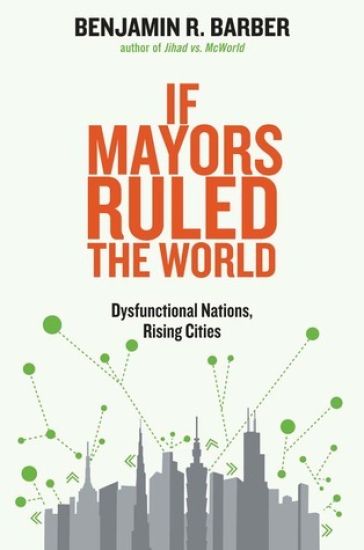
If Mayors Ruled the World

If Mayors Ruled the World

Benjamin R. Barber

Yale University Press
2014
pokkari
Can cities solve the biggest problems of the twenty-first century better than nations? Is the city democracy’s best hope? In the face of the most perilous challenges of our time—climate change, terrorism, poverty, and trafficking of drugs, guns, and people—the nations of the world seem paralyzed. The problems are too big, too interdependent, too divisive for the nation-state. Is the nation-state, once democracy's best hope, today democratically dysfunctional? Obsolete? The answer, says Benjamin Barber in this highly provocative and original book, is yes. Cities and the mayors who run them can do and are doing a better job. Barber cites the unique qualities cities worldwide share: pragmatism, civic trust, participation, indifference to borders and sovereignty, and a democratic penchant for networking, creativity, innovation, and cooperation. He demonstrates how city mayors, singly and jointly, are responding to transnational problems more effectively than nation-states mired in ideological infighting and sovereign rivalries. Featuring profiles of a dozen mayors around the world—courageous, eccentric, or both at once—If Mayors Ruled the World presents a compelling new vision of governance for the coming century. Barber makes a persuasive case that the city is democracy’s best hope in a globalizing world, and great mayors are already proving that this is so.
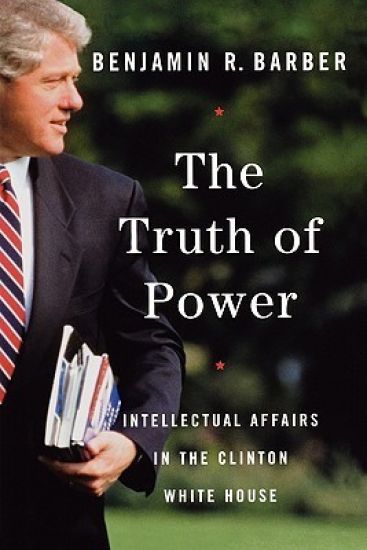
The Truth of Power

The Truth of Power

Benjamin R. Barber

WW Norton Co
2012
nidottu
President Clinton had a romance with big ideas. He intently cultivated intellectuals, seducing them with his characteristic charm and with the promise of real influence on the political stage. Yet most often he disappointed the big thinkers whose advice he sought. Benjamin Barber was first invited to Camp David in 1994, along with other prominent members of the academic community, to participate in a "seminar" with President Clinton on the future of Democratic ideas and ideals. Afterwards, he became a steady informal adviser to the White House. For a politically committed professor like Barber, the opportunity was exhilarating—here was an opportunity to put ideas into action, to link ideas to power. The result was enlightening, if unexpected. The most unpredictable factor was the president himself: a man of astonishing intellectual gifts, a consummate listener and synthesizer of ideas, who nonetheless failed to present a stirring progressive vision or even to craft a memorable speech. With great perceptiveness, wit, and élan, Barber provides a startling meditation on truth and power—and the truth of power, which is the responsibility of the elected not to an idea but to the electorate. He identifies the fault lines that future progressive candidates must straddle if they are to win—and the gift they must have, if they are to be great, of calling forth the best in their fellow citizens. In the end, Barber give us a unique portrait of our compelling and maddening ex-president, and the hopes and disillusionments he represents.
Jihad Vs McWorld

Jihad Vs McWorld

Benjamin R Barber

Corgi Books
2011
pokkari
JIHAD VS. MCWORLD is an essential text for anyone who wants to understand the challenges facing us after the tragic events of September 11, 2001 and in light of the current conflict in the Middle East. In a groundbreaking work, political scientist Benjamin R. Barber offers a penetrating analysis of the central conflict of our times: consumerist capitalism versus religious and tribal fundamentalism. These diametrically opposed but intertwined forces are tearing apart - and bringing together - the world as we know it, undermining democracy and the nation-state on which it depends. On the one hand, capitalism on the global level is rapidly dissolving the social and economic barriers between nations, transforming the world's diverse populations into a blandly uniform market. On the other hand, ethnic, religious, and racial hatreds are fragmenting the political landscape into smaller and smaller tribal units. JIHAD VS. MCWORLD is the term that Barber has coined to describe the powerful and paradoxical interdependence of these forces. In this important book, now more timely than ever before, he explores the alarming repercussions of this potent dialectic and in his new introduction sketches a democratic response to terrorism.
Consumed

Consumed

Benjamin R. Barber

WW Norton Co
2008
nidottu
A powerful sequel to Benjamin R. Barber's best-selling Jihad vs. McWorld, Consumed offers a vivid portrait of a global economy that overproduces goods and targets children as consumers in a market where there are never enough shoppers—and where the primary goal is no longer to manufacture goods but needs. Disturbing, provocative, and compelling, this book examines phenomena as seemingly disparate as adolescent fashion trends for adults, megachurches, declining voter participation, the privatization of the public sphere, branding, and the rise of online shopping to show how the freedoms of the free market have undermined the freedoms of the deliberative adult citizen. Barber brings together extensive empirical research with an original theoretical framework for understanding our contemporary predicament.
Fear's Empire

Fear's Empire

Benjamin R. Barber

WW Norton Co
2004
nidottu
The author of Jihad vs. McWorld analyzes how American foreign policy has gone wrongand how it could go right. In this hard-hitting but pragmatic new critique of the Bush administration's foreign policy, Benjamin R. Barber exposes in detail the folly of an agenda of preventive war, placing it in the context of two hundred years of American strategic doctrine (including the recent history of deterrence and containment). He shows how chosen "rogue states" have been made to stand in for terrorists too difficult to locate and destroy, and how the United States continues to support dictatorship in nations it regards as friends, while still believing we can impose democracy on vanquished enemies at the barrel of a gun. Barber argues for an America that promotes cooperation, multilateralism, international law, and pooled sovereignty. For as law and citizenship alone secure liberty within nations, law and citizenship alone can secure liberty among them, freeing them from fear.
Strong Democracy

Strong Democracy

Benjamin R. Barber

University of California Press
2004
pokkari
Since its appearance twenty years ago, Benjamin R. Barber's "Strong Democracy" has been one of the primary standards against which political science thinking and writing is measured. Defined as the participation of all of the people in at least some aspects of self-government at least some of the time, "Strong Democracy" offers liberal society a new way of thinking about and of practicing democracy. Contrary to the commonly held view that an excess of democracy can undo liberal institutions, Barber argues that an excess of liberalism has undermined our democratic institutions and brought about the set of crises we still find ourselves struggling against: cynicism about voting, alienation, privatization, and the growing paralysis of public institutions. In a new preface Barber looks at the past twenty years and restates his argument, which seems, sadly, more pressing than ever.
A Passion for Democracy

A Passion for Democracy

Benjamin R. Barber

Princeton University Press
2000
pokkari
Benjamin Barber is one of America's preeminent political theorists. He has been a significant voice in the continuing debate about the nature and role of democracy in the contemporary world. A Passion for Democracy collects twenty of his most important writings on American democracy. Together they refine his distinctive position in democratic theory. Barber's conception of "strong democracy" contrasts with traditional concepts of "liberal democracy," especially in its emphasis on citizen participation in central issues of public debate. These essays critique the "thin representation" of liberal democracy and buttress the arguments presented in Barber's twelve books, most recently in his well-received Jihad vs. McWorld: How Globalism and Tribalism Are Re-shaping the World. In these pieces, Barber argues for participatory democracy without dependence on abstract metaphysical foundations, and he stresses the relationship among democracy and civil society, civic education, and culture. A Passion for Democracy is divided into four sections. In the first, "American Theory: Democracy, Liberalism, and Rights," Barber addresses issues of ongoing relevance to today's debates about the roots of participatory democracy, including individualism vs. community, the importance of consent, and the irrelevance of Marxism. Essays in the second section, "American Practice: Leadership, Citizenship, and Censorship" provide a "strong democracy" critique of American democratic practice. "Education for Democracy: Civic Education, Service, and Citizenship" applies Barber's theories to three related topics and includes his much-discussed essay "America Skips School." The final section, "Democracy and Technology: Endless Frontier or End of Democracy?" provides glimpses into a future that technology alone cannot secure for democracy. In his preface, Barber writes: "In these essays ...I have been hard on my country. Like most ardent democrats, I want more for it than it has achieved, despite the fact that it has achieved more than most people have dared to want." This wide-ranging collection displays not only his passion for democracy, but also his unique perspective on issues of abiding importance for the democratic process.
The New State

The New State

Mary Parker Follett; Benjamin R. Barber; Jane Mansbridge

Pennsylvania State University Press
1998
pokkari
Having organized neighborhood discussion groups before World War I, Follett traces the dynamics she noticed in these forums and develops some core concepts useful for those working on questions of public deliberation today. She also shows how deliberation informs debates that raged in political theory during her own era. She discusses the works of pluralists (Harold Laski), idealists (T. H. Green and Bernard Bosanquet), and pragmatists (William James) and makes important arguments about the relationship between socialism and democracy. Her work is marked by rigorous thinking about the implications of democratic principles as they relate to political and socioeconomic organization. This book articulates the formation of a “new state” growing out of the local activities of citizens and renews the American idea of "federalism" in order to balance local activities and national purposes. By doing this, Follett leaves us with a pathbreaking work that demands more attention today. With preliminary essays by Benjamin Barber and Jane Mansbridge, plus a historical introduction provided by Kevin Mattson, this reissued edition will be of use to scholars and activists who are currently working on issues of democratic participation, civic education, and public deliberation.
The New State

The New State

Mary Parker Follett; Benjamin R. Barber; Jane Mansbridge

Pennsylvania State University Press
1998
pokkari
Having organized neighborhood discussion groups before World War I, Follett traces the dynamics she noticed in these forums and develops some core concepts useful for those working on questions of public deliberation today. She also shows how deliberation informs debates that raged in political theory during her own era. She discusses the works of pluralists (Harold Laski), idealists (T. H. Green and Bernard Bosanquet), and pragmatists (William James) and makes important arguments about the relationship between socialism and democracy. Her work is marked by rigorous thinking about the implications of democratic principles as they relate to political and socioeconomic organization. This book articulates the formation of a “new state” growing out of the local activities of citizens and renews the American idea of "federalism" in order to balance local activities and national purposes. By doing this, Follett leaves us with a pathbreaking work that demands more attention today. With preliminary essays by Benjamin Barber and Jane Mansbridge, plus a historical introduction provided by Kevin Mattson, this reissued edition will be of use to scholars and activists who are currently working on issues of democratic participation, civic education, and public deliberation.
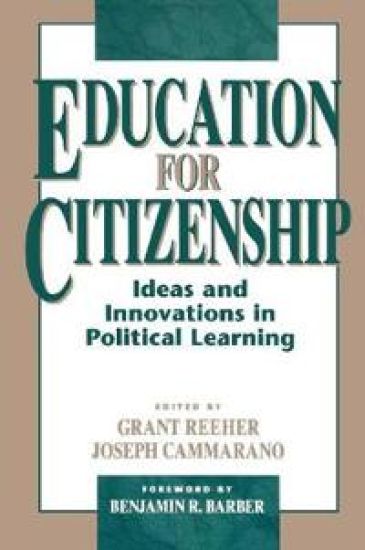
Education for Citizenship

Education for Citizenship

Benjamin R. Barber

Rowman Littlefield
1997
nidottu
This book addresses the challenge of education for citizenship at a specific, concrete level. It offers examples of efforts to create among our students a new set of what Tocqueville called mores or culturally defining 'habits of the heart' which will enhance citizenship, foster a sense of connectedness to a community stretching beyond the university, and ultimately, support the practices, basic values, and institutions necessary for the democratic process.