Kirjojen hintavertailu. Mukana 12 203 766 kirjaa ja 12 kauppaa.
Kirjailija
Benjamin Schneider
Kirjat ja teokset yhdessä paikassa: 15 kirjaa, julkaisuja vuosilta 2004-2026, suosituimpien joukossa Employee Engagement. Vertaile teosten hintoja ja tarkista saatavuus suomalaisista kirjakaupoista.
Providing both practical advice, tools, and case examples, Employee Engagement translates best practices, ideas, and concepts into concrete and practical steps that will change the level of engagement in any organization. Explores the meaning of engagement and how engagement differs significantly from other important yet related concepts like satisfaction and commitmentDiscusses what it means to create a culture of engagementProvides a practical presentation deck and talking points managers can use to introduce the concept of engagement in their organizationAddresses issues of work-life balance, and non-work activities and their relationship to engagement at work
Providing both practical advice, tools, and case examples, Employee Engagement translates best practices, ideas, and concepts into concrete and practical steps that will change the level of engagement in any organization. Explores the meaning of engagement and how engagement differs significantly from other important yet related concepts like satisfaction and commitmentDiscusses what it means to create a culture of engagementProvides a practical presentation deck and talking points managers can use to introduce the concept of engagement in their organizationAddresses issues of work-life balance, and non-work activities and their relationship to engagement at work
This book summarizes the 'rules of the service game' and presents the distilled lessons from three leaders' decades-long experience in consulting, teaching, and research on service, summarizing the 'rules of the game' they have learned. In particular, the authors emphasize that people (customers, employees, and managers) remain a prominent key to success in service, regardless of the level and extent of technology, robotics, and artificial intelligence (AI) involved.Embracing the social psychology of the various stakeholders and the settings in which they interact is critical for the long-term health of service organizations because this is what can yield sustainable competitive advantage. To be effective, service leaders need to understand the complexities of people so that they can create and support appropriate psycho-social contexts in their organizations.This book draws on the interrelated disciplines of social psychology, organizational behavior, and organizational psychology to distill fundamental principles that help inform the effective management of people and their organizational contexts. This book summarizes the most important 'rules of the game' on how to build effective service organizations for people to innovate, design, and co-create value.Rules of the Service Game provides a sharp and concise summary of how to manage a service organization by three thought leaders in this field. It reveals how people are central to the development of services whether those are delivered via technology, personally, or — more likely — a combination of these. This book deals with the organizational and contextual issues that produce the service quality marketing promotes. A central focus of the book is talent management — how to attract, retain, and manage the talent necessary for creating and implementing the wide range of service delivery systems that will be required in the future.
Consider your surroundings. Maybe you're in a house or in an apartment building. Maybe you're at a desk in an office building, or in a cafe looking out on a lively main street. The urban landscape is not simply the backdrop to your life. It determines, to a remarkable degree, what kind of life you're able to live. Today, the horizons of American life are constrained by a built environment that has not significantly changed since the 1970s. American cities used to constantly evolve, experimenting with new urban designs and ambitious infrastructure projects, from railroads and subways to public housing and shopping malls. But now we keep pursuing the same 20th century urban development plans-freeways, downtown office towers, suburban housing developments. This pattern is why Americans are so dependent on their cars, why housing is so expensive and homelessness is at crisis levels, and why downtowns are struggling and communities are fraying. In The Unfinished Metropolis, Benjamin Schneider argues that city-building is a lost art. We need to embrace new transportation technologies, new types of housing, new ways to use streets other than for cars and parking. In this insightful and entertaining tour of the built environment, Schneider explores common urban designs that shape our lives and color our cultural imagination: office parks, apartments, single family homes, and transit systems. He explains how these forms came to be, why they no longer function as promised, and introduces readers to the advocates and professionals around the country who are working on transformative new solutions. Learrung from past mistakes, we can remake our cities and create better lives for ourselves and future generations.
Organizational Climate and Culture breaks down the barriers between the fields of organizational climate and organizational culture to encourage a broader understanding of how an organization’s environment affects its functioning and performance.Building on in-depth reviews of the development of both the organizational climate and organizational culture literatures, the book identifies key research issues as well as how practitioners can utilize the key concepts when conducting organizational cultural inquiries and leading change efforts. The book identifies the key strengths and limitations of research and theory on each topic and then presents ways each field could learn from the other. The authors also identify how practitioners can leverage the key concepts in the two literatures when conducting organizational cultural inquiries leading to climate and culture change efforts. The end product is an in-depth discussion and reconciliation of organizational climate and culture unlike anything that has come before it.In this updated edition, Mark G. Ehrhart, Benjamin Schneider and William H. Macey present a thorough examination of both the history and current status of research in each field, as well as areas for their potential integration. Academics, practitioners, and students will all deepen their understanding of how organizations function and will gain insights into how to improve both organizational research and organizational effectiveness.
Organizational Climate and Culture breaks down the barriers between the fields of organizational climate and organizational culture to encourage a broader understanding of how an organization’s environment affects its functioning and performance.Building on in-depth reviews of the development of both the organizational climate and organizational culture literatures, the book identifies key research issues as well as how practitioners can utilize the key concepts when conducting organizational cultural inquiries and leading change efforts. The book identifies the key strengths and limitations of research and theory on each topic and then presents ways each field could learn from the other. The authors also identify how practitioners can leverage the key concepts in the two literatures when conducting organizational cultural inquiries leading to climate and culture change efforts. The end product is an in-depth discussion and reconciliation of organizational climate and culture unlike anything that has come before it.In this updated edition, Mark G. Ehrhart, Benjamin Schneider and William H. Macey present a thorough examination of both the history and current status of research in each field, as well as areas for their potential integration. Academics, practitioners, and students will all deepen their understanding of how organizations function and will gain insights into how to improve both organizational research and organizational effectiveness.
Facebook Marketing for Entrepreneurs is a book that gives you a step-by-step guide to creating your own ads on Facebook Whether you run an online store, act as a consultant or coach, operate in a network marketing system or run a local store, your goal is to win more and more customers for your own company, right? That's exactly what the book "Facebook Marketing for Entrepreneurs" provide you the solution for You do not need any previous knowledge You do not need thousands of dollars advertising budget - from 5 dollars per day, its possible to advertise You will get with this book a step by step guide You also get the basic marketing knowledge you need to successfully create ads on Facebook. Ben Schneider is an entrepreneur in E-Commerce and Online Marketing. So, he do not only tell you theoretical knowledge about Facebook marketing, he speaks in the book from the daily practice of his own companys. More than 1,000,000 clicks of people watching his videos on YouTube. And these are the unbeatable advantages of the book Facebook Marketing for Entrepreneurs ... Time saving: Through the book Facebook Marketing for entrepreneurs you get a shortcut to the hand, since you do not have to gather this knowledge yourself painstakingly. Money saving: The high quality content of this book can save you a lot of instructive money. Absolutely compressed knowledge No unnecessary blah blah, but an enormously high density of knowledge you will find in this book. Competitive Advantage: With the knowledge of this book, you could be one step ahead of your competition in terms of Facebook Marketing.
The fields of organizational climate and organizational culture have co-existed for several decades with very little integration between the two. In Organizational Climate and Culture: An Introduction to Theory, Research, and Practice, Mark G. Ehrhart, Benjamin Schneider, and William H. Macey break down the barriers between these fields to encourage a broader understanding of how an organization’s environment affects its functioning and performance. Building on in-depth reviews of the development of both the organizational climate and organizational culture literatures, the authors identify the key issues that researchers in each field could learn from the other and provide recommendations for the integration of the two. They also identify how practitioners can utilize the key concepts in the two literatures when conducting organizational cultural inquiries and leading change efforts. The end product is an in-depth discussion of organizational climate and culture unlike anything that has come before that provides unique insights for a broad audience of academics, practitioners, and students.
The fields of organizational climate and organizational culture have co-existed for several decades with very little integration between the two. In Organizational Climate and Culture: An Introduction to Theory, Research, and Practice, Mark G. Ehrhart, Benjamin Schneider, and William H. Macey break down the barriers between these fields to encourage a broader understanding of how an organization’s environment affects its functioning and performance. Building on in-depth reviews of the development of both the organizational climate and organizational culture literatures, the authors identify the key issues that researchers in each field could learn from the other and provide recommendations for the integration of the two. They also identify how practitioners can utilize the key concepts in the two literatures when conducting organizational cultural inquiries and leading change efforts. The end product is an in-depth discussion of organizational climate and culture unlike anything that has come before that provides unique insights for a broad audience of academics, practitioners, and students.
Sponsored by the Society for Industrial and Organizational Psychology, a division of the American Psychological Association. Reveals how examining climate and culture together can advance understanding of the behavior of individuals within organizations, as well as overall organizational performance in such diverse areas as financial planning, marketing, and human resource development.
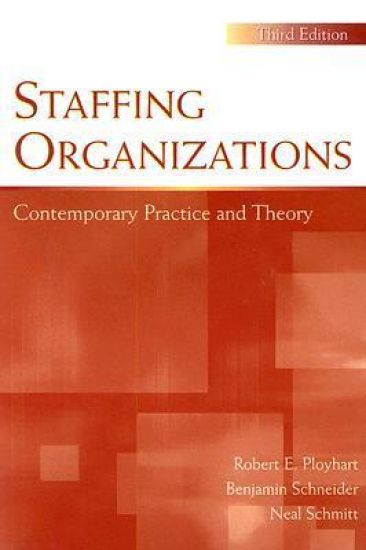
Staffing Organizations: Contemporary Practice and Theory, the new third edition of a classic in the field, shows how organizations of all sizes can use effective staffing procedures as a source of sustained competitive advantage. Practically, the book shows how to choose, develop, and administer effective staffing procedures, including conducting job analyses, defining and measuring job performance, identifying predictors of performance that are both valid and legally defensible, and using this information to make sound hiring decisions. All three authors are active practitioners and recommendations based on their experiences are interwoven throughout the chapters. The authors are also grounded in a scientific, conceptual perspective that informs what they say and do in the staffing area. They review cutting-edge theory and research in diverse areas of importance to the practice of staffing, and identify scientific advances as well as areas that should be informed by additional research.Examples of such cutting-edge issues include:*multilevel staffing models linking individual, group, and organizational levels;*comprehensive consideration of diversity and cross-cultural challenges;*the opportunities and challenges of the use of information technology in staffing;*the legal, professional, and ethical challenges facing staffing practitioners;*modern statistical approaches (e.g., structural equation modeling, item response theory, hierarchical linear modeling); and*integrated models of staffing predictors and frameworks for understanding predictor and criterion spaces.Each chapter contains real-world examples and illustrations, a discussion of best practices, practical recommendations, and directions for future research. In doing so, Staffing Organizations: Contemporary Practice and Theory is a modern version of a genuine classic.
Staffing Organizations: Contemporary Practice and Theory, the new third edition of a classic in the field, shows how organizations of all sizes can use effective staffing procedures as a source of sustained competitive advantage. Practically, the book shows how to choose, develop, and administer effective staffing procedures, including conducting job analyses, defining and measuring job performance, identifying predictors of performance that are both valid and legally defensible, and using this information to make sound hiring decisions. All three authors are active practitioners and recommendations based on their experiences are interwoven throughout the chapters. The authors are also grounded in a scientific, conceptual perspective that informs what they say and do in the staffing area. They review cutting-edge theory and research in diverse areas of importance to the practice of staffing, and identify scientific advances as well as areas that should be informed by additional research.Examples of such cutting-edge issues include:*multilevel staffing models linking individual, group, and organizational levels;*comprehensive consideration of diversity and cross-cultural challenges;*the opportunities and challenges of the use of information technology in staffing;*the legal, professional, and ethical challenges facing staffing practitioners;*modern statistical approaches (e.g., structural equation modeling, item response theory, hierarchical linear modeling); and*integrated models of staffing predictors and frameworks for understanding predictor and criterion spaces.Each chapter contains real-world examples and illustrations, a discussion of best practices, practical recommendations, and directions for future research. In doing so, Staffing Organizations: Contemporary Practice and Theory is a modern version of a genuine classic.
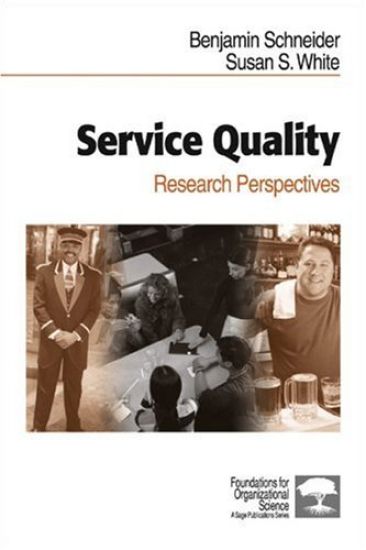
"This book is not a 'one-minute' guide for managers in search of alleged quick-fixes of service quality. Instead, it is thirty years of accumulated theory and research that can help serious students understand and analyze this complex phenomenon. The book succeeds in embedding the often overlooked customer within organization studies, using the interdisciplinary approach that scholars preach but seldom practice, and closing with an agenda for future research that others might even find worth pursuing." --Dr. David E. Bowen, Professor of Management and Dean of Faculty and Programs, Thunderbird"Schneider and White promise to deliver insight into the intriguing intricacies of providing excellent services. They deliver sagacity, the intelligent application of knowledge. They do this by being eclectic, disciplined, and thoughtful... Facts about service – what it is, how it happens, what is required to make it better – thankfully dominate this book, supported by good thinking and good methods. No one interested in service quality should miss this book. There is no other book like it." --Rick Guzzo, Ph.D., Mercer Human Resource Consulting"The coverage is excellent. Among other things, it does a nice job of providing a rationale for why researchers and managers need to understand the perspectives of their customers." --Susan E. Jackson, Ph.D., Rutgers UniversityThe last three decades have seen a dramatic increase in the attention businesses devote to their quality of service. Scholars and researchers in a number of disciplines, including marketing, human resources I/O psychology, sociology, and consumer behavior, have all made substantial contributions to understanding what service is, how service and service delivery quality are experienced by customers, and the role of employees and their organizations in service delivery. Service Quality: Research Perspectives presents a comprehensive overview and analysis of the field and its research, including its growth, emerging trends, and debates. Authors Benjamin Schneider and Susan S. White cover the diverse conceptual and empirical approaches that characterize thinking and research on service quality, especially service delivery. It introduces the concept of service and the important ways service production can differ from goods production. It also presents a history of the concept of product quality and the emergence of concern for service quality. Key Features Summarizes conceptual and empirical research from the marketing perspective on the measurement of service quality and customer satisfaction Deals with concepts and approaches to service characteristic of operations management, especially the role of customer variability in service production Introduces research promoting the linkage of service climate experienced by employees to the service quality experienced by customers Presents several HR/OB approaches to organizational design and useful frameworks for integrating ideas from marketing and operations management into HR/OB research Offers six key research questions that integrate three different perspectives and provide important avenues for additional analysis and research
"This book is not a 'one-minute' guide for managers in search of alleged quick-fixes of service quality. Instead, it is thirty years of accumulated theory and research that can help serious students understand and analyze this complex phenomenon. The book succeeds in embedding the often overlooked customer within organization studies, using the interdisciplinary approach that scholars preach but seldom practice, and closing with an agenda for future research that others might even find worth pursuing." --Dr. David E. Bowen, Professor of Management and Dean of Faculty and Programs, Thunderbird"Schneider and White promise to deliver insight into the intriguing intricacies of providing excellent services. They deliver sagacity, the intelligent application of knowledge. They do this by being eclectic, disciplined, and thoughtful... Facts about service – what it is, how it happens, what is required to make it better – thankfully dominate this book, supported by good thinking and good methods. No one interested in service quality should miss this book. There is no other book like it." --Rick Guzzo, Ph.D., Mercer Human Resource Consulting"The coverage is excellent. Among other things, it does a nice job of providing a rationale for why researchers and managers need to understand the perspectives of their customers." --Susan E. Jackson, Ph.D., Rutgers UniversityThe last three decades have seen a dramatic increase in the attention businesses devote to their quality of service. Scholars and researchers in a number of disciplines, including marketing, human resources I/O psychology, sociology, and consumer behavior, have all made substantial contributions to understanding what service is, how service and service delivery quality are experienced by customers, and the role of employees and their organizations in service delivery. Service Quality: Research Perspectives presents a comprehensive overview and analysis of the field and its research, including its growth, emerging trends, and debates. Authors Benjamin Schneider and Susan S. White cover the diverse conceptual and empirical approaches that characterize thinking and research on service quality, especially service delivery. It introduces the concept of service and the important ways service production can differ from goods production. It also presents a history of the concept of product quality and the emergence of concern for service quality. Key Features Summarizes conceptual and empirical research from the marketing perspective on the measurement of service quality and customer satisfaction Deals with concepts and approaches to service characteristic of operations management, especially the role of customer variability in service production Introduces research promoting the linkage of service climate experienced by employees to the service quality experienced by customers Presents several HR/OB approaches to organizational design and useful frameworks for integrating ideas from marketing and operations management into HR/OB research Offers six key research questions that integrate three different perspectives and provide important avenues for additional analysis and research