Kirjojen hintavertailu. Mukana 12 390 323 kirjaa ja 12 kauppaa.

Kirjailija

Benjamin Schoendorff

Kirjat ja teokset yhdessä paikassa: 6 kirjaa, julkaisuja vuosilta 2014-2019, suosituimpien joukossa ACT Matrix. Vertaile teosten hintoja ja tarkista saatavuus suomalaisista kirjakaupoista.

6 kirjaa

Kirjojen julkaisuhaarukka 2014-2019.

Praxishandbuch ACT-Matrix

Praxishandbuch ACT-Matrix

Kevin L. Polk; Benjamin Schoendorff; Mark Webster; Fabián Olaz

Springer-Verlag Berlin and Heidelberg GmbH Co. KG
2019
nidottu
Dieses Fachbuch bietet einen praktischen Leitfaden für den effektiven Einsatz der ACT-Matrix (als kondensierter Form der Akzeptanz- und Commitmenttherapie) in Psychotherapie, Coaching und Beratung. Praktikerinnen und Praktiker erhalten eine Schritt-für-Schritt-Anleitung sowie zahlreiche nützliche Werkzeuge für die Matrixarbeit.Zahlreiche Beispieldialoge und FAQ-Abschnitte unterstützen die klinische Praxis, wobei stets lebendige Prozesse in konkreten Kontexten, nicht schablonenhafte Lösungen, vermittelt werden. Optional lesbare Vertiefungen bieten theoretisch interessierten Praktikerinnen und Praktikern Gelegenheit, Bezüge zur Bezugsrahmentheorie herzustellen und neue abzuleiten.

Managing Tic and Habit Disorders

Managing Tic and Habit Disorders

Kieron P. O'Connor; Marc E. Lavoie; Benjamin Schoendorff

Wiley-Blackwell
2017
sidottu
A pioneering guide for the management of tics and habit disorders Managing Tic and Habit Disorders: A Cognitive Psychophysiological Approach with Acceptance Strategies is a complete client and therapist program for dealing with tics and habit disorders. Groundbreaking and evidence-based, it considers tics and habit disorders as part of the same spectrum and focuses on the personal processes that are activated prior to a tic and habit rather than the tic or habit itself. By drawing on acceptance and mindfulness strategies to achieve mental and physical flexibility in preparing action, individuals can release unnecessary tension, expend less effort and ultimately establish control over their tic or habit. The authors explain how to identify the contexts of thoughts, feelings and activities that precede tic or habit onset, understand how self-talk and language can trigger tic onset, and move beyond unhelpful ways of dealing with emotions - particularly in taking thoughts about emotions literally. They also explore how individuals can plan action more smoothly by drawing on existing skills and strengths, and overcome shame by becoming less self-critical and more self-compassionate. They conclude with material on maintaining gains, developing new goals, and creating a more confident and controlled lifestyle. Managing Tic and Habit Disorders is a thoughtful and timely guide for those suffering from this sometimes all-consuming disorder, and the professionals who set out to help them.
Managing Tic and Habit Disorders

Managing Tic and Habit Disorders

Kieron P. O'Connor; Marc E. Lavoie; Benjamin Schoendorff

Wiley-Blackwell
2017
nidottu
A pioneering guide for the management of tics and habit disorders Managing Tic and Habit Disorders: A Cognitive Psychophysiological Approach with Acceptance Strategies is a complete client and therapist program for dealing with tics and habit disorders. Groundbreaking and evidence-based, it considers tics and habit disorders as part of the same spectrum and focuses on the personal processes that are activated prior to a tic and habit rather than the tic or habit itself. By drawing on acceptance and mindfulness strategies to achieve mental and physical flexibility in preparing action, individuals can release unnecessary tension, expend less effort and ultimately establish control over their tic or habit. The authors explain how to identify the contexts of thoughts, feelings and activities that precede tic or habit onset, understand how self-talk and language can trigger tic onset, and move beyond unhelpful ways of dealing with emotions - particularly in taking thoughts about emotions literally. They also explore how individuals can plan action more smoothly by drawing on existing skills and strengths, and overcome shame by becoming less self-critical and more self-compassionate. They conclude with material on maintaining gains, developing new goals, and creating a more confident and controlled lifestyle. Managing Tic and Habit Disorders is a thoughtful and timely guide for those suffering from this sometimes all-consuming disorder, and the professionals who set out to help them.
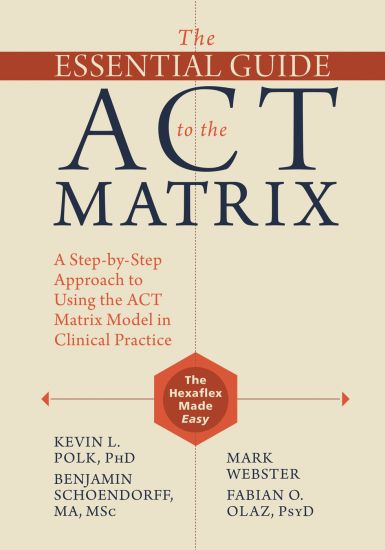
The Essential Guide to the ACT Matrix

The Essential Guide to the ACT Matrix

Kevin L. Polk; Benjamin Schoendorff; Mark Webster; Fabian O. Olaz

New Harbinger Publications
2016
pokkari
If you're a clinician, you know that acceptance and commitment therapy (ACT) is extremely effective in helping clients who are "stuck" in unhealthy thought patterns by encouraging them align their values with their thoughts and actions. However, the ACT model is complex, and it's not always easy to use. Enter the ACT Matrix, a seamless fusion of the six core processes of the ACT hexaflex-cognitive defusion, acceptance, contact with the present moment, observing the self, values, and committed action-into a simplified, easy-to-apply approach.From the editors of The ACT Matrix, The Essential Guide to the ACT Matrix offers professionals a comprehensive guide to using the innovative Matrix model in-session. With this book, you'll learn how to help your clients break free from painful psychological traps and live more meaningful lives. You'll also learn how client actions and behavior should be viewed as workable or unworkable, rather than good or bad. Most importantly, you'll discover how this unique approach can be used to deliver ACT more effectively in a variety of settings and contexts, even when clients are resistant or unmotivated to participate.This book is essential for any ACT clinician looking to simplify their therapeutic approach in client sessions.
Myötätunnon tiede

Myötätunnon tiede

Dennis Tirch; Benjamin Schoendorff; Laura R. Silberstein

Viisas Elämä
2016
nidottu
Itse-myötätunnosta on tullut yksi psykologian päävirtauksista viime vuosina. ACT-terapia (suomeksi HOT eli hyväksymis- ja omistautumisterapia) on tutkimustulosten perusteella erittäin toimiva keino monenlaisten psyykkisten ongelmien hoitoon, oli kysymys sitten masennuksesta, syömishäiriöistä, riippuvuuksista tai muista vahvasti mieleen liittyvistä pulmista. Myötätuntoa lisäävät harjoitukset lisäävät hyvinvointia ja parantavat stressaavien ja muuten kuormittavien asioiden kestokykyä.Tässä kirjassa huippupsykologit valottavat ACT-terapian menetelmiä ja taustoja. Kirja soveltuu ammattikäyttöön ja sisältää ohjeet, miten ACT terapiaa voi yhdistää muihin psykologisiin menetelmiin. Kirjan tasapainoinen yhdistelmä tiedettä ja käytäntöä auttaa myös oman myötätunnon harjoittamisen pariin.
ACT Matrix

ACT Matrix

Kevin L. Polk; Benjamin Schoendorff

New Harbinger Publications
2014
pokkari
If you are an ACT practitioner or mental health professional, this eagerly awaited resource is an essential addition to your professional library. Acceptance and commitment therapy (ACT) is an evidence-based therapy that has been successful in treating a variety of psychological issues, such anxiety, depression, substance abuse, trauma, eating disorders, and more. In contrast to other treatment options, ACT has proven extremely effective in helping clients who are “stuck” in unhealthy thought patterns by encouraging them align their values with their thoughts and actions. However, the ACT model is complex, and it’s not always easy to use.Traditionally, ACT is delivered with a focus around six core processes that are often referred to as the hexaflex: cognitive defusion, acceptance, contact with the present moment, observing the self, values, and committed action. Each of these core processes serves a specific function, but they are often made more complex than needed in both theory and in practice. So what if there was a way to simplify ACT in your sessions with clients?Edited by clinical psychologist and popular ACT workshop leader Kevin Polk, The ACT Matrix fuses the six core principles of acceptance and commitment therapy (ACT) into a simplified, easy-to-apply approach that focuses on client actions and behavior as workable or unworkable, rather than good or bad. Most importantly, you’ll learn how this innovative approach can be used to deliver ACT more effectively in a variety of settings and contexts, even when clients are resistant or unmotivated to participate.With contributions by Benjamin Schoendorff, Mark Webster, and more, this is the first book to utilize the ACT Matrix model, and it is a must-read for any ACT practitioner looking to streamline his or her therapeutic approach.