Kirjojen hintavertailu. Mukana 12 595 353 kirjaa ja 12 kauppaa.

Kirjailija

Benjamin Smith

Kirjat ja teokset yhdessä paikassa: 26 kirjaa, julkaisuja vuosilta 2007-2025, suosituimpien joukossa Seeing and Knowing. Vertaile teosten hintoja ja tarkista saatavuus suomalaisista kirjakaupoista.

26 kirjaa

Kirjojen julkaisuhaarukka 2007-2025.

Seeing and Knowing

Seeing and Knowing

Blundell Geoffrey; Christopher Chippindale; Clottes Jean; Conkey Margaret W.; Edward B. Eastwood; Francis Julie E.; Helskog Knut; Imogene L. Lim; Loendorf Lawrence L.; Johannes Loubser; David Morris; Sven Ouzman; Neil Price; Saetersdal Tore; Benjamin Smith; Patricia Vinnicombe; Eva Walderhaug; Walker Nick; Whitley David S.

Wits University Press
2010
nidottu
This collection focuses on David Lewis-Williams and the extent of his personal impact on the field of rock art research. It is largely through his work that San rock art has come to be understood so well, as a complex symbolic and metaphoric representation of San religious beliefs and practices. The purpose of this volume is to demonstrate the depth and wide geographical impact of Lewis-Williams' contribution, with particular emphasis on the use of theory and methodology drawn from ethnography that he has used with inspirational effect in understanding the meaning and context of rock art in various parts of the world. Seeing and Knowing explores how best archaeologists study rock art when there exist ethnographic or ethno - historic bases of insight, and how they study rock art when there do not appear to exist ethnographic or ethnohistoric bases of insight - in short, how to understand and learn from rock art with and without ethnography. Because many of the chapters are based on solid fieldwork and ethnographic research, they offer a new body of work that provides the evidence for differentiation between knowing and simply seeing.
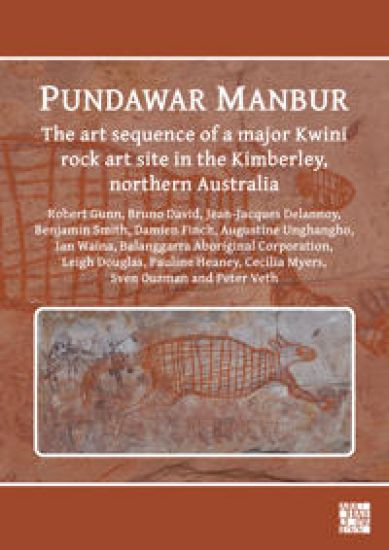
Pundawar Manbur

Pundawar Manbur

Robert G. Gunn; Bruno David; Jean-Jacques Delannoy; Benjamin Smith; Damien Finch; Augustine Unghangho; Ian Waina; Leigh Douglas; Pauline Heaney; Cecilia Myers; Sven Ouzman; Peter Veth

Archaeopress
2025
nidottu
Pundawar Manbur is one of the largest painted rock shelters in the Drysdale River valley of the Kimberley, Western Australia. It contains more than 600 rock paintings, engravings and rock markings with a complex series of overlapping styles of rock art. It is a cultural jewel of Kwini Country, within the lands of the Balanggarra Native Title determination. This monograph presents the first detailed recording and analysis of the site and its art. There are many figures in superposition, and many also in carefully targeted patterns of superimposition, making for a rich story of sequential engagements going back many thousands of years. There is much figurative art, including images from the earliest purported phase of Kimberley art, the Irregular Infill Animal Period, but there are also stencils and other markings. There is evidence of additive reuse – some of the figures have been repainted. There is also fascinating evidence of subtractive reuse, some of the images showing signs of having been ‘battered’ and/or scratched, that is, directly engaged with subsequent to their painting. This monograph is unusual in Australian archaeology as it does not focus on an excavated site; it focuses solely on the rock art of Pundawar Manbur and gives it the attention it deserves.
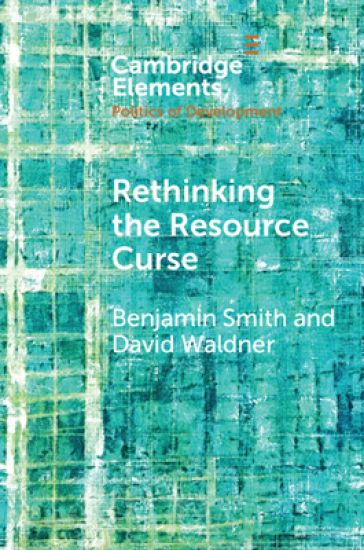
Rethinking the Resource Curse

Rethinking the Resource Curse

Benjamin Smith; David Waldner

Cambridge University Press
2021
pokkari
This Element documents the diversity and dissensus of scholarship on the political resource curse, diagnoses its sources, and directs scholarly attention towards what the authors believe will be more fruitful avenues of future research. In the scholarship to date, there is substantial regional heterogeneity and substantial evidence denying the existence of a political resource curse. This dissensus is located in theory, measure, and research design, especially regarding measurement error and endogenous selection. The work then turns to strategies for reconnecting research on resource politics to the broader literature on democratic development. Finally, the results of the authors' own research is presented, showing that a set of historically contingent events in the Middle East and North Africa are at the root of what has been mistaken for a global political resource curse.
Familiar: A Full-Length Play

Familiar: A Full-Length Play

Benjamin Smith

Independently Published
2019
nidottu
Joy is a children's book author and illustrator who's recently gone through a divorce. She's lost custody of her son. Now she's moved back to the small Kansas college town where a long-forgotten family property looms.Jake, the part-time caretaker, is probably out of a cushy job with this new owner moving to town. That's okay. Jake is easy going, and this new owner is also a not-bad looking only-slightly-older woman. Maeve Daniels was the wife of a well-to-do South Texas minister. But, alas, a scandal has forced her to hit her mid-forties as a tenant in her aging mother's house. To boot, she is only afforded an adjunct's salary in a third-rate theology department. For Corky, Aunt Maeve and Kansas have been hell on roller-skates. The only relief she got was when she slithered into the cellar of the old nearly-abandoned house next door. Now her hiding place is ruined. How will she get through her summer in exile without...Binx. Binx remembers little Joy. The house has been quiet since the night her father went missing. They took little Joy away from him. All the details will be his to share if only he can get Joy all alone.
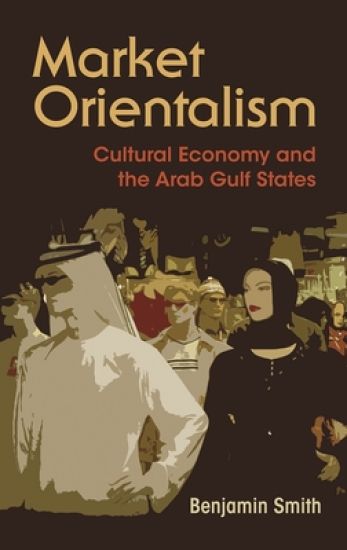
Market Orientalism

Market Orientalism

Benjamin Smith

Syracuse University Press
2017
nidottu
Although the Arab states of the Persian Gulf are leaders in many of the measures of absolute wealth that have traditionally defined success in the global economy, they have had a much harder time becoming accepted in the equally fractured and hierarchal realm of the cultural economy, where practices, signs, and perceptions of propriety matter.Market Orientalism examines how emerging markets are imagined as cultural economic spaces—spaces that are assembled, ranked, desired, and sometimes punished in ways built on earlier forms of dealing with ""backward"" economies and peoples. Such imaginations not only impact investment and guide policy, but also create stories of economic value that separate ""us"" from ""them."" While market Orientalism functions anywhere that questions of ""deserved"" wealth come down to cultural/economic differences between places, Smith focuses on the Arab states of the Gulf. By combining field research with extensive analysis of news archives concerning the cultural economies of the Gulf states, Market Orientalism addresses important motivations for economic relations and provides a framework to analyze how prejudice, fashion, taste, and waste are vital to both narrow and widespread forms of economic activity.
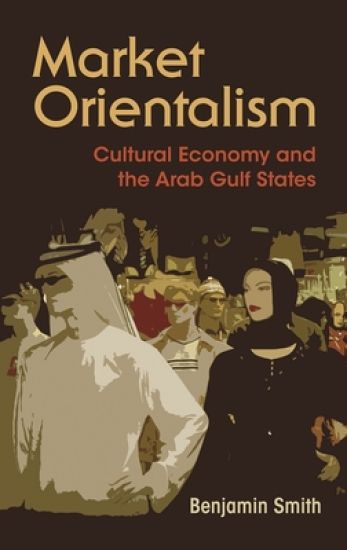
Market Orientalism

Market Orientalism

Benjamin Smith

Syracuse University Press
2015
sidottu
Although the Arab states of the Persian Gulf are leaders in many of the measures of absolute wealth that have traditionally defined success in the global economy, they have had a much harder time becoming accepted in the equally fractured and hierarchal realm of the cultural economy, where practices, signs, and perceptions of propriety matter.Market Orientalism examines how emerging markets are imagined as cultural economic spaces—spaces that are assembled, ranked, desired, and sometimes punished in ways built on earlier forms of dealing with ""backward"" economies and peoples. Such imaginations not only impact investment and guide policy, but also create stories of economic value that separate ""us"" from ""them."" While market Orientalism functions anywhere that questions of ""deserved"" wealth come down to cultural/economic differences between places, Smith focuses on the Arab states of the Gulf. By combining field research with extensive analysis of news archives concerning the cultural economies of the Gulf states, Market Orientalism addresses important motivations for economic relations and provides a framework to analyze how prejudice, fashion, taste, and waste are vital to both narrow and widespread forms of economic activity.