Kirjojen hintavertailu. Mukana 12 595 353 kirjaa ja 12 kauppaa.

Kirjailija

Benjamin Straumann

Kirjat ja teokset yhdessä paikassa: 5 kirjaa, julkaisuja vuosilta 2015-2025, suosituimpien joukossa Roman Law in the State of Nature. Vertaile teosten hintoja ja tarkista saatavuus suomalaisista kirjakaupoista.

5 kirjaa

Kirjojen julkaisuhaarukka 2015-2025.

The Just State

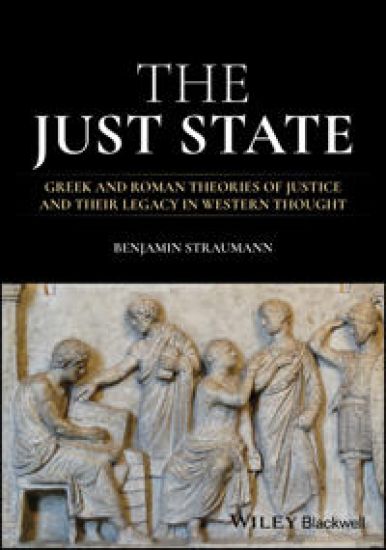
The Just State

Benjamin Straumann

JOHN WILEY AND SONS LTD
2025
nidottu
An intellectual history of one of the most important contributions to Western society The Just State explores influential Greek and Roman ideas about justice and their institutional context, and discusses their legacy in later political thought. Bringing Greco-Roman and modern ideas into conversation with each other, Benjamin Straumann traces the history of ancient political thought by focusing on classical ideas about justice. With a readable narrative style, Straumann places Greek and Roman theories of justice in their historical context, starting from Homer and the pre-Socratic period through to the later Roman Empire, and outlines the respective contribution of the Greek and Roman traditions of thinking about justice to early modern and Enlightenment political thought. Concise chapters address Athenian democracy, the Sophist movement, the political philosophies of Plato and Aristotle, the origins of constitutionalism in the Roman Republic, classical influences on the American and French revolutions, and more. Highlighting how modern debates on justice can be enriched by an engagement with their classical foundations, The Just State: Examines the impact of Greek and Roman political thought on modern ideas and institutionsDiscusses the emergence of the city-state and the origins of Greek political philosophyDescribes the political ideas of the Hellenistic philosophical schools, such as the Stoic idea of natural lawSurveys the political philosophy found in influential works by Plato, Aristotle, Cicero, St. Augustine, and other classical thinkersExplores the reception history of Roman ideas about justice from the re-discovery of the Roman law of the Digest c. 1100 CE to early modern thought about politics The Just State: Greek and Roman Theories of Justice and their Legacy in Western Thought is an excellent textbook for undergraduate classes on the history of political thought and graduate seminars on classical political theory and ancient philosophy.
Roman Law in the State of Nature

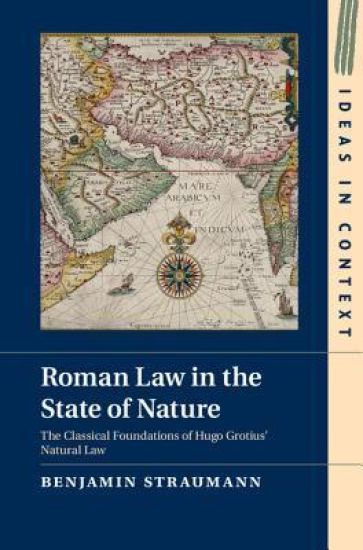
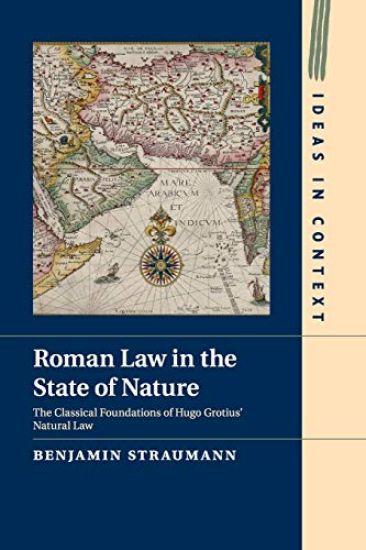
Roman Law in the State of Nature

Benjamin Straumann

Cambridge University Press
2019
pokkari
Roman Law in the State of Nature offers a new interpretation of the foundations of Hugo Grotius' natural law theory. Surveying the significance of texts from classical antiquity, Benjamin Straumann argues that certain classical texts, namely Roman law and a specifically Ciceronian brand of Stoicism, were particularly influential for Grotius in the construction of his theory of natural law. The book asserts that Grotius, a humanist steeped in Roman law, had many reasons to employ Roman tradition and explains how Cicero's ethics and Roman law - secular and offering a doctrine of the freedom of the high seas - were ideally suited to provide the rules for Grotius' state of nature. This fascinating new study offers historians, classicists and political theorists a fresh account of the historical background of the development of natural rights, natural law and of international legal norms as they emerged in seventeenth-century early modern Europe.
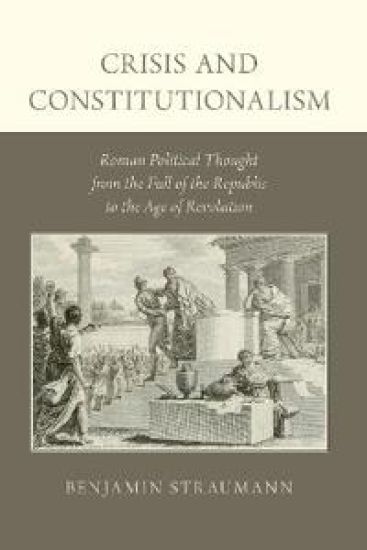
Crisis and Constitutionalism

Crisis and Constitutionalism

Benjamin Straumann

Oxford University Press Inc
2018
nidottu
Crisis and Constitutionalism argues that the late Roman Republic saw, for the first time in the history of political thought, the development of a normative concept of constitution--the concept of a set of constitutional norms designed to guarantee and achieve certain interests of the individual. Benjamin Straumann first explores how a Roman concept of constitution emerged out of the crisis and fall of the Roman Republic. The increasing use of emergency measures and extraordinary powers in the late Republic provoked Cicero and some of his contemporaries to turn a hitherto implicit, inchoate constitutionalism into explicit constitutional argument and theory. The crisis of the Republic thus brought about a powerful constitutionalism and convinced Cicero to articulate the norms and rights that would provide its substance; this typically Roman constitutional theory is described in the second part of the study. Straumann then discusses the reception of Roman constitutional thought up to the late eighteenth century and the American Founding, which gave rise to a new, constitutional republicanism. This tradition was characterized by a keen interest in the Roman Republic's decline and fall, and an insistence on the limits of virtue. The crisis of the Republic was interpreted as a constitutional crisis, and the only remedy to escape the Republic's fate--military despotism--was thought to lie, not in republican virtue, but in Roman constitutionalism. By tracing Roman constitutional thought from antiquity to the modern era, this unique study makes a substantial contribution to our understanding of Roman political thought and its reception.
Crisis and Constitutionalism

Crisis and Constitutionalism

Benjamin Straumann

Oxford University Press Inc
2016
sidottu
Crisis and Constitutionalism argues that the late Roman Republic saw, for the first time in the history of political thought, the development of a normative concept of constitutionthe concept of a set of constitutional norms designed to guarantee and achieve certain interests of the individual. Benjamin Straumann first explores how a Roman concept of constitution emerged out of the crisis and fall of the Roman Republic. The increasing use of emergency measures and extraordinary powers in the late Republic provoked Cicero and some of his contemporaries to turn a hitherto implicit, inchoate constitutionalism into explicit constitutional argument and theory. The crisis of the Republic thus brought about a powerful constitutionalism and convinced Cicero to articulate the norms and rights that would provide its substance; this typically Roman constitutional theory is described in the second part of the study. Straumann then discusses the reception of Roman constitutional thought up to the late eighteenth century and the American Founding, which gave rise to a new, constitutional republicanism. This tradition was characterized by a keen interest in the Roman Republics decline and fall, and an insistence on the limits of virtue. The crisis of the Republic was interpreted as a constitutional crisis, and the only remedy to escape the Republic's fate -- military despotism -- was thought to lie, not in republican virtue, but in Roman constitutionalism. By tracing Roman constitutional thought from antiquity to the modern era, this unique study makes a substantial contribution to our understanding of Roman political thought and its reception.
Roman Law in the State of Nature

Roman Law in the State of Nature

Benjamin Straumann

Cambridge University Press
2015
sidottu
Roman Law in the State of Nature offers a new interpretation of the foundations of Hugo Grotius' natural law theory. Surveying the significance of texts from classical antiquity, Benjamin Straumann argues that certain classical texts, namely Roman law and a specifically Ciceronian brand of Stoicism, were particularly influential for Grotius in the construction of his theory of natural law. The book asserts that Grotius, a humanist steeped in Roman law, had many reasons to employ Roman tradition and explains how Cicero's ethics and Roman law - secular and offering a doctrine of the freedom of the high seas - were ideally suited to provide the rules for Grotius' state of nature. This fascinating new study offers historians, classicists and political theorists a fresh account of the historical background of the development of natural rights, natural law and of international legal norms as they emerged in seventeenth-century early modern Europe.