Kirjojen hintavertailu. Mukana 12 595 353 kirjaa ja 12 kauppaa.

Kirjailija

Benjamin Wardhaugh

Kirjat ja teokset yhdessä paikassa: 24 kirjaa, julkaisuja vuosilta 2008-2025, suosituimpien joukossa Book of Wonders. Vertaile teosten hintoja ja tarkista saatavuus suomalaisista kirjakaupoista.

24 kirjaa

Kirjojen julkaisuhaarukka 2008-2025.

Thomas Salmon: Writings on Music

Thomas Salmon: Writings on Music

Benjamin Wardhaugh

Ashgate Publishing Limited
2013
sidottu
This is the second volume in a two-part set on the writings of Thomas Salmon. Salmon (1647-1706) is remembered today for the fury with which Matthew Locke greeted his first foray into musical writing, the Essay to the Advancement of Musick (1672), and the near-farcical level to which the subsequent pamphlet dispute quickly descended. Salmon proposed a radical reform of musical notation, involving a new set of clefs which he claimed, and Locke denied, would make learning and performing music much easier (these writings are the subject of Volume I). Later in his life Salmon devoted his attention to an exploration of the possible reform of musical pitch. He made or renewed contact with instrument-makers and performers in London, with the mathematician John Wallis, with Isaac Newton and with the Royal Society of London through its Secretary Hans Sloane. A series of manuscript treatises and a published Proposal to Perform Musick, in Perfect and Mathematical Proportions (1688) paved the way for an appearance by Salmon at the Royal Society in 1705, when he provided a demonstration performance by professional musicians using instruments specially modified to his designs. This created an explicit overlap between the spaces of musical performance and of experimental performance, as well as raising questions about the meaning and the source of musical knowledge similar to those raised in his work on notation. Benjamin Wardhaugh presents the first published scholarly edition of Salmon's writings on pitch, previously only available mostly in manuscript.
How to Read Historical Mathematics

How to Read Historical Mathematics

Benjamin Wardhaugh

PRINCETON UNIVERSITY PRESS
2010
sidottu
Writings by early mathematicians feature language and notations that are quite different from what we're familiar with today. Sourcebooks on the history of mathematics provide some guidance, but what has been lacking is a guide tailored to the needs of readers approaching these writings for the first time. How to Read Historical Mathematics fills this gap by introducing readers to the analytical questions historians ask when deciphering historical texts. Sampling actual writings from the history of mathematics, Benjamin Wardhaugh reveals the questions that will unlock the meaning and significance of a given text--Who wrote it, why, and for whom? What was its author's intended meaning? How did it reach its present form? Is it original or a translation? Why is it important today? Wardhaugh teaches readers to think about what the original text might have looked like, to consider where and when it was written, and to formulate questions of their own. Readers pick up new skills with each chapter, and gain the confidence and analytical sophistication needed to tackle virtually any text in the history of mathematics. * Introduces readers to the methods of textual analysis used by historians * Uses actual source material as examples * Features boxed summaries, discussion questions, and suggestions for further reading * Supplements all major sourcebooks in mathematics history * Designed for easy reference * Ideal for students and teachers
John Birchensha: Writings on Music

John Birchensha: Writings on Music

Christopher D.S. Field; Benjamin Wardhaugh

Ashgate Publishing Limited
2010
sidottu
John Birchensha (c.1605-?1681) is chiefly remembered for the impression that his theories about music made on the mathematicians, natural philosophers and virtuosi of the Royal Society in the 1660s and 1670s, and for inventing a system that he claimed would enable even those without practical experience of music to learn to compose in a short time by means of 'a few easy, certain, and perfect Rules'-his most famous composition pupil being Samuel Pepys in 1662. His great aim was to publish a treatise on music in its philosophical, mathematical and practical aspects (which would have included a definitive summary of his rules of composition), entitled Syntagma musicæ. Subscriptions for this book were invited in 1672-3, and it was due to be published by March 1675; but it never appeared, and no final manuscript of it survives. Consequently knowledge about his work has hitherto remained extremely sketchy. Recent research, however, has brought to light a number of manuscripts which allow us at last to form a more complete view of Birchensha's ideas. Almost none of this material has been previously published. The new items include an autograph treatise of c.1664 ('A Compendious Discourse of the Principles of the Practicall & Mathematicall Partes of Musick') which Birchensha presented to the natural philosopher Robert Boyle, and which covers concisely much of the ground that he intended to cover in Syntagma musicæ; a detailed synopsis for Syntagma musicæ which he prepared for a meeting of the Royal Society in February 1676; and an autograph notebook (now in Brussels) containing his six rules of composition with music examples, presumably written for a pupil. Bringing all this material together in a single volume will allow scholars to see how Birchensha's rules and theories developed over a period of fifteen years, and to gain at least a flavour of the lost Syntagma musicæ.
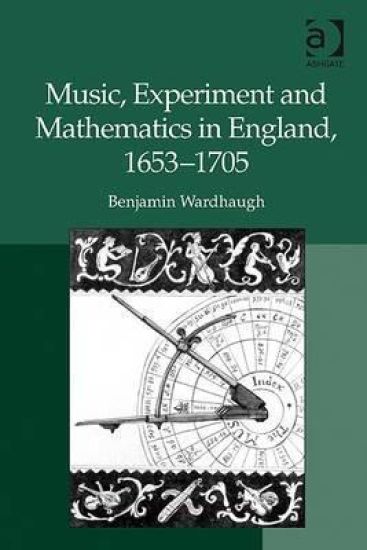
Music, Experiment and Mathematics in England, 1653–1705

Music, Experiment and Mathematics in England, 1653–1705

Benjamin Wardhaugh

Ashgate Publishing Limited
2008
sidottu
How, in 1705, was Thomas Salmon, a parson from Bedfordshire, able to persuade the Royal Society that a musical performance could constitute a scientific experiment? Or that the judgement of a musical audience could provide evidence for a mathematically precise theory of musical tuning? This book presents answers to these questions. It constitutes a general history of quantitative music theory in the late seventeenth century as well as a detailed study of one part of that history: namely the applications of mathematical and mechanical methods of understanding to music that were produced in England between 1653 and 1705, beginning with the responses to Descartes's 1650 Compendium musicæ, and ending with the Philosophical Transactions' account of the appearance of Thomas Salmon at the Royal Society in 1705. The book is organized around four key questions. Do musical pitches form a small set or a continuous spectrum? Is there a single faculty of hearing which can account for musical sensation, or is more than one faculty at work? What is the role of harmony in the mechanical world, and where can its effects be found? And what is the relationship between musical theory and musical practice? These are questions which are raised and discussed in the sources themselves, and they have wide significance for early modern theories of knowledge and sensation more generally, as well as providing a fascinating side light onto the world of the scientific revolution.