Kirjojen hintavertailu. Mukana 12 595 353 kirjaa ja 12 kauppaa.

Kirjailija

Benn Steil

Kirjat ja teokset yhdessä paikassa: 10 kirjaa, julkaisuja vuosilta 2008-2025, suosituimpien joukossa Money, Markets, and Sovereignty. Vertaile teosten hintoja ja tarkista saatavuus suomalaisista kirjakaupoista.

10 kirjaa

Kirjojen julkaisuhaarukka 2008-2025.

The World That Wasn't: Henry Wallace and the Fate of the American Century
From the acclaimed economist-historian and author of The Marshall Plan, a "timely, riveting" (The Washington Post) new perspective on the political career of Henry Wallace--one that will forever change how we view the making of US and Soviet foreign policy at the dawn of the Cold War. Henry Wallace is the most important, and certainly the most fascinating, almost-president in American history. As FDR's third-term vice president, and a hero to many progressives, he lost his place on the 1944 Democratic ticket in a wild open convention, resulting in Harry Truman becoming president upon FDR's death. Books, films, and even plays have since portrayed the circumstances surrounding Wallace's defeat as corrupt, and the results catastrophic. Filmmaker Oliver Stone, among others, has claimed that Wallace's loss ushered in four decades of devastating and unnecessary Cold War. Now, based on striking new finds from Russian, FBI, and other archives, Benn Steil's The World That Wasn't paints a decidedly less heroic portrait of the man, of the events surrounding his fall, and of the world that might have been under his presidency. Though a brilliant geneticist, Henry Wallace was a self-obsessed political figure, blind to the manipulations of aides--many of whom were Soviet agents and assets. From 1933 to 1949, Wallace undertook a series of remarkable interventions abroad, each aimed at remaking the world order according to his evolving spiritual blueprint. As agriculture secretary, he fell under the spell of Russian mystics, and used the cover of a plant-gathering mission to aid their doomed effort to forge a new theocratic state in Central Asia. As vice president, he toured a Potemkin Siberian continent, guided by undercover Soviet security and intelligence officials who hid labor camps and concealed prisoners. He then wrote a book, together with an American NKGB journalist source, hailing the region's renaissance under Bolshevik leadership. In China, the Soviets uncovered his private efforts to coax concessions to Moscow from Chiang Kai-shek, fueling their ambitions to dominate Manchuria. Running for president in 1948, he colluded with Stalin to undermine his government's foreign policy, allowing the dictator to edit his most important election speech. It was not until 1950 that he began to acknowledge his misapprehensions regarding the Kremlin's aims and conduct. Meticulously researched and deftly written, The World That Wasn't is a spellbinding work that shows how "American history--and world history--could have turned out very differently if just a few things had gone the other way" (The Wall Street Journal).

The World That Wasn't: Henry Wallace and the Fate of the American Century
From the acclaimed economist-historian and author of The Marshall Plan, a "timely, riveting" (The Washington Post) new perspective on the political career of Henry Wallace--one that will forever change how we view the making of US and Soviet foreign policy at the dawn of the Cold War. Henry Wallace is the most important, and certainly the most fascinating, almost-president in American history. As FDR's third-term vice president, and a hero to many progressives, he lost his place on the 1944 Democratic ticket in a wild open convention, resulting in Harry Truman becoming president upon FDR's death. Books, films, and even plays have since portrayed the circumstances surrounding Wallace's defeat as corrupt, and the results catastrophic. Filmmaker Oliver Stone, among others, has claimed that Wallace's loss ushered in four decades of devastating and unnecessary Cold War. Now, based on striking new finds from Russian, FBI, and other archives, Benn Steil's The World That Wasn't paints a decidedly less heroic portrait of the man, of the events surrounding his fall, and of the world that might have been under his presidency. Though a brilliant geneticist, Henry Wallace was a self-obsessed political figure, blind to the manipulations of aides--many of whom were Soviet agents and assets. From 1933 to 1949, Wallace undertook a series of remarkable interventions abroad, each aimed at remaking the world order according to his evolving spiritual blueprint. As agriculture secretary, he fell under the spell of Russian mystics, and used the cover of a plant-gathering mission to aid their doomed effort to forge a new theocratic state in Central Asia. As vice president, he toured a Potemkin Siberian continent, guided by undercover Soviet security and intelligence officials who hid labor camps and concealed prisoners. He then wrote a book, together with an American NKGB journalist source, hailing the region's renaissance under Bolshevik leadership. In China, the Soviets uncovered his private efforts to coax concessions to Moscow from Chiang Kai-shek, fueling their ambitions to dominate Manchuria. Running for president in 1948, he colluded with Stalin to undermine his government's foreign policy, allowing the dictator to edit his most important election speech. It was not until 1950 that he began to acknowledge his misapprehensions regarding the Kremlin's aims and conduct. Meticulously researched and deftly written, The World That Wasn't is a spellbinding work that shows how "American history--and world history--could have turned out very differently if just a few things had gone the other way" (The Wall Street Journal).

The Marshall Plan

The Marshall Plan

Benn Steil

Oxford University Press
2021
nidottu
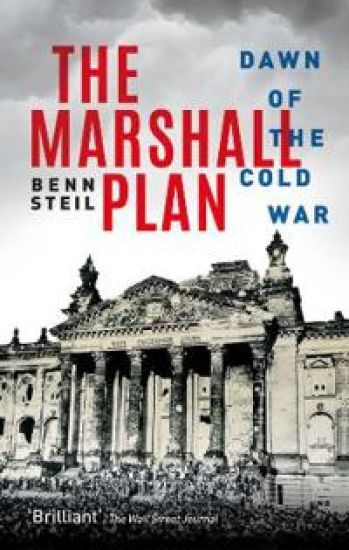
A polished and masterly work of historical narrative, The Marshall Plan is an instant classic of Cold War literature. With Britain's empire collapsing and Stalin's ascendant, U.S. officials under new Secretary of State George C. Marshall set out to reconstruct western Europe as a bulwark against communist authoritarianism. Their massive, costly, and ambitious undertaking would confront Europeans and Americans alike with a vision at odds with their history and self-conceptions. In the process, they would drive the creation of NATO, the European Union, and a Western identity that continues to shape world events. This is the story behind the birth of the Cold War, and the U.S.-led liberal global order, told with verve, insight, and resonance for today. Bringing to bear fascinating new material from American, Russian, German, and other European archives, Benn Steil's book will forever change how we see the Marshall Plan. Focusing on the critical years 1947 to 1949, Steil's gripping narrative takes us through the seminal episodes that marked the collapse of postwar U.S.-Soviet relations: the Prague coup, the Berlin blockade, and the division of Germany. In each case, Stalin's determination to crush the Marshall Plan and undermine American power in Europe is vividly portrayed. And in a riveting epilogue, Steil shows how the forces which clove Europe in two after the Second World War have reasserted themselves since the collapse of the Soviet Union.
The Marshall Plan: Dawn of the Cold War
" A] brilliant book...by far the best study yet" (The Wall Street Journal) of the gripping history behind the Marshall Plan and its long-lasting influence on our world. In the wake of World War II, with Britain's empire collapsing and Stalin's on the rise, US officials under new Secretary of State George C. Marshall set out to reconstruct western Europe as a bulwark against communist authoritarianism. Their massive, costly, and ambitious undertaking would confront Europeans and Americans alike with a vision at odds with their history and self-conceptions. In the process, they would drive the creation of NATO, the European Union, and a Western identity that continue to shape world events. Benn Steil's "thoroughly researched and well-written account" (USA TODAY) tells the story behind the birth of the Cold War, told with verve, insight, and resonance for today. Focusing on the critical years 1947 to 1949, Benn Steil's gripping narrative takes us through the seminal episodes marking the collapse of postwar US-Soviet relations--the Prague coup, the Berlin blockade, and the division of Germany. In each case, Stalin's determination to crush the Marshall Plan and undermine American power in Europe is vividly portrayed. Bringing to bear fascinating new material from American, Russian, German, and other European archives, Steil's account will forever change how we see the Marshall Plan. "Trenchant and timely...an ambitious, deeply researched narrative that...provides a fresh perspective on the coming Cold War" (The New York Times Book Review), The Marshall Plan is a polished and masterly work of historical narrative. An instant classic of Cold War literature, it "is a gripping, complex, and critically important story that is told with clarity and precision" (The Christian Science Monitor). Winner of the 2019 New-York Historical Society Barbara and David Zalaznick Book Prize in American History Winner of the 2018 American Academy of Diplomacy Douglas Dillon Award Shortlisted for the 2018 Duff Cooper Prize in Literary Nonfiction Honorable Mention (runner-up) for the 2019 ASEEES Marshall D. Shulman Prize
The Marshall Plan

The Marshall Plan

Benn Steil

Oxford University Press
2018
sidottu
With Britain's empire collapsing and Stalin's ascendant, U.S. officials under new Secretary of State George C. Marshall set out to reconstruct western Europe as a bulwark against communist authoritarianism. Their massive, costly, and ambitious undertaking would confront Europeans and Americans alike with a vision at odds with their history and self-conceptions. In the process, they would drive the creation of NATO, the European Union, and a Western identity that continues to shape world events. This is the story behind the birth of the Cold War, and the U.S.-led liberal global order, told with verve, insight, and resonance for today. Bringing to bear fascinating new material from American, Russian, German, and other European archives, Benn Steil's book will forever change how we see the Marshall Plan. Focusing on the critical years 1947 to 1949, Steil's gripping narrative takes us through the seminal episodes marking the collapse of postwar U.S.-Soviet relations: the Prague coup, the Berlin blockade, and the division of Germany. In each case, Stalin's determination to crush the Marshall Plan and undermine American power in Europe is vividly portrayed. And in a riveting epilogue, Steil shows how the forces which clove Europe in two after the Second World War have reasserted themselves since the collapse of the Soviet Union. A polished and masterly work of historical narrative, The Marshall Plan is an instant classic of Cold War literature.
The Battle of Bretton Woods

The Battle of Bretton Woods

Benn Steil

Princeton University Press
2014
pokkari
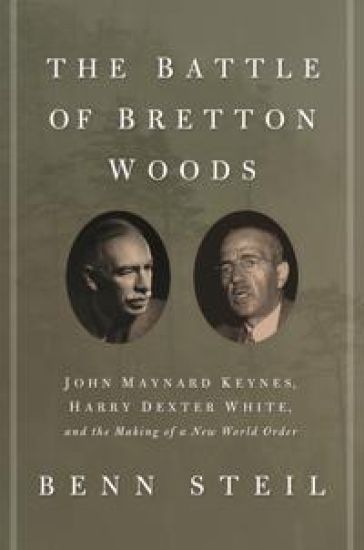
When turmoil strikes world monetary and financial markets, leaders invariably call for 'a new Bretton Woods' to prevent catastrophic economic disorder and defuse political conflict. The name of the remote New Hampshire town where representatives of forty-four nations gathered in July 1944, in the midst of the century's second great war, has become shorthand for enlightened globalization. The actual story surrounding the historic Bretton Woods accords, however, is full of startling drama, intrigue, and rivalry, which are vividly brought to life in Benn Steil's epic account. Upending the conventional wisdom that Bretton Woods was the product of an amiable Anglo-American collaboration, Steil shows that it was in reality part of a much more ambitious geopolitical agenda hatched within President Franklin D. Roosevelt's Treasury and aimed at eliminating Britain as an economic and political rival. At the heart of the drama were the antipodal characters of John Maynard Keynes, the renowned and revolutionary British economist, and Harry Dexter White, the dogged, self-made American technocrat. Bringing to bear new and striking archival evidence, Steil offers the most compelling portrait yet of the complex and controversial figure of White--the architect of the dollar's privileged place in the Bretton Woods monetary system, who also, very privately, admired Soviet economic planning and engaged in clandestine communications with Soviet intelligence officials and agents over many years. A remarkably deft work of storytelling that reveals how the blueprint for the postwar economic order was actually drawn, The Battle of Bretton Woods is destined to become a classic of economic and political history.
The Battle of Bretton Woods

The Battle of Bretton Woods

Benn Steil

PRINCETON UNIVERSITY PRESS
2013
sidottu
When turmoil strikes world monetary and financial markets, leaders invariably call for 'a new Bretton Woods' to prevent catastrophic economic disorder and defuse political conflict. The name of the remote New Hampshire town where representatives of forty-four nations gathered in July 1944, in the midst of the century's second great war, has become shorthand for enlightened globalization. The actual story surrounding the historic Bretton Woods accords, however, is full of startling drama, intrigue, and rivalry, which are vividly brought to life in Benn Steil's epic account. Upending the conventional wisdom that Bretton Woods was the product of an amiable Anglo-American collaboration, Steil shows that it was in reality part of a much more ambitious geopolitical agenda hatched within President Franklin D. Roosevelt's Treasury and aimed at eliminating Britain as an economic and political rival. At the heart of the drama were the antipodal characters of John Maynard Keynes, the renowned and revolutionary British economist, and Harry Dexter White, the dogged, self-made American technocrat. Bringing to bear new and striking archival evidence, Steil offers the most compelling portrait yet of the complex and controversial figure of White--the architect of the dollar's privileged place in the Bretton Woods monetary system, who also, very privately, admired Soviet economic planning and engaged in clandestine communications with Soviet intelligence officials and agents over many years. A remarkably deft work of storytelling that reveals how the blueprint for the postwar economic order was actually drawn, The Battle of Bretton Woods is destined to become a classic of economic and political history.
Money, Markets, and Sovereignty

Money, Markets, and Sovereignty

Benn Steil; Manuel Hinds

Yale University Press
2010
pokkari
Winner of the 2010 Hayek Book Prize given by the Manhattan Institute "Money, Markets and Sovereignty is a surprisingly easy read, given the complicated issues covered. In it, Mr. Steil and Mr. Hinds consistently challenge today's statist nostrums."—Doug Bandow, The Washington Times In this keenly argued book, Benn Steil and Manuel Hinds offer the most powerful defense of economic liberalism since F. A. Hayek published The Road to Serfdom more than sixty years ago. The authors present a fascinating intellectual history of monetary nationalism from the ancient world to the present and explore why, in its modern incarnation, it represents the single greatest threat to globalization. Steil and Hinds describe the current state of international economic relations as both unusual and precarious. Eras of economic protectionism have historically coincided with monetary nationalism, while eras of liberal trade have been accompanied by a universal monetary standard. But today, the authors show, an unprecedentedly liberal global trade regime operates side by side with the most extreme doctrine of monetary nationalism ever contrived—a situation bound to trigger periodic crises. Steil and Hinds call for a revival of the political and economic thinking that underlay earlier great periods of globalization, thinking that is increasingly under threat by more recent ideas about what sovereignty means.
Financial Statecraft

Financial Statecraft

Benn Steil; Robert E. Litan

Yale University Press
2008
pokkari
As trade flows expanded and trade agreements proliferated after World War II, governments—most notably the United States—came increasingly to use their power over imports and exports to influence the behavior of other countries. But trade is not the only way in which nations interact economically. Over the past two decades, another form of economic exchange has risen to a level of vastly greater significance and political concern: the purchase and sale of financial assets across borders. Nearly $2 trillion worth of currency now moves cross-border every day, roughly 90 percent of which is accounted for by financial flows unrelated to trade in goods and services—a stunning inversion of the figures in 1970. The time is ripe to ask fundamental questions about what Benn Steil and Robert Litan have coined as “financial statecraft,” or those aspects of economic statecraft directed at influencing international capital flows. How precisely has the American government practiced financial statecraft? How effective have these efforts been? And how can they be made more effective? The authors provide penetrating and incisive answers in this timely and stimulating book.