Kirjojen hintavertailu. Mukana 12 514 298 kirjaa ja 12 kauppaa.

Kirjailija

Bennett Zon

Kirjat ja teokset yhdessä paikassa: 11 kirjaa, julkaisuja vuosilta 1999-2021, suosituimpien joukossa Music and Orientalism in the British Empire, 1780s–1940s. Vertaile teosten hintoja ja tarkista saatavuus suomalaisista kirjakaupoista.

11 kirjaa

Kirjojen julkaisuhaarukka 1999-2021.

Victorian Culture and the Origin of Disciplines

Victorian Culture and the Origin of Disciplines

Bernard Lightman; Bennett Zon

TAYLOR FRANCIS LTD
2021
nidottu
Current studies in disciplinarity range widely across philosophical and literary contexts, producing heated debate and entrenched divergences. Yet, despite their manifest significance for us today seldom have those studies engaged with the Victorian origins of modern disciplinarity. Victorian Culture and the Origin of Disciplines adds a crucial missing link in that history by asking and answering a series of deceptively simple questions: how did Victorians define a discipline; what factors impinged upon that definition; and how did they respond to disciplinary understanding? Structured around sections on professionalization, university curriculums, society journals, literary genres and interdisciplinarity, Victorian Culture and the Origin of Disciplines addresses the tangled bank of disciplinarity in the arts, humanities, social sciences and natural sciences including musicology, dance, literature, and art history; classics, history, archaeology, and theology; anthropology, psychology; and biology, mathematics and physics. Chapters examine the generative forces driving disciplinary formation, and gauge its success or failure against social, cultural, political, and economic environmental pressures. No other volume has focused specifically on the origin of Victorian disciplines in order to track the birth, death, and growth of the units into which knowledge was divided in this period, and no other volume has placed such a wide array of Victorian disciplines in their cultural context.
Victorian Culture and the Origin of Disciplines

Victorian Culture and the Origin of Disciplines

Bernard Lightman; Bennett Zon

Routledge
2019
sidottu
Current studies in disciplinarity range widely across philosophical and literary contexts, producing heated debate and entrenched divergences. Yet, despite their manifest significance for us today seldom have those studies engaged with the Victorian origins of modern disciplinarity. Victorian Culture and the Origin of Disciplines adds a crucial missing link in that history by asking and answering a series of deceptively simple questions: how did Victorians define a discipline; what factors impinged upon that definition; and how did they respond to disciplinary understanding? Structured around sections on professionalization, university curriculums, society journals, literary genres and interdisciplinarity, Victorian Culture and the Origin of Disciplines addresses the tangled bank of disciplinarity in the arts, humanities, social sciences and natural sciences including musicology, dance, literature, and art history; classics, history, archaeology, and theology; anthropology, psychology; and biology, mathematics and physics. Chapters examine the generative forces driving disciplinary formation, and gauge its success or failure against social, cultural, political, and economic environmental pressures. No other volume has focused specifically on the origin of Victorian disciplines in order to track the birth, death, and growth of the units into which knowledge was divided in this period, and no other volume has placed such a wide array of Victorian disciplines in their cultural context.
Evolution and Victorian Musical Culture

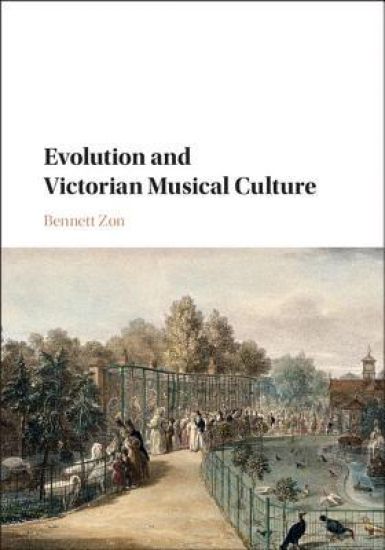
Evolution and Victorian Musical Culture

Bennett Zon

Cambridge University Press
2017
sidottu
This engaging book explores the dynamic relationship between evolutionary science and musical culture in Victorian Britain, drawing upon a wealth of popular scientific and musical literature to contextualize evolutionary theories of the Darwinian and non-Darwinian revolutions. Bennett Zon uses musical culture to question the hegemonic role ascribed to Darwin by later thinkers, and interrogates the conceptual premise of modern debates in evolutionary musicology. Structured around the Great Chain of Being, chapters are organized by discipline in successively ascending order according to their object of study, from zoology and the study of animal music to theology and the music of God. Evolution and Victorian Musical Culture takes a non-Darwinian approach to the interpretation of Victorian scientific and musical interrelationships, debunking the idea that the arts had little influence on contemporary scientific ideas and, by probing the origins of musical interdisciplinarity, the volume shows how music helped ideas about evolution to evolve.
Nineteenth-Century Music

Nineteenth-Century Music

Bennett Zon

Routledge
2016
nidottu
This selection of essays represents a wide cross-section of the papers given at the Tenth International Conference on Nineteenth-Century Music held at the University of Bristol in 1998. Sections include thematic groupings of work on musical meaning, Wagner, Liszt, musical culture in France, music and nation, and women and music.
Music and Metaphor in Nineteenth-Century British Musicology
’In a word, I shall endeavour to show how our music, having been originally a shell-fish, with its restrictive skeleton on the outside and no soul within, has been developed by the inevitable laws of evolution, through natural selection and the survival of the fittest, into something human, even divine, with the strong, logical skeleton of its science inside, the fair flesh of God-given beauty outside, and the whole, like man himself, animated by a celestial, eternal spirit....’ W.J. Henderson, The Story of Music (1889) Critical writing about music and music history in nineteenth-century Britain was permeated with metaphor and analogy. Music and Metaphor examines how over-arching theories of music history were affected by reference to various figurative linguistic templates adopted from other disciplines such as art, religion, politics and science. Each section of the book discusses a wide range of musicological writings and their correspondence with the language used to convey contemporary ideas such as the sublime, the ancient and modern debate, and, in particular, the theory of evolution. Bennett Zon reveals that through their application of metaphorical frameworks taken from art, religion and science, these writers and their work shed light on nineteenth-century perceptions of music history and illuminate the ways in which these disciplines affected notions of musical development.
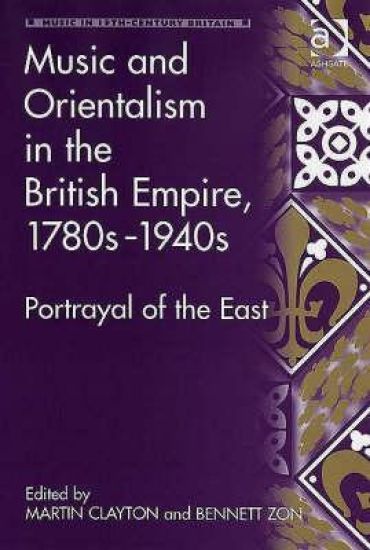
Music and Orientalism in the British Empire, 1780s–1940s
Filling a significant gap in current scholarship, the fourteen original essays that make up this volume individually and collectively reflect on the relationship between music and Orientalism in the British Empire over the course of the long nineteenth century. The book is in four themed sections. 'Portrayal of the East' traces the routes from encounter to representation and restores the Orient to its rightful place in histories of Orientalism. 'Interpreting Concert Music' looks at one of the principal forms in which Orientalism could be brought to an eager and largely receptive - yet sometimes resistant - mass market. 'Words and Music' investigates the confluence of musical and Orientalist themes in different genres of writing, including criticism, fiction and travel writing. Finally, 'The Orientalist Stage' discusses crucial sites of Orientalist representation - music theatre and opera - as well as tracing similar phenomena in twentieth-century Hindi cinema. These final chapters examine the rendering of the East as 'unachievable and unrecognizable' for the consuming gaze of the western spectator.
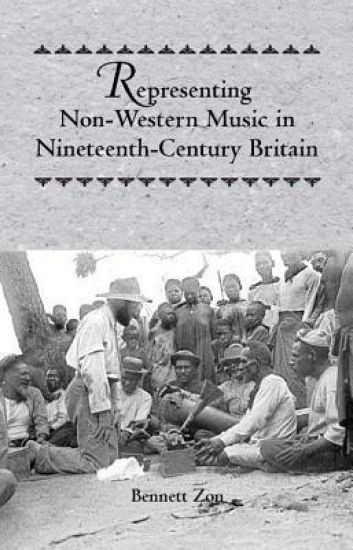
Representing Non-Western Music in Nineteenth-Century Britain

Representing Non-Western Music in Nineteenth-Century Britain

Bennett Zon

University of Rochester Press
2007
sidottu
Bennett Zon's Representing Non-Western Music in Nineteenth-Century Britain is the first book to situate non-Western music within the intellectual culture of nineteenth-century Britain. It covers many crucial issues -- race, orientalism, otherness, evolution -- and explores the influence of important anthropological theories on the perception of non-Western music. The book also considers a wide range of other writings of the period, from psychology and travel literature to musicology and theories of musical transcription, and it reflects on the historically problematic term "ethnomusicology." Representing Non-Western Music discusses such theories as noble simplicity, monogenism and polygenism, the comparative method, degenerationism, and developmentalism. Zon looks at the effect of evolutionism on the musical press, general music histories, and histories of national music. He also treats the work of Charles Samuel Myers, the first Britain to record non-Western music in the field, and explores how A. H. Fox Strangways used contemporary translation theory as an analogy for transcription in The Music of Hindostan (1914) to show that individuality can be retained by embracing foreign elements rather than adapting them to Western musical style. Bennett Zon is Reader in Music and Fellow of the Institute of Advanced Study, Durham University UK and author of Music and Metaphor in Nineteenth-Century British Musicology (Ashgate, 2000).
Music and Orientalism in the British Empire, 1780s–1940s
Filling a significant gap in current scholarship, the fourteen original essays that make up this volume individually and collectively reflect on the relationship between music and Orientalism in the British Empire over the course of the long nineteenth century. The book is in four themed sections. 'Portrayal of the East' traces the routes from encounter to representation and restores the Orient to its rightful place in histories of Orientalism. 'Interpreting Concert Music' looks at one of the principal forms in which Orientalism could be brought to an eager and largely receptive - yet sometimes resistant - mass market. 'Words and Music' investigates the confluence of musical and Orientalist themes in different genres of writing, including criticism, fiction and travel writing. Finally, 'The Orientalist Stage' discusses crucial sites of Orientalist representation - music theatre and opera - as well as tracing similar phenomena in twentieth-century Hindi cinema. These final chapters examine the rendering of the East as 'unachievable and unrecognizable' for the consuming gaze of the western spectator.
Nineteenth-Century Music

Nineteenth-Century Music

Bennett Zon

Ashgate Publishing Limited
2002
sidottu
This selection of essays represents a wide cross-section of the papers given at the Tenth International Conference on Nineteenth-Century Music held at the University of Bristol in 1998. Sections include thematic groupings of work on musical meaning, Wagner, Liszt, musical culture in France, music and nation, and women and music.
Music and Metaphor in Nineteenth-Century British Musicology
’In a word, I shall endeavour to show how our music, having been originally a shell-fish, with its restrictive skeleton on the outside and no soul within, has been developed by the inevitable laws of evolution, through natural selection and the survival of the fittest, into something human, even divine, with the strong, logical skeleton of its science inside, the fair flesh of God-given beauty outside, and the whole, like man himself, animated by a celestial, eternal spirit....’ W.J. Henderson, The Story of Music (1889) Critical writing about music and music history in nineteenth-century Britain was permeated with metaphor and analogy. Music and Metaphor examines how over-arching theories of music history were affected by reference to various figurative linguistic templates adopted from other disciplines such as art, religion, politics and science. Each section of the book discusses a wide range of musicological writings and their correspondence with the language used to convey contemporary ideas such as the sublime, the ancient and modern debate, and, in particular, the theory of evolution. Bennett Zon reveals that through their application of metaphorical frameworks taken from art, religion and science, these writers and their work shed light on nineteenth-century perceptions of music history and illuminate the ways in which these disciplines affected notions of musical development.
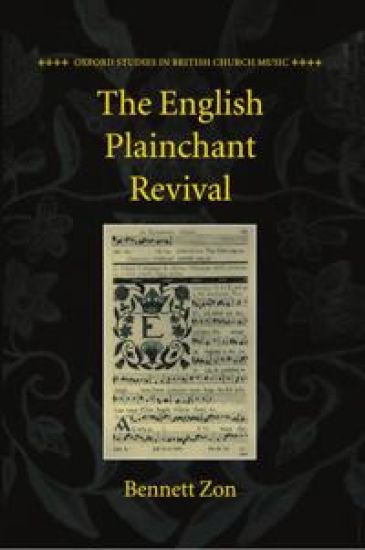
The English Plainchant Revival

The English Plainchant Revival

Bennett Zon

Clarendon Press
1999
sidottu
This study provides a general introduction to the sources of the plainchant revival in eighteenth- and nineteenth-century England. Part I examines the eighteenth-century Catholic revival, in particular the work of John Frances Wade, a Roman Catholic plainchant scribe and publisher. His work centred on the Roman Catholic foreign embassy chapels in London during the waning years of the recusancy period, and his collaboration with contemporary publishers and musicians is evidenced in numerous contemporary letters, music manuscripts, and printed works. In Part II the starting point for the Roman Catholic revival is Novello's A Collection of Sacred Music and for the Anglican revival, Reinagle's A Collection of Psalm & Hymn Tunes. Pro-Gregorian enthusiasts monitored the progress of the revival well into the nineteenth century, but it was not until the late 1830s that plainchant became a cause célèbre in Anglican and Catholic worship alike. A multiplicity of plainchant publications followed well into the 1870s, with Thomas Helmores ranking first among them. By this time plainchant had become an integral, albeit controversial, part of musical worship in both churches. Bennett Zon brings together a host of previously undiscovered or unknown eighteenth- and nineteenth-century sources, drawing mainly upon printed and manuscript works. Contemporary periodical and occasional literature provide further insight into their musical and social contexts. This is as much a source book for ecclesiastical history of the eighteenth and nineteenth centuries as it is a chronicling of the plainchant revival, and it will be of interest to ecclesiastical historians, plainchant enthusiasts, church musicians, and bibliographers.