Kirjojen hintavertailu. Mukana 12 390 323 kirjaa ja 12 kauppaa.
Kirjailija
Benoît Vermander
Kirjat ja teokset yhdessä paikassa: 10 kirjaa, julkaisuja vuosilta 2014-2025, suosituimpien joukossa Comment Lire Les Classiques Chinois ?. Vertaile teosten hintoja ja tarkista saatavuus suomalaisista kirjakaupoista.
Via a hermeneutics focused on Chinese numerology and concentric arrangements, this book offers a novel construal of the textual universe proper to early China writings. The author lays bare distinguishable patterns of textual composition while relating them to corresponding patterns of thinking. He differentiates rhetorical variants through detailed studies of the Zhuangzi’s Inner chapters, the Laozi, the Analects, and the Huainanzi. The philosophical depth and relevance of the Chinese ancient worldview appear in a fresh light when one unearths the patterns into which its content is embedded. The focus on textual patterns and rhetorical arrangements also facilitates the reading of Chinese classics alongside other traditions. The book will be a valuable reference for scholars and graduate students studying Chinese literary criticism, Chinese philosophy, and comparative philosophy.
Vermander revisits the encounter between Chinese and Western philosophy while unfolding questions about the way "comparative philosophy" is conducted today. In the vulgate of intellectual history, "Western thought" has constructed a substantialist view of reality that puts "relations" and "processes" into a subordinate position. The same view explains for the primacy given to the autonomy of individual beings. In contrast, according to the same vulgate, Chinese thought has been stressing the fluidity of all phenomena and forms of life to best adapt to their overarching patterns. The critique of these representations is a preliminary for tackling the following question: in today’s context, what style of cross-cultural philosophical engagement should be imagined and fostered? Cross-cultural philosophical dialogue is indeed indispensable to the revival of philosophies that could be both local and genuinely dialogic. The first two chapters focus upon the dominant model propounded by Western sinologists when it comes to comparing the Western philosophical tradition with the Chinese one. The third chapter shifts to Chinese narratives about local, comparative, and global philosophies, notably assessing its self-positioning vis-à-vis Western authors, topics, and concepts. Chapter 4 offers a general reading of ancient Chinese classics, alternative to the one that presently dominates the landscape described in Chapters 1 to 3. Chapter 5 harnesses the results and insights already gathered, offering a blueprint as to the way to positively draw upon different philosophical traditions to engage common questions and pursue shared endeavors. A last chapter presents four cases of ongoing transcultural philosophical dialogues and the promises they bear, while the conclusion recapitulates the journey and opens further perspectives. Once it develops outside pre-formatted narratives, the web shaped by our philosophies and wisdoms suggests the outlines of a world that we could inhabit together.
Via a hermeneutics focused on Chinese numerology and concentric arrangements, this book offers a novel construal of the textual universe proper to early China writings.The author lays bare distinguishable patterns of textual composition while relating them to corresponding patterns of thinking. He differentiates rhetorical variants through detailed studies of the Zhuangzi’s Inner chapters, the Laozi, the Analects, and the Huainanzi. The philosophical depth and relevance of the Chinese ancient worldview appear in a fresh light when one unearths the patterns into which its content is embedded. The focus on textual patterns and rhetorical arrangements also facilitates the reading of Chinese classics alongside other traditions.The book will be a valuable reference for scholars and graduate students studying Chinese literary criticism, Chinese philosophy, and comparative philosophy.
Vermander revisits the encounter between Chinese and Western philosophy while unfolding questions about the way "comparative philosophy" is conducted today. In the vulgate of intellectual history, "Western thought" has constructed a substantialist view of reality that puts "relations" and "processes" into a subordinate position. The same view explains for the primacy given to the autonomy of individual beings. In contrast, according to the same vulgate, Chinese thought has been stressing the fluidity of all phenomena and forms of life to best adapt to their overarching patterns. The critique of these representations is a preliminary for tackling the following question: in today’s context, what style of cross-cultural philosophical engagement should be imagined and fostered? Cross-cultural philosophical dialogue is indeed indispensable to the revival of philosophies that could be both local and genuinely dialogic. The first two chapters focus upon the dominant model propounded by Western sinologists when it comes to comparing the Western philosophical tradition with the Chinese one. The third chapter shifts to Chinese narratives about local, comparative, and global philosophies, notably assessing its self-positioning vis-à-vis Western authors, topics, and concepts. Chapter 4 offers a general reading of ancient Chinese classics, alternative to the one that presently dominates the landscape described in Chapters 1 to 3. Chapter 5 harnesses the results and insights already gathered, offering a blueprint as to the way to positively draw upon different philosophical traditions to engage common questions and pursue shared endeavors. A last chapter presents four cases of ongoing transcultural philosophical dialogues and the promises they bear, while the conclusion recapitulates the journey and opens further perspectives. Once it develops outside pre-formatted narratives, the web shaped by our philosophies and wisdoms suggests the outlines of a world that we could inhabit together.
Comment lire les classiques chinois? Comment les lire pour eux-memes, mais aussi avec les questions qui sont notres? Cet ouvrage presente l'ensemble de la production textuelle chinoise antique comme la variete des approches par lesquelles on l'interprete. Il montre l'unite organique de ce massif textuel, construite autour d'une apprehension reflexive de nos experiences corporelles, et il detaille les debats qui le traversent, lesquels restent largement les notres: le marquage de la difference des sexes, des generations et des classes; la maniere dont se construit et se conteste l'ordre symbolique; la maitrise politique du langage. Une derniere partie revele la coherence et la sophistication des structures de composition qui gouvernent nos textes. Leur mise en evidence renouvelle la comprehension du Laozi, du Zhuangzi ou encore des Entretiens de Confucius. L'epilogue de l'ouvrage trace la voie d'une lecture partagee des classiques autour desquels l'humanite se rencontre, se dechire, et continue a se construire.
Un panorama mondial qui envisage les cereales et pseudocereales dans leur rapport a la sedentarisation de l'humanite, a l'evolution des differentes civilisations depuis le Neolithique, et a l'avenir de nos relations avec toutes les formes du vivant. Une etude concrete et abondamment illustree des differentes especes de cereales et de leurs usages Une source de reflexions sur les reponses que les cereales peuvent apporter aux defis alimentaires, environnementaux et spirituels des generations de demain Une mise en perspective de la portee symbolique et religieuse des cereales a travers les epoques et les civilisations- Un compte-rendu complet des echanges biologiques et technologiques qui se sont succede jusqu'aux enjeux actuels de la mondialisation Une approche transdisciplinaire, qui combine l'experience de terrain et les connaissances complementaires d'Alain Bonjean, geneticien des plantes, et Benoit Vermander, enseignant en sciences sociales et religieuses. Cet ouvrage retrace la longue histoire des interactions entre l'Homme et les cereales. Depuis les premieres tentatives de domestication jusqu'aux applications agronomiques les plus contemporaines de la genomique, depuis les gestes de partage qui scandent le quotidien jusqu'aux rituels agraires les plus elabores, Alain Bonjean et Benoit Vermander devoilent la diversite des especes productrices de grain et celle des societes qui s'organisent autour de leur culture. La domestication des orges, exemplaire du travail poursuivi entre la nature et l'humanite; la naissance des bles dans le croissant fertile, leur introduction en Europe puis dans le monde entier; la precoce mise en valeur des millets et l'exuberance du repertoire mythique qui les accompagne; les transferts et les drames qui ont marque l'echange colombien, depuis l'introduction du mais en Europe jusqu'a celle de techniques culturales africaines en Amerique du Nord; le repertoire elabore des riz asiatiques et des rituels associes; la diversite maintenue des cereales africaines, celle des especes andines trop longtemps negligees, gage d'espoir pour l'humanite... Telles sont quelques-unes des etapes de ce livre, qui ouvre des perspectives inedites sur les rapports entre l'homme et le vegetal et sur les crises qui marquent aujourd'hui pareille relation.
A l'instar du Domaine royal dont elle partage les origines, la ville de Versailles s'est constituee en un organisme pourvu de son dynamisme propre - en un ecosysteme. L'ouvrage est d'abord le recit, souvent surprenant, de l'evolution d'une ville dont la place dans l'histoire politique francaise est sans equivalent. Inseparable en ses debuts de la representation monarchique, Versailles deviendra pourtant le Mont Aventin de la Republique (Leon Bourgeois); la ville continue a dire et montrer la Nation tout en marquant l'ecart avec ses centres de pouvoir. Ce faisant, Versailles, en son ethos, ses espaces, sa memoire, devoile la tension a l'oeuvre entre l'Idee republicaine et l'imaginaire national, ce dernier travaille par des schemes trifonctionnels inscrits dans l'histoire longue: a Versailles nous est conte par quels sortileges le Tiers se fait Tout et le Tout se divise en tiers. Versailles apparait alors comme un camee dans lequel on peut detailler des structures mentales d'ampleur bien plus vaste. Cette etude des representations croisees de la ville, de la republique et de la nation beneficie d'une distance comparatiste inspiree notamment par la longue familiarite de l'auteur avec le monde chinois. Essai d'anthropologie politique, l'ouvrage ambitionne d'eclairer comment sont negocies les frontieres, les symboles et la charge sacrale des identites collectives. Versailles demeure l'un des sites ou se devoile le plus clairement la facon dont le corps social s'engendre et se celebre en une invention continue.
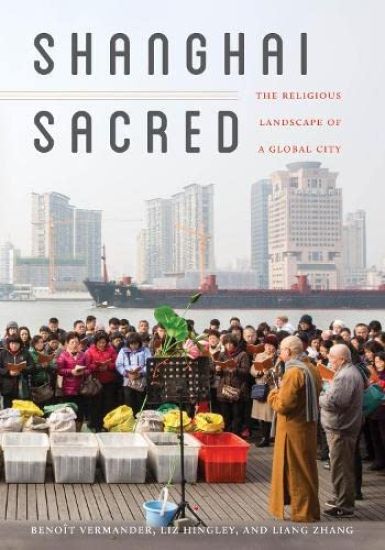
Shanghai, a dynamic world metropolis, is home to a multitude of religions, from Buddhism and Islam, to Christianity and Baha'ism, to Hinduism and Daoism, and many more. In this city of 24 million inhabitants, new religious groups and older faiths together claim and reclaim spiritual space.Shanghai Sacred explores the spaces, rituals, and daily practices that make up the religious landscape of the city, offering a new paradigm for the study of Chinese spirituality that reflects the global trends shaping Chinese culture and civil society.Based on years of fieldwork, incorporating both comparative and methodological perspectives, Shanghai Sacred demonstrates how religions are lived, constructed, and thus inscribed into the social imaginary of the metropolis. Evocative photographs by Liz Hingley enrich and interact with the narrative, making the book an innovative contribution to religious visual ethnography.
Shanghai, a dynamic world metropolis, is home to a multitude of religions, from Buddhism and Islam, to Christianity and Baha'ism, to Hinduism and Daoism, and many more. In this city of 24 million inhabitants, new religious groups and older faiths together claim and reclaim spiritual space.Shanghai Sacred explores the spaces, rituals, and daily practices that make up the religious landscape of the city, offering a new paradigm for the study of Chinese spirituality that reflects the global trends shaping Chinese culture and civil society.Based on years of fieldwork, incorporating both comparative and methodological perspectives, Shanghai Sacred demonstrates how religions are lived, constructed, and thus inscribed into the social imaginary of the metropolis. Evocative photographs by Liz Hingley enrich and interact with the narrative, making the book an innovative contribution to religious visual ethnography.
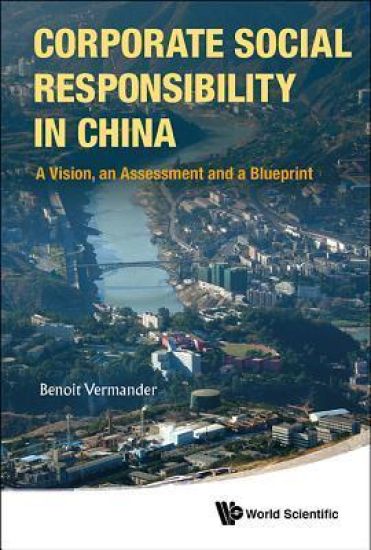
Over the years, many corporations have been trying to determine what they can and should do to contribute to the sustainability of the economic, social and ecological environment within which they operate. Corporate social responsibility has become a key senior management issue worldwide and an increasingly debated topic in China. This book aims at helping companies operating in China to better assess and exercise their corporate social responsibility (CSR) in specific contexts. The purpose of this book is to show that CSR has a strong economic pay back in the long run, that it is a key success factor in nurturing corporate excellence, and that a sense of urgency and accrued inventiveness are required from companies operating in China. This practical, business-oriented book takes into account China's classical and contemporary thought on CSR. It is the result of a long research and collaborative process, with several institutions (notably the Chinese's People Institute of Foreign Affairs, Fudan University, the Taipei Ricci Institute, BNP Paribas and the Chirac Foundation) during 2005 - 2010 and later with some industry leaders. Cross-disciplinary in scope, the book aims at helping students and analysts in political science, governance, international relations and Chinese studies to understand and appreciate the unique role that firms play in shaping a new China. It focuses on the relationship between the state, civil society and corporations in the Chinese context. It researches the conditions under which this relationship might result in redefining China's developmental model.