Kirjojen hintavertailu. Mukana 12 657 676 kirjaa ja 12 kauppaa.

Kirjailija

Bent Flyvbjerg

Kirjat ja teokset yhdessä paikassa: 11 kirjaa, julkaisuja vuosilta 1998-2026, suosituimpien joukossa Kvalitative metoder. Vertaile teosten hintoja ja tarkista saatavuus suomalaisista kirjakaupoista.

11 kirjaa

Kirjojen julkaisuhaarukka 1998-2026.

Kvalitative metoder

Kvalitative metoder

Svend Brinkmann; Charlotte Andreas Baarts; Barbara Czarniawska; Peter Dahler-Larsen; Norman Denzin; Bent Flyvbjerg; Morten Frederiksen; Judy Gammelgaard; Bente Halkier; Martyn Hammersley; Kirsten Hastrup; Bo Jacobsen; Casper Bruun Jensen; Frederikke Skaaning Knage; Søren Kristiansen; Unni Lind; Kennet Lynggaard; Perle Møhl; Anne-Kirstine Mølholt; Henrik Kaare Nielsen; Kristian Nødvedt Knudsen; Louise Jane Phillips; Pernille Rasmussen; Jakob Steensig; Thomas Szulevicz; Dorte Marie Søndergaard; Lene Tanggaard Pedersen

Gyldendal
2025
sidottu
KVALITATIVE METODER belyser, hvordan mennesker oplever og beretter om verden, hvordan de agerer, og hvordan menneskelige fænomener fremtræder og udvikler sig i komplekse sammenhænge. I denne 4. udgave er samtlige kapitler reviderede og opdaterede, og indeholder bl.a. nye kapitler om digital etnografi, kvalitative forløbsstudier, forandringsorienteret forskning, sensoriske metoder, Arts-Based Research og feministisk inspireret metodologi, og er velegnet for både studerende og erfarne kvalitative forskere. Bogens 29 kapitler giver en indføring i de kvalitative metoders teori, men lægger først og fremmest vægt på konkret at beskrive den håndværksmæssige kunnen, som præger indsigtsgivende kvalitative studier. Bogen tilbyder et overblik over typiske, kvalitative metoder, og hvordan disse anvendes i dansk og international kontekst. Kvalitative metoder har været i hastig vækst i human- og samfundsvidenskaberne i de seneste ca. 25 år, og forskere har på tværs af faggrænser udviklet et væld af forskellige teknikker, tilgange og perspektiver. De beskrevne metoder er på forskellig vis egnede til at beskrive, forstå, fortolke og analysere den menneskelige erfarings mange nuancer og kvaliteter, hvilket gør denne bog til et centralt værktøj og supplement for mange forskellige fag og uddannelsesniveauer. Svend Brinkmann er professor i psykologi ved Aalborg Universitet. Lene Tanggaard er professor i pædagogisk psykologi ved Aalborg Universitet.
HBR's 10 Must Reads 2026

HBR's 10 Must Reads 2026

Erin Meyer; Bent Flyvbjerg; Vijay Govindarajan; David De Cremer

Harvard Business Review Press
2026
sidottu
The definitive leadership and management ideas of the year from Harvard Business Review. We've reviewed the ideas, insights, and best practices from the past year of Harvard Business Review to keep you up to date on the most cutting-edge, influential thinking driving business today. Featuring examples from leaders such as Jensen Huang and Jane Fraser, and companies from Hermès to OpenAI, this volume brings a year's worth of management wisdom right to your fingertips. This book will inspire you to: Eliminate dysfunction in your leadership team Apply the right kinds of questions to strategic decisions Bring everyone on board with your AI efforts Design innovative products that grow with your customers Better assess what macroeconomic risk means for your business Build a corporate culture that truly aligns with your values This collection of articles includes: "The Art of Asking Smarter Questions," by Arnaud Chevallier, Frédéric Dalsace, and Jean-Louis Barsoux; "The Uniqueness Trap," by Bent Flyvbjerg, Alexander Budzier, M.D. Christodoulou, and M. Zottoli; "Why Multibusiness Strategies Fail and How to Make Them Succeed," by Bharat N. Anand and David J. Collis; "One Company A/B Tested Hybrid Work. Here's What It Found," by Nicholas Bloom, James Liang, and Ruobing Han; "Build a Corporate Culture That Works," by Erin Meyer; "Why Leadership Teams Fail," by Thomas Keil and Marianna Zangrillo; "How to Assess True Macroeconomic Risk," by Philipp Carlsson-Szlezak and Paul Swartz; "Five Ways to Ask Your Boss to Advocate for You," by Melody Wilding; "What Comes After DEI," by Lily Zheng; "For Success with AI, Bring Everyone On Board," by David De Cremer, "Design Products That Won't Become Obsolete," by Vijay Govindarajan, Tojin T. Eapen, and Daniel J. Finkenstadt; and "The Strategic Genius of Taylor Swift," by Kevin Evers. HBR's 10 Must Reads are definitive collections of classic ideas, practical advice, and essential thinking from the pages of Harvard Business Review. Exploring topics like disruptive innovation, emotional intelligence, and new technology in our ever-evolving world, these books empower any leader to make bold decisions and inspire others. This edition features a detailed discussion guide to give you and your team the tools you need for sustained success.
Jak robiti veliki spravi. Nespodivani faktori v doli projektiv vid pobutovogo do kosmichnogo masshtabu
In your hands is a book that will help in any matter - from building a skyscraper to repairing a kitchen. After reading it, you will learn to think outside the box, but not for too long. Stop considering psychology and power as separate forces. Learn to ask the right questions before demanding the right answers and to think from right to left. You will reliably keep the correct landmarks in your field of vision. Accept the fact that no process is perfect. And take a new look at forecasting and risk management by analyzing the experience of global companies: Amazon, Pixar, Apple, Mass Transit Railway (MTR), Tesla, Facebook, etc.
Få store ting gjort

Få store ting gjort

Bent Flyvbjerg; Dan Gardner

Psykologisk Forlag
2024
nidottu
Drøm stort – og se drømmen blive virkelighed!Alle storbyer i verden har historier om bragende fiaskoer – om milliardbyggerier og anlægsprojekter, der løb løbsk i astronomiske budgetoverskridelser og heftige forsinkelser.Når det går galt i megaprojekterne, går det for det meste meget galt. Igen og igen ender de storevisioner i vilde mareridt. Verden er også fuld af kuldsejlede projekter i mindre skala: opstart af virksomheder, husombygninger og nye IT-systemer. Resultatet lever sjældent op til forventningerne. Men hvorfor? Professor Bent Flyvbjerg har viet sin karriere til at forstå, hvad der adskiller succes fra fiasko i projekter. I Få store ting gjort trækker han på sin ekspertise i megaprojekter over hele verden, bigdata og forskning. Bogen er fuld af levende historier om projekter, der gik godt eller skidt, lige fra megaprojekter som operahusene i København og Sydney, Storebæltsforbindelsen og udviklingen af Pixar-film til en lille håbløs køkkenrenovering. Få store ting gjort graver dybt i projektfortællingerne og identificerer de værste – og helt almindelige – faldgruber og fejlslutninger. Bogen udleder principperne for god projektledelse, hvor man planlægger langsomt og gennemtænkt – og handler hurtigt og beslutsomt, når projektet skal føres ud i livet.Om forfatterne.Bent Flyvbjerg er professor ved University of Oxford og IT-Universitetet i København. Han er økonomisk geograf og verdens førende ekspert i megaprojekter ifølge den globale revisionsvirksomhed KPMG. Dan Gardner er journalist og forfatter til bøgerne Risk (på dansk 'Frygtens anatomi'), Future Babble og Superforecasting, der alle har været på New York Times' bestsellerliste. * * * * * *Få store ting gjort er kåret som Årets ledelsesbog 2024 af Børsen.
How Big Things Get Done

How Big Things Get Done

Bent Flyvbjerg; Dan Gardner

PAN MACMILLAN
2024
pokkari
Best Books of the Year – The Financial Times and The EconomistShortlisted for the Financial Times and Schroders Business Book of the Year Award 2023World expert Bent Flyvbjerg and bestselling author Dan Gardner reveal the secrets to successfully planning and delivering ambitious projects on any scale.‘Important, timely, instructive and entertaining’ – Daniel Kahneman, bestselling author of Thinking, Fast and SlowNothing is more inspiring than a big vision that becomes a triumphant new reality. Think of how Apple’s iPod went from a project with a single employee to an enormously successful product launch in eleven months. But such successes are the exception. Consider how London’s Crossrail project delivered five years late and billions over budget. More modest endeavours, whether launching a small business, organizing a conference, or just finishing a work project on time, also commonly fail. Why?Understanding what distinguishes the triumphs from the failures has been the life’s work of Oxford professor Bent Flyvbjerg. In How Big Things Get Done, he identifies the errors that lead projects to fail, and the research-based principles that will make yours succeed:Understand your odds. If you don’t know them, you won’t win.Plan slow, act fast. Getting to the action quick feels right. But it’s wrong.Think right to left. Start with your goal, then identify the steps to get there.Find your Lego. Big is best built from small.Master the unknown unknowns. Most think they can’t, so they fail. Flyvbjerg shows how you can.Full of vivid examples ranging from the building of the Sydney Opera House to the making of the latest Pixar blockbusters, How Big Things Get Done reveals how to get any ambitious project done – on time and on budget.'Entertaining . . . compelling . . . there are lessons here for managers of all stripes' – The Economist
How Big Things Get Done (EXP)

How Big Things Get Done (EXP)

Bent Flyvbjerg

Random House US
2024
pokkari
Nothing is more inspiring than a big vision that becomes a triumphant, new reality. Think of how the Empire State Building went from a sketch to the jewel of New York's skyline in twenty-one months, or how Apple's iPod went from a project with a single employee to a product launch in eleven months. These are wonderful stories. But most of the time big visions turn into nightmares. Remember Boston's "Big Dig"? Almost every sizeable city in the world has such a fiasco in its backyard. In fact, no less than 92% of megaprojects come in over budget or over schedule, or both. The cost of California's high-speed rail project soared from $33 billion to $100 billon-and won't even go where promised. More modest endeavors, whether launching a small business, organizing a conference, or just finishing a work project on time, also commonly fail. Why? Understanding what distinguishes the triumphs from the failures has been the life's work of Oxford professor Bent Flyvbjerg, dubbed "the world's leading megaproject expert." In How Big Things Get Done, he identifies the errors in judgment and decision-making that lead projects, both big and small, to fail, and the research-based principles that will make you succeed with yours.
How Big Things Get Done

How Big Things Get Done

Bent Flyvbjerg; Dan Gardner

Crown Publishing Group, Division of Random House Inc
2023
sidottu
The secrets to successfully planning and delivering projects on any scale--from home renovation to space exploration--by the world's leading expert on megaprojects "This book is important, timely, instructive, and entertaining. What more could you ask for?"--Daniel Kahneman, Nobel Prize-winning author of Thinking, Fast and Slow "Over-budget and over-schedule is an inevitability. Incompetence and grift is outrageous. Bent Flyvbjerg, with this terrific data-driven book, has shown that there is another way."--Frank Gehry Nothing is more inspiring than a big vision that becomes a triumphant, new reality. Think of how the Empire State Building went from a sketch to the jewel of New York's skyline in twenty-one months, or how Apple's iPod went from a project with a single employee to a product launch in eleven months. These are wonderful stories. But most of the time big visions turn into nightmares. Remember Boston's "Big Dig"? Almost every sizeable city in the world has such a fiasco in its backyard. In fact, no less than 92% of megaprojects come in over budget or over schedule, or both. The cost of California's high-speed rail project soared from $33 billion to $100 billon--and won't even go where promised. More modest endeavors, whether launching a small business, organizing a conference, or just finishing a work project on time, also commonly fail. Why? Understanding what distinguishes the triumphs from the failures has been the life's work of Oxford professor Bent Flyvbjerg, dubbed "the world's leading megaproject expert." In How Big Things Get Done, he identifies the errors in judgment and decision-making that lead projects, both big and small, to fail, and the research-based principles that will make you succeed with yours. For example: - Understand your odds. If you don't know them, you won't win.- Plan slow, act fast. Getting to the action quick feels right. But it's wrong. - Think right to left. Start with your goal, then identify the steps to get there.- Find your Lego. Big is best built from small.- Be a team maker. You won't succeed without an "us."- Master the unknown unknowns. Most think they can't, so they fail. Flyvbjerg shows how you can.- Know that your biggest risk is you. Full of vivid examples ranging from the building of the Sydney Opera House, to the making of the latest Pixar blockbusters, to a home renovation in Brooklyn gone awry, How Big Things Get Done reveals how to get any ambitious project done--on time and on budget.
Samfundsvidenskab som virker

Samfundsvidenskab som virker

Bent Flyvbjerg

Lindhardt og Ringhof
2009
nidottu
Samfundsvidenskab som virker præsenterer en ny og spændende tilgang til samfunds- og adfærdsvidenskaberne. Bent Flyvbjerg argumenterer for, at samfundsvidenskabernes styrke ligger i den mangefacetterede, refleksive analyse af værdier og magt, der er så afgørende for den sociale og økonomiske udvikling i samfundet, snarere end i forsøg på at efterligne naturvidenskaberne og sigte på generaliseret teori. Flyvbjerg overskrider sædvanlig samfundsvidenskabelig tænkning, når han sammenligner det teoretiske studium af menneskelig aktivitet med situationer i den virkelige verden og demonstrerer, hvordan samfundsvidenskaberne i allerhøjeste grad kan blive relevante i det moderne samfund. Bent Flyvbjergs argumentation er overbevisende. Bogen giver klare metodologiske retningslinjer og praktiske eksempler, og den åbner for en ny fremtid for samfundsvidenskaberne, hvor de er (mindst) lige så vigtige som naturvidenskaberne. Det livgivende budskab vil gøre bogen til pligtlæsning for studerende og universitetsforskere inden for alle områder af samfunds- og adfærdsvidenskaberne. Dette er samfundsvidenskab, som virker. Pierre Bourdieu
Making Social Science Matter

Making Social Science Matter

Bent Flyvbjerg

Cambridge University Press
2001
sidottu
Making Social Science Matter presents an exciting new approach to the social and behavioral sciences including theoretical argument, methodological guidelines, and examples of practical application. Why has social science failed in attempts to emulate natural science and produce normal theory? Bent Flyvbjerg argues that the strength of social sciences lies in its rich, reflexive analysis of values and power, essential to the social and economic development of any society. Richly informed, powerfully argued, and clearly written, this book opens up a new future for the social sciences. Its empowering message will make it required reading for students and academics across the social and behavioral sciences.
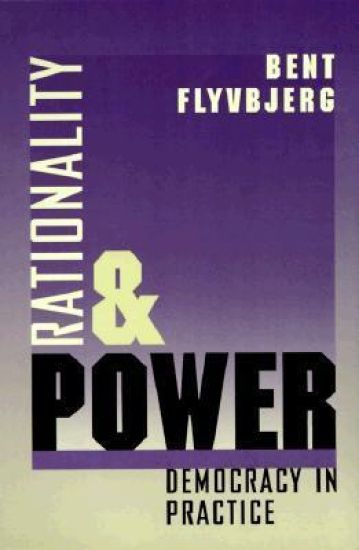
Rationality and Power

Rationality and Power

Bent Flyvbjerg

University of Chicago Press
1998
nidottu
In the Enlightenment tradition, rationality is considered well-defined, independent of context; we know what rationality is, and its meaning is constant across time and space. However, Bent Flyvbjerg argues that rationality is context-dependent and that the crucial context is determined by decision-makers' political power. Flyvbjerg takes us behind the scenes to uncover the real politics - and real rationality - of public administration and planning in an internationally acclaimed project for environmental improvement in the Danish city of Aalborg. The result is a narrative that is both concrete and general, current and timeless. Drawing on the ideas of Machiavelli, Nietzsche, Habermas, and Foucault, Flyvbjerg reads the Aalborg case as a metaphor of modernity and of modern politics. Flyvbjerg shows how power actually distorted policy deliberation over a policy aimed at, among other things, reducing auto traffic in downtown Aalborg. He demonstrates how modern "rationality" can only be an ideal when confronted with the real rationalities involved in decision-making by administrators and policy makers. Flyvbjerg then elaborates on how this problem can be avoided so that fruitful deliberation and action can occur.