Kirjojen hintavertailu. Mukana 12 540 443 kirjaa ja 12 kauppaa.
Kirjailija
Bernard C. Nalty
Kirjat ja teokset yhdessä paikassa: 36 kirjaa, julkaisuja vuosilta 2005-2025, suosituimpien joukossa With Courage: The U.S. Army Air Forces in World War II. Vertaile teosten hintoja ja tarkista saatavuus suomalaisista kirjakaupoista.
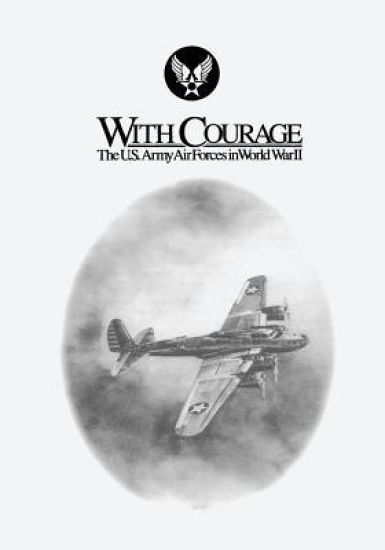
The four years between 1941 and 1945 were years in which the nation raised and trained an air armada and committed it to operations on a scale unknown to that time. With Courage: The U.S. Army Air Forces in World War II retells the story of sacrifice, valor, and achievements in air campaigns against tough determined adversaries. It describes the development of a uniquely American doctrine for the application of air power against an opponent's key industries and centers of national life, a doctrine whose legacy today is the Global Reach - Global Power strategic planning framework of the modern U.S. Air Force. The narrative integrates aspects of strategic intelligence, logistics, technology, and leadership to offer a full yet concise account of the contributions of American air power to victory in that war.
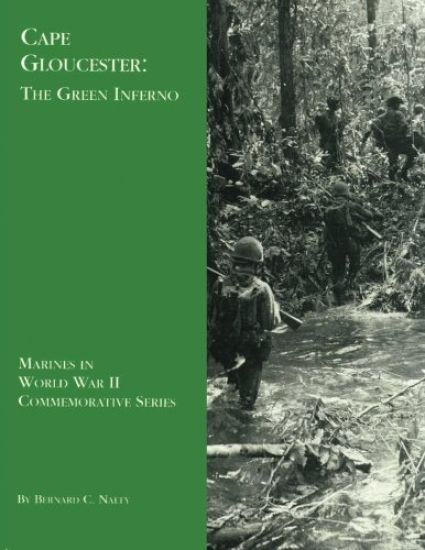
Cape Gloucester: The Green Inferno, has been considered important throughout the human history, and so that this work is never forgotten we have made efforts in its preservation by republishing this book in a modern format for present and future generations. This whole book has been reformatted, retyped and designed. These books are not made of scanned copies of their original work and hence the text is clear and readable.
Cape Gloucester: The Green Inferno, has been considered important throughout the human history, and so that this work is never forgotten we have made efforts in its preservation by republishing this book in a modern format for present and future generations. This whole book has been reformatted, retyped and designed. These books are not made of scanned copies of their original work and hence the text is clear and readable.
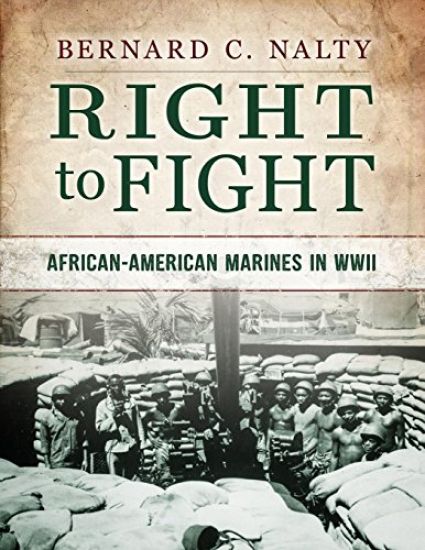
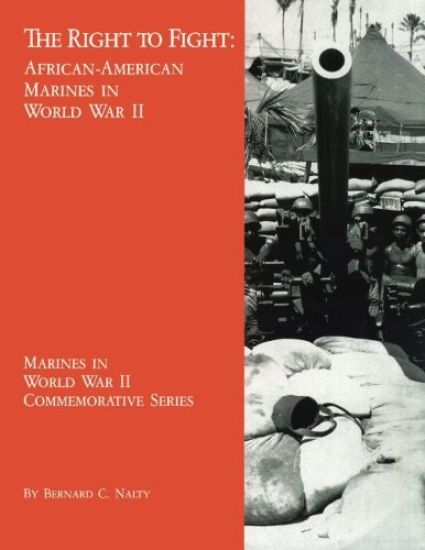
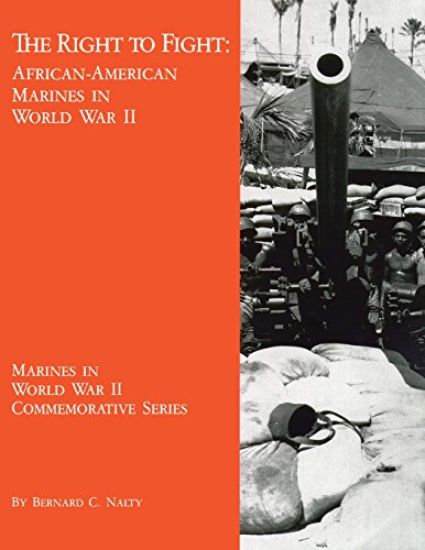
When World War II erupted, over 2.5 million black men registered for the draft and one million served as draftees or volunteers in all of the branches of the Armed Forces during conflict.In June of 1942, the United States Marine Corps began admitting black recruits for the first time since the American Revolution. The men received their training at a segregated camp in Montford Point, North Carolina. More than 19,000 African-American Marines passed through Montford Point during World War II, and almost 13,000 were assigned to overseas defense battalions or combat support companies.Right to Fight is snapshot of their journey.
This publication is derived from official records and appropriate published manuscript sources. It is published for the information of those interested in the history of Marine officer procurement from 1775 to 1969. In order to chronicle the history of Marine Corps officer procurement, a clarification of terminology is needed. "Procurement" is the normally accepted term to describe the obtaining of officers-for the military. Actually, "procurement" is defined "as obtaining or securing." There are, of course, further definitions of the word, but all basically refer to the process of obtaining or securing. Officer procurement, however, as witnessed throughout Marine Corps history, in both lean and plentiful years, has been more appropriately reflected in the term "selection," to wit: "...a choosing in preference to another or other; picked out especially for excellence or some special quality; picked." Consequently, the business of procuring officers for the Marine Corps is officially known as "Officer Selection" and an officer who does in fact select officer candidates is known as an "Officer Selection Officer." Historically, officer selection or officer procurement, regardless of the terminology used, is and has been fundamental to the success of the Corps. Such was the case in 1775 ... and so it will be in the future.
On the early morning of 26 December 1943, Marines poised off the coast of Japanese-held New Britain could barely make out the mile--high bulk of Mount Talawe against a sky growing light with the approach of dawn. Flame billowed from the guns of American and Australian cruisers and destroyers, shattering the early morning calm. The men of the 1st Marine Division, commanded by Major General William H. Rupertus, a veteran of expeditionary duty in Haiti and China and of the recently concluded Guadalcanal campaign, steeled themselves as they waited for daylight and the signal to assault the Yellow Beaches near Cape Gloucester in the northwestern part of the island. For 90 minutes, the fire support ships blazed away, trying to neutralize whole areas rather than destroy pinpoint targets, since dense jungle concealed most of the individual fortifications and supply dumps. After the day dawned and H-Hour drew near, Army airmen joined the preliminary bombardment. Four-engine Consolidated Liberator B-24 bombers, flying so high that the Marines offshore could barely see them, dropped 500-pound bombs inland of the beaches, scoring a hit on a fuel dump at the Cape Gloucester airfield complex and igniting a fiery geyser that leapt hundreds of feet into the air. Twin-engine North American Mitchell B-25 medium bombers and Douglas Havoc A-20 light bombers, attacking from lower altitude, pounced on the only Japanese antiaircraft gun rash enough to open fire. Cape Gloucester: the Green Inferno is a narrative of the activities of the Marine Corps. Official records and appropriate historical works were used in compiling this chronicle, which is published for the information of those interested in the history of Cape Gloucester.
When the United States began arming against aggression by the Axis powers - Nazi Germany, Imperial Japan, and Fascist Italy- the Marine Corps had a simple and inflexible policy governing African-Americans: it had not accepted them since its reestablishment in 1798 and did not want them now. In April 1941, during a meeting of the General Board of the Navy - a body roughly comparable to the War Department General Staff - the Commandant of the Marine Corps, Major General Thomas Holcomb, declared that blacks had no place in the organization he headed. "If it were a question of having a Marine Corps of 5,000 whites or 250,000 Negroes," he said, "I would rather have the whites." Whereas General Holcomb and the Marine Corps refused to accept African-Americans, the Navy admitted blacks in small numbers, but only to serve as messmen or stewards. The forces of change were gathering momentum, however. President Franklin D. Roosevelt, after meeting in September 1940 with a panel of black leaders, offered African-Americans better treatment and greater opportunity within the segregated armed forces in return for their support of his rearmament program and his attempt to gain an unprecedented third term in the November Presidential election. Roosevelt won that election with the help of those blacks, mainly in the cities of the North, who could still exercise the right to vote, and he did so without antagonizing the Southern segregationists in the Senate and House of Representatives whose support he needed for his anti-Nazi foreign policy. By the spring of 1941, many black leaders felt that the time had come for the Roosevelt administration to make good its pledge to African-Americans, repaying them for their help. This book offers a concise narrative that recounts the history of African-American Marines in World War II.