Kirjojen hintavertailu. Mukana 12 390 323 kirjaa ja 12 kauppaa.
Kirjailija
Bernard McGinn
Kirjat ja teokset yhdessä paikassa: 25 kirjaa, julkaisuja vuosilta 1900-2024, suosituimpien joukossa The Renewal of Mystical Theology Essays in Memory of John N. Jones (1964-2012). Vertaile teosten hintoja ja tarkista saatavuus suomalaisista kirjakaupoista.
The life and times of the most important theological work of medieval ChristendomThomas Aquinas’s Summa theologiae holds a unique place in Western religion and philosophy. Written between 1266 and 1273, it was conceived by Aquinas as an instructional guide for teachers and novices and a compendium of all the approved teachings of the Catholic Church. It synthesizes an astonishing range of scholarship, covering hundreds of topics and containing more than a million and a half words—and was still unfinished at the time of Aquinas’s death. Bernard McGinn, one of today’s most acclaimed scholars of medieval Christianity, traces the remarkable life of this iconic work, examining Aquinas’s reasons for writing it, its subject matter, and the novel way he organized it. McGinn looks at the influence of Aquinas’s masterpiece on such giants of medieval Christendom as Meister Eckhart, its ridicule during the Enlightenment, the role of the Summa in the post–Vatican II church, and the book’s enduring relevance today.
Mysticism is not just a phenomenon of the past, but has been alive and flourishing in Chistianity, Judaism, and Islam over the past century, as well as in many of the other religious traditions. Best understood as a search for the transforming presence of God, the mystical tradition has necessarily undergone changes and developments as it has confronted modernity and its frequently anti-religious stance. Making use of ten exemplary mystics of the 20th century, including Catholic, Protestants, and Jews, this book argues for the continued importance of mysticism in the modern world and studies its ongoing transformations.
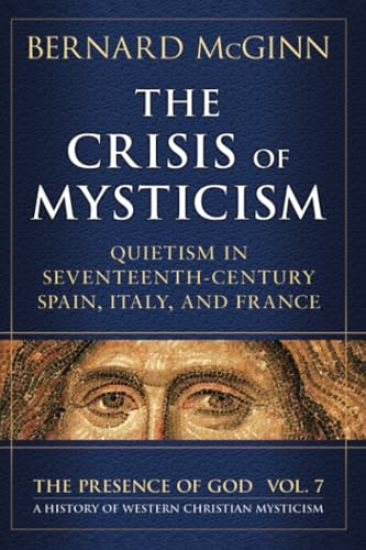
The Crisis of Mysticism is the first book in English in seventy years to give a full account of the struggle over mystical spirituality that tore the Catholic Church apart at the end of the seventeenth century, resulting in papal condemnation of some mystics and the decline of mysticism in Catholicism for almost two centuries.
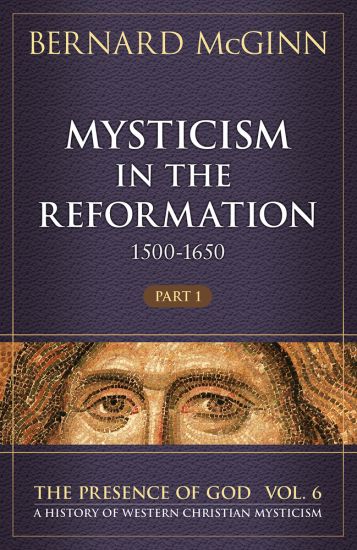
Mysticism in the Reformation, Part I of Volume 6 of The Presence of God Series, is the first full account of the role of the mystical element of Christianity in the Reformers who broke with Rome in the period 1500-1650. Although some modern Protestant theologians tried to distance the Reformation from any contact with mysticism, recent scholarship, by both Protestants and Catholics, has shown that Protestant mysticism is an important part of the heritage of the Reformation. After an "Introduction" surveying modern disputes about the nature of the Reformation and the Catholic reaction to it (both Catholic Reform and Counter-Reformation), Chapter One deals with how the pioneering Reformers Martin Luther and John Calvin reacted to the heritage of Christian mysticism, concentrating on Luther's complicated relation to mystical traditions. Chapter Two turns to the role of mysticism in select "Radical Reformers" of the sixteenth century, who created models of interior mystical religion that continued to have an effect over the centuries. Chapter Three analyzes the writings of the two most famous Lutheran mystics of the early seventeenth century, Johann Arndt and Jacob Boehme, whose impact in later Western religious traditions has been both powerful and controversial. Finally, Chapter Four considers the significance of mysticism in the English Reformation, both among those who accepted the Elizabethan Settlement that established the Anglican Church, as well as with the dissident Puritans who rejected it.
Mysticism in the Golden Age of Spain (1500-1650) provides the single most thorough history of the influence of Spain on Christian mysticism during the Reformation. Serious church scholars and students of church history and mysticism will make this volume an essential part of their library. It is the 7th installment in the Presence of God series, which has been acknowledged by both the review media and the academy as the most important and comprehensive series devoted to the Reformation. It is a complete treatment of the subject, including extensive notes and references. Unlike general histories that have been written about the Reformation, McGinn's volume is rich in detail and provides a fascinating and intelligent review of mysticism in early Spain.
Band 6/2 der monumentalen Mystikgeschichte von Bernard McGinn befasst sich mit der Mystik im Goldenen Zeitalter Spaniens. Schwerpunkte bilden die geistliche Lehre und das mystische Leben des Ignatius von Loyola sowie die karmelitische Mystik, insbesondere einer Teresa von Avila und eines Johannes vom Kreuz. Weitere mystische Stimmen aus Spanien, Portugal und dem spanischen Amerika der Zeit runden den Band ab. Mit seiner gross angelegten Geschichte der Mystik im Abendland schliesst Bernard McGinn eine Lucke der Theologie- und Kulturgeschichtsschreibung. Eindrucksvoll stellen die einzelnen Bande der vorliegenden Reihe unter Beweis, dass eine rein literaturwissenschaftliche Darstellung der Mystik der Tragweite des Themas keinesfalls gerecht wird. McGinns neuer Zugang mit einer konsequenten Einbeziehung religioser Stromungen und philosophischer Ideen holt die Entwicklung der Mystik aus dem Dunkel der Geschichte. Auf uberzeugende Weise gelingt es dabei, den religiosen Kern des Phanomens Mystik verstandlich zu machen - ein roter Faden, der sich durch die vielfaltigsten geschichtlichen Metamorphosen der mystischen Lebensform verfolgen lasst. Ein Schlusselwerk der abendlandischen Kultur- und Spiritualitatsgeschichte.
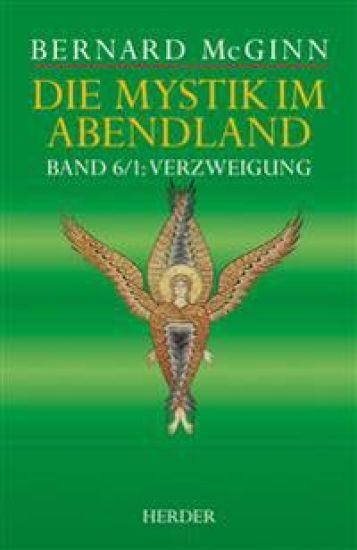
Band 6/1 von McGinns grosser Mystikgeschichte behandelt die protestantische Mystik im Zeitraum von 1500 bis 1650. Ausfuhrlich wird der Umgang Martin Luthers und Johannes Calvins mit der mystischen Tradition geschildert. Daruber hinaus kommen die radikalen Reformatoren des 16. Jh.s in den Blick. Weitere Schwerpunkte bilden die beruhmtesten lutherischen Mystiker des 17. Jh.s, Johannes Arndt und Jacob Boehme, sowie die Mystik in der englischen Reformation.
More than 25 years in the making, this magisterial volume uncovers the riches of one of the greatest periods of mystical wisdom in Christian history: the “vernacular” spirituality of the late medieval period in Europe. The compilation incorporates more than a century of new research from around the globe, demonstrating how this period gave rise to many mystical writers who remain influential even today, including Julian of Norwich, Eckhart’s follower Jan van Ruusbroec, and the inspirational doctor of the church and visionary, Catherine of Siena. With unmatched knowledge of the primary works and scholarship around the globe, this study illustrates the unique genius of each mystical teacher as well as how they build on one another’s insights to pursue a life in God’s presence. Specific types of mysticism covered include Trinitarian, late medieval Italian, renaissance, and the golden age of English mysticism.
William of Saint-Thierry (ca. 1080–1148) became abbot of the Benedictine abbey of Saint-Thierry in about 1119, holding that office for about sixteen years and writing a large number of works, some for the guidance of the monks of his abbey and others as theological treatises. But during that same time, after meeting Bernard, abbot of the Cistercian abbey of Clairvaux, he longed to become a Cistercian. He finally satisfied that dream in 1135, when he became a monk at Signy. His final work was the first of the five books that constitute the Vita Prima Sancti Bernardi. The nine chapters in this book explore William’s thought as represented in his twenty works, ranging from his earliest theological writing through his contribution to the Vita Prima Sancti Bernardi. The contributors to this volume have moved scholarship on William in new directions, ranging from a comparative analysis of Bernard’s and William’s thought through a study of William’s Christology, an analysis of individual works, a new translation of one of William’s little-known works, an examination of sixteenth-century images drawn from the Vita Prima, a study of William’s rhetorical skills, and a recognition of William’s new take on the phrase unitas spiritus. Dr. E. Rozanne Elder’s expertise as a scholar of the works of William of Saint-Thierry, combined with her decades of distinguished service as a professor of history, director of the Institute of Cistercian Studies and then of the Center for Cistercian and Monastic Studies, all at Western Michigan University, and as editorial director of Cistercian Publications for thirty-five years, has made her the best known of Cistercian scholars today. She is the one primarily responsible for moving Cistercian studies into the mainstream of medieval history and thought. As the gracious and indefatigable host of the annual Conference of Cistercian Studies that takes place each May as part of the International Medieval Studies Congress, she has created a community of scholars and friends.
More than 25 years in the making, this magisterial volume uncovers the riches of one of the greatest periods of mystical wisdom in Christian history: the “vernacular” spirituality of the late medieval period in Europe. The compilation incorporates more than a century of new research from around the globe, demonstrating how this period gave rise to many mystical writers who remain influential even today, including Julian of Norwich, Eckhart’s follower Jan van Ruusbroec, and the inspirational doctor of the church and visionary, Catherine of Siena. With unmatched knowledge of the primary works and scholarship around the globe, this study illustrates the unique genius of each mystical teacher as well as how they build on one another’s insights to pursue a life in God’s presence. Specific types of mysticism covered include Trinitarian, late medieval Italian, renaissance, and the golden age of English mysticism.
Written by one of the great authorities on Catholic wisdom, this user friendly resource is designed as a general introduction to the 33 remarkable individuals who shaped the understanding of the Church's faith. After a brief account of the concept and development of the office of doctor ecclesiae , sketches of the lives and teachings of the influential doctors are presented in chronological order. A list of major translations of each doctor's writings for further reading is also included.
The fourth volume in the universally-acclaimed The Presence of God series, The Harvest of Mysticism is a tour-de-force study of medieval German mysticism from Thomas Aquinas and his master, Albert the Great to Cardinal Nicholas of Cusa, and including Jan van Ruusbroeck, Meister Eckhart, and John Tauler.
In this first volume of the highly-acclaimed Presence of God series, Bernard McGinn explores the origins of Christian mysticism, from early Jewish apocalyptic writings to pre-Christian Greek contemplative thought; the New Testament witnesses; early Greek Patristic thought; and the contribution of early monastic practice. In Part 2, McGinn discusses Western Christian mysticism proper, with special attention to Augustine of Hippo. Of special interest is the now-influential appendix, which reviews various theoretical approaches to mysticism.
Bernard McGinn's The Presence of God series is one of the most respected histories of Christian mysticism in print today. In this new book, Bernard and Patricia McGinn draw from the series to take a closer, personal look at the mystical vision of 12 great spiritual masters living before the Reformation. What were the deep insights of these early mystics? How can we apply their wisdom to our lives today? Chapters include Hildegard of Bingen on cosmic vision, John Cassian on prayer and purity of heart, and Bernard of Clairvaux on spousal love.
Centuries after his work as a preacher, philosopher, and spiritual guide, Meister Eckhart remains one of the most widely-read mystics of the Western tradition. Yet as he has come to be studied more closely in recent decades, a number of different Eckharts have emerged. This volume reviews and synthesizes the diverging views of Eckhart that have been presented in recent past. For the first time, Bernard McGinn, the greatest living scholar of Western Christian mysticism, brings together in one volume the fruition of decades of reflection on these questions, offering a view of Eckhart that unites his reflections as preacher, philosopher, and theologian.
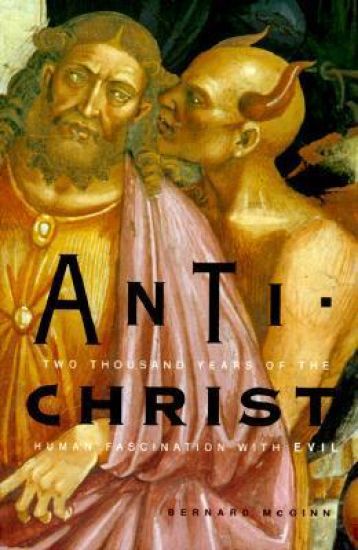
In this timely and sweeping exploration, one of the greatest living historians of Christian thought traces the concept of Antichrist from its Judeo-Christian origins to the present day. Rooted in Second Temple Judaism--a period of intense religious and political disruption--Antichrist developed out of belief in malevolent angelic and human forces. McGinn demonstrates how Antichrist has often reflected the human need to comprehend the persistence of evil in the world, and examines how it has haunted popular imagination in both the form of indivuduals--such as Nero, Napoleon, and Saddam Hussein--and groups--Jews, heretics, Muslims.