Kirjojen hintavertailu. Mukana 12 169 125 kirjaa ja 12 kauppaa.

Kirjailija

Bernard P. Prusak

Kirjat ja teokset yhdessä paikassa: 3 kirjaa, julkaisuja vuosilta 1988-2023, suosituimpien joukossa The Church Unfinished. Vertaile teosten hintoja ja tarkista saatavuus suomalaisista kirjakaupoista.

3 kirjaa

Kirjojen julkaisuhaarukka 1988-2023.

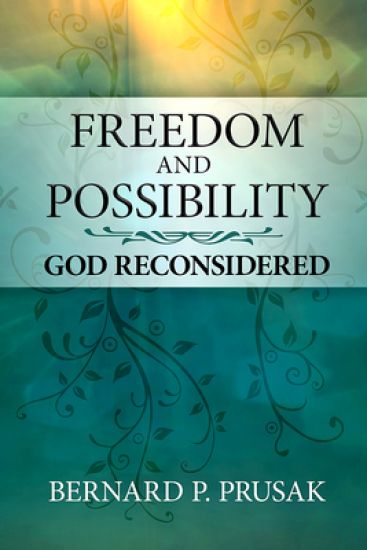
Freedom and Possibility

Freedom and Possibility

Bernard P. Prusak

PAULIST PRESS INTERNATIONAL,U.S.
2023
nidottu
Freedom and Possibility considers the ongoing adventure of God acting through the randomness and chance of the evolutionary process, whereby matter became life and life became self-conscious spirit with freedom. God's creation of freedom has been pivotal in the theology of the younger Joseph Ratzinger, as well as of Karl Rahner, Edward Schillebeeckx, and others. Making room for human freedom involves thinking about God's patience, defenselessness, and vulnerability, particularly as made clear in the humanity of Jesus. By creating humans with their finite and free will, God has voluntarily renounced power and control. And, as Walter Kasper has emphasized, if the Church is to be a credible advocate for human rights and freedom in the world, it must assess its own record, and plan to integrate freedom into its internal structures. Bernard P. Prusak, professor emeritus of systematic/constructive theology at Villanova University in Pennsylvania, is also the former chair of the theology and religious studies department there. He is the author of The Church Unfinished: Ecclesiology through the Centuries (Paulist Press), as well as numerous articles. He has lectured extensively on both the historical and theological perspectives of the Second Vatican Council and its continued influence and challenges, with hope for new possibilities. †
The Church Unfinished

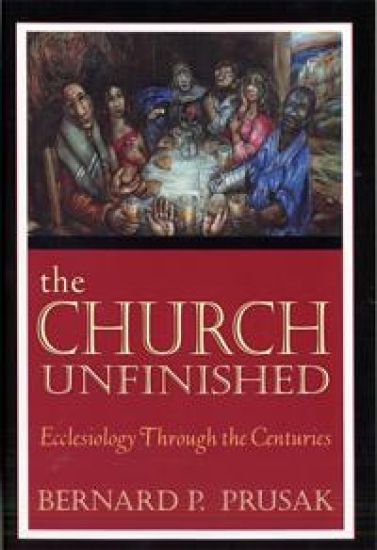
The Church Unfinished

Bernard P. Prusak

Paulist Press International,U.S.
2004
nidottu
Like human life, the Catholic or universal Church is lived forward but understood backward. To appreciate the Church's past, however, does not require that we simply repeat it. Using such a framework, this book puts the present period of the Church in vast historical context. It traces how the Church came from the "community of unexpected persons" whom Jesus gathered around himself and was then shaped, over the course of centuries, by human decisions made in the Spirit. The Church's catholicity is seen to involve an ever expanding memory, embracing the immense richness of past and present times, places, and cultures, and at the same time an openness to assimilating, and possibly being transformed by, a future history in which God offers new possibilities. Vatican II's Constitution on the Church in the Modern World affirmed that God has endowed humans with a certain autonomy for shaping the world. The book asks whether that has implications for traditional presumptions about the order and structure of the Church. The tendency to presume that nothing new or unexpected could develop in the unfolding future of the Church might close us to the presence of the Spirit in our midst, and fail to recognize that our time, as much as any past time, is an opportunity for God's creative activity and grace. The book thus proposes that the Church's leadership would do well to nurture a renewed eschatological attitude that embraces a genuine openness to the newness and surprise of the future, leaving room not only for continuity but also for the important elements of change and transformation. For, what the Church is, only the entirety of its history will fully reveal. Audience: —undergraduate and graduate courses on the Church or on the development of Christianity —readers who want to take the time and effort to learn more about the church †
Raising the Torch of Good News

Raising the Torch of Good News

Bernard P. Prusak

University Press of America
1988
sidottu
In his opening address to the Second Vatican Council, on October 11, 1962, Pope John XXIII spoke of the Catholic Church "raising the torch of religious truth." Raising the Torch of Good News, the College Theology Society's 1986 Annual Publication, brings together a variety of scholars to consider the practical implications for the Catholic Church of Pope John XXIII's call for "unity in diversity." Co-published with the College Theology Society.