Kirjojen hintavertailu. Mukana 12 464 431 kirjaa ja 12 kauppaa.

Kirjailija

Bernard Scott

Kirjat ja teokset yhdessä paikassa: 9 kirjaa, julkaisuja vuosilta 2000-2021, suosituimpien joukossa Cybernetics for the Social Sciences. Vertaile teosten hintoja ja tarkista saatavuus suomalaisista kirjakaupoista.

9 kirjaa

Kirjojen julkaisuhaarukka 2000-2021.

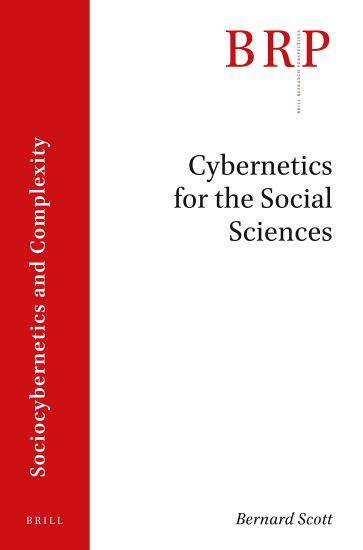
Cybernetics for the Social Sciences
Bernard Scott has met a long-felt need by authoring a book that shows the relevance of cybernetics for the social sciences (including psychology, sociology, and anthropology). Scott provides user-friendly descriptions of the core concepts of cybernetics, with examples of how they can be used in the social sciences. He explains how cybernetics functions as a transdiscipline that unifies other disciplines and a metadiscipline that provides insights about how other disciplines function. He provides an account of how cybernetics emerged as a distinct field, following interdisciplinary meetings in the 1940s, convened to explore feedback and circular causality in biological and social systems. He also recounts how encountering cybernetics transformed his thinking and his understanding of life in general.
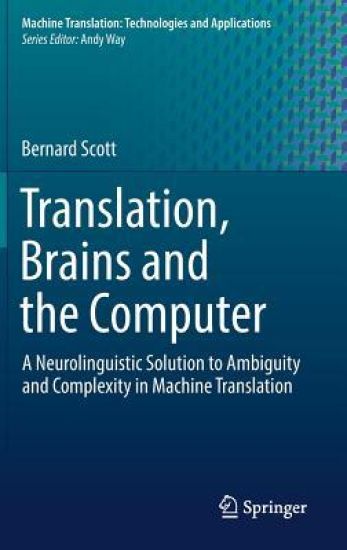
Translation, Brains and the Computer

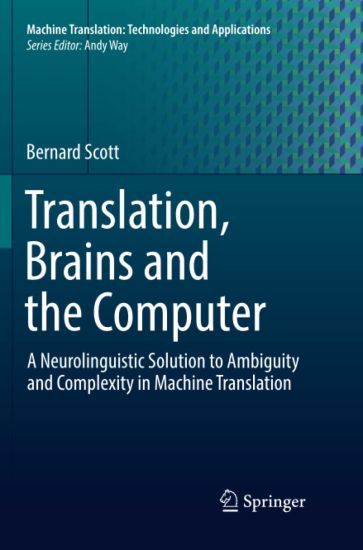
Translation, Brains and the Computer

Bernard Scott

Springer Nature Switzerland AG
2018
nidottu
This book is about machine translation (MT) and the classic problems associated with this language technology. It examines the causes of these problems and, for linguistic, rule-based systems, attributes the cause to language’s ambiguity and complexity and their interplay in logic-driven processes. For non-linguistic, data-driven systems, the book attributes translation shortcomings to the very lack of linguistics. It then proposes a demonstrable way to relieve these drawbacks in the shape of a working translation model (Logos Model) that has taken its inspiration from key assumptions about psycholinguistic and neurolinguistic function. The book suggests that this brain-based mechanism is effective precisely because it bridges both linguistically driven and data-driven methodologies. It shows how simulation of this cerebral mechanism has freed this one MT model from the all-important, classic problem of complexity when coping with the ambiguities of language. Logos Model accomplishes this by a data-driven process that does not sacrifice linguistic knowledge, but that, like the brain, integrates linguistics within a data-driven process. As a consequence, the book suggests that the brain-like mechanism embedded in this model has the potential to contribute to further advances in machine translation in all its technological instantiations.
Translation, Brains and the Computer

Translation, Brains and the Computer

Bernard Scott

Springer International Publishing AG
2018
sidottu
This book is about machine translation (MT) and the classic problems associated with this language technology. It examines the causes of these problems and, for linguistic, rule-based systems, attributes the cause to language’s ambiguity and complexity and their interplay in logic-driven processes. For non-linguistic, data-driven systems, the book attributes translation shortcomings to the very lack of linguistics. It then proposes a demonstrable way to relieve these drawbacks in the shape of a working translation model (Logos Model) that has taken its inspiration from key assumptions about psycholinguistic and neurolinguistic function. The book suggests that this brain-based mechanism is effective precisely because it bridges both linguistically driven and data-driven methodologies. It shows how simulation of this cerebral mechanism has freed this one MT model from the all-important, classic problem of complexity when coping with the ambiguities of language. Logos Model accomplishes this by a data-driven process that does not sacrifice linguistic knowledge, but that, like the brain, integrates linguistics within a data-driven process. As a consequence, the book suggests that the brain-like mechanism embedded in this model has the potential to contribute to further advances in machine translation in all its technological instantiations.
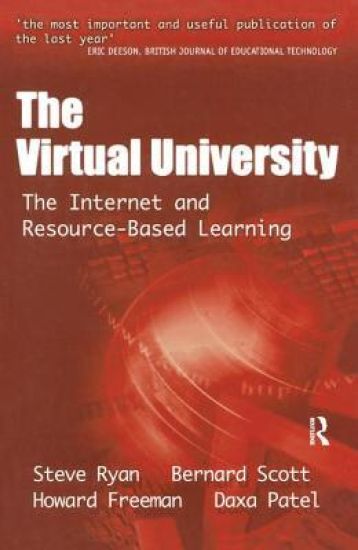
The Virtual University

The Virtual University

Steve Ryan; Bernard Scott; Howard Freeman; Daxa Patel

Routledge
2017
sidottu
A discussion of the increased accessibility to the Internet and how this has lead to a variety of resources being used for learning. Case studies and examples show the benefits of using the Internet as part of resource-based learning.
The Heart Hath Its Reasons: Catholic Novella in Sundry Shades of Love (Ordered and Otherwise)
This distinctly Catholic novella comprises a set of free standing pieces that nevertheless make up a whole story. From a sundry cast of characters we see emerge an uncommonly attractive woman, Monica, in a series of corrosive affairs until, finding herself at a moral dead end, she attempts (we learn) to take her life, mercifully without success. Recovering physically, but with a still unsettled conscience, she comes to the attention of a young curate who tries to help her. This young priest has unresolved needs of his own, disclosed when he finds himself inordinately drawn to her, troubling the priest's own conscience. What happens next reveals the action of grace in the most ordinary of circumstances.This is a tale, then, of a grace that mysteriously enters into, and heals, disordered affections of the heart. Interestingly, this healing does not come about by slamming the door on human love just because it is disordered. As we see, there is a blessed lesson to be learned regarding these matters of the heart, one involving an act of holy trust. The author, Bernard Scott, is an award-winning short story writer, anthologized essayist, and published poet. His short adventure/mystery novel, Secret of Lost Mountain, was a finalist in the 2012 Tuscany Prize for Catholic Fiction. He is happily married and knows whereof he speaks.
Brian's Law: And Other Stories

Brian's Law: And Other Stories

Bernard Scott

Logos Institute Press
2013
nidottu
Stories in this collection, such as HERE'S MASHED, A DIFFERENT KIND OF DAY, WITH ALL HIS HEART, along with a few others, all depict contemporary lives in conflicts of one kind or another, until something interesting happens to change things. The style is in the manner of modern minimalism, where character and behavior are depicted rather than described, more like a film or show than an account. Stories like I HEARD THEIR LAUGHTER and BRIAN'S LAW are quite different. These are longer treatments of rather inordinate lives. The first depicts the state of a math freak cooped up under the roof of an abandoned building, pondering the life he should have lived but had refused. Then something happens to redeem it. BRIAN'S LAW depicts a fourteen year old boy who thinks he is smarter than Einstein. The tale makes certain demands on the reader but is guaranteed to fascinate those interested in such things and who stick it out. It is the author's favorite work, by far.Bernard (Bud) Scott wrote these stories in between the demands of his career as an entrepreneurial computational linguist, a career depicted at http: www.logosinstitute.org/LogosStory.html. He is a published poet, anthologized essayist, and award-winning short story writer, and has published several novels, most recently, The Heart Hath Its Reasons.
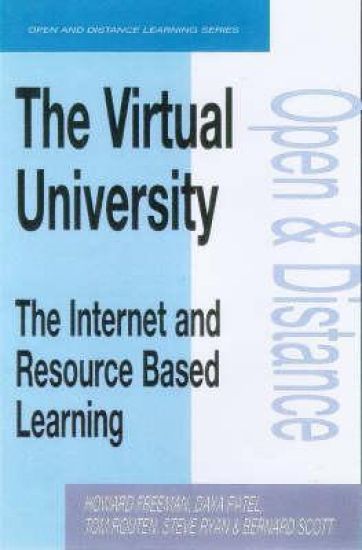
The Virtual University

The Virtual University

Steve Ryan; Bernard Scott; Howard Freeman; Daxa Patel

Kogan Page Ltd
2000
nidottu
A discussion of the increased accessibility to the Internet and how this has lead to a variety of resources being used for learning. Case studies and examples show the benefits of using the Internet as part of resource-based learning.