Kirjojen hintavertailu. Mukana 12 657 676 kirjaa ja 12 kauppaa.
Kirjailija
Bernard Shaw
Kirjat ja teokset yhdessä paikassa: 636 kirjaa, julkaisuja vuosilta 1968-2026, suosituimpien joukossa Herra Byronin ammatti. Vertaile teosten hintoja ja tarkista saatavuus suomalaisista kirjakaupoista.
Alkuper isen j ljenn s. Kustannusyhti Antigonos on erikoistunut historiallisten kirjojen uusintapainosten julkaisemiseen. Huolehdimme siit , ett n m teokset saatetaan yleis n saataville hyv ss kunnossa kulttuuriperinn n s ilytt miseksi.
You Never Can Tell, stands as a beacon in the world of books, bridging the gap between past and present. Once considered among the old books, this classic work-like so many forgotten and ancient books-has shaped our understanding of culture and history. It's a remarkable example of history books that have influenced generations, and now, through the dedication of Alpha Editions-your trusted book publisher-it's reborn in a fresh, elegant format. We've carefully retyped, redesigned, and improved this book so it's much more than just another title to read. Now you can enjoy clear, easy-to-read pages without any blurry scans or faded text. By choosing this edition, you're investing in more than a book-you're safeguarding a legacy. Your support keeps a remarkable piece of human heritage alive, ensuring its lessons and inspirations continue to resonate well into the future.
After movie-makers in England bungled film versions of Bernard Shaw's How He Lied to Her Husband and Arms and the Man, producers and directors in Germany and Holland botched those based on Pygmalion, and a Hollywood screenplay desecrated The Devil's Disciple, Shaw took a chance on Gabriel Pascal and gave him permission to produce a movie version of Pygmalion in England. The contract was signed on 13 December 1935 and Pascal, a charming, flamboyant Hungarian emigre with relatively little experience in cinema, did the playwright proud. Shaw's gamble paid off in this Pygmalion, which, to this day, is usually claimed to be the best film version of any of his plays. This first collection of the correspondence of Bernard Shaw and Gabriel Pascal contains 268 letters, the greatest portion of which have not been previously published. They provide an intimate, behind-the-scenes view of the film industry's day-to-day workings and of the art of movie-making, from the signing of the first contract between Shaw and Pascal, to Shaw's death in 1950. The letters reveal the great extent to which Pascal, unlike his predecessors, scrupulously kept Shaw informed of what he did. We learn about whom Pascal negotiated with, the merits of association with certain individuals or businesses, contract problems, the backbiting and backstabbing of the industry, difficulties with casting, and progress throughout the filming. Shaw accepted and embellished some of Pascal's ideas for production, and vehemently disagreed with others. Their correspondence highlights the differences in personality between the two men. Shaw was ever the astute businessman, while Pascal was the eager artist. Shaw the methodical mastermind contrasted sharply with Pascal the entrepreneur with many projects under development, few of which came to fruition. Most important, however, the letters, postal cards, and telegrams collected here reveal how Pascal fought for the integrity of Shavian cinema; how, as a director, he tried to create films that were true to their dramatic sources; and how, in partnership with Pascal, Shaw's cinematic writings flourished.
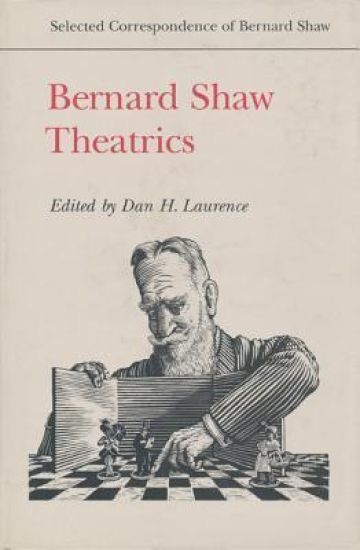
In his introduction Dan H. Laurence notes that 'theatrics' connotes not only activities of a theatrical character but behaviour that manifests itself as theatricality. All the correspondence selected for this volume - most of it hitherto unpublished - relates to Bernard Shaw's theatre dealings and theatrical interest, at the same time attesting to the 'histrionic instinct' and 'theatrified imagination' (his own phrases) of the man who penned them. More than one hundred letters are represented, starting from mid-1889, when Shaw had not yet completed his first play and was known instead as a music critic, journalist, socialist organizer, and street orator. The letters reveal a consummate man of the theatre: a dramatist, director, actor, designer, publicist, financial backer, translator, and critic concerned with such varied issues as censorship, theatre politics, prying journalists, and wireless and television performance. The letters are shaded with histrionic tones of assumed anger, irritation, and anguish. The style invariably is colloquial, free-flowing, ebullient - and personal.
Bernard Shaw and H.G. Wells are among the best-known and most controversial literary figures of the twentieth century. Both were rebelliously critical of the social and political, familial and sexual conventions and structures of their time. They shared broadly similar interests, but their lifestyles differed sharply - as did their views on many subjects, including those discussed in their correspondence: religion, socialism, science, war and world history, the theatre, the profession of authorship, and more. The letters are always forthright, often abusive and quarrelsome, sometimes suggesting that the relationship cannot last. They are also often warm, good-natured, playful, and generous - reflecting a fundamental mutual respect and similarity of outlook, however contrasting the temperament and style. The great majority of the two writers' correspondence is published here for the first time. This volumes comprises the personal correspondence of Shaw and Wells through the course of their friendship of more than forty years, and includes and introductory essay by J. Percy Smith. The letters are fully annotated, and are accompanied by information about the circumstances under which each was written, to enable the reader to follow the course of the frequently tempestuous relationship.