

Kirjailija
Bernard Williams
Kirjat ja teokset yhdessä paikassa: 31 kirjaa, julkaisuja vuosilta 1973-2025, suosituimpien joukossa Moral Luck / Moralischer Zufall. Vertaile teosten hintoja ja tarkista saatavuus suomalaisista kirjakaupoista.
31 kirjaa
Kirjojen julkaisuhaarukka 1973-2025.

What does it mean to be truthful? What role does truth play in our lives? What do we lose if we reject truthfulness? No philosopher is better suited to answer these questions than Bernard Williams. Writing with his characteristic combination of passion and elegant simplicity, he explores the value of truth and finds it to be both less and more than we might imagine.Modern culture exhibits two attitudes toward truth: suspicion of being deceived (no one wants to be fooled) and skepticism that objective truth exists at all (no one wants to be naive). This tension between a demand for truthfulness and the doubt that there is any truth to be found is not an abstract paradox. It has political consequences and signals a danger that our intellectual activities, particularly in the humanities, may tear themselves to pieces.Williams's approach, in the tradition of Nietzsche's genealogy, blends philosophy, history, and a fictional account of how the human concern with truth might have arisen. Without denying that we should worry about the contingency of much that we take for granted, he defends truth as an intellectual objective and a cultural value. He identifies two basic virtues of truth, Accuracy and Sincerity, the first of which aims at finding out the truth and the second at telling it. He describes different psychological and social forms that these virtues have taken and asks what ideas can make best sense of them today.Truth and Truthfulness presents a powerful challenge to the fashionable belief that truth has no value, but equally to the traditional faith that its value guarantees itself. Bernard Williams shows us that when we lose a sense of the value of truth, we lose a lot both politically and personally, and may well lose everything.

'Courage is knowing what not to fear' Plato'One of the penalties for refusing to participate in politics is that you end up being governed by your inferiors' Without the work of Plato, western thought is, quite literally, unthinkable. No single influence has been greater, in every age and in every philosophic field. Even those thinkers who have rejected Plato's views have found themselves working to an agenda he set. Yet between the neo-platonist interpretations and the anti-platonist reactions, the stuff of 'Platonism' proper has often been obscured. The philosopher himself has not necessarily helped in the matter: at times disconcertingly difficult, at other disarmingly simple, Plato can be an elusive thinker, his meanings hard to pin down. His dialogues are complex and often ironically constructed and do not simply expand his views - which in any case changed and developed over a long life. In this lucid and exciting introductory guide, Bernard Williams takes his reader back to first principles, re-reading the key texts to reveal what the philosopher actually said. The result is a rediscovered Plato: often unexpected, always fascinating and rewarding.




In his last work, one of the great philosophers of the 20th century explores the pleasures of opera Bernard Williams, who died in 2003, was one of the most influential moral philosophers of his generation. A lifelong opera lover, his articles and essays, talks for the BBC, contributions to the Grove Dictionary of Opera, and program notes for the Royal Opera House, Covent Garden, and the English National Opera, generated a devoted following. This elegant volume brings together these widely scattered and largely unobtainable pieces, including two that have not been previously published. It covers an engaging range of topics from Mozart to Wagner, including sparkling essays on specific operas by those composers as well as Verdi, Puccini, Strauss, Debussy, Janacek, and Tippett. Reflecting Williams’s brilliance, passion, and clarity of mind, these essays engage with, and illustrate, the enduring appeal of opera as an art form.

Bernard Williams was one of the most important philosophers of the past fifty years, but he was also a distinguished critic and essayist with an elegant style and a rare ability to communicate complex ideas to a wide public. This is the first collection of Williams's popular essays and reviews. Williams writes about a broad range of subjects, from philosophy to science, the humanities, economics, feminism, and pornography. Included are reviews of major books such as John Rawls's Theory of Justice, Richard Rorty's Consequences of Pragmatism, and Martha Nussbaum's Therapy of Desire. But many of these essays extend beyond philosophy, providing an intellectual tour through the past half century, from C. S. Lewis to Noam Chomsky. No matter the subject, readers see a first-class mind grappling with landmark books in "real time," before critical consensus had formed and ossified.

With a new foreword by Jonathan Lear'Remarkably lively and enjoyable…It is a very rich book, containing excellent descriptions of a variety of moral theories, and innumerable and often witty observations on topics encountered on the way.' - Times Literary SupplementBernard Williams was one of the greatest philosophers of his generation. Ethics and the Limits of Philosophy is not only widely acknowledged to be his most important book, but also hailed a contemporary classic of moral philosophy. Drawing on the ideas of the Greek philosophers, Williams reorients ethics away from a preoccupation with universal moral theories towards ‘truth, truthfulness and the meaning of an individual life’. He explores and reflects upon the most difficult problems in contemporary philosophy and identifies new ideas about central issues such as relativism, objectivity and the possibility of ethical knowledge. This edition also includes a commentary on the text by A.W.Moore. At the time of his death in 2003, Bernard Williams was hailed by the Times as 'the outstanding moral philosopher of his age.' He taught at the Universities of Cambridge, Berkeley and Oxford and is the author of many influential books, including Morality; Descartes: The Project of Pure Enquiry (available from Routledge) and Truth and Truthfulness.

Descartes has often been called the 'father of modern philosophy'. His attempts to find foundations for knowledge, and to reconcile the existence of the soul with the emerging science of his time, are among the most influential and widely studied in the history of philosophy. This is a classic and challenging introduction to Descartes by one of the most distinguished modern philosophers. Bernard Williams not only analyzes Descartes' project of founding knowledge on certainty, but uncovers the philosophical motives for his search. With acute insight, he demonstrates how Descartes' Meditations are not merely a description but the very enactment of philosophical thought and discovery. Williams covers all of the key areas of Descartes' thought, including God, the will, the possibility of knowledge, and the mind and its place in nature. He also makes profound contributions to the theory of knowledge, metaphysics and philosophy generally.With a new foreword by John Cottingham.


In Morality Bernard Williams confronts the problems of writing moral philosophy and offers a stimulating alternative to more systematic accounts which seem nevertheless to have left all the important issues somewhere off the page. Williams explains, analyses and distinguishes a number of key positions, from the purely amoral to notions of subjective or relative morality, testing their coherence before going on to explore the nature of 'goodness' in relation to responsibilities and choice, roles, standards and human nature. A classic in moral philosophy.

With a new foreword by Jonathan Lear'Remarkably lively and enjoyable…It is a very rich book, containing excellent descriptions of a variety of moral theories, and innumerable and often witty observations on topics encountered on the way.' - Times Literary SupplementBernard Williams was one of the greatest philosophers of his generation. Ethics and the Limits of Philosophy is not only widely acknowledged to be his most important book, but also hailed a contemporary classic of moral philosophy. Drawing on the ideas of the Greek philosophers, Williams reorients ethics away from a preoccupation with universal moral theories towards ‘truth, truthfulness and the meaning of an individual life’. He explores and reflects upon the most difficult problems in contemporary philosophy and identifies new ideas about central issues such as relativism, objectivity and the possibility of ethical knowledge. This edition also includes a commentary on the text by A.W.Moore. At the time of his death in 2003, Bernard Williams was hailed by the Times as 'the outstanding moral philosopher of his age.' He taught at the Universities of Cambridge, Berkeley and Oxford and is the author of many influential books, including Morality; Descartes: The Project of Pure Enquiry (available from Routledge) and Truth and Truthfulness.

FÅS OGSÅ SOM E_BOGDenne samling af artikler, alle om opera, forener et livs fascination af opera. Bidragene stammer fra mange kilder, hvoraf nogle ikke tidligere har været publiceret. Bogen diskuterer forskellige operakomponister og deres værker. Den giver en kritisk vinkel på de enkelte værker og kan være med til at skabe debat om operaens form. Den behandler værker fra Mozart til Wagner og afspejler Bernard Williams holdning til komposition og opførelse og musikkens evner til at bevæge både følelser og intellekt Artiklerne viser Bernard Williams passion og klarsynethed. De viser og illustrerer operaens vedvarende kraft som kunstform. Bernard Williams er en kendt engelsk musikkritiker og har tidligere været professor i filosofi.
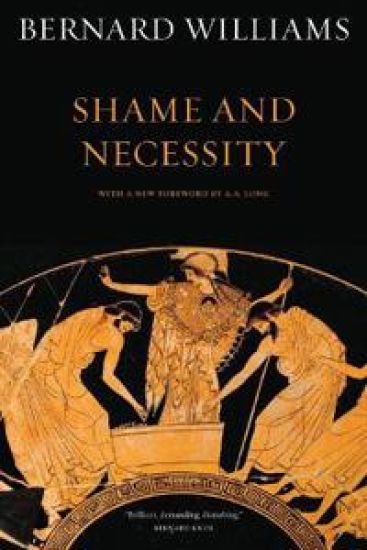
Shame and Necessity, Second Edition
Bernard Williams; A. A. Long
University of California Press
2008
pokkari
We tend to suppose that the ancient Greeks had primitive ideas of the self, of responsibility, freedom, and shame, and that now humanity has advanced from these to a more refined moral consciousness. Bernard Williams' original and radical book questions this picture of Western history. While we are in many ways different from the Greeks, Williams claims that the differences are not to be traced to a shift in these basic conceptions of ethical life. We are more like the ancients than we are prepared to acknowledge, and only when this is understood can we properly grasp our most important differences from them, such as our rejection of slavery. The author is a philosopher, but much of his book is directed to writers such as Homer and the tragedians, whom he discusses as poets and not just as materials for philosophy. At the center of his study is the question of how we can understand Greek tragedy at all, when its world is so far from ours. Williams explains how it is that when the ancients speak, they do not merely tell us about themselves, but about ourselves. In a new foreword A.A. Long explores the impact of this volume in the context of Williams' stunning career.

What can--and what can't--philosophy do? What are its ethical risks--and its possible rewards? How does it differ from science? In Philosophy as a Humanistic Discipline, Bernard Williams addresses these questions and presents a striking vision of philosophy as fundamentally different from science in its aims and methods even though there is still in philosophy "something that counts as getting it right." Written with his distinctive combination of rigor, imagination, depth, and humanism, the book amply demonstrates why Williams was one of the greatest philosophers of the twentieth century. Spanning his career from his first publication to one of his last lectures, the book's previously unpublished or uncollected essays address metaphysics, epistemology, and ethics, as well as the scope and limits of philosophy itself. The essays are unified by Williams's constant concern that philosophy maintain contact with the human problems that animate it in the first place. As the book's editor, A. W. Moore, writes in his introduction, the title essay is "a kind of manifesto for Williams's conception of his own life's work." It is where he most directly asks "what philosophy can and cannot contribute to the project of making sense of things"--answering that what philosophy can best help make sense of is "being human." Philosophy as a Humanistic Discipline is one of three posthumous books by Williams to be published by Princeton University Press. In the Beginning Was the Deed: Realism and Moralism in Political Argument was published in the fall of 2005. The Sense of the Past: Essays in the History of Philosophy is being published shortly after the present volume.

Before his death in 2003, Bernard Williams planned to publish a collection of historical essays, focusing primarily on the ancient world. This posthumous volume brings together a much wider selection, written over some forty years. His legacy lives on in this masterful work, the first collection ever published of Williams's essays on the history of philosophy. The subjects range from the sixth century B.C. to the twentieth A.D., from Homer to Wittgenstein by way of Socrates, Plato, Aristotle, Descartes, Hume, Sidgwick, Collingwood, and Nietzsche. Often one would be hard put to say which part is history, which philosophy. Both are involved throughout, because this is the history of philosophy written philosophically. Historical exposition goes hand in hand with philosophical scrutiny. Insights into the past counteract blind acceptance of present assumptions. In his touching and illuminating introduction, Myles Burnyeat writes of these essays: "They show a depth of commitment to the history of philosophy seldom to be found nowadays in a thinker so prominent on the contemporary philosophical scene." The result celebrates the interest and importance to philosophy today of its near and distant past. The Sense of the Past is one of three collections of essays by Bernard Williams published by Princeton University Press since his death. In the Beginning Was the Deed: Realism and Moralism in Political Argument, selected, edited, and with an introduction by Geoffrey Hawthorn, and Philosophy as a Humanistic Discipline, selected, edited, and with an introduction by A. W. Moore, make up the trio.
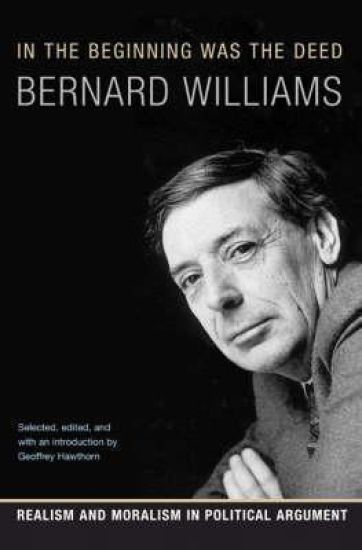
Bernard Williams is remembered as one of the most brilliant and original philosophers of the past fifty years. Widely respected as a moral philosopher, Williams began to write about politics in a sustained way in the early 1980s. There followed a stream of articles, lectures, and other major contributions to issues of public concern--all complemented by his many works on ethics, which have important implications for political theory. This new collection of essays, most of them previously unpublished, addresses many of the core subjects of political philosophy: justice, liberty, and equality; the nature and meaning of liberalism; toleration; power and the fear of power; democracy; and the nature of political philosophy itself. A central theme throughout is that political philosophers need to engage more directly with the realities of political life, not simply with the theories of other philosophers. Williams makes this argument in part through a searching examination of where political thinking should originate, to whom it might be addressed, and what it should deliver. Williams had intended to weave these essays into a connected narrative on political philosophy with reflections on his own experience of postwar politics. Sadly he did not live to complete it, but this book brings together many of its components. Geoffrey Hawthorn has arranged the material to resemble as closely as possible Williams's original design and vision. He has provided both an introduction to Williams's political philosophy and a bibliography of his formal and informal writings on politics. Those who know the work of Bernard Williams will find here the familiar hallmarks of his writing--originality, clarity, erudition, and wit. Those who are unfamiliar with, or unconvinced by, a philosophical approach to politics, will find this an engaging introduction. Both will encounter a thoroughly original voice in modern political theory and a searching approach to the shape and direction of liberal political thought in the past thirty-five years.

By the time of his death in 2003, Bernard Williams was one of the greatest philosophers of his generation. Ethics and the Limits of Philosophy is not only widely acknowledged to be his most important book, but also hailed a contemporary classic of moral philosophy.Presenting a sustained critique of moral theory from Kant onwards, Williams reorients ethical theory towards ‘truth, truthfulness and the meaning of an individual life’. He explores and reflects upon the most difficult problems in contemporary philosophy and identifies new ideas about central issues such as relativism, objectivity and the possibility of ethical knowledge. This edition also includes a new commentary on the text by A.W.Moore and a foreword by Jonathan Lear.

Spiritual Fitness for the Heart and Soul
Bernard Williams
R.H. Boyd Publishing Corporation
2006
nidottu