

Kirjailija
Bernd Heinrich
Kirjat ja teokset yhdessä paikassa: 37 kirjaa, julkaisuja vuosilta 1987-2026, suosituimpien joukossa Strafrecht - Allgemeiner Teil. Vertaile teosten hintoja ja tarkista saatavuus suomalaisista kirjakaupoista.
37 kirjaa
Kirjojen julkaisuhaarukka 1987-2026.

Das Lehrbuch bietet eine umfassende Darstellung der Allgemeinen Lehren des Strafrechts. Sein Aufbau ist zweigliedrig. Die fur das grundsatzliche Verstandnis fur den Studienanfanger notwendigen Grundstrukturen werden zuerst ausfuhrlich dargestellt und an zahlreichen Fallbeispielen erlautert. Ausgewahlte Problemschwerpunkte fur Examenskandidaten schliessen sich an; anhand eines Fallbeispiels werden die wesentlichen in Wissenschaft und Praxis vertretenen Theorien aufgezeigt und im Wege eines "Repetitoriums" die examensrelevanten Probleme verdeutlicht. Diesem Zweck dienen auch die am Ende enthaltenen Zusammenstellungen (Aufbau- und Prufungsschemata; Problemschwerpunkte) und Definitionen.
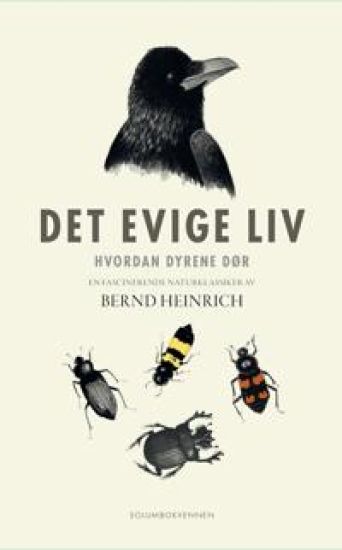
I Det evige liv tar den anerkjente biologen og forfatteren Bernd Heinrich oss med på en fascinerende reise inn i naturens sykluser av liv og død. Med sin store innsikt og dype respekt for naturen utforsker Heinrich hvordan død, i stedet for å være slutten, er en integrert del av livets evige kretsløp. Gjennom personlige refleksjoner, banebrytende forskning og fengslende historier fra naturens rike, viser Heinrich hvordan døden gir næring til nytt liv og opprettholder balansen i våre økosystemer. Fra insektenes betydning i nedbrytning til hvordan dyr og planter samhandler etter døden, viser Det evige liv naturens overveldende nettverk av forbindelser. Denne boken er både en hyllest til naturens visdom og en invitasjon til å reflektere over vår egen plass i den store livssyklusen. Det evige liv er en tankevekkende, inspirerende bok, og uforglemmelig leseropplevelse som vil endre ditt syn på naturen, livet og døden.


Einführung in die Rechtswissenschaft
Hermann Reichold; Michael Droege; Bernd Heinrich
C.H. BECK
2023
nidottu

Examinatorium Strafprozessrecht
Bernd Heinrich; Tobias Reinbacher
Nomos Verlagsgesellschaft
2023
nidottu
Als klassisches "Examensrepetitorium" ist das Examinatorium auf die im Ersten Staatsexamen ubliche "strafprozessuale Zusatzfrage" ausgerichtet. Hierzu werden insgesamt 51 Problembereiche im Uberblick dargestellt und am Ende mit einer solchen "Zusatzfrage" versehen, die klausurmassig beantwortet wird. Diese sind uberwiegend an "Originalklausuren" angelehnt, sodass sie als Beispiel dienen, was in den Klausuren verlangt wird. Besonders nutzlich fur das Referendariat: Bei der Darstellung der Meinungsstande wird jeweils deutlich gekennzeichnet, welche Ansicht die Rechtsprechung vertritt. Weiterfuhrende Hinweise zur Vertiefung runden die Darstellung ab. Die 4. Auflage wurde grundlich uberarbeitet und auf den neuesten Stand gebracht. Fur alle, die sich in vertretbarer Zeit einen komprimierten Uberblick uber den examensrelevanten Stoff des Strafprozessrechts verschaffen mochten

Strafrechtsfälle und Lösungen
Jörg Eisele; Bernd Heinrich; Wolfgang Mitsch
Gieseking E.U.W. GmbH
2023
nidottu

An award-winning, much-loved biologist turns his gaze on himself, using his long-distance running to illuminate the changes to a human body over a lifetimePart memoir, part scientific investigation, Racing the Clock is the book biologist and natural historian Bernd Heinrich has been waiting his entire life to write. A dedicated and accomplished marathon (and ultra-marathon) runner who won his first marathon at age thirty-nine, Heinrich looks deeply at running, aging, and the body, exploring the unresolved relationship between metabolism, diet, exercise, and age. Why do some bodies age differently than others? How much control do we have over that process and what effect, if any, does being active have? Bringing to bear research from his entire career and in the spirit of his classic Why We Run, Heinrich probes the questions of how we use energy and continue to adapt to our mutable surroundings and circumstances. Beyond that, he examines how our bodies change while we age but also how we can work with, if not overcome, many of these changes--and what all this tells us about evolution and the mechanisms of life, health, and happiness.Racing the Clock offers fascinating and surprising conclusions, all while bringing the reader along on Heinrich's compelling journey to what he says will be his final race--a fifty-kilometer race at age eighty.

An award-winning, much-loved biologist turns his gaze on himself, using his long-distance running to illuminate the changes to a human body over a lifetimePart memoir, part scientific investigation, Racing the Clock is the book biologist and natural historian Bernd Heinrich has been waiting his entire life to write. A dedicated and accomplished marathon (and ultra-marathon) runner who won his first marathon at age thirty-nine, Heinrich looks deeply at running, aging, and the body, exploring the unresolved relationship between metabolism, diet, exercise, and age. Why do some bodies age differently than others? How much control do we have over that process and what effect, if any, does being active have? Bringing to bear research from his entire career and in the spirit of his classic Why We Run, Heinrich probes the questions of how we use energy and continue to adapt to our mutable surroundings and circumstances. Beyond that, he examines how our bodies change while we age but also how we can work with, if not overcome, many of these changes--and what all this tells us about evolution and the mechanisms of life, health, and happiness.Racing the Clock offers fascinating and surprising conclusions, all while bringing the reader along on Heinrich's compelling journey to what he says will be his final race--a fifty-kilometer race at age eighty.

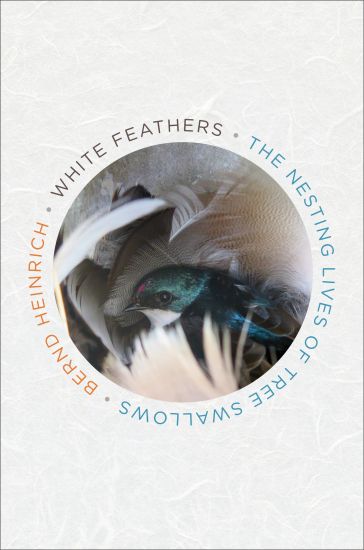
Heinrich is sparked one early spring day by a question: Why does a pair of swallows in a nest-box close to his Maine cabin show an unvarying preference for white feathers - not easily available nearby - as nest lining? He notices, too, the extreme aggressiveness of “his” swallows toward some other swallows of their own kind. And he wonders, given swallows’ reputation for feistiness, at the extraordinary tameness and close contact he experiences with his nesting birds.

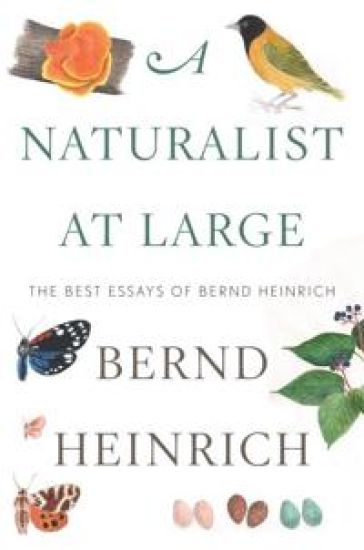
In essays that span several decades, Heinrich finds himself at home in his beloved camp in Maine, where he plays host to annoying visitors from Europe (the cluster flies) and more helpful guests from Asia (ladybugs); and as far away as Botswana, where he unravels the far-reaching ecological consequences of elephants’ bruising treatment of mopane trees. Heinrich turns to his great love, the extraordinary behaviors of ravens, some of them close companions for years. Finally, he asks “Where does a biologist find hope?” while delivering an answer that informs and inspires.
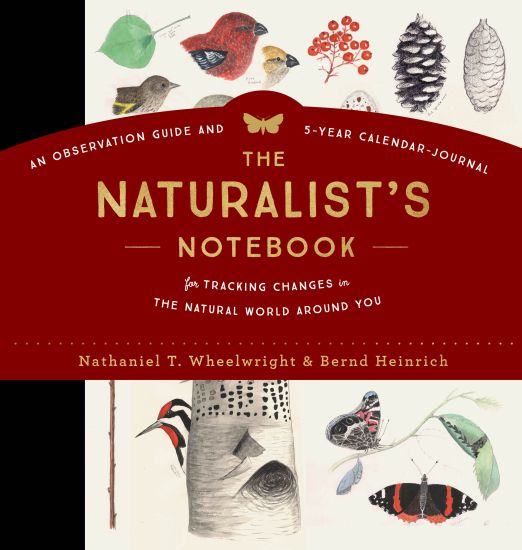
The Naturalist's Notebook
Bernd Heinrich; Nathaniel T. Wheelwright
Storey Publishing LLC
2017
sidottu
Become a more attentive observer and deepen your appreciation for the natural world. The unique five-year calendar format of The Naturalist’s Notebook helps you create a long-term record and point of comparison for memorable events, such as the first songbird you hear in spring, your first monarch butterfly sighting of summer, or the appearance of the northern lights. Biologist Nathaniel T. Wheelwright and best-selling author Bernd Heinrich teach nature lovers of all ages what to look for outdoors no matter where you live, using Heinrich’s classic illustrations as inspiration. As you jot down one observation a day, year after year, your collected field notes will serve as a valuable record of your piece of the planet. This deluxe book, with a three-piece case, gilt edges, a burgundy ribbon bookmark, and a belly band with gold foil stamping, is a perfect gift for all nature lovers.

How long should a leaf live? When should blueberries ripen? And what should a clever moose eat? Questions like these may seem simple or downright strange, yet they form the backbone of natural history, a discipline that fostered some of our most important scientific theories, from natural selection to glaciation. Through careful, patient observations of the organisms that live in an area, their distributions, and how they interact with other species, we gain a more complete picture of the world around us, and our place in it. In What Should a Clever Moose Eat?, John Pastor explores the natural history of the North Woods, an immense and complex forest that stretches from the western shore of Lake Superior to the far coast of Newfoundland. The North Woods is one of the most ecologically and geologically interesting places on the planet, with a host of natural history questions arising from each spruce or sugar maple. From the geological history of the region to the shapes of leaves and the relationship between aspens, caterpillars, and predators, Pastor delves into a captivating range of topics as diverse as the North Woods themselves. Through his meticulous observations of the natural world, scientists and non-scientists alike learn to ask natural history questions and form their own theories, gaining a greater understanding of and love for the North Woods, and other natural places precious to them. In the tradition of Charles Darwin and Henry David Thoreau, John Pastor is a joyful observer of nature who makes sharp connections and moves deftly from observation to theory. Take a walk in John Pastor's North Woods, you'll come away with a new appreciation for details, for the game trails, beaver ponds, and patterns of growth around you, and won't look at the natural world in the same way again.
The story and science of how animals find their way home.
The Homing Instinct: Meaning and Mystery in Animal Migration
Bernd Heinrich
Mariner Books
2015
nidottu
A captivating exploration of the homing instinct in animals, and what it means for human happiness and survival, from the celebrated naturalist and author of Mind of the Raven, Why We Run, and Life Everlasting.Acclaimed scientist and author Bernd Heinrich has returned every year since boyhood to a beloved patch of western Maine woods. What is the biology in humans of this deep-in-the-bones pull toward a particular place, and how is it related to animal homing?Heinrich explores the fascinating science chipping away at the mysteries of animal migration: how geese imprint true visual landscape memory; how scent trails are used by many creatures, from fish to insects to amphibians, to pinpoint their home if they are displaced from it; and how the tiniest of songbirds are equipped for solar and magnetic orienteering over vast distances. Most movingly, Heinrich chronicles the spring return of a pair of sandhill cranes to their home pond in the Alaska tundra. With his trademark "marvelous, mind-altering" prose (Los Angeles Times), he portrays the unmistakable signs of deep psychological emotion in the newly arrived birds--and reminds us that to discount our own emotions toward home is to ignore biology itself.
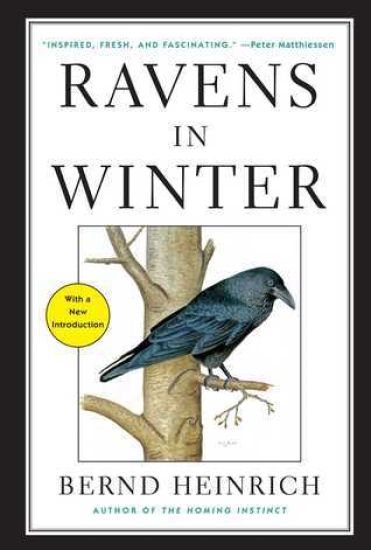
"One of the most interesting discoveries I've seen in animal sociobiology in years." --E.O. WilsonWhy do ravens, generally understood to be solitary creatures, share food between each other during winter? On the surface, there didn't appear to be any biological or evolutionary imperative behind the raven's willingness to share. The more Bernd Heinrich observed their habits, the more odd the bird's behavior became. What started as mere curiosity turned into an impassioned research project, and Ravens In Winter, the first research of its kind, explores the fascinating biological puzzle of the raven's rather unconventional social habits. "Bernd Heinrich is no ordinary biologist. He's the sort who combines formidable scientific rigor with a sense of irony and an unslaked, boyish enthusiasm for his subject, and who even at his current professorial age seems to do a lot of tree climbing in the line of research." --David Quammen, The New York Times