Kirjojen hintavertailu. Mukana 12 657 676 kirjaa ja 12 kauppaa.
Kirjailija
Bert Hölldobler
Kirjat ja teokset yhdessä paikassa: 13 kirjaa, julkaisuja vuosilta 1990-2023, suosituimpien joukossa Herbivory of Leaf-Cutting Ants. Vertaile teosten hintoja ja tarkista saatavuus suomalaisista kirjakaupoista.
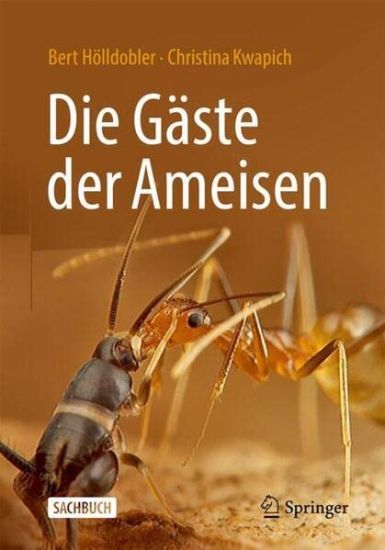
In diesem Buch erfahren Sie, wie Ameisenvölker, die für ihr komplexes kollektives Verhalten bekannt sind, von Myrmecophilen infiltriert werden. Schmetterlinge, Fliegen, Käfer, Grillen, Spinnen, Pilze und Bakterien haben im Laufe ihrer Evolutionsgeschichte eine Vielfalt von Taktiken entwickelt, die sie befähigen, in Ameisenkolonien einzudringen und z.T. das Kommunikationssystem der Ameisen zu entschlüsseln. Einigen myrmecophilen Arten gelingt die Täuschung so gut, dass die Wirtsameisen die ungebetenen Gäste nicht mehr von wahren Nestgenossinnen unterscheiden können. Dieser spannende Vorgang wird von den Autoren detailliert beschrieben, um Ihnen zu erläutern, wie die Myrmecophilen den Code knacken und anschließend die Reserven der Kolonie ausbeuten. Bert Hölldobler und Christina Kwapich zeigen eine Vielzahl von Verhaltensmechanismen auf, mit denen Myrmecophile Ameisen zu „unfreiwilligen Dienern“ machen. Dieses Werk richtet sich sowohl an Fachleute als auch an Naturbegeisterte mit entsprechendem Vorwissen.
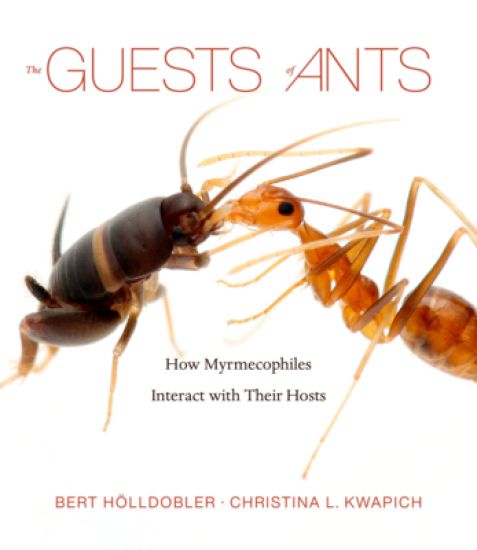
A fascinating examination of socially parasitic invaders, from butterflies to bacteria, that survive and thrive by exploiting the communication systems of ant colonies.Down below, on sidewalks, in fallen leaves, and across the forest floor, a covert invasion is taking place. Ant colonies, revered and studied for their complex collective behaviors, are being infiltrated by tiny organisms called myrmecophiles. Using incredibly sophisticated tactics, various species of butterflies, beetles, crickets, spiders, fungi, and bacteria insert themselves into ant colonies and decode the colonies’ communication system. Once able to “speak the language,” these outsiders can masquerade as ants. Suddenly colony members can no longer distinguish friend from foe.Pulitzer Prize–winning author and biologist Bert Hölldobler and behavioral ecologist Christina L. Kwapich explore this remarkable phenomenon, showing how myrmecophiles manage their feat of code-breaking and go on to exploit colony resources. Some myrmecophiles slip themselves into their hosts’ food sharing system, stealing liquid nutrition normally exchanged between ant nestmates. Other intruders use specialized organs and glandular secretions to entice ants or calm their aggression. Guiding readers through key experiments and observations, Hölldobler and Kwapich reveal a universe of behavioral mechanisms by which myrmecophiles turn ants into unwilling servants.As The Guests of Ants makes clear, symbiosis in ant societies can sometimes be mutualistic, but, in most cases, these foreign intruders exhibit amazingly diverse modes of parasitism. Like other unwelcome guests, many of these myrmecophiles both disrupt and depend on their host, making for an uneasy coexistence that nonetheless plays an important role in the balance of nature.
Knapp 20 Jahre nach dem Pulitzer Preis für ihr Werk „The Ants" präsentieren Bert Hölldobler und Edward O. Wilson einem breiten Publikum, was die Biologen in den vergangenen zwei Jahrzehnten über die Organisationsformen sozial lebender Insekten herausgefunden haben. „Superorganismen" werden Kolonien sozialer Insekten genannt, die sich durch altruistische Zusammenarbeit sowie komplexe Kommunikation und Arbeitsteilung auszeichnen. Ihr Studium erhellt viele Phänomene und Konzepte von allgemeiner Bedeutung in der Biologie.Das Buch zeigt den Weg der Evolution der „Superorganismen". Auf diesem Wissen aufbauend werfen die Autoren einen Blick auf einen der bedeutendsten Übergänge des Lebens: vom Molekül über die Zelle zum Organismus und darüberhinaus zum Superorganismus, zur Population und schließlich zum Ökosystem.Dieser Softcovernachdruck hält das nachgefragte Buch weiterhin verfügbar.
Charles Darwin struggled to explain how forty thousand bees working in the dark, seemingly by instinct alone, could organize themselves to construct something as perfect as a honey comb. How do bees accomplish such incredible tasks? Synthesizing the findings of decades of experiments, The Spirit of the Hive presents a comprehensive picture of the genetic and physiological mechanisms underlying the division of labor in honey bee colonies and explains how bees’ complex social behavior has evolved over millions of years.Robert Page, one of the foremost honey bee geneticists in the world, sheds light on how the coordinated activity of hives arises naturally when worker bees respond to stimuli in their environment. The actions they take in turn alter the environment and so change the stimuli for their nestmates. For example, a bee detecting ample stores of pollen in the hive is inhibited from foraging for more, whereas detecting the presence of hungry young larvae will stimulate pollen gathering. Division of labor, Page shows, is an inevitable product of group living, because individual bees vary genetically and physiologically in their sensitivities to stimuli and have different probabilities of encountering and responding to them.A fascinating window into self-organizing regulatory networks of honey bees, The Spirit of the Hive applies genomics, evolution, and behavior to elucidate the details of social structure and advance our understanding of complex adaptive systems in nature.
The Leafcutter Ants is the most detailed and authoritative description of any ant species ever produced. With a text suitable for both a lay and a scientific audience, the book provides an unforgettable tour of Earth's most evolved animal societies. Each colony of leafcutters contains as many as five million workers, all the daughters of a single queen that can live over a decade. A gigantic nest can stretch thirty feet across, rise five feet or more above the ground, and consist of hundreds of chambers that reach twenty-five feet below the ground surface. Indeed, the leafcutters have parlayed their instinctive civilization into a virtual domination of forest, grassland, and cropland—from Louisiana to Patagonia. Inspired by a section of the authors' acclaimed The Superorganism, this brilliantly illustrated work provides the ultimate explanation of what a social order with a half-billion years of animal evolution has achieved.
Plant-animal interactions have become a focus of ecological research, with the processes of herbivory being of special interest. This volume examines the interactions of leaf-cutting ants with the rainforest vegetation on Barro Colorado Islands in Central America. It is the synthesis of field research on multiple scales extending over a period of several years. This work can serve as a model study summarizing and extending knowledge about herbivorous insect-plant relationships, and the resulting consequences on structural and functional features of tropical ecosystems. The text is an invaluable reference for researchers and land managers working in the fields of plant-animal interactions, herbivory, community ecology and biodiversity.
The Superorganism promises to be one of the most important scientific works published in this decade. Coming eighteen years after the publication of The Ants, this new volume expands our knowledge of the social insects (among them, ants, bees, wasps, and termites) and is based on remarkable research conducted mostly within the last two decades. These superorganisms—a tightly knit colony of individuals, formed by altruistic cooperation, complex communication, and division of labor—represent one of the basic stages of biological organization, midway between the organism and the entire species. The study of the superorganism, as the authors demonstrate, has led to important advances in our understanding of how the transitions between such levels have occurred in evolution and how life as a whole has progressed from simple to complex forms. Ultimately, this book provides a deep look into a part of the living world hitherto glimpsed by only a very few.
Asked to name an insect society, most of us--whether casual or professional students of nature--quickly point to one of the so-called eusocial marvels: the ant colony, the beehive, the termite mound, the wasp nest. Each is awe-inspiring in its division of labor--collective defense, foraging, and nestbuilding. Yet E. O. Wilson cautioned back in 1971 that sociality should be defined more broadly, "in order to prevent the arbitrary exclusion of many interesting phenomena." Thirty-five years later, James T. Costa gives those interesting phenomena their due. He argues that, in trying to solve the puzzle of how highly eusocial behaviors evolved in a few insect orders, evolutionary biologists have neglected the more diverse social arrangements in the remaining twenty-eight orders--insect societies that don't fit the eusocial schema. Costa synthesizes here for the first time the scattered literature about social phenomena across the arthropod phylum: beetles and bugs, caterpillars and cockroaches, mantids and membracids, sawflies and spiders. This wide-ranging tour takes a rich narrative approach that interweaves theory and data analysis with the behavior and ecology of these remarkable groups. This comprehensive treatment is likely to inspire a new generation of naturalists to take a closer look.
Plant-animal interactions have become a focus of ecological research, with the processes of herbivory being of special interest. This volume examines the interactions of leaf-cutting ants with the rainforest vegetation on Barro Colorado Islands in Central America. It is the synthesis of field research on multiple scales extending over a period of several years. This work can serve as a model study summarizing and extending knowledge about herbivorous insect-plant relationships, and the resulting consequences on structural and functional features of tropical ecosystems. The text is an invaluable reference for researchers and land managers working in the fields of plant-animal interactions, herbivory, community ecology and biodiversity.
Richly illustrated and delightfully written, Journey to the Ants combines autobiography and scientific lore to convey the excitement and pleasure the study of ants can offer. Bert Hölldobler and E. O. Wilson interweave their personal adventures with the social lives of ants, building, from the first minute observations of childhood, a remarkable account of these abundant insects’ evolutionary achievement.
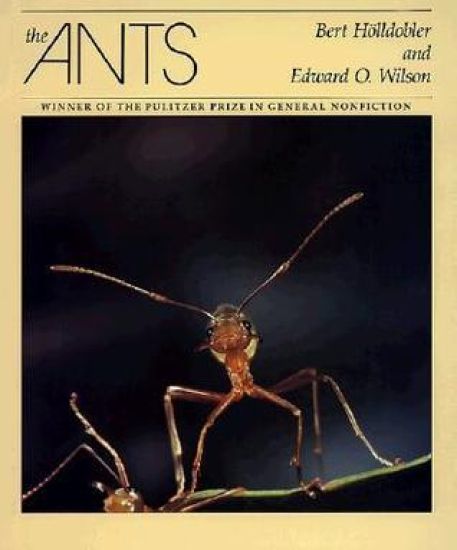
This landmark work, the distillation of a lifetime of research by the world’s leading myrmecologists, is a thoroughgoing survey of one of the largest and most diverse groups of animals on the planet. Bert Hölldobler and Edward O. Wilson review in exhaustive detail virtually all topics in the anatomy, physiology, social organization, ecology, and natural history of the ants. In large format, with almost a thousand line drawings, photographs, and paintings, it is one of the most visually rich and all-encompassing views of any group of organisms on earth. It will be welcomed both as an introduction to the subject and as an encyclopedia reference for researchers in entomology, ecology, and sociobiology.
From the Arctic to South Africa - one finds them everywhere: Ants. Making up nearly 15% of the entire terrestrial animal biomass, ants are impressive not only in quantitative terms, they also fascinate by their highly organized and complex social system. Their caste system, the division of labor, the origin of altruistic behavior and the complex forms of chemical communication makes them the most interesting group of social organisms and the main subject for sociobiologists. Not least is their ecological importance: Ants are the premier soil turners, channelers of energy and dominatrices of the insect fauna.