Kirjailija
Bert Nemcik
Kirjat ja teokset yhdessä paikassa: 18 kirjaa, julkaisuja vuosilta 2014-2018, suosituimpien joukossa Twilight of an Order. Vertaile teosten hintoja ja tarkista saatavuus suomalaisista kirjakaupoista.
18 kirjaa
Kirjojen julkaisuhaarukka 2014-2018.
Colonel Michal Volodyovski, a veteran of countless wars, a decorated hero and a mercenary cannot escape a recurring nightmare. Wading in a pool of blood, he sees the shapeless, dead men, women and children he has killed. He contemplates suicide, but an epiphany saves him. He must complete one final mission. He travels to Washington and begins a movement to "End War Forever." The forces of good and evil stand in his way. Congressional leaders, the presidential candidates, and the President are confronted by a movement determined to change American military policy. The mission takes the Colonel, Sergeant Joe, Sal Ruff, Sergeant Eric and thousands of people who join them to a climax that is both awe-inspiring and tragic. The Last Warrior is a story of what is possible when the human spirit is focused on one man's dream pursued with the belief nothing is impossible.
Colonel Michal Volodyovski, a veteran of every war since Korea, faces his demons and he wants them to go away. He decides he has one last mission to undertake and that is to end war forever. He rides to Washington, D.C. and begins his protest. He is assisted by Sergeant Joe Morelli, a man he served with in Vietnam. He befriends a homeless veteran who joins in the mission. Sally Ruff, a vivacious 85 year old woman, comes to join them in achieving their goal to end war forever. Michal is kidnapped and tortured and left for dead. Someone wants the mission to end, but luckily, Michal is saved and the movement continues. He is invited to testify before the Senate committee on defense and he shares with them his vision. After a ride to end war and massive marches across Washington, Michal finally decides to begin a hunger strike to bring attention to the goal. He and Sal begin their hunger strike and thirteen days later it ends in a most surprising way. Michal and Sal are modern American heroes.
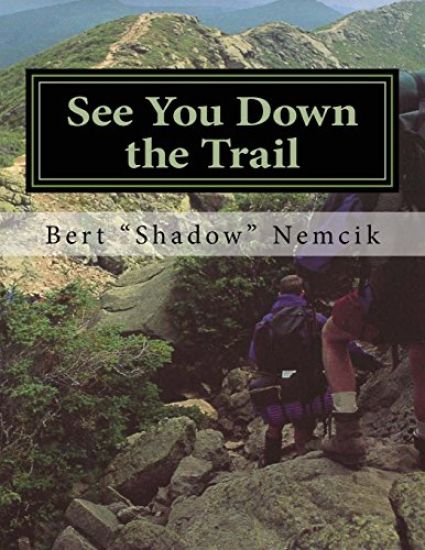
See You Down the Trail: A 2002 AT Thru-Hike
Bert Nemcik
Createspace Independent Publishing Platform
2017
nidottu
In 1995, I rode my bicycle across America from Oregon to New Jersey. It took me 31 days and I traveled more than 3,250 miles. When I returned home, many friends and neighbors asked me if I were going to write about my adventure. For a few years, I resisted doing so until I felt the experience was far enough removed from the present to be honestly and accurately reflected upon. In 1998, I wrote about the trip in the Forest Press. In 2002, I thru-hiked the Appalachian Trail from Maine to Georgia. It took me four months and I traveled more than 2,200 miles on foot. Again, when I returned home, many friends and neighbors asked me if I were going to write about this adventure too. It's been 15 years now since I completed that epic journey and the time to document it has come. Now, I'm ready to recount a journey that entailed much more of a tour of America than the bicycle trip did. I hope you enjoy reading about this journey as much as I did experiencing it first, on foot, and now, once again, in text.
Brother's and Sisters' Keeper: An American Allegory
Bert Nemcik
Createspace Independent Publishing Platform
2017
nidottu
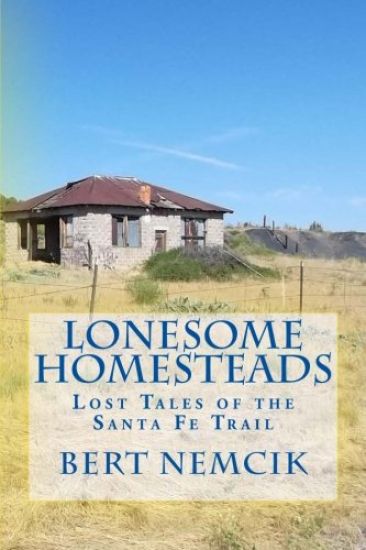
Lonesome Homesteads: Lost Tales of the Santa Fe Trail
Bert Nemcik
Createspace Independent Publishing Platform
2017
nidottu
In American history, the Santa Fe Trail looms as large as the Kansas, Colorado and New Mexico landscapes it traverses. Along its path, thousands of hearty settlers traveled westward seeking a new life. In some places, the wagon ruts remain reminding us of the primitive mode of travel used by those who sought freedom and fortune in the vast expanses of an untamed land. All of these restless and resilient pioneers are dead and buried many of them along the way in marked and unmarked graves. What remains are the myriad abandoned homesteads that once provided shelter to those who dared to explore the world beyond the tame sidewalks of the east. I live a few miles north of the Santa Fe Trail. Every time I ride along its route in my truck or on a motorcycle, I am enchanted by the lonely homesteads standing gaunt vigil along the roadside. They are a reminder of what once was a major route west for thousands of people. Though they may be abandoned now, once upon a time they were warm and cozy havens for the settlers who braved harsh winters, torrid summers, violent rainstorms, hostile Natives, greedy rustlers and a host of other dangers. Each time I pass by one of these places, I wonder, "What is its story? Who lived there? What kind of people were they? What caused them to leave this sanctuary behind and move? Where are their ancestors now?" The notion of telling their stories occurred to me on one of my many motorcycle trips through Trinidad, Colorado. I was cruising along, saw the remains of a sandstone structure and had to stop and look at it more closely. I admired the way the builders fit each stone together without cement making a remarkably tight wall. At that moment, I pulled out my notebook and began making notes. I would tell the stories of the lonesome homesteads I passed on the Santa Fe Trail. Each story would be unique, another facet of the story we call western expansion. Dear Reader, you must bear with me when I say I am writing their stories, but I am not going to let you know which ones are true and which are pure imagination. I have studied enough history to know the difference. These are the stories I wanted to tell and not necessarily those which some might want to hear. I hope these tales stir your imagination and make you want to take any mode of travel you can and come visit the great Santa Fe Trail. You won't be disappointed. I never am. Go West young man and woman See what there is to see. Hear the sounds of raucous winds and desert silence. Touch the hot sands and frozen snowcaps. This is my challenge to you, but for now, read on. Bert Nemcik Westcliffe, Colorado February, 2017
Colonel Michal Volodyovski, a veteran of countless wars, a decorated hero and a mercenary cannot escape a recurring nightmare. Wading in a pool of blood, he sees the shapeless, dead men, women and children he has killed. He contemplates suicide, but an epiphany saves him. He must complete one final mission. He travels to Washington and begins a movement to "End War Forever". The forces of good and evil stand in his way. Congressional leaders, the presidential candidates, and the President are confronted by a movement determined to change American military policy. The mission takes the Colonel, Sergeant Joe, Sal Ruff, Sergeant Eric and thousands of people who join them to a climax that is both awe-inspiring and tragic. The Last Warrior is a story of what is possible when the human spirit is focused on one man's dream pursued with the belief nothing is impossible.
Life, Liberty and Library: Essays On Our Times - 1993 Thru 2015
Bert Nemcik
Createspace Independent Publishing Platform
2015
nidottu
The following selected articles appeared in the Forest Press in my column entitled, Life, Liberty, and Library. Alex Badenoch, who originated the column many years ago, died in 1993. Before Alex died, he and I corresponded frequently. Alex told me that he was retiring from the newspaper business and wanted me to take over the column. I told him that he could not retire yet. He said he was about to do so. What he and I both knew by that time was he was not going to live much longer. Alex had Lou Gehrig's disease. He suffered quietly, and when he died, many people missed his cheer, Scottish wit, and homespun knowledge. Though Alex never went to college, he was an exceptionally well-read man. His column was not just a misnomer, or some cutesy title. He read voraciously and encouraged others to do so. By trade, Alex was a lumber grader. He traveled all over the forests and worked for many people, but always with trees. Each and every week for nearly six years, he wrote his weekly column. As his illness destroyed his energy, he withdrew from life, and refused to write anymore. I chastised him in one letter saying that many of his loyal readers were upset that he was not contributing any articles to the paper. He wrote back to me and said that he was not well. However, he did write one more story before he died. I guess my words did affect him. I wrote and thanked him. I began my column with a tribute to Alex. It is the only reference to him, and yet, his work is still inside of me. Many times when I sit down to write, I sense his presence near me. I am not Alex. I don't possess his wit. Nor am I Scottish. However, I am who I am, and when he told me to take over for him, I believe he trusted me to do my very best. With that in mind, I proceeded. What I want you all to know is that these stories are just like Alex's - straight from the heart. Some are humorous and some serious. Each is an attempt to tie together the themes of life, liberty, and library. Sometimes I succeeded in accomplishing this. Other times I guess I fell short. Over the past nine months, many ideas for stories flowed through me. I was never sure when I sat down at the keyboard what might appear. Perhaps, that is what makes this type of writing so much fun. Some were spontaneous inspirations that flowed from mind to keyboard without much editing. Others were mulled over for many days, weeks, often months, before I was prepared to write them. Nothing pleases me more than the opportunity to create something that did not exist before. In the writing is the creation of a new point of view, a new perspective, and a new notion how things just might be. I hope that as you read them, you are encouraged to live a little more fully. I hope that you cherish your own measure of liberty. Most of all, I hope that references to the many works cited in the stories prompt you to make a trip to the library and read them. Peace and love, Bert
An Inquiry Into Human Motivation
Bert Nemcik
Createspace Independent Publishing Platform
2015
nidottu
Ringing the Liberty Bell: A Third Party Campaign for the Presidency of the United States
Bert Nemcik
Createspace Independent Publishing Platform
2015
nidottu
Ringing the Liberty Bell is a fiction work describing a third party candidate's quest to become the President of the United States. Leo Pollack, an unemployed steel worker, is frustrated with the way working people are being treated in America and decides it is time for "one of our own" to lead America. His fledgling campaign gains swift momentum as he and his supporters use unconventional methods to inform the voting public about his platform and what he hopes to achieve as President. If there is anything called "the American Dream", this story captures its essence. You will be shocked and amazed at the political adventure ahead of you as you read this thrilling story.
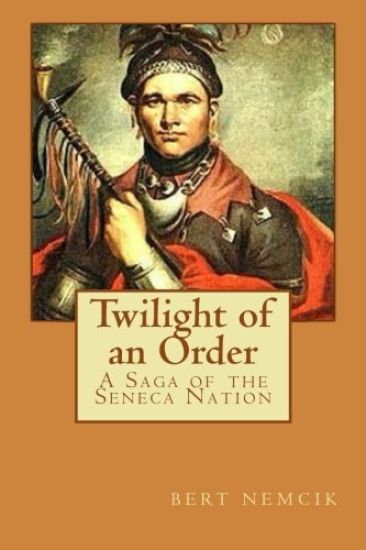
Gyantwachia, the Cornplanter, was a famous Seneca chief who lived during the time of the American Revolution. He fought with the French in the French and Indian War. As a result of his siding with the French, General George Washington dispatched troops to hold Cornplanter accountable for his choosing to support the enemy. A number of Seneca people were killed. When it came time to fight in the Revolutionary War, Cornplanter fought with Washington. After the war Cornplanter led negotiations with the United States and was a signatory of the Treaty of Fort Stanwix (1784). He helped gain Iroquois neutrality during the Northwest Indian War. In the post war years, he worked to learn more about European-American ways and invited Quakers to establish schools in Seneca territory. Disillusioned by his people's poor reaction to European-American society, he had the schools closed and followed his half-brother Handsome Lake's movement returning traditional Seneca way. The United States government granted him about 1500 acres of former Seneca territory in Pennsylvania in 1796 for "him and his heirs forever", which became known as the Cornplanter Tract. This land was flooded in 1965 by the Kinzua Dam and most of the remaining residents were relocated to the Allegany Reservation of the federally recognized Seneca Nation of New York. The setting for this novel is pre-revolutionary times when the Seneca travelled each spring to the Allegheny Mountains to await the return of the myriad passenger pigeons that migrated to the northern tier to roost. They celebrated spring by feasting on the pigeons and starting their new growing season in the land near the river. The pigeons were so plentiful they darkened the skies when in flight, but by 1912, the last bird died in captivity. In a little more than a century, settlers and other hunters killed so many birds they became extinct. The Native American world faced many changes and this was one of them. With the death of the pigeons, the influx of myriad settlers onto the land and the eventual destruction of the reservation, the Seneca people were reduced to living in a small part of southwest New York. This is a tragic tale of American history that must be told because it was a symbol of the reckless way we treated Native People in their own land. Perhaps by reading it, we can become more tolerant of other people in this land and around the world who do not share our belief in the principle of "Manifest Destiny".

You Can Teach An Old Dog New Tricks: The Psychology of Adult Learning
Bert Nemcik
Createspace Independent Publishing Platform
2015
nidottu
Malcolm Knowles, the father of modern adult education, introduced the term andragogy into the learning process. Unlike pedagogy, the practice of child learning, adult learning is inherently different for many psychological reason. This book explores the modern practice of adult learning via the psychology of adults versus children in the learning environment. The key differences are listed and strategies for using the principles are explained in detail. An extensive bibliography is included for the trainer or adult educator who wants to further explore this unique and special aspect of education.
Universal Prayer: Enlightenment through Prayer in the Buddhist, Christian, Hebrew, Hindu and Muslim Traditions
Bert Nemcik
Createspace Independent Publishing Platform
2015
nidottu
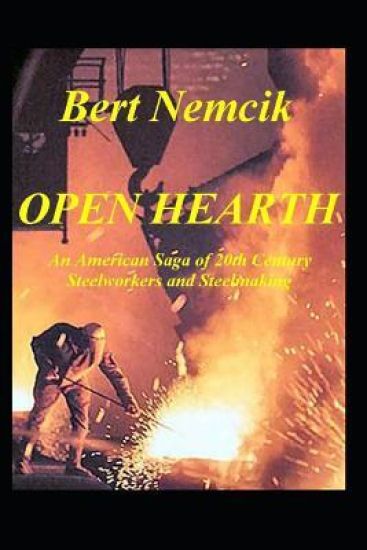
Open Hearth: An American Saga of 20th Century Steel Workers and Steel making
Bert Nemcik
Createspace Independent Publishing Platform
2015
nidottu
Open Hearth is a saga of 20th Century steel workers and steel making as seen through the eyes of John "Shadow" Kordetski who lies in his bed dying of lung cancer. As the last five hours of his existence slowly pass, he remembers the important moments in his life. His story is personal, but symbolizes the struggle of the American blue collar worker to rise to middle class status and then decline. Shadow's father dies leaving his five children to be cared for by his immigrant wife. He and his sisters work hard to make it through the Depression. When he gets into trouble with the law, he is sent to a CCC camp in Wyoming where he first experiences manhood. He quits school in the eighth grade and goes to work in the steel mill. He and his sisters save money, buy another home and move their mother out of a mill ghetto where they grew up. Shadow serves in WWII in the South Pacific, comes home, returns to work in the mill and marries Regina, his one and only love. They build their own home, raise three children and live the American Dream. Every major event in the 20th Century affects the Kordetski family in ways that define the experience of middle class America. Using a convention of past and present chapters to explore his story, what unfolds is a tale rich in the history of industrial America when men and women graduate from high school and still make a decent living, raise a family and pursue happiness in any way they choose. Open Hearth becomes an open heart of the American working class facing a transition into the digital age without any buffers to shield it from the onslaught of a new era. It depicts the merciless denial of the right of working people to share in the profit of the corporations now holding personhood status and implacable in their desire to maximize profits and minimize costs at the expense of working people.
Solo: A Bicycle Trip Across America to Raise Money for Habitat for Humanity
Bert Nemcik
Createspace Independent Publishing Platform
2015
nidottu
Lincoln - A Tragedy in Five Acts
Bert Nemcik
Createspace Independent Publishing Platform
2015
nidottu
As this presidential campaign year begins to unfold, many of us who watch politics with a close eye and a sensitive ear wonder what happened to the real orators of the past. The president whose name comes to mind, most of all, is Abraham Lincoln. Even after 146 years since his death, there is no president that garners our respect, our admiration, our wonder and awe as Lincoln. Over the years, I spent a significant amount of time studying Lincoln. I considered writing a book about him. This endeavor seemed rather trite. How would another book contribute to a greater understanding of this unique American character? What I decided to do instead was craft a play about Lincoln, written in the Shakespearean model of a five-act tragedy. It is time to share this work with you, my readers. I believe you will find this a different way to view our 16th President. I hope you read the play and gain a new appreciation for this president, our political system, our history, our morals, values, and most of all, our people who are as complex as any people anywhere in the history of human kind. I would like to thank Mike Sample, owner of the Forest Press, and Editor, Kathy Patrick, for their encouragement, support and understanding.

What happens when the House of Yashica, the great Japanese camera manufacturer, is faced with a sagging economy, dwindling sales, increased competition from other national companies and the need to reduce its workforce in order to survive? This story juxtaposes Old Japan thrust up against the New Japan. It describes how company honor and employee loyalty painfully evolve into internal and external human conflict leading to a new but foreign way of life.