Kirjojen hintavertailu. Mukana 12 595 353 kirjaa ja 12 kauppaa.

Kirjailija

Bertram C. Bruce

Kirjat ja teokset yhdessä paikassa: 10 kirjaa, julkaisuja vuosilta 1992-2026, suosituimpien joukossa Democratic Education: Finding Hope in Challenging Times. Vertaile teosten hintoja ja tarkista saatavuus suomalaisista kirjakaupoista.

Mukana myös kirjoitusasut: Bertram C Bruce

10 kirjaa

Kirjojen julkaisuhaarukka 1992-2026.

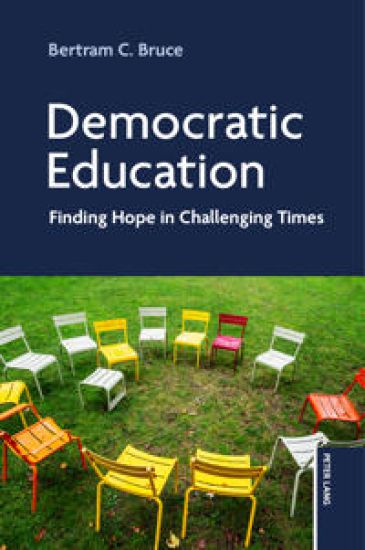
Democratic Education: Finding Hope in Challenging Times

Democratic Education: Finding Hope in Challenging Times

Bertram C. Bruce

Peter Lang Inc., International Academic Publi
2026
sidottu
In Democratic Education, Bertram Bruce insists that democracy and education rise (and fall) together. He goes beyond the generally accepted formula of education of, by, and for democracy to articulate a commitment to education with democracy - through which "educators and students work to simultaneously transform both education and society to become more democratic." The spirit of both John Dewey (democracy) and Paulo Freire (hope) resonate in the concrete case studies he employs to make his argument.
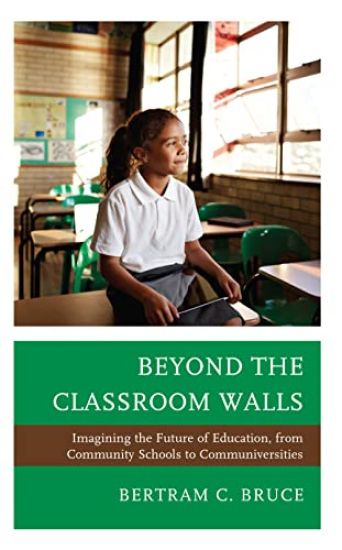
Beyond the Classroom Walls

Beyond the Classroom Walls

Bertram C. Bruce

BLOOMSBURY PUBLISHING PLC
2022
nidottu
The book asks readers to adopt a critical and comprehensive view of education (pre-K to lifelong learning) as existing both within classroom walls, and in the surrounding world, including communities and workplaces. It presents an integrated view of online learning, community schools, communiversities, and learning through work. Our educational systems are organized in ways that make this integration difficult. We have elaborate systems of formal instruction––academies, schools, universities, and training institutes––all to facilitate learning within the walls. At the same time we have ample opportunities for learning in the wild. Unfortunately these systems diverge to the point that they do little to support learning that allows us to draw from both of the realms of knowledge. But it is possible to bring together learning within the walls with that beyond the walls. Moreover it is crucial to make these connections in the world of today. In order to bring together the classroom and daily life we need an educational system that does that as well.The book provides a coherent account of how schooling can and should relate to learning beyond the classroom walls.
Beyond the Classroom Walls

Beyond the Classroom Walls

Bertram C. Bruce

BLOOMSBURY PUBLISHING PLC
2022
sidottu
The book asks readers to adopt a critical and comprehensive view of education (pre-K to lifelong learning) as existing both within classroom walls, and in the surrounding world, including communities and workplaces. It presents an integrated view of online learning, community schools, communiversities, and learning through work. Our educational systems are organized in ways that make this integration difficult. We have elaborate systems of formal instruction––academies, schools, universities, and training institutes––all to facilitate learning within the walls. At the same time we have ample opportunities for learning in the wild. Unfortunately these systems diverge to the point that they do little to support learning that allows us to draw from both of the realms of knowledge. But it is possible to bring together learning within the walls with that beyond the walls. Moreover it is crucial to make these connections in the world of today. In order to bring together the classroom and daily life we need an educational system that does that as well.The book provides a coherent account of how schooling can and should relate to learning beyond the classroom walls.
Thinking with Maps

Thinking with Maps

Bertram C. Bruce

Rowman Littlefield
2021
sidottu
Spatial reasoning, which promises connection across wide areas, is itself ironically often not connected to other areas of knowledge. Thinking with Maps: Understanding the World through Spatialization addresses this problem, developing its argument through historical analysis and cross-disciplinary examples involving maps. The idea of maps here includes traditional cartographic representations of physical environments, but more broadly encompasses the wide variety of ways that visualizations are used across all disciplines to enable understanding, to generate new knowledge, and to effect change.The idea of thinking with maps is also used broadly. Maps become, not simply one among many items to learn about, but indispensable tools for thinking across every field of inquiry, in a way similar to that of textual and mathematical language. Effective use of maps becomes a way to make knowledge, much as writing or mathematical exploration not only displays ideas, but also creates them. The book shows that maps for thinking are not just a means to improve geographic knowledge, as valuable as that may be. Instead, they provide mechanisms for rejuvenating our engagement with the world, helping us to become more capable of facing our global challenges.This book has a broader aim: It is fundamentally about general principles of how we learn and know. It calls for a renewed focus on democratic education in which both the means and ends are democratic. Education, just as the political realm, should follow Dewey’s dictum that “democratic ends need democratic methods for their realization.” Maps and mapping are invaluable in that endeavor.
Thinking with Maps

Thinking with Maps

Bertram C. Bruce

Rowman Littlefield
2021
nidottu
Spatial reasoning, which promises connection across wide areas, is itself ironically often not connected to other areas of knowledge. Thinking with Maps: Understanding the World through Spatialization addresses this problem, developing its argument through historical analysis and cross-disciplinary examples involving maps. The idea of maps here includes traditional cartographic representations of physical environments, but more broadly encompasses the wide variety of ways that visualizations are used across all disciplines to enable understanding, to generate new knowledge, and to effect change.The idea of thinking with maps is also used broadly. Maps become, not simply one among many items to learn about, but indispensable tools for thinking across every field of inquiry, in a way similar to that of textual and mathematical language. Effective use of maps becomes a way to make knowledge, much as writing or mathematical exploration not only displays ideas, but also creates them. The book shows that maps for thinking are not just a means to improve geographic knowledge, as valuable as that may be. Instead, they provide mechanisms for rejuvenating our engagement with the world, helping us to become more capable of facing our global challenges.This book has a broader aim: It is fundamentally about general principles of how we learn and know. It calls for a renewed focus on democratic education in which both the means and ends are democratic. Education, just as the political realm, should follow Dewey’s dictum that “democratic ends need democratic methods for their realization.” Maps and mapping are invaluable in that endeavor.
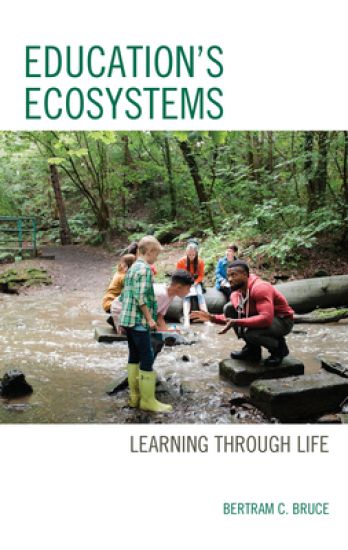
Education's Ecosystems

Education's Ecosystems

Bertram C. Bruce

Rowman Littlefield
2020
nidottu
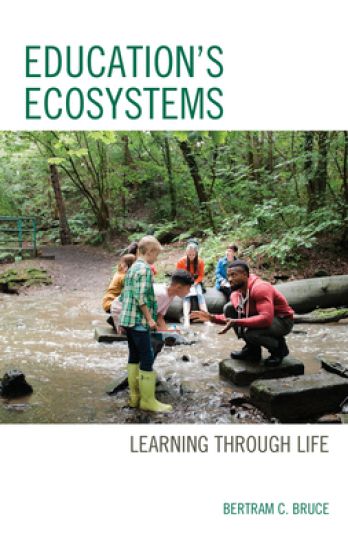
Education’s Ecosystems offers a new perspective on learning that is integrated and connected to lived experience. It presents a model for salient characteristics of both biological and pedagogical ecosystems, involving diversity, interaction, emergence, construction, interpretation. Examples from around the world show how learning can be made more whole and relevant. The book should be valuable to educators, parents, policy makers, and anyone interested in democratic education.
Education's Ecosystems

Education's Ecosystems

Bertram C. Bruce

Rowman Littlefield
2020
sidottu
Education’s Ecosystems offers a new perspective on learning that is integrated and connected to lived experience. It presents a model for salient characteristics of both biological and pedagogical ecosystems, involving diversity, interaction, emergence, construction, interpretation. Examples from around the world show how learning can be made more whole and relevant. The book should be valuable to educators, parents, policy makers, and anyone interested in democratic education.
Progressive Education in Nepal

Progressive Education in Nepal

Bertram C Bruce

Lulu.com
2018
pokkari
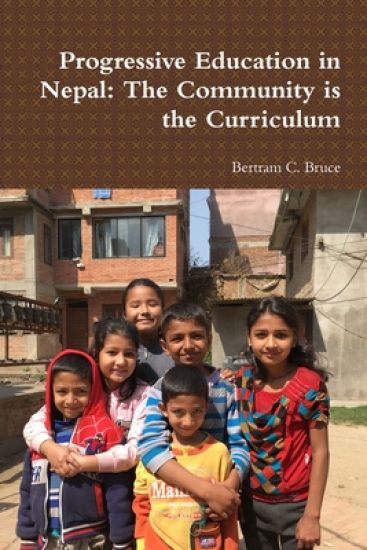
Nepal is a country with daunting needs in terms of basic education and other social services. At the same time, its cultural and moral wealth provide a strong basis for meaningful life and learning. In particular, it offers fertile ground for progressive education, in which learning grows out of experiences in the community. Thus, despite material poverty, the country holds the possibility of significant advances, even international leadership, in the area of progressive education. This book reports on recent educational innovations. There are more than 100 color photos.
Electronic Quills

Electronic Quills

Bertram C. Bruce; Andee Rubin; with contributi Barnhardt and Teachers

Routledge Member of the Taylor and Francis Group
1992
nidottu
This volume centers on the words and experiences of teachers and students who used QUILL -- a software package developed by the authors to aid in writing instruction. It looks in detail at the stories of these early users and considers questions relevant for other teachers, students, researchers, and developers of educational innovations. Questions posed include: * What does it mean to develop an environment for literacy in an actual classroom? * How can a teacher create an environment in which students work together toward meaningful goals? * How can a teacher promote the rich communication so necessary for developing language? * What is the role of technology in the practice and development of literacy? The examination of the QUILL experiences provides a fuller and more revealing account of what it meant to use QUILL than would have been possible through standard evaluation techniques. At the same time, the focus on the particulars also finds analogues in analyses of similar pieces of open-ended software or educational innovations in general.
Electronic Quills

Electronic Quills

Bertram C. Bruce; Andee Rubin; with contributi Barnhardt and Teachers

Routledge Member of the Taylor and Francis Group
1992
sidottu
This volume centers on the words and experiences of teachers and students who used QUILL -- a software package developed by the authors to aid in writing instruction. It looks in detail at the stories of these early users and considers questions relevant for other teachers, students, researchers, and developers of educational innovations. Questions posed include: * What does it mean to develop an environment for literacy in an actual classroom? * How can a teacher create an environment in which students work together toward meaningful goals? * How can a teacher promote the rich communication so necessary for developing language? * What is the role of technology in the practice and development of literacy? The examination of the QUILL experiences provides a fuller and more revealing account of what it meant to use QUILL than would have been possible through standard evaluation techniques. At the same time, the focus on the particulars also finds analogues in analyses of similar pieces of open-ended software or educational innovations in general.