Kirjojen hintavertailu. Mukana 12 595 353 kirjaa ja 12 kauppaa.

Kirjailija

Bertram Wyatt-Brown

Kirjat ja teokset yhdessä paikassa: 12 kirjaa, julkaisuja vuosilta 1990-2014, suosituimpien joukossa Céline. Vertaile teosten hintoja ja tarkista saatavuus suomalaisista kirjakaupoista.

12 kirjaa

Kirjojen julkaisuhaarukka 1990-2014.

Céline

Céline

Céline Frémaux Garcia; Bertram Wyatt-Brown

University of Georgia Press
2008
pokkari
In the middle years of her life, Céline Frémaux Garcia recollected in this memoir her Louisiana childhood and growth into maturity—a tumultuous personal period that was transformed by violence as it was dominated by fear. The result is a detailed and sensitive portrait of a child's world of awe and wonder, color, and strife, in which the Civil War and its aftermath form the backdrop for conflict and rivalry within her French middle-class immigrant family.
A Warring Nation

A Warring Nation

Bertram Wyatt-Brown

University of Virginia Press
2014
sidottu
In this final work of a long and distinguished career, historian Bertram Wyatt-Brown looks at the theme of honour--a subject on which he was an acknowledged expert--and places it in a broader historical and cultural context than ever before. Wyatt-Brown begins with the contention that honour cannot be understood without considering the role of humiliation, which not only sets victor apart from vanquished but drives the search for vindication that is integral to notions of honour. The American conception of honour is further deepened by issues of race. The author turns to the slave South to show how white and black concepts of honour differed from and contradicted each other, illuminating honour’s elusive but powerful role in our society. He then goes on to explore these themes within a wide range of military and political contexts, from the Revolutionary War to Desert Storm, providing new insights on how honour drove decision making during many defining events in our history and how the consequences continue to reverberate in the American mind.
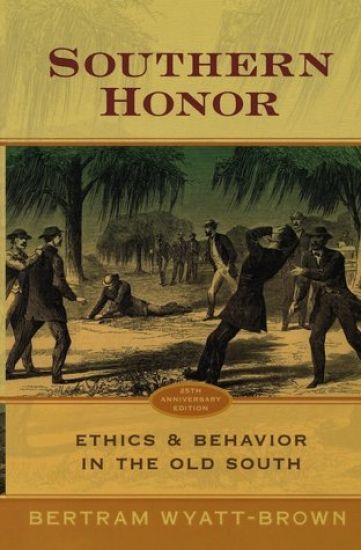
Southern Honor

Southern Honor

Bertram Wyatt-Brown

Oxford University Press Inc
2007
nidottu
A finalist for the Pulitzer Prize and the American Book Award, hailed in The Washington Post as "a work of enormous imagination and enterprise" and in The New York Times as "an important, original book," Southern Honor revolutionized our understanding of the antebellum South, revealing how Southern men adopted an ancient honor code that shaped their society from top to bottom. Using legal documents, letters, diaries, and newspaper columns, Wyatt-Brown offers fascinating examples to illuminate the dynamics of Southern life throughout the antebellum period. He describes how Southern whites, living chiefly in small, rural, agrarian surroundings, in which everyone knew everyone else, established the local hierarchy of kinfolk and neighbors according to their individual and familial reputation. By claiming honour and dreading shame, they controlled their slaves, ruled their households, established the social rankings of themselves, kinfolk, and neighbors, and responded ferociously against perceived threats. The shamed and shameless sometimes suffered grievously for defying community norms. Wyatt-Brown further explains how a Southern elite refined the ethic. Learning, gentlemanly behavior, and deliberate rather than reckless resort to arms softened the cruder form, which the author calls "primal honor." In either case, honor required men to demonstrate their prowess and engage in fierce defense of individual, family, community, and regional reputation by duel, physical encounter, or war. Subordination of African-Americans was uppermost in this Southern ethic. Any threat, whether from the slaves themselves or from outside agitation, had to be met forcefully. Slavery was the root cause of the Civil War, but, according to Wyatt-Brown, honor pulled the trigger. Featuring a new introduction by the author, this anniversary edition of a classic work offers readers a compelling view of Southern culture before the Civil War.
Ely

Ely

Bertram Wyatt-Brown; Ely Green

University of Georgia Press
2004
pokkari
Ely Green was born in Sewanee, Tennessee, in 1893. His father was a member of the white gentry, the son of a former Confederate officer. His mother was a housemaid, the daughter of a former slave. In this small Episcopal community—home to the University of the South—Ely lived his early childhood oblivious to the implications of his illegitimacy and his parentage. He was nearly nine years old before he realized that being different from his white playmates was of any real significance.An incident at a local drugstore marked the beginning of what would be a painful rite of passage from an idyllic childhood through a tormented adolescence as Ely struggled to understand why he could not wholly belong to either his father's world or his mother's. "I was having a struggle within," he writes, ". . . learning to hate white people after I had been taught that they were all God's children and we are to love everybody." At age eighteen, still warring to reconcile one part of himself with the other, he fled the mountains of Tennessee—and a brewing lynch mob—for the plains of Texas and a new beginning.Straightforwardly recounting his early life, rising above bitterness and pain, Ely Green gives his readers an astoundingly honest and poignant portrait of a young man trying to come to terms with race relations in the early twentieth-century South.
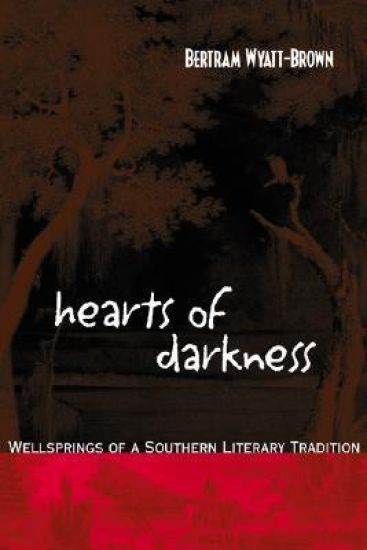
Hearts of Darkness

Hearts of Darkness

Bertram Wyatt-Brown

Louisiana State University Press
2002
nidottu
From Edgar Allan Poe's ""dark forebodings"" to Kate Chopin's lifelong struggle with sorrow and loss, depression has shadowed southern letters. This beautifully realised study explores the defining role of melancholy in southern literature from the early nineteenth century to the early twentieth, when it evolved into modernist alienation.While creativity and depression have been linked throughout Western history, Bertram Wyatt-Brown argues that nineteenth-century southern culture was hospitable to a distinctive melancholy that impelled literary production. Deeply marked by high death rates, social dread, and bitter defeat, white southerners imposed a climate of parochial pride, stifling conventions of masculinity, social condescension, and mistrust of intellectualism. Many writers experienced a conscious or unconscious alienation from the prevailing social currents. And they expressed emotional turmoil in and through their writing.Hearts of Darkness develops original insights into the lives and creative impulses of both major and more obscure writers. Discussing individuals as diverse as William Gilmore Simms, Mark Twain, Constance Fenimore Woolson, Sidney Lanier, and Ellen Glasgow, Wyatt-Brown identifies a close association between creativity and psychological distress. This connection helps to explain southern literary engrossment with defeat and violence, together with a disposition for the romantic, gothic, and grotesque styles, well before William Faulkner and the male Southern Renaissance. Wyatt-Brown also finds that the first authors to break away from the sentimental modes to explore new psychological terrain were women whose depression ironically furnished them with critical dispassion. Imaginative detachment in writers such as Willa Cather enabled them to create luminous characters and settings while heralding literary modernism.A major reinterpretation of the South's fertile literary culture, Hearts of Darkness intensifies our regard for both southern writers and the fruits of pen and paper.
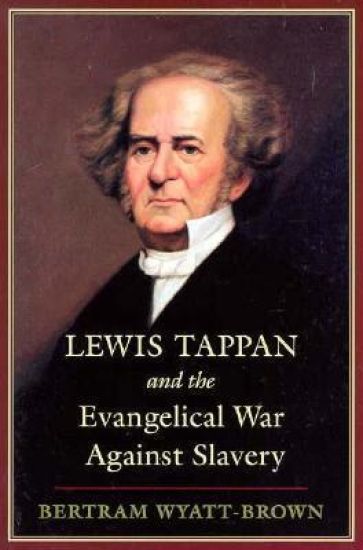
Lewis Tappan and the Evangelical War against Slavery

Lewis Tappan and the Evangelical War against Slavery

Bertram Wyatt-Brown

Louisiana State University Press
1997
nidottu
Lewis Tappan (1788-1873), founder of the Journal of Commerce and the nation's first credit rating firm, is probably best known for his business accomplishments. His greatest achievement, however, was not finance but freedom. In the 1830s, he and his wealthy brother Arthur underwrote and inspired the Manhattan headquarters of the American Anti-Slavery Society and founded many other organisations to promote freedom, faith, and racial tolerance. As prominent historian Bertram Wyatt-Brown demonstrates in this fascinating portrait, Tappan contributed much more to the cause of liberty and equality than has yet been acknowledged.
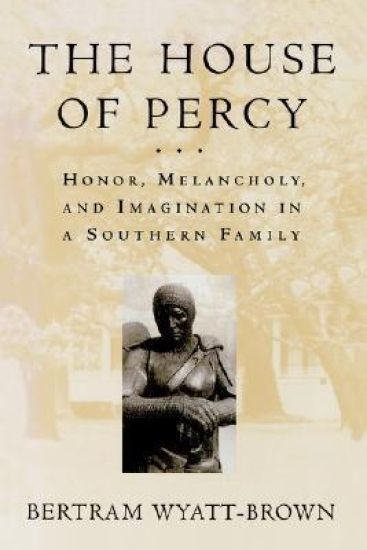
The House of Percy

The House of Percy

Bertram Wyatt-Brown

Oxford University Press Inc
1996
nidottu
The novels of Walker Percy--The Moviegoer, Lancelot, The Second Coming, and The Thanatos Syndrome to name a few--have left a permanent mark on twentieth-century Southern fiction; yet the history of the Percy family in America matches anything, perhaps, that he could have created. Two centuries of wealth, literary accomplishment, political leadership, depression, and sometimes suicide established a fascinating legacy that lies behind Walker Percy's acclaimed prose and profound insight into the human condition. In The House of Percy, Bertram Wyatt-Brown masterfully interprets the life of this gifted family, drawing out the twin themes of an inherited inclination to despondency and an abiding sense of honor. The Percy family roots in Mississippi and Louisiana go back to "Don Carlos" Percy, an eighteenth-century soldier of fortune who amassed a large estate but fell victim to mental disorder and suicide. Wyatt-Brown traces the Percys through the slaveholding heyday of antebellum Natchez, the ravages of the Civil War (which produced the heroic Colonel William Alexander Percy, the "Gray Eagle"), and a return to prominence in the Mississippi Delta after Reconstruction. In addition, the author recovers the tragic lives and literary achievements of several Percy-related women, including Sarah Dorsey, a popular post-Civil War novelist who horrified her relatives by befriending Jefferson Davis--a married man--and bequeathing to him her plantation home, Beauvoir, along with her entire fortune. Wyatt-Brown then chronicles the life of Senator LeRoy Percy, whose climactic re-election loss in 1911 to a racist demagogue deply stung the family pride, but inspired his bold defiance to the Ku Klux Klan in the 1920s. The author goes on to tell the poignant story of poet and war hero Will Percy, the Senator's son. The weight of this family narrative found expression in Will Percy's memoirs, Lanterns on the Levee--and in the works of Walker Percy, who was reared in his cousin Will's Greenville home after the suicidal death of Walker's father and his mother's drowning. As the biography of a powerful dynasty, steeped in Sou8thern traditions and claims to kinship with English nobility, The House of Percy shows the interrelationship of legend, depression, and grand achievement. Written by a leading scholar of the South, it weaves together intensive research and thoughtful insights into a riveting, unforgettable story.
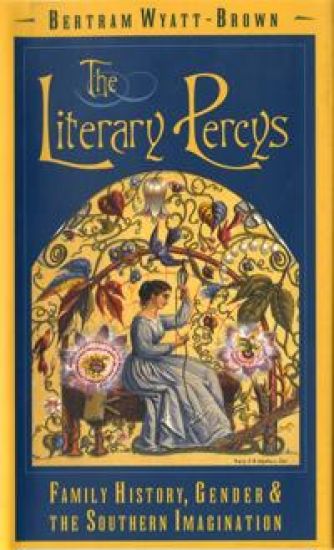
The Literary Percys

The Literary Percys

Bertram Wyatt-Brown

University of Georgia Press
1994
sidottu
The Percys, one the most distinguished families in the South, are notable not only for their prominence in the political and economic development of the Mississippi Delta but also for their literary creativity. In The Literary Percys, noted historian Bertram Wyatt-Brown examines the role of gender and family history in the writings of this exceptional lineage.Few families in American can claim so many gifted writers as the Percys. The best-known among them are novelist Walker Percy, who died in 1990, and his cousin and guardian, William Alexander Percy, poet and author of the classic memoir Lanterns on the Levee. In researching the family's history, however, Wyatt-Brown discovered that Walker and Will were not the first in the family to take up the pen. In the nineteenth century, four Percy-related women--Eleanor Percy Ware Lee, Catherine Ann Ware Warfield, Sarah Anne Ellis Dorsey, and Kate Ferguson--published a total of eighteen works, chiefly novels, but also books of poetry and a biography. Wyatt-Brown examines these achievements in the context of contemporary Delta society and in light of these writers' lives within a family of powerful planters and lawyers. Through these four women he also draws connections between the Percys' literary inclinations and the family's tendency toward melancholy--a disorder with which Walker Percy was burdened throughout his life.In the twentieth century, Wyatt-Brown observes, the male authors--Will and Walker Percy--reflected on the ravages of modern life using a wider range of forms, from philosophical essay to memoir to science fiction. Curiously, in composing Lancelot (1977) Walker Percy chose the gothic form that his collateral ancestors had sometimes adopted, and fashioned a plot and villainous hero bearing uncanny resemblances to those of a bestseller by Catherine Warfield, published more than one hundred years earlier. Finally, Wyatt-Brown explores Walker Percy's use of a purely male genre--namely, the mock-heroic--and how it reflected his personal and familial concerns.The Literary Percys uncovers an impressive family history and offers fascinating details about southern literary life.
Honor and Violence in the Old South

Honor and Violence in the Old South

Bertram Wyatt-Brown

Oxford University Press Inc
1994
nidottu
Hailed as a classic by reviewers and historians, Bertram Wyatt-Brown's Southern Honor now appears in abridged form under the title Honor and Violence in the Old South. Winner of a Phi Alpha Theta Book Award and a finalist for the Pulitzer Prize in History, this is the first major reinterpretation of Southern life and custom since W.J. Cash's The Mind of the South. It explores the meaning and expression of the ancient code of honor as whites--both slaveholders and non-slaveholders--applied it to their lives. Wyatt-Brown argues persuasively that Southern ethical habits and traditions are the basis of regional distinctiveness and helped to perpetuate and justify the South's most cherised peculiarity: the institution of slavery. Using both literature and anthropology in innovative ways, Wyatt-Brown shows how honor affected family loyalty and community defensiveness. He also explains why, though it preceded and outlasted the demise of slavery, honor thrived on race oppression and was manifested in such violent acts as rape, lynching, and slave discipline. The work begins with a study of Hawthorne's famous story of a tar-and-feathering, "My Kinsman, Major Molineux," and ends with an authentic lynching, an absorbing and chilling example of a public shaming ritual. Between these studies of fictional and historical violence, Wyatt-Brown deals with such wide-ranging topics as childbearing, marital patterns, gentility, legal traditions, duelling, hospitality, slave discipline, lynch-law, and insurrectionary panic--all of which were matters that gave white Southerners a special sense of themselves.
Yankee Saints and Southern Sinners

Yankee Saints and Southern Sinners

Bertram Wyatt-Brown

Louisiana State University Press
1990
nidottu
Many scholars, according to Bertram Wyatt-Brown, have mistakenly attributed the coming of the Civil War solely to the slaveholding South's determination to retain black bondage as a means of economic and political advantage. That view, he maintains, too readily diminishes the ethical dynamics involved in the chasm between antebellum North and South. In Yankee Saints and Southern Sinners, Wyatt-Brown explores in a series of wide-ranging essays the ethical differences, epically with regard to honor, liberty, and slavery, that divided the two regions of the country.Slavery was, of course, the crucial issue in the conflict, but such moral concerns as honor and shame, conscience and guilt were inextricably a part of the dispute as well. Northerners, under abolitionist and antislavery guidance, came to regard slavery as a violation of American conscience and understandings of individuality, personal liberty and civic responsibility, whereas soothers adhered to an ethical scheme based on traditional concepts of honor. Wyatt-Brown suggests that to most southern whites the rubric of honor was much more than a matter of duels and political posturing. It was instead an integral part of the moral and cultural heritage of the region, affecting a variety of social relationships. Sometimes the dictates of honor were even more powerful than the Christian morality that nearly all Americans espoused.Using Stanley Elkins' antislavery interpretation as a point of departure, Wyatt-Brown devotes the first part of the book to the abolitionists' dynamic relationship to evangelical culture in which conscience, implanted in childhood, became the primary ethical code guiding reformers. In the most dramatic and probing chapter in this section, he shows how the violent ""antinomian"" John Brown capitalized on the tensions between Christian conscience and primal manhood to gratify his own and his fellow countrymen's desire for righteous glory, albeit for noble ends.The second half of the book reveals the contrasting ethical spirit of the South, as explained in W.J. Cash's Mind of the South. After placing the proslavery argument in the context of evangelical and, later, secular ""modernity,"" Wyatt-Brown analyses the ethical texture of secessionism in one of the book's most original and intriguing arguments. Differences over the meaning and applicability of honor and shame, he contends, played a major part in the South's struggle in 1860 and 1861 over secession and the North's response to it.Making abundant use of anthropological, sociological, and psychological insights, Bertram Wyatt-Brown offers here an interpretation of the causes of the Civil war that is both provocative and persuasive.