Kirjojen hintavertailu. Mukana 12 152 606 kirjaa ja 12 kauppaa.

Kirjailija

Beth Shapiro

Kirjat ja teokset yhdessä paikassa: 4 kirjaa, julkaisuja vuosilta 2015-2022, suosituimpien joukossa Life as We Made It. Vertaile teosten hintoja ja tarkista saatavuus suomalaisista kirjakaupoista.

4 kirjaa

Kirjojen julkaisuhaarukka 2015-2022.

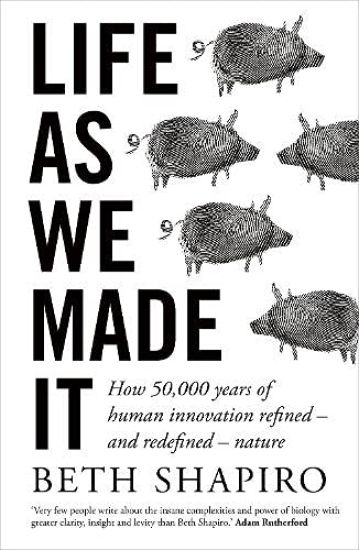
Life as We Made It

Life as We Made It

Beth Shapiro

Oneworld Publications
2022
pokkari
From the very first dog to glowing fish and designer pigs – the human history of remaking nature ‘Enlightening… Big history meets big science – and it’s great entertainment.’ THE TIMES, BEST BOOKS OF 2021 Malaria-free mosquitoes, resurrected dinosaurs and woolly mammoths, designer humans – such is the power of the science of tomorrow. But the idea that humans have only recently begun to tinker with the natural world is false. We’ve been meddling with nature since the last ice age, we’re just getting a lot better at it. Drawing on decades of research, Beth Shapiro reveals the surprisingly long history of human intervention in evolution – for good and for ill – and looks ahead to the future, casting aside scaremongering myths about the dangers of interference. New biotechnologies can present us with the chance to improve our own lives, and increase the likelihood that we will continue to live in a rich and biologically diverse world. ‘Very few people write about the insane complexities and power of biology with greater clarity, insight and levity than Beth Shapiro.’ ADAM RUTHERFORD, AUTHOR OF A BRIEF HISTORY OF EVERYONE WHO EVER LIVED

Life as We Made It: How 50,000 Years of Human Innovation Refined--And Redefined--Nature
From the first dog to the first beefalo, from farming to CRISPR, the human history of remaking nature When the 2020 Nobel Prize was awarded to the inventors of CRISPR, the revolutionary gene-editing tool, it underlined our amazing and apparently novel powers to alter nature. But as biologist Beth Shapiro argues in Life as We Made It, this phenomenon isn't new. Humans have been reshaping the world around us for ages, from early dogs to modern bacteria modified to pump out insulin. Indeed, she claims, reshaping nature--resetting the course of evolution, ours and others'--is the essence of what our species does. In exploring our evolutionary and cultural history, Shapiro finds a course for the future. If we have always been changing nature to help us survive and thrive, then we need to avoid naive arguments about how we might destroy it with our meddling, and instead ask how we can meddle better. Brilliant and insightful, Life as We Made It is an essential book for the decades to come.
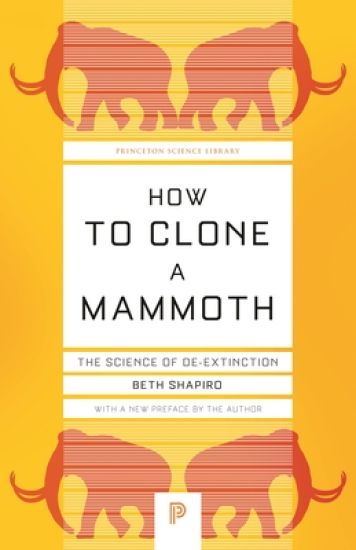
How to Clone a Mammoth

How to Clone a Mammoth

Beth Shapiro

Princeton University Press
2020
pokkari
An insider's view on bringing extinct species back to lifeCould extinct species, like mammoths and passenger pigeons, be brought back to life? In How to Clone a Mammoth, Beth Shapiro, an evolutionary biologist and pioneer in ancient DNA research, addresses this intriguing question by walking readers through the astonishing and controversial process of de-extinction. From deciding which species should be restored to anticipating how revived populations might be overseen in the wild, Shapiro vividly explores the extraordinary cutting-edge science that is being used to resurrect the past. Considering de-extinction's practical benefits and ethical challenges, Shapiro argues that the overarching goal should be the revitalization and stabilization of contemporary ecosystems. Looking at the very real and compelling science behind an idea once seen as science fiction, How to Clone a Mammoth demonstrates how de-extinction will redefine conservation's future.
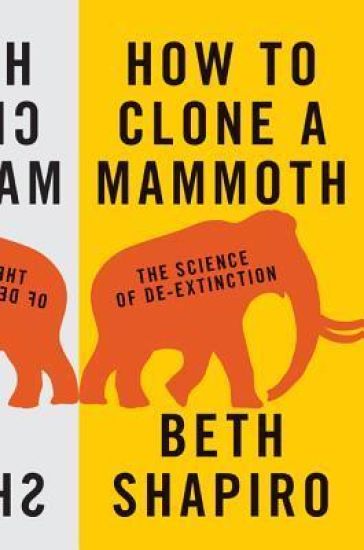
How to Clone a Mammoth

How to Clone a Mammoth

Beth Shapiro

Princeton University Press
2015
sidottu
Could extinct species, like mammoths and passenger pigeons, be brought back to life? The science says yes. In How to Clone a Mammoth, Beth Shapiro, evolutionary biologist and pioneer in "ancient DNA" research, walks readers through the astonishing and controversial process of de-extinction. From deciding which species should be restored, to sequencing their genomes, to anticipating how revived populations might be overseen in the wild, Shapiro vividly explores the extraordinary cutting-edge science that is being used--today--to resurrect the past. Journeying to far-flung Siberian locales in search of ice age bones and delving into her own research--as well as those of fellow experts such as Svante Paabo, George Church, and Craig Venter--Shapiro considers de-extinction's practical benefits and ethical challenges. Would de-extinction change the way we live? Is this really cloning? What are the costs and risks? And what is the ultimate goal? Using DNA collected from remains as a genetic blueprint, scientists aim to engineer extinct traits--traits that evolved by natural selection over thousands of years--into living organisms. But rather than viewing de-extinction as a way to restore one particular species, Shapiro argues that the overarching goal should be the revitalization and stabilization of contemporary ecosystems. For example, elephants with genes modified to express mammoth traits could expand into the Arctic, re-establishing lost productivity to the tundra ecosystem. Looking at the very real and compelling science behind an idea once seen as science fiction, How to Clone a Mammoth demonstrates how de-extinction will redefine conservation's future.