Kirjojen hintavertailu. Mukana 12 595 353 kirjaa ja 12 kauppaa.

Kirjailija

Bethany Henning

Kirjat ja teokset yhdessä paikassa: 2 kirjaa, julkaisuja vuosilta 2022-2026, suosituimpien joukossa A Metaphysics for the Liberal Arts. Vertaile teosten hintoja ja tarkista saatavuus suomalaisista kirjakaupoista.

2 kirjaa

Kirjojen julkaisuhaarukka 2022-2026.

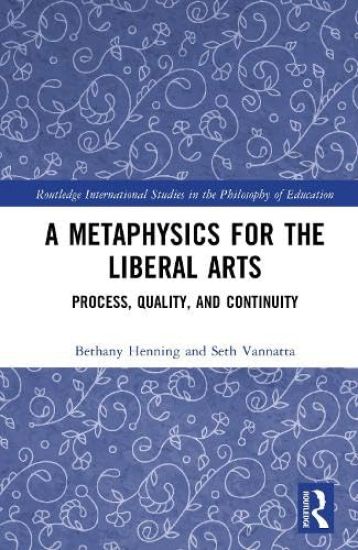
A Metaphysics for the Liberal Arts

A Metaphysics for the Liberal Arts

Bethany Henning; Seth Vannatta

TAYLOR FRANCIS LTD
2026
sidottu
This book explores the relationship between metaphysics and the liberal arts. Part I contrasts the dualistic metaphysics of Platonism, Cartesianism, and materialisms, with the process metaphysics of William James, John Dewey, C.S. Peirce, and A.N. Whitehead with an eye toward illustrating how education should be treated as a transactive and interactive process whose objects of knowledge evolve through time. In Part II, the authors go on to investigate conceptions of the value of a liberal arts education, considering reactionary, conservative, pragmatist, and radical approaches.. Finally, in Part III, the authors explore connections between metaphysics and conservative, radical, and pragmatist conceptions of art, and demonstrate how process metaphysics can be extended to highlight the role of aesthetic experience in both understanding and appreciating art and in liberal arts education. A timely and unique exploration of the relationship between metaphysics and the liberal arts, this book will appeal to scholars, researchers, and faculty with interests in several branches of philosophy, metaphysics, epistemology, philosophy of education, and aesthetics.
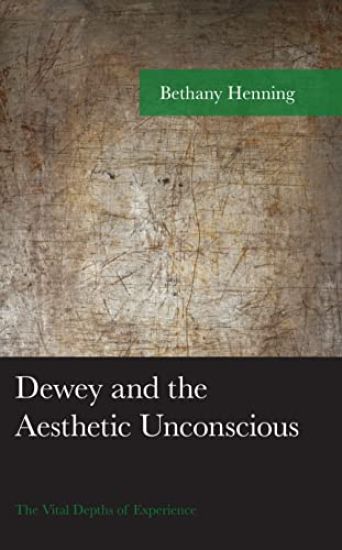
Dewey and the Aesthetic Unconscious

Dewey and the Aesthetic Unconscious

Bethany Henning

BLOOMSBURY PUBLISHING PLC
2022
sidottu
John Dewey was the most celebrated and publicly engaged American philosopher in the twentieth century. His naturalistic theory of “experience” generated new approaches to education and democracy and re-grounded philosophy’s search for truth in the needs of life as it is shared and lived. However, interpretations of Dewey after the linguistic turn have either obscured or rejected the considerable role that he gives to the non-discursive dimension of experience. In Dewey and the Aesthetic Unconscious: The Vital Depths of Experience, Bethany Henning argues that much classical American philosophy implicitly recognizes an unconscious dimension of mind that is distinct from Freud’s theory. Although the unconscious that emerges within American thought has never been treated systematically, it found its fullest expression in Dewey’s work, particularly in his theory of aesthetic experience. This dimension of mind illuminates the continuity between nature and culture, and it provides us with an account of why artwork is often successful at communicating meanings from the ecological and intimate dimensions of life, where discourse often fails. If the relationship between the human and the organic world has emerged as the definitive question of twenty-first century life, then the aesthetic unconscious stands as a resource for our ecological and intimate well-being.