Kirjojen hintavertailu. Mukana 12 595 353 kirjaa ja 12 kauppaa.
Kirjailija
Beverley Bie Brahic
Kirjat ja teokset yhdessä paikassa: 5 kirjaa, julkaisuja vuosilta 2012-2024, suosituimpien joukossa White Sheets. Vertaile teosten hintoja ja tarkista saatavuus suomalaisista kirjakaupoista.
'I am drawn to paintings that catch glimpses of ordinary people in rooms that lead to other rooms,' Beverley Bie Brahic says. Apple Thieves is full of such painterly moments, remembered or caught on the fly, with their charge of mystery, like this shell – 'an empty house / a nudge will set rocking / almost indefinitely' – collected on the coast of her native British Columbia, whose diverse populations and their migrations she evokes in 'Root Vegetables'. Today, long resident in France, she relishes Paris – 'Smelling of piss and baking bread / The city in its glory and dereliction' – 'time-hedged cottages' and the earthbound in all its fragility.
A beautiful collection of poems from various styles and genres by France's foremost poet, Yves Bonnefoy. Praised by Paul Auster as “one of the rare poets in the history of literature to have sustained the highest level of artistic excellence throughout an entire lifetime,” Yves Bonnefoy is widely considered the foremost French poet of his generation. Proving that his prose is just as lyrical, Rue Traversière, written in 1977, is one of his most harmonious works. Each of the fifteen discrete or linked texts, whose lengths range from brief notations to long, intense, self-questioning pages, is a work of art in its own right: brief and richly suggestive as haiku, or long and intricately wrought in syntax and thought; and all are as rewarding in their sounds and rhythms, and their lightning flashes of insight, as any sonnet. “I can write all I like; I am also the person who looks at the map of the city of his childhood and doesn’t understand,” says the section that gives the book its title, as he revisits childhood cityscapes and explores the tricks memory plays on us. A mixture of genres—the prose poem, the personal essay, quasi-philosophical reflections on time, memory, and art—this is a book of both epigrammatic concision and dreamlike narratives that meander with the poet’s thought as he struggles to understand and express some of the undercurrents of human life. The book’s layered texts echo and elaborate on one another, as well as on aspects of Bonnefoy’s own poetics and thought.
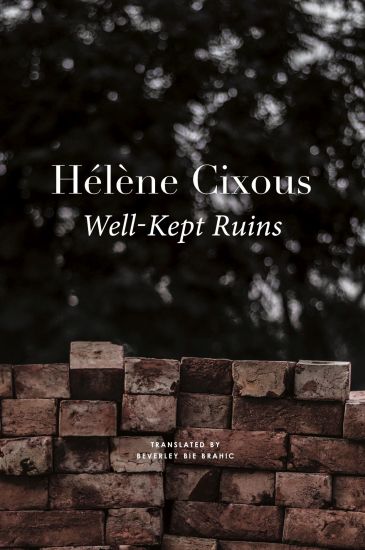
A genre-defying book from one of France’s most well-known philosopher-writers. In the Lower Saxony region of northwestern Germany sits the city of Osnabrück. This is where, in 1648, the Peace of Westphalia was signed, bringing the Thirty Years’ War and one of the most calamitous periods of European history to an end. But the city was later to witness another calamity. Today, as one walks through Old Synagogue Street in a rich neighborhood of Osnabrück, one might miss noticing a pile of pale stones held together by chicken wire that sits between two fashionable homes. These are the well-kept ruins from behind which stares a gaping space—a place of memory and oblivion. Four polished plaques tell the tale of the horror-filled night of November 9, 1938—today known as Kristallnacht—when the synagogue that had stood on this spot was desecrated, looted, set on fire, and eventually demolished by Hitler’s forces. On the same day, ninety parishioners were imprisoned by the Gestapo and eventually sent to the Buchenwald concentration camp. Osnabrück was also home to Eve Klein, a member of the city’s early-twentieth-century Jewish community and the mother of author Hélène Cixous. In Well-Kept Ruins, Cixous returns to the historic city in 2019 and reflects on the remains of the synagogue that “express the life lost, the life kept.” Walking the streets of the city, plumbing the depths of the past along with her own family’s history, looking deep into the future, and punctuating her poetic prose with haunting photographs, Cixous explores the ruins at the heart of humanity. Part memoir, part philosophical meditation, Well-Kept Ruins is a genre-defying and timely reflection of the contemporary human condition.
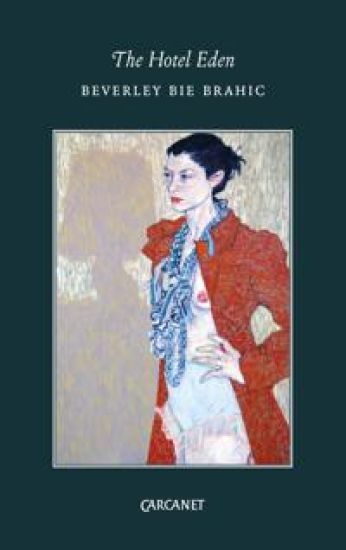
'Madame Martin will throw back her shutters at eight...' With these words Beverley Bie Brahic opens The Hotel Eden, a book about seeing the world. She moves through – Paris, the French provinces, the American west coast – in the spirit of a flaneur, going about her daily life alert to the variety and mystery of human experience: the soup kitchens, the Luxembourg Gardens and the Latin Quarter, the refugees, works of art and areas of damage. The title poem pays a debt to Joseph Cornell, the master of the assemblage, whose 'The Hotel Eden' discloses a stuffed parrot and other objects under glass. The eye – the poem – assembles them but cannot tell their intended story. It tells a story all the same. 'On the tip of God’s tongue, the bird waits to be named.' This is a book of revelatory indirections, of unexpected moons, creatures, passions, rituals and histories, of days rich in disclosures and in hints of revelation.
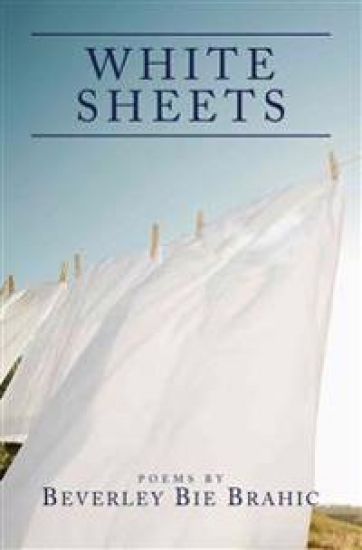
Beverley Bie Brahic is a poet with her eye on what is happening between us, between continents on which she lives, between familial relationships, between languages in which she works. In this, her second collection--the first to be published in Canada--her assured and dignified voice speaks of the world around her, creating original and fascinating poems.