
Kirjojen hintavertailu. Mukana 12 390 323 kirjaa ja 12 kauppaa.

Kirjailija

Beverley C. Southgate

Kirjat ja teokset yhdessä paikassa: 2 kirjaa, julkaisuja vuosilta 2015-2017, suosituimpien joukossa Why Bother with History?. Vertaile teosten hintoja ja tarkista saatavuus suomalaisista kirjakaupoista.

2 kirjaa

Kirjojen julkaisuhaarukka 2015-2017.

History Meets Fiction

History Meets Fiction

Beverley C. Southgate

Routledge
2017
sidottu
Is history factual, or just another form of fiction? Are there distinct boundaries between the two, or just extensive borderlands? How do novelists represent historians and history? The relationship between history and fiction has always been contentious and sometimes turbulent, not least because the two have traditionally been seen as mutually exclusive opposites. However, new hybrid forms of writing ? from historical fiction to docudramas to fictionalised biographies ? have led to the blurring of boundaries, and given rise to the claim that history itself is just another form of fiction. In his thought-provoking new book, Beverley Southgate untangles this knotty relationship, setting his discussion in a broad historical and philosophical context. Throughout, Southgate invokes a variety of writers to illuminate his arguments, from Dickens and Proust, through Virginia Woolf and Daphne du Maurier, to such contemporary novelists as Tim O?Brien, Penelope Lively, and Graham Swift. Anyone interested in the many meeting points between history and fiction will find this an engaging, accessible and stimulating read.
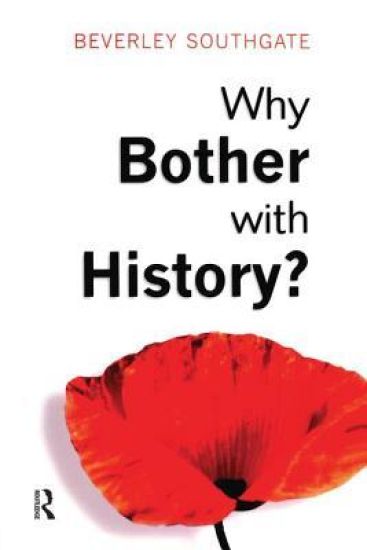
Why Bother with History?

Why Bother with History?

Beverley C. Southgate

Routledge
2015
sidottu
. Why Bother With History? argues for an increasingly important role for a revitalised historical study. Examining the motivations of past historians, the author rejects the ancient aspiration to a 'history for its own sake' and argues that historians' importance lies in their own adoption of a moral standpoint, from which a story of the past can be told, that facilitates the attainment of a future we desire. Inevitably controversial, in that it challenges many of the assumptions of modernist history, this is an interdisciplinary book, which draws in particular on psychology and literature.