

Kirjailija
Beverly Mayne Kienzle
Kirjat ja teokset yhdessä paikassa: 10 kirjaa, julkaisuja vuosilta 2009-2025, suosituimpien joukossa Hildegard of Bingen and Her Gospel Homilies. Vertaile teosten hintoja ja tarkista saatavuus suomalaisista kirjakaupoista.
10 kirjaa
Kirjojen julkaisuhaarukka 2009-2025.


Hildegard of Bingen, Gospel Interpreter
Beverly Mayne Kienzle
BLOOMSBURY PUBLISHING PLC
2022
nidottu
In Hildegard of Bingen, Gospel Interpreter, Beverly Mayne Kienzle presents and acquaints readers with Hildegard’s fifty-eight Homilies on the Gospels-a dazzling summa of her theology and the culmination of her visionary insight and scriptural knowledge. Part one probes how a twelfth-century woman became the only known female Gospel interpreter of the Middle Ages. It includes an examination of Hildegard’s epistemology-how she received her basic theological education and how she extended her knowledge through divine revelations and intellectual exchange with her monastic network. Part two expounds on several of Hildegard’s homilies, elucidating the theological brilliance that emanates from the creative exegesis she shapes to develop profound, interweaving themes. Hildegard eschewed the linear, repetitive explanations of her predecessors and created an organically coherent body of thought, rich with interconnected spiritual symbols. Part three deals with the wide-ranging reception of Hildegard’s works and her inspiring legacy, extending from theology to medicine. Her prophetic voice resounds in the morally urgent areas of creation theology and the corruption of church and political leadership. Hildegard decries human disregard for the earth and its lust for power. Instead, she advocates the unifying capacity of nature, “viridity,” that fosters the interconnectedness of all creation.

Hildegard of Bingen, Gospel Interpreter
Beverly Mayne Kienzle
Lexington Books/Fortress Academic
2020
sidottu
Hildegard of Bingen: Gospel Interpreter presents and acquaints readers with Hildegard’s fifty-eight Homilies on the Gospels-a dazzling summa of her theology and the culmination of her visionary insight and scriptural knowledge. Part One probes how a twelfth-century woman became the only known female Gospel interpreter of the Middle Ages. It includes an examination of Hildegard’s epistemology-how she received her basic theological education, and how she extended her knowledge through divine revelations and intellectual exchange with her monastic network. Part Two expounds on several of Hildegard’s Homilies, elucidating the theological brilliance that emanates from the creative exegesis she shapes to develop profound, interweaving themes. Hildegard eschewed the linear, repetitive explanations of her predecessors and created an organically coherent body of thought, rich with interconnected spiritual symbols. Part Three deals with the wide-ranging reception of Hildegard’s works and her inspiring legacy, extending from theology to medicine. Her prophetic voice resounds in the morally urgent areas of creation theology and the corruption of church and political leadership. Hildegard decries human disregard for the earth and lust for power. Instead, she advocates the unifying capacity of nature, “viridity,” that fosters the interconnectedness of all creation.
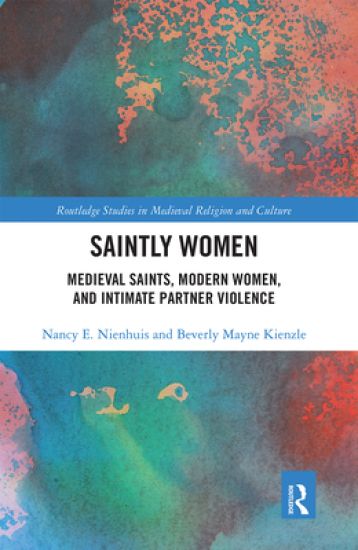
This ground-breaking volume assesses the contemporary epidemic of intimate partner violence and explores how and why cultural and religious beliefs serve to excuse battering and to work against survivors’ attempts to find safety. Theological interpretations of sacred texts have been used for centuries to justify or minimize violence against women. The authors recover historical and especially medieval narratives whose protagonists endure violence that is framed by religious texts or arguments. The medieval theological themes that redeem battering in saints’ lives—suffering, obedience, ownership and power—continue today in most religious traditions. This insightful book emphasizes Christian history and theology, but the authors signal contributions from interfaith studies to efforts against partner violence.Examining medieval attitudes and themes sharpens the readers’ understanding of contemporary violence against women. Analyzing both historical and contemporary narratives from a religious perspective grounds the unique approach of Nienhuis and Kienzle, one that forges a new path in grappling with partner violence. Medieval and contemporary narratives alike demonstrate that women in abusive relationships feel the burden of religious beliefs that enjoin wives to endure suffering and to maintain stable marriages. Religious leaders have reminded women of wives’ responsibility for obedience to husbands, even in the face of abuse. In some narratives, however, women create safe places for themselves. Moreover, some exemplary communities call upon religious belief to support their opposition to violence. Such models of historical resistance reveal precedents for response through intervention or protection.

Letters from Vegas 1953
Beverly Mayne Kienzle; Virginia Cary Hudson
Independently Published
2018
nidottu
What happened in 1953 Vegas did not stay in Vegas thanks to the vibrant letters from "Sin City" by Virginia Cary Hudson. Virginia, the child author of O Ye Jigs & Juleps , demonstrated the same lively spirit and sharp wit, deepened by wisdom, when she was approaching sixty. Virginia captures the essence of Las Vegas and its people--celebrities, miners, gamblers, hotel workers, dancers, and Native Americans, with empathy, humor, and acute perception. Her letters open a window on everyday life in 1953, the year that Las Vegas opened a racetrack.
This ground-breaking volume assesses the contemporary epidemic of intimate partner violence and explores how and why cultural and religious beliefs serve to excuse battering and to work against survivors’ attempts to find safety. Theological interpretations of sacred texts have been used for centuries to justify or minimize violence against women. The authors recover historical and especially medieval narratives whose protagonists endure violence that is framed by religious texts or arguments. The medieval theological themes that redeem battering in saints’ lives—suffering, obedience, ownership and power—continue today in most religious traditions. This insightful book emphasizes Christian history and theology, but the authors signal contributions from interfaith studies to efforts against partner violence.Examining medieval attitudes and themes sharpens the readers’ understanding of contemporary violence against women. Analyzing both historical and contemporary narratives from a religious perspective grounds the unique approach of Nienhuis and Kienzle, one that forges a new path in grappling with partner violence. Medieval and contemporary narratives alike demonstrate that women in abusive relationships feel the burden of religious beliefs that enjoin wives to endure suffering and to maintain stable marriages. Religious leaders have reminded women of wives’ responsibility for obedience to husbands, even in the face of abuse. In some narratives, however, women create safe places for themselves. Moreover, some exemplary communities call upon religious belief to support their opposition to violence. Such models of historical resistance reveal precedents for response through intervention or protection.


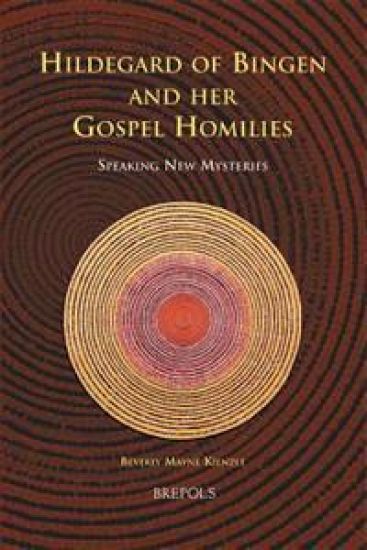
Hildegard of Bingen (1098-1179), the only medieval woman known to have authored systematic works of exegesis, composed fifty-eight little-studied Expositiones euangeliorum, homilies on twenty-seven Gospel passages. Hildegard described her divine charge to restore the tottering faith of her era through the revelation of hidden mysteries in the Scriptures. She was to continue the exegetical tradition of the Fathers and to construct moral fortifications with the words of Scripture in order to defend her sisters against the forces of evil. Hildegard of Bingen and her Gospel Homilies constitutes the first in-depth study of Hildegard's Expositiones and of her exegesis, preaching, and use of sources. It explores the Expositiones in the context of Hildegard's intellectual and cultural milieu and underscores the central role of biblical interpretation in the seer's works. Furthermore, this book re-examines Hildegard's self-depiction in the context of monastic education for women, the magistra's exchange with her mentors and friends, and her rich use of divine voice to empower her own expression. This is a new, exciting, and erudite study on one of the most influential female mystics.