Kirjailija
Bibek Debroy
Kirjat ja teokset yhdessä paikassa: 20 kirjaa, julkaisuja vuosilta 2006-2025, suosituimpien joukossa Vishnu Purana. Vertaile teosten hintoja ja tarkista saatavuus suomalaisista kirjakaupoista.
20 kirjaa
Kirjojen julkaisuhaarukka 2006-2025.




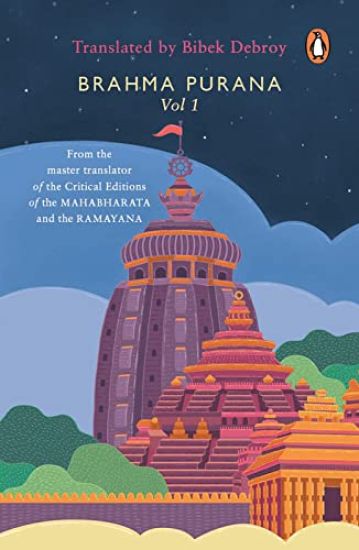
The eighteen Puranas are counted among the foundational texts of Hinduism. The holy trinity of Brahma as the creator, Vishnu as the preserver and Shiva as the destroyer play a central deities of the Puranas and feature in the narratives. The Puranas where creation themes feature prominently are identified with Brahma (Brahma, Brahmanda, Brahmavaivarta, Markandeya). Puranas where Vishnu features prominently are identified as Vaishnava Puranas (Bhagavata, Garuda, Kurma, Matysa, Narada, Padma, Vamana, Varaha, Vishnu). Puranas where Shiva features prominently are identified as Shaiva Puranas (Agni, Lings, Shiva, Skanda, Vayu). The Brahma Purana is so named because it was originally recounted by Brahma. It is described as Adi Purana in several Purana texts, underlining its importance. Odisha and the temples in that region are a key component of the text.
The eighteen Puranas are counted among the foundational texts of Hinduism. The holy trinity of Brahma as the creator, Vishnu as the preserver and Shiva as the destroyer play a central deities of the Puranas and feature in the narratives. The Puranas where creation themes feature prominently are identified with Brahma (Brahma, Brahmanda, Brahmavaivarta, Markandeya). Puranas where Vishnu features prominently are identified as Vaishnava Puranas (Bhagavata, Garuda, Kurma, Matysa, Narada, Padma, Vamana, Varaha, Vishnu). Puranas where Shiva features prominently are identified as Shaiva Puranas (Agni, Lings, Shiva, Skanda, Vayu). The Brahma Purana is so named because it was originally recounted by Brahma. It is described as Adi Purana in several Purana texts, underlining its importance. Odisha and the temples in that region are a key component of the text.
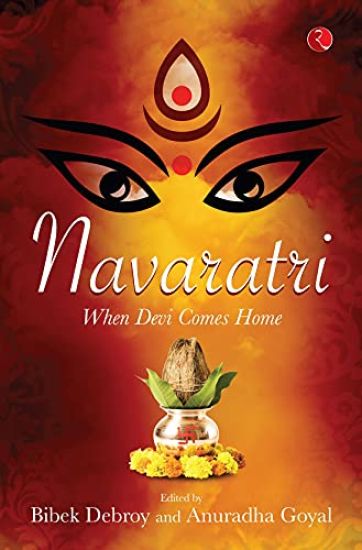
Devi is always with us. Devi is always inside us. Every year, there are occasions when we celebrate her presence a little more, specially worship her and become a bit more conscious of her presence inside us, and everywhere around us. Navaratri, the nine nights with Devi, is an example. Chaitra and Sharada Navaratris are special occasions when Bharata, with all its diversity, celebrates Devi's manifestations. Rituals and rites are localized, customs are based on historical legacies and culture, but the template of worship is universal throughout India, and even outside it. Navaratri: When Devi Comes Home documents this diversity in tradition, each specific to one particular part of the country. But, taken together, they resonate with the theme-ya devi sarva-pradesheshu puja-rupena samsthita. Just like diverse manifestations of the Adi Shakti-the eternal Goddess-which Devi is worshipped as, the expression of the celebration changes as you move around the country. This is the first ever compilation of living customs, culture and conventions that make the canon of Devi Mahatmya and Devi Bhagavatam come alive and thrive through diverse expressions. From the visual of colourful and energetic Garba from the western coast of India to the warm enthusiasm of Durga Puja pandals from the eastern parts, this book explains the myriad ways of celebrating these auspicious nine days and nights. Like most things Indian, there is a common thread that runs across all Navaratri celebra tions around India that this book brings to light. Other popular versions of celebrations are more of trends that we sometimes follow and enjoy with people around us, and the not-so-popular versions remain undiscovered. This book helps uncover those versions.
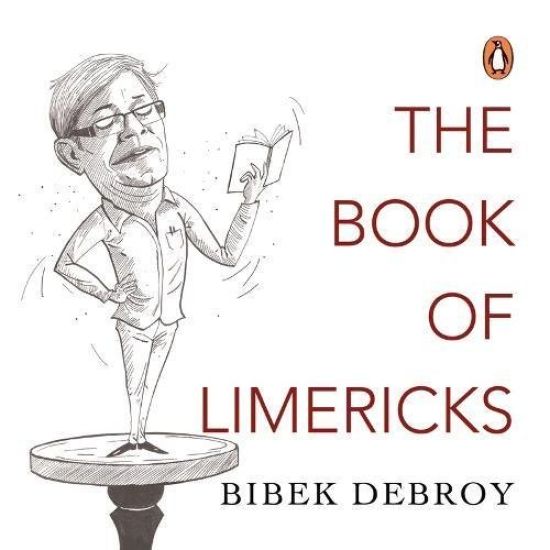
A compilation of witty verses based on current events, The Book of Limericks by Bibek Debroy is a brilliantly illustrated guide for anyone trying to understand what exactly happened last year. From economic issues to citizen concerns, these hilarious five-liners will take you on a roller coaster ride through the year 2017.
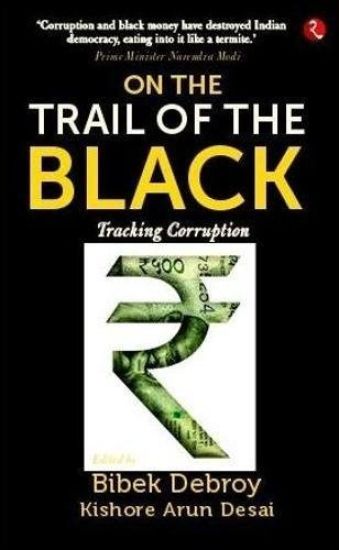
The colour black loses its grandeur the moment it is used in the context of corruption. In the last few decades, the spectre of corruption in India has only increased, and has become a reality so grim that most of us have accepted it as fait accompli. Further, the abuse of power, position and privilege for personal gain is rampant. Corruption and black money are festering sores that are holding us back in the race towards development. Since 2014, Prime Minister Narendra Modi has displayed strong political intent and an unambiguous resolve to uproot this menace. November 2016 witnessed the bold and radical exercise of demonetization that strengthened the hands of the common man in the fight against corruption. On the Trail of the Black traces the cross-sectoral prevalence of corruption-from agriculture and real estate to education and electoral finances-in a comprehensive manner giving readers a ringside view of its cumulative and cascading impact on the common citizen. Further, concrete steps to uproot corruption are also suggested. This action agenda follows a consistent, fact-based diagnostic and analytical approach. Leveraging the practical experience of senior government officials and the passion of young professionals, this book presents a systematic enquiry on corruption. Given the richness, diversity and depth of the subject, this authoritative volume is a valuable reference to every citizen who dreams of a corruption-free India.
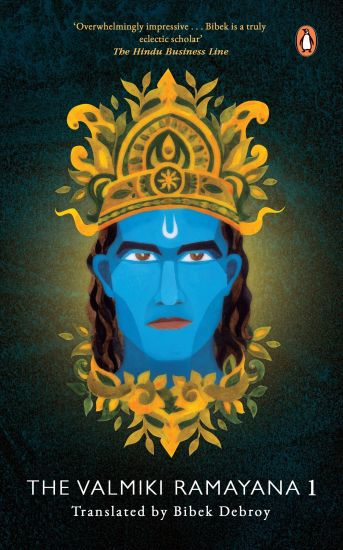
The Valmiki Ramayana remains a living force in the lives of the Indian people. A timeless epic, it recounts the legend of the noble prince Rama and his battle to vanquish the demon king Ravana. Even before he is crowned king of Ayodhya, Rama is exiled to the Dandaka forests where he is accompanied by his beauteous wife Sita and loyal brother Lakshmana. Deep in the jungle, Sita is abducted by Ravana and taken to his island kingdom Lanka, setting into motion a dramatic chain of events that culminates in an epoch-defining war. Filled with adventure and spectacle, the Ramayana is also the poignant story of a family caught up in the conflict between personal duty and individual desires. In Bibek Debroy's majestic new translation, the complete and unabridged text of the Critical Edition of this beloved epic can now be relished by a new generation of readers.
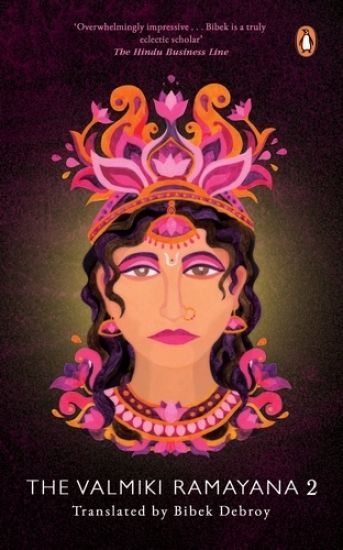
The Valmiki Ramayana remains a living force in the lives of the Indian people. A timeless epic, it recounts the legend of the noble prince Rama and his battle to vanquish the demon king Ravana.Even before he is crowned king of Ayodhya, Rama is exiled to the Dandaka forests where he is accompanied by his beauteous wife Sita and loyal brother Lakshmana. Deep in the jungle, Sita is abducted by Ravana and taken to his island kingdom Lanka, setting into motion a dramatic chain of events that culminates in an epoch-defining war. Filled with adventure and spectacle, the Ramayana is also the poignant story of a family caught up in the conflict between personal duty and individual desires. In Bibek Debroy's majestic new translation, the complete and unabridged text of the Critical Edition of this beloved epic can now be relished by a new generation of readers.
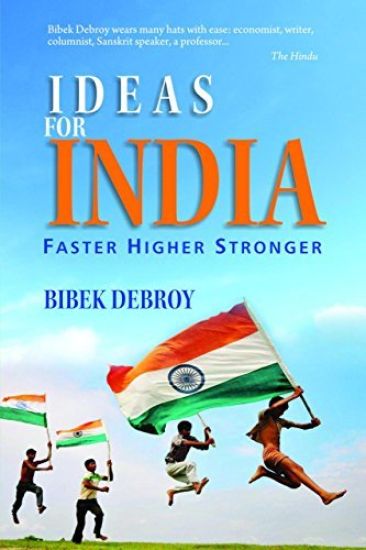
India is probably in the middle of the most reform-friendly phase in its history-open to conceptions that can help transform the nation faster, put it on a stronger firmament to help it leap higher. This book, a collection of ideas, by one of India's foremost thinkers, marries his deep academic understanding with the rich practical experience; the penetrating macroeconomic analysis with the intricate microeconomic observations; and the vast knowledge of the governance ecosystem with the challenging requirements of the governed. Be it simplifying and reforming the legal structures and statutes, decentralisation to boost the quality of governance, upgrading the parameters of data collection for mapping administrative performance and improving its efficiency or promoting the cause of a better and streamlined railway system, the ideas captured in this book present a fresh and inspiring result-based approach to the pressing problems India faces today. Innovative, precise and practical, solutions offered in this book are a treasure trove, not just for India, but other developing countries of the world too, for both their constitutional arms as also the civil society.
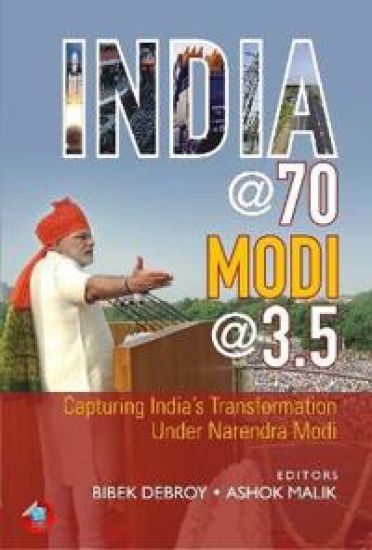
Transformation of a nation-that too, with the size and complexity of India-won't happen in months. At the same time, if it took decades, it won't be called transformation any more. So is India really in the middle of a transformation under the Modi government? Are we seeing history in the making without fully realising it? The best way to answer these questions would be to capture the story of India's development since 2014 with the backdrop of its progress as an independent nation. This book brings together acclaimed economists, scholars, diplomats and strategicians who dispassionately analyse India's growth story under the Modi sarkar. Be it plugging massive public spending leaks through the astute cashless transaction stratagem or touching the lives of millions of women through Ujjwala-the cooking gas revolution; be it the campaign to clean India, creating 100 smart cities or the focus on renewable energy and making India a responsible global leader, what stands out in the analysis is that the Prime Minister leads from the front, retains a grip on the performance parameters with processes like PRAGATI and believes in people participation-an inherent ingredient of the Reform, Perform and Transform theme that is close to his heart. This deeply analytical and evocative book captures the incremental changes combined with a sense of inherent hope and optimism that India is witnessing today-an essential reading to understand the working of the Modi government and the nation's unique growth story under it.

A gorgeous, lucid rendering of the majestic conclusion to the Mahabharata As an epilogue to the greatest epic of all time, the Harivamsha further elaborates on the myriad conflicts of dharma and the struggle between good and evil. Stories abound-from the cosmogony of the universe to the legends of the solar and lunar dynasties and even a foreshadowing of kali yuga in the future. At the centre of all these magnificent tales is the mercurial figure of Krishna, whose miraculous life and wondrous exploits are recounted with vivid detail. In offering a glimpse into Krishna's life-as a mischievous child, as an enchanting lover, as a discerning prince-this luminous text sheds light on many questions left unanswered in the Mahabharata. Brimming with battles and miracles, wisdom and heroics, philosophical insight and psychological acuity, Bibek Debroy's splendid translation of the Harivamsha is absolutely essential reading for all those who love the Mahabharata.

The Mahabharata is one of the greatest stories ever told. Dispute over land and kingdom may lie at the heart of this story of war between cousins-the Kouravas and Pandavas-but the Mahabharata is about conflicts of dharma. These conflicts are immense and various, singular and commonplace. Throughout the epic, characters face them with no clear indications of what is right and what is wrong; there are no absolute answers. Thus every possible human emotion features in the Mahabharata, the reason the epic continues to hold sway over our imagination. In this superb and widely acclaimed translation of the complete Mahabharata. Bibek Debroy takes us on a great journey with incredible ease.
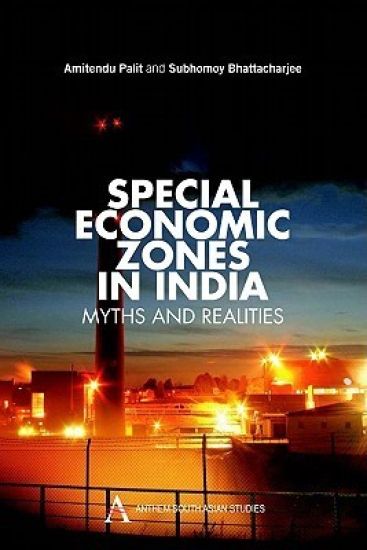
Special Economic Zones in India
Amitendu Palit; Subhomoy Bhattacharjee; Bibek Debroy
Anthem Press India
2008
sidottu
Special Economic Zones (SEZs) are turning out to be one of the stiffest challenges for India's economic policy reforms. Since the announcement of SEZ rules on 10 February 2006, these zones have aroused unprecedented controversy. The emotionally charged debate on SEZs has often produced inflexible positions on either side. The unusually strong public reaction has also forced policymakers to revisit several aspects of the policy in recent months. Why are SEZs so controversial? Will they really exacerbate income inequality, endanger food security and worsen regional imbalance? Or will they help Indian industry in taking its final leap onto the global arena? Only time will provide the answers. As the first book on India's SEZs, this volume examines different popular perceptions - both good and bad - surrounding these zones. Apart from the international evidence and the Indian story, the book looks closely at critical issues like financial viability, land requirements, extant rules and the political economy of SEZs. Admitting that the last word on the subject is far from being spoken, the book contends that the SEZ saga will be a test of strength for the country's social and political concensus on its economic policies and future reforms. Introduced by eminent economist Bibek Debroy, this book is a must read.