Kirjailija
Bidyut Chakrabarty
Kirjat ja teokset yhdessä paikassa: 69 kirjaa, julkaisuja vuosilta 2004-2026, suosituimpien joukossa Depoliticisation and Ideational Vision. Vertaile teosten hintoja ja tarkista saatavuus suomalaisista kirjakaupoista.
69 kirjaa
Kirjojen julkaisuhaarukka 2004-2026.
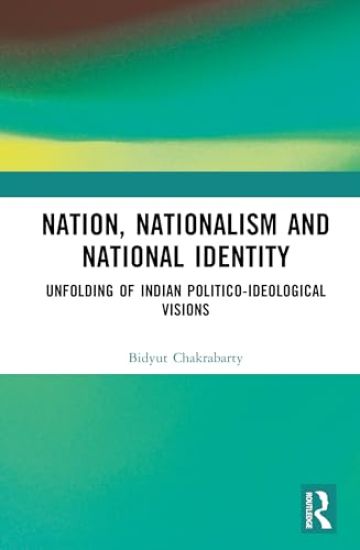
This book examines the multifaceted evolution of Indian nationalist thought through three critical ideological frameworks that shaped the subcontinent's journey toward independence and beyond. Drawing on extensive sources and theoretical frameworks, the volume presents a nuanced understanding of how constitutional liberalism, spiritualism, and identity politics converged to create India's distinctive nationalist discourse. The book demonstrates how Indian nationalism emerged as a unique confluence of Western Enlightenment principles and indigenous intellectual traditions, challenging conventional narratives that view it merely as derivative discourse. Through detailed examination of key figures including Gandhi, Tagore, Ambedkar, Tilak, and Aurobindo, the analysis reveals how constitutional liberalism was indigenized through spiritual frameworks drawn from Vedas, Upanishads, and Bhagavad Gita. The work explores the critical role of identity formation in nationalist mobilization, examining how religious, caste, and gender identities both strengthened and fragmented the independence movement, ultimately leading to partition in 1947. This authoritative study will appeal to students and scholars of political theory, South Asian studies, and comparative politics. Graduate students and researchers examining postcolonial political thought, religious nationalism, and identity politics will find this an essential resource for understanding the complex ideological foundations of modern India.
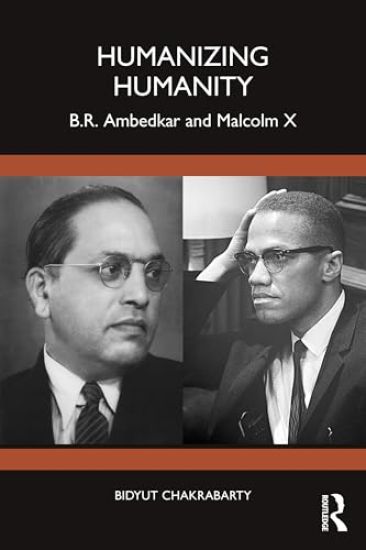
This book traces the political lives and ideas of B.R. Ambedkar and Malcolm X, and their struggles against caste and racial discrimination to present a unique East meets West subaltern history of the twentieth century. Although Ambedkar and Malcolm X came from very different backgrounds, their worldviews have many overlaps, shaped by their experiences of caste oppression, institutional violence, marginalisation and racism. This book explores their parallel ideologies and the lasting impact of their legacy on civil rights discourse and movements across the world. The volume will be of interest to researchers and scholars of race, caste and discrimination studies, history, African-American studies and South Asian studies.
This book explores Swami Vivekananda’s ideational visions, highlighting their multifaceted nature. On one level, it demonstrates how his ideas were a confluence of intellectual traditions that evolved both in India and abroad, including influences from Western liberalism. On another level, the book examines his indebtedness to colleagues, particularly those with differing ideational perspectives, who were connected to Ramakrishna Paramhamsa, his spiritual mentor. Despite being initiated into spiritualism by Ramakrishna, Vivekananda reshaped his spiritualism along humanist lines rather than strictly religious ones. The book underscores the distinctiveness of Vivekananda’s perceptions, especially in contrast to many of Ramakrishna’s followers who adopted conservative Hindu ideologies and dismissed other socio-cultural traditions. It argues that a deep analysis of Vivekananda’s ideational vision reaffirms the notion that history, as a process, unfolds differently, exerting varied impacts on individuals’ politico-ideological priorities. This volume will be of significant interest to scholars and researchers in South Asian studies, politics, and modern Indian history.
Aurobindo Ghose's ideological vision challenges traditional interpretations that divide his thought into distinct political and spiritual phases. The common belief that his engagement in the nationalist movement (1893-1910) gave way to a retreat into spirituality in Pondicherry oversimplifies the complexity of his intellectual evolution. This division, often found in historiography, suggests a shift from nationalism to spirituality but fails to recognise the underlying continuity in Aurobindo's ideas. A closer examination reveals a seamless development that transcends such a simplistic bifurcation.Aurobindo's nationalism was not solely political; it was deeply connected to his reverence for India's ancient intellectual traditions. He opposed the Westernisation of India, seeing it as a force that disconnected Indians from their cultural heritage. The blind imitation of Western values, in his view, betrayed India's spiritual and philosophical legacy. This commitment to intellectual revival was evident throughout his early career, during which he sought to navigate the colonial system, even attempting to secure a position within the British administration.Ultimately, Aurobindo rejected this path and aligned himself with the nationalist movement. Alongside leaders like Lal, Bal, and Pal, he redefined Indian nationalism, advocating for direct resistance to colonial rule and championing mass mobilisation that included all castes, religions, and genders. His vision was not a transition from politics to spirituality, but an integrated approach, where nationalism and spirituality were inextricably linked in the pursuit of India's freedom and cultural renaissance.
Rabindranath Tagore and Critique of Critiques
Bidyut Chakrabarty
Peter Lang International Academic Publishers
2025
nidottu
Tagore’s critique is an expansion of India’s argumentative tradition. While critiquing a phenomenon, he engaged himself with analytically dissecting the dominant, and also, derivative discourses which were at variance with what he upheld in consonance with his exclusive ideational vision. A careful analysis of his innovative essays and creative literary texts reveals that he attributed India’s civilizational decline to (a) the hiatus between the narrow governing design of the rulers and (b) the feeble challenges to the divisive socio-cultural practices permanently partitioning humanity in India. His creative writings are testimony to his concerted endeavour to meaningfully address these issues. By drawing on Upanishads, in particular, Tagore discharged a historical function since his initiative resulted in a resurgence of interests on those ideas which were, so far, dismissed as archaic and irrelevant. Contrary to such a perception, the bard reinforced those ideas by showing that they continued to be pertinent in dealing with inter-personal relationships even when concerted attempts were made to champion the derivative Western discourses. In so far as his conceptual tapestry is concerned, Tagore was perhaps one of those innovative thinkers who privileged indigenous source of knowledge so long as it was complementary to the ideational goal he espoused. This book is a thorough study of the ideas which Tagore articulated to develop his own distinctive ideational vision.
The book deals with the making and unfolding of the Constitution of India, framed by the Constituent Assembly between 1946 and 1949. Superseding the conventional legalistic approach, it focuses on the politico-ideological priorities of the members of Assembly who played a critical role in preparing the provisions of the Constitution.With its appeal cutting across academic specializations, this book stands out as a significant document by making readers aware of their constitutional rights and duties, and the ways to utilize the constitutional directions for human and national betterment. Written in lucid language, this book is a great asset for those seeking to understand the complex ideas implicit in legally articulated provisions.Tailored to the academic requirements of a global readership, this volume would be useful to students, researchers and teachers working in the fields of Politics, Law, Public Administration and Public Policy. It would also be an invaluable resource for legal experts and policy makers.
Depoliticisation and Ideational Vision
Bidyut Chakrabarty
Peter Lang International Academic Publishers
2025
nidottu
The book is an in-depth study of the eighteenth Lok Sabha elections held in India. Besides dwelling on the factors that acted critically in exercising voting rights by the voters, the text also highlights how the voters established their hegemony while casting votes in accordance with their priorities. This book stands out not merely because it introduces new parameters of conceptualizing Indian politics, but also because it questions the widely accepted models of analysis. By innovatively deciphering the nature of voting behaviour, the book provides newer conceptual tools which will help future researchers to reconceptualise democracy in a different but theoretically persuasive model of analysis. Professor Dennis Dalton, Professor Emeritus of Political Science, Barnard College, Columbia University Meticulously organised and incisively analysed, this study offers a pan-Indian level of an in-depth analysis of the 2024 Indian Lok Sabha polls. The book convincingly argued that to make a sense of disparate socio-cultural, politico-ideological, and diverse lingual-geographical fault-lines of the Indian society, one needs not to lost in fabricating a pan-Indian model of its electoral algorithm.Conceptualisingafresh, it weaves an episteme to map Indian electoral democratic space through a prism of constant influx. - Professor (Dr.) Ronki Ram, Shaheed Bhagat Singh Chair Professor of Political Science, Panjab University, Chandigarh
This book is a comprehensive analysis of the many visions of nationalism and nationalist leadership that emerged during India’s struggle for independence. The volume examines key nationalist thinkers such as Aurobindo, Gandhi, Tagore, Nazrul, Savarkar, and Ambedkar. It delineates different strands of nationalism in the post-moderate phase of nationalist movement and discusses political emancipation, social emancipation, and ethnic emancipation.Accessibly written for students with a helpful overview of how nationalist thought emerged in India, this book will be of great interest to students of South Asian history and politics. It will also be helpful for civil service aspirants.
This book explores Tagore’s socio-political ideas through his novels, short stories, and essays. It looks at Tagore beyond his literary achievements and examines his notions of friendship, religion, nationalism, civilization, and knowledge. It highlights his uniquely textured and innovatively argued views on critical aspects of humanity in the tumultuous phase of Indian nationalist campaign that also witnessed a kaleidoscope of myriad ideological voices, besides the hegemonic mainstream nationalist campaign, led by Gandhi. It captures the bard’s creative ideational priorities and his attempts to radically transform the prevalent socio-economic and politico-cultural environment.The volume will be of great interest to scholars and researchers of history, politics, literature, and South Asian studies.
By focusing on the socio-political ideas of the nationalist Aurobindo Ghosh (1872-1950), the book is an analytical dissection of his ideational vision which is still a relatively under-studied area of nationalist thoughts. During the perod, 1893-1910, Ghosh radically altered the texture of Indian nationalism by dwelling on how nationalism flourished in different parts of India, particularly, Japan, Italy and Ireland. conceptually different from the prevalent form of nationalist voice, it was he who clearly charted out a new course for anti-British campaign that fully unfolded with the appearance of Gandhi (1869-1948) on the Indian political scene. So, Aurobindo's politico-ideological vision ushered in a new era in the nationalist battle for India's political emancipation. Not only is the book therefore an intervention in the nationalist thought, but also devised new conceptual parameters for comprehending the radicalization of politico-ideological voices while simultaneously mobilizing those who were ready to make supreme sacrifices for the cause.
The Three Tagores—Dwarkanath, Debendranath and Rabindranath
Bidyut Chakrabarty
TAYLOR FRANCIS LTD
2025
sidottu
This book maps the intellectual and cultural transformation that India witnessed in the nineteenth and twentieth centuries through the three Tagores – Dwarkanath Tagore (1794–1846), Debendranath Tagore (1817–1905) and Rabindranath Tagore (1861–1941). It examines how these three generations of Tagores drew on the intellectual strands of the time to chart a different course for India’s socio-cultural and politico-ideological development in the wake of colonial rule. The author looks at the various progressive measures introduced by the Tagores that sought to combat the prevalent socio-cultural practices which were aimed at segregating people on the basis of caste, religion and ethnicity.An important addition to the study of India’s social metamorphosis, the book will be of great interest to scholars and researchers of history, political science, colonialism, cultural studies and South Asian studies.
This book is a political biography of Rabindranath Tagore. It identifies the principal threads in Tagore’s ideational universe and discusses them with reference to his written treatises. The book looks at the issues that made Tagore a thinker of visions and were complementary to the uplift of humanity regardless of race, religion and ethnicity. According to Tagore, religion, caste and gender were the major deterrents to the socio-cultural uniformity of contemporary India. He championed an ideational vision castigating those socio-cultural practices which impaired the coming together of human beings. The book also analyses his debate with Gandhi and the contestations around ideas of nation, industrialism and colonial exploitation.An important addition to the study of Tagore’s politico-ideological views, the volume will be of great interest to scholars and researchers of history, political science, literature, nationalism, sociology and South Asian studies.
This volume examines the distinct structural characteristics of Indian politics and unearths significant sociopolitical and economic processes which are critical to the political articulation of governance in the country. It reflects on the foundational values of Indian polity, the emergence of the nation post-colonialism, the structural fluidity of federalism in India, and the changing nature of the planning process in the country. The book also studies the electoral processes, social movements, party system, local and state governance. Apart from analyzing corruption and public grievance systems, the volume also probes into significant issues in Indian politics.This book will be useful to the students, researchers and faculty working in the field of political science, public administration, political sociology, political economy and post-colonial contemporary Indian politics in particular. It will also be an invaluable and interesting reading for those interested in South Asian studies.
Modern Indian Political Thought
Bidyut Chakrabarty; Rajendra K. Pandey
TAYLOR FRANCIS LTD
2024
nidottu
This book is an unconventional articulation of the political thinking in India in a refreshingly creative manner in more than one way. Empirically, the book becomes innovative by providing an analytically more grasping contextual interpretation of Indian political thought that evolved during the nationalist struggle against colonialism. Insightfully, it attempts to unearth the hitherto unexplored yet vital subaltern strands of political thinking in India as manifested through the mode of numerous significant socio-economic movements operating side by side and sometimes as part of the mainstream nationalist movement. This book articulates the main currents of Indian political thought by locating the text and themes of the thinkers within the socio-economic and politico-cultural contexts in which such ideas were conceptualised and articulated.The book also tries to analytically grasp the influences of the various British constitutional devices that appeared as the responses of the colonial government to redress the genuine socio-economic grievances of the various sections of Indian society. The book breaks new ground in not only articulating the main currents of Indian political thought in an analytically more sound approach of context-driven discussion but also provokes new research in the field by charting a new course in grasping and articulating the political thought in India.This volume will be useful to the students, researchers and faculty working in the fields of political science, political sociology, political economy and post-colonial contemporary Indian politics in particular. It will also be an invaluable and interesting reading for those interested in South Asian studies.
This textbook is a comprehensive, student-friendly guide to understanding the fundamentals of public administration. It examines the recent developments and relevant theoretical underpinnings in an accessible manner.Public Administration:Helps students grasp key dialectical interconnections between theoretical conceptualizations and prevalent socio-economic and political circumstancesProvides understanding of issues in governanceAnalyses significant transformations in civil society and administrative set-ups across the worldHighlights the contributions of non-Western thinkers in the development of conceptual ideas of the disciplineAccessibly written, it caters to a wide range of university syllabi in public administration and will be essential for students and researchers of political science, public policy and public administration. It will also be particularly useful for those preparing for the civil service examinations.
This textbook is a comprehensive, student-friendly guide to public policy in India. It highlights the critical aspects of public policy-making and its implementation by contextualizing it in the Indian historical and modern-day perspective. Public Policy in India: • Provides lucid explanations of theoretical aspects of public policy and its practice in the Indian context; • Captures the complexities in making, implementing and evaluating public policy; • Studies the dialectical interconnection that public policy has with the socio-economic and political environment; • Highlights the influence of culture on public policy; and • Analyses public policy as an outcome of a very complex contextual dialogue involving various kinds of actors. Accessibly written, this book covers a range of university syllabi and will be essential reading for students and researchers of political science and public administration. It will also be indispensable for civil service examinations, including the UPSC.