Kirjojen hintavertailu. Mukana 12 595 353 kirjaa ja 12 kauppaa.

Kirjailija

Bilal M. Ayyub

Kirjat ja teokset yhdessä paikassa: 11 kirjaa, julkaisuja vuosilta 2001-2026, suosituimpien joukossa Risk Analysis in Engineering and Economics. Vertaile teosten hintoja ja tarkista saatavuus suomalaisista kirjakaupoista.

11 kirjaa

Kirjojen julkaisuhaarukka 2001-2026.

Risk Analysis in Engineering and Economics

Risk Analysis in Engineering and Economics

Bilal M. Ayyub

TAYLOR FRANCIS LTD
2026
sidottu
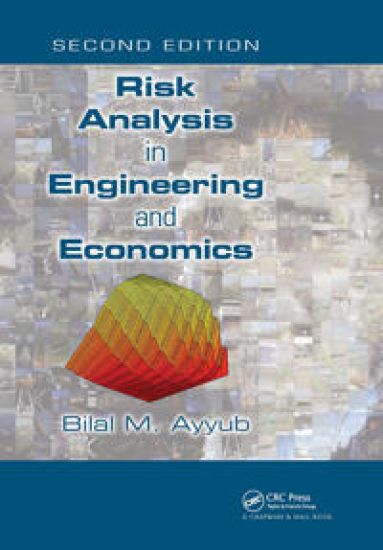
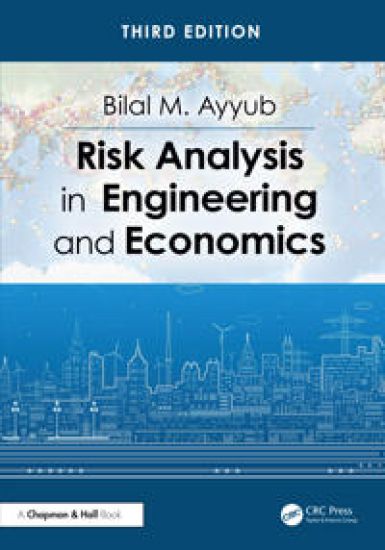
Risk Analysis in Engineering and Economics is required reading for decision-making under conditions of uncertainty. Drawing on his extensive experience in uncertainty, risk modeling, and analysis, the author covers everything from basic theory and key computational algorithms to data needs, sources, and collection. He emphasizes real-world solutions and the practical use of the methods while carefully examining the advantages and limitations of each to help readers translate the discussed techniques into practice. The third edition continues and advances the successful approach of this text. It offers: 1. The fundamental concepts, techniques, and applications of the subject in a style tailored to meet the needs of students and practitioners of engineering, science, economics, and finance 2. Introduces the fundamentals to facilitate quantification and rational decision-making 3. Enhances the coverage of economic valuation, risk tolerance, and attitude 4. Emphasizes the practical use of these methods through real-world case studies 5. Establishes the limitations, advantages, and disadvantages of various methods 6. Targets analysts, researchers, and/or anyone who deals with risk analysis to solve problems The book is designed to emphasize the applications of the concepts presented. The fundamental concepts are properly balanced in eight well-organized chapters. The outstanding features of the third edition include: More material on risk management and finance, including enhancements of the coverage of economic valuation, risk tolerance, and risk attitudes in decision making A renewed emphasis on practical problem solving More diversity in examples from engineering, the sciences, insurance, etc. Maintains the illustrative, complex examples with explicitly presented computations to enable students to reproduce the computations Enhanced exercises to increase the difficulty of some of them Other books by the author include Numerical Analysis for Engineers, third edition, with Richard H. McCuen ©2026 and Probability, Statistics, and Reliability for Engineers and Scientists, fourth edition, with Richard H. McCuen, © 2025, both published by CRC Press.
Numerical Analysis for Engineers

Numerical Analysis for Engineers

Bilal M. Ayyub; Richard H. McCuen

TAYLOR FRANCIS LTD
2025
sidottu
This widely used textbook demonstrates the power of numerical methods in the context of solving complex engineering and scientific problems. The book helps to prepare future engineers and assists practicing engineers in understanding the fundamentals of numerical methods, especially their applications, limitations, and potentials.Each chapter contains many computational examples, as well as a section on applications that contain additional engineering examples. Each chapter also includes a set of exercise problems.The problems are designed to meet the needs of instructors in assigning homework and to help students with practicing the fundamental concepts. Although the book was developed with emphasis on engineering and technological problems, the numerical methods can also be used to solve problems in other fields of science.The text is most appropriate for a first course in numerical methods, so students would only need basiccalculus and matrix algebra.The book offers three general parts: (1) introduction to numerical methods; (2) the process and application of numerical methods; (3) optimization of engineering data. In all chapters, a proper balance between theory and the application of the numerical methods is provided.Outstanding Features:· Presents a balanced mix of theory and engineering concepts· Emphasizes theoretical background, and engineering applications· Introduces fundamental concepts in a self-contained manner· Provides numerous examples and applications to illustrate key computational algorithms· Provides end-of-chapter exercise problemsA solutions manual is available for instructors. Some textbooks focus on the theoretical aspects of numerical methods. Students of the 21st century prefer a more applied education. While the background theory will be provided, the emphasis of the textbook will be the application of the methods. Sufficient theory will be provided to enable the students to program the methods and to understand the limitations of the procedures. Since students have access to many different programming languages, programmed algorithms will not be included; instead the general solution procedure will be a focus of the theory.In the past, function fitting has been limited in undergraduate curricula to analytical least squares. This limits examples to linear, polynomial, and log-linear (power) model forms. Many statistical software packages allow for the option of other forms, as problems in optimization go beyond the simple models. While the proposed text will discuss the analytical fitting of functions, the test will include basic material on the methods for numerical optimization, which will be a distinguishing feature from other books on numerical methods.Rationale and PedagogyEngineering students are motivated to learn a concept when they see applications that they believe would be relevant to their career paths. While applications should not be the primary educational focal point, they are an important motivational factor and a necessary ingredient to the retention of the educational concepts. While one type of engineering student (e.g., mechanical) may prefer the applications to be solely from that discipline, the student still appreciates applications in other engineering disciplines (e.g., electrical), as the student then recognizes the breadth of the concepts. This focus on the broad application of numerical methods is a primary educational objective of our proposed textbook.Students need different types of illustrating examples. First, they need computational examples that illuminate the nuances of the underlying theoretical concepts; these are simple calculations that focus on setting up solutions and number crunching. Second, students need engineering applications which show that learning the methods will be of value to them in applied engineering. The textbook will include both types of illustrating examples—the simple computation-oriented problem solving and the more retailed, engineering-oriented, real-world applications.
Probability, Statistics, and Reliability for Engineers and Scientists

Probability, Statistics, and Reliability for Engineers and Scientists

Bilal M. Ayyub; Richard H. McCuen

TAYLOR FRANCIS LTD
2025
sidottu
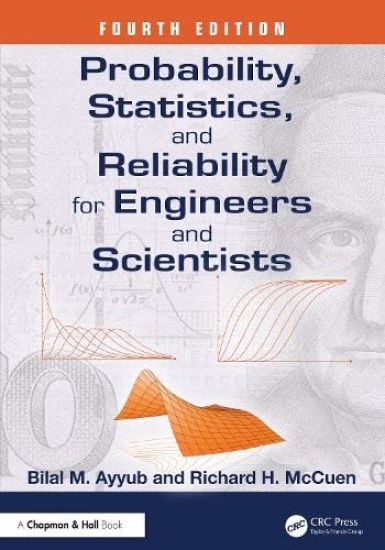
Virtually every engineer and scientist must be able to collect, analyze, interpret, and properly use vast arrays of data. This means acquiring a solid foundation in the methods of data analysis and synthesis. Understanding the theoretical aspects is important, but learning to properly apply the theory to real-world problems is essential.The goal of this popular and proven book is to introduce the fundamentals of probability, statistics, reliability, and risk methods to engineers and scientists for the purpose of data and uncertainty analysis and modeling in support of decision-making.The primary objectives to the author’s approach include: (1) introducing probability, statistics, reliability, and risk methods to students and practicing professionals in engineering and the sciences; (2) emphasizing the practical use of these methods; and (3) establishing the limitations, advantages, and disadvantages of the methods. The book was developed with an emphasis on solving real-world technological problems that engineers and scientists are asked to solve as part of their professional responsibilities.Upon graduation, engineers and scientists must have a solid academic foundation in methods of data analysis and synthesis, as the analysis and synthesis of complex systems are common tasks that confront even entry-level professionals.The underlying theory, especially the assumptions central to the methods, is presented, but then the proper application of the theory is presented through realistic examples, often using actual data. Every attempt is made to show that methods of data analysis are not independent of each other. Instead, we show that real-world problem-solving often involves applying many of the methods presented in different chapters.Probability, Statistics, and Reliability for Engineers and Scientists, here in its fourth edition, is a very popular textbook. Ultimately, readers will find its content of great value in problem-solving and decision-making, particularly in practical applications.
Probability, Statistics, and Reliability for Engineers and Scientists

Probability, Statistics, and Reliability for Engineers and Scientists

Bilal M. Ayyub; Richard H. McCuen

TAYLOR FRANCIS LTD
2024
nidottu
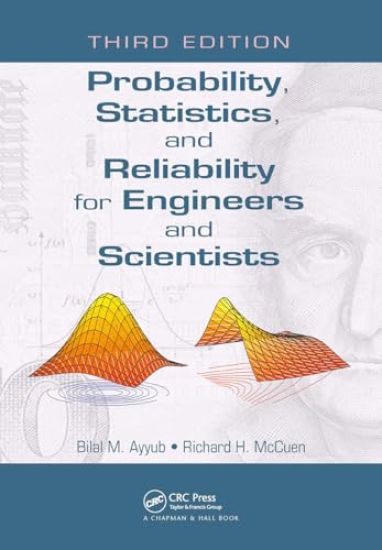
In a technological society, virtually every engineer and scientist needs to be able to collect, analyze, interpret, and properly use vast arrays of data. This means acquiring a solid foundation in the methods of data analysis and synthesis. Understanding the theoretical aspects is important, but learning to properly apply the theory to real-world problems is essential.Probability, Statistics, and Reliability for Engineers and Scientists, Third Edition introduces the fundamentals of probability, statistics, reliability, and risk methods to engineers and scientists for the purposes of data and uncertainty analysis and modeling in support of decision making.The third edition of this bestselling text presents probability, statistics, reliability, and risk methods with an ideal balance of theory and applications. Clearly written and firmly focused on the practical use of these methods, it places increased emphasis on simulation, particularly as a modeling tool, applying it progressively with projects that continue in each chapter. This provides a measure of continuity and shows the broad use of simulation as a computational tool to inform decision making processes. This edition also features expanded discussions of the analysis of variance, including single- and two-factor analyses, and a thorough treatment of Monte Carlo simulation. The authors not only clearly establish the limitations, advantages, and disadvantages of each method, but also show that data analysis is a continuum rather than the isolated application of different methods. Like its predecessors, this book continues to serve its purpose well as both a textbook and a reference. Ultimately, readers will find the content of great value in problem solving and decision making, particularly in practical applications.
Risk Analysis in Engineering and Economics

Risk Analysis in Engineering and Economics

Bilal M. Ayyub

TAYLOR FRANCIS LTD
2024
nidottu
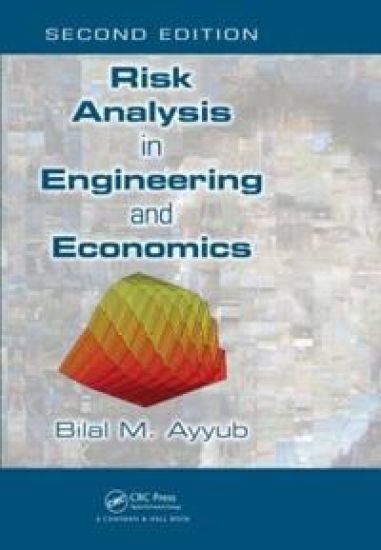
Risk Analysis in Engineering and Economics is required reading for decision making under conditions of uncertainty. The author describes the fundamental concepts, techniques, and applications of the subject in a style tailored to meet the needs of students and practitioners of engineering, science, economics, and finance. Drawing on his extensive experience in uncertainty and risk modeling and analysis, the author covers everything from basic theory and key computational algorithms to data needs, sources, and collection. He emphasizes practical use of the methods presented and carefully examines the limitations, advantages, and disadvantages of each to help readers translate the discussed techniques into real-world solutions.This Second Edition:Introduces the topic of risk financeIncorporates homeland security applications throughoutOffers additional material on predictive risk managementIncludes a wealth of new and updated end-of-chapter problemsDelivers a complementary mix of theoretical background and risk methodsBrings together engineering and economics on balanced terms to enable appropriate decision makingPresents performance segregation and aggregation within a risk frameworkContains contemporary case studies, such as protecting hurricane-prone regions and critical infrastructureProvides 320+ tables and figures, over 110 diverse examples, numerous end-of-book references, and a bibliographyUnlike the classical books on reliability and risk management, Risk Analysis in Engineering and Economics, Second Edition relates underlying concepts to everyday applications, ensuring solid understanding and use of the methods of risk analysis.
Thoughts and Conversations of Buildings and Other Structures

Thoughts and Conversations of Buildings and Other Structures

Bilal M. Ayyub

Createspace Independent Publishing Platform
2020
nidottu
The book provides creative writings including poems, short stories, lyrics, short essays, etc. prepared by engineers and engineering students, selected based on relevance to buildings and structures, composition strength and stirring emotions.Historically, engineers have effectively capitalized on science and mathematics to conceive, design and produce current technologies and products - most of which can be viewed as easily obtained gains, i.e., obtained by readily available means. The challenge to engineers is to creatively innovate beyond the obvious tracks of progression in order to develop solutions and products commensurate with the challenges anticipated. These challenges include climate change, sustainability, limited resources, health hazards, potential extinction risks, etc.Creativity then is defined by the ability to transcend traditional ideas, rules, patterns, relationships, and the like, and to create meaningful new ideas, forms, methods, interpretations, etc. based on originality, progressiveness, or imagination. Art offers means for expressing creativity, and defined by the quality, production, expression, or realm, according to aesthetic principles, of what is beautiful, appealing, grand, or of more than ordinary significance. Such means include, but not limited to, vocals, drama, music, dance, poetry, sculpture, painting, photography, etc. Artistic works are simply the means and methods for expressing feelings.The vision behind this book is expressed eloquently by Jean-Jacques Rousseau's as follows: "The world of reality has its limits; the world of imagination is boundless," and President John F. Kennedy who said "There is a connection, hard to explain logically ... between achievement in public life and progress in the arts. If more politicians knew poetry... I am convinced the world would be a little better place in which to live." According to the Plutarch, Greek philosopher, biographer, essayist, and priest at the Temple of Apollo, (AD 46-after 119), "the mind is not a vessel to be filled, but a fire to be kindled."
Risk Analysis in Engineering and Economics
Risk Analysis in Engineering and Economics is required reading for decision making under conditions of uncertainty. The author describes the fundamental concepts, techniques, and applications of the subject in a style tailored to meet the needs of students and practitioners of engineering, science, economics, and finance. Drawing on his extensive experience in uncertainty and risk modeling and analysis, the author covers everything from basic theory and key computational algorithms to data needs, sources, and collection. He emphasizes practical use of the methods presented and carefully examines the limitations, advantages, and disadvantages of each to help readers translate the discussed techniques into real-world solutions.This Second Edition: Introduces the topic of risk financeIncorporates homeland security applications throughoutOffers additional material on predictive risk managementIncludes a wealth of new and updated end-of-chapter problemsDelivers a complementary mix of theoretical background and risk methodsBrings together engineering and economics on balanced terms to enable appropriate decision makingPresents performance segregation and aggregation within a risk frameworkContains contemporary case studies, such as protecting hurricane-prone regions and critical infrastructureProvides 320+ tables and figures, over 110 diverse examples, numerous end-of-book references, and a bibliographyUnlike the classical books on reliability and risk management, Risk Analysis in Engineering and Economics, Second Edition relates underlying concepts to everyday applications, ensuring solid understanding and use of the methods of risk analysis.
Probability, Statistics, and Reliability for Engineers and Scientists

Probability, Statistics, and Reliability for Engineers and Scientists

Bilal M. Ayyub; Richard H. McCuen

CRC Press Inc
2011
sidottu
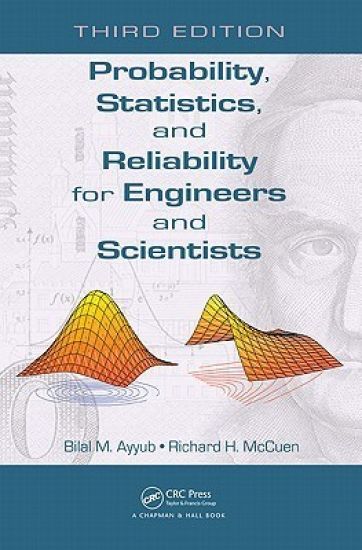
In a technological society, virtually every engineer and scientist needs to be able to collect, analyze, interpret, and properly use vast arrays of data. This means acquiring a solid foundation in the methods of data analysis and synthesis. Understanding the theoretical aspects is important, but learning to properly apply the theory to real-world problems is essential.Probability, Statistics, and Reliability for Engineers and Scientists, Third Edition introduces the fundamentals of probability, statistics, reliability, and risk methods to engineers and scientists for the purposes of data and uncertainty analysis and modeling in support of decision making.The third edition of this bestselling text presents probability, statistics, reliability, and risk methods with an ideal balance of theory and applications. Clearly written and firmly focused on the practical use of these methods, it places increased emphasis on simulation, particularly as a modeling tool, applying it progressively with projects that continue in each chapter. This provides a measure of continuity and shows the broad use of simulation as a computational tool to inform decision making processes. This edition also features expanded discussions of the analysis of variance, including single- and two-factor analyses, and a thorough treatment of Monte Carlo simulation. The authors not only clearly establish the limitations, advantages, and disadvantages of each method, but also show that data analysis is a continuum rather than the isolated application of different methods. Like its predecessors, this book continues to serve its purpose well as both a textbook and a reference. Ultimately, readers will find the content of great value in problem solving and decision making, particularly in practical applications.
Uncertainty Modeling and Analysis in Engineering and the Sciences

Uncertainty Modeling and Analysis in Engineering and the Sciences

Bilal M. Ayyub; George J. Klir

Chapman Hall/CRC
2006
sidottu
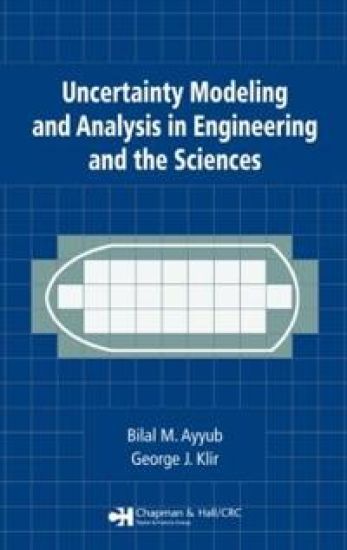
Engineers and scientists often need to solve complex problems with incomplete information resources, necessitating a proper treatment of uncertainty and a reliance on expert opinions. Uncertainty Modeling and Analysis in Engineering and the Sciences prepares current and future analysts and practitioners to understand the fundamentals of knowledge and ignorance, how to model and analyze uncertainty, and how to select appropriate analytical tools for particular problems. This volume covers primary components of ignorance and their impact on practice and decision making. It provides an overview of the current state of uncertainty modeling and analysis, and reviews emerging theories while emphasizing practical applications in science and engineering. The book introduces fundamental concepts of classical, fuzzy, and rough sets, probability, Bayesian methods, interval analysis, fuzzy arithmetic, interval probabilities, evidence theory, open-world models, sequences, and possibility theory. The authors present these methods to meet the needs of practitioners in many fields, emphasizing the practical use, limitations, advantages, and disadvantages of the methods.
Elicitation of Expert Opinions for Uncertainty and Risks
Experts, despite their importance and value, can be double-edged swords. They can make valuable contributions from their deep base of knowledge, but those contributions may also contain their own biases and pet theories. Therefore, selecting experts, eliciting their opinions, and aggregating their opinions must be performed and handled carefully, with full recognition of the uncertainties inherent in those opinions. Elicitation of Expert Opinions for Uncertainty and Risks illuminates those uncertainties and builds a foundation of philosophy, background, methods, and guidelines that helps its readers effectively execute the elicitation process. Based on the first-hand experiences of the author, the book is filled with illustrations, examples, case studies, and applications that demonstrate not only the methods and successes of expert opinion elicitation, but also its pitfalls and failures. Studies show that in the future, analysts, engineers, and scientists will need to solve ever more complex problems and reach decisions with limited resources. This will lead to an increased reliance on the proper treatment of uncertainty and on the use of expert opinions. Elicitation of Expert Opinions for Uncertainty and Risks will help prepare you to better understand knowledge and ignorance, to successfully elicit expert opinions, to select appropriate expressions of those opinions, and to use various methods to model and aggregate opinions.