Kirjojen hintavertailu. Mukana 12 152 606 kirjaa ja 12 kauppaa.

Kirjailija

Bill Ashcroft

Kirjat ja teokset yhdessä paikassa: 19 kirjaa, julkaisuja vuosilta 2001-2025, suosituimpien joukossa Intimate Horizons. Vertaile teosten hintoja ja tarkista saatavuus suomalaisista kirjakaupoista.

19 kirjaa

Kirjojen julkaisuhaarukka 2001-2025.

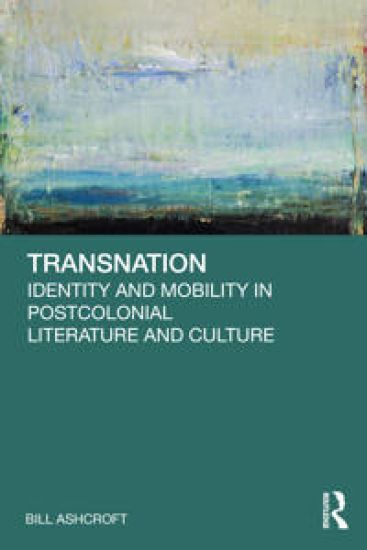
Transnation

Transnation

Bill Ashcroft

TAYLOR FRANCIS LTD
2025
nidottu
Transnation: Identity and Mobility in Postcolonial Literature and Culture offers a fresh and thought-provoking exploration of transnationalism, focusing on the mobility of populations who may not physically leave their national borders, but whose potential for movement subtly challenges the power and authority of the state. Drawing from postcolonial studies, it examines how marginalized and colonized groups resist and navigate the systems of control imposed by the state—resistance that may be subtle, yet constant and potent. Through the concept of the transnation, Bill Ashcroft reveals how individuals and groups move while avoiding the restrictive practices of borders. It emphasizes the increasing global mobility and how all nations, whether their populations are moving or not, can be seen as transnations. The book provides a radical lens on mobility, showing how deeply it impacts nations and how it might pose a threat to traditional forms of control. The work covers critical themes such as: Nations, Postnationalism, and the Transnation; The Space of the Transnation; Borders and Bordering Practices; The Subjects of the Transnation; The Transnation and the City; The Porosity of Borders in the Works of Rushdie and Ghosh An ideal resource for scholars and students of global movement, migration, literary studies, postcolonial studies, and transnational studies, this book provides a unique perspective on how people move within and across the boundaries of nation-states in an increasingly interconnected world. This book will be of great use to scholars and students investigating the increase in global movement.
Transnation

Transnation

Bill Ashcroft

TAYLOR FRANCIS LTD
2025
sidottu
Transnation: Identity and Mobility in Postcolonial Literature and Culture offers a fresh and thought-provoking exploration of transnationalism, focusing on the mobility of populations who may not physically leave their national borders, but whose potential for movement subtly challenges the power and authority of the state. Drawing from postcolonial studies, it examines how marginalized and colonized groups resist and navigate the systems of control imposed by the state—resistance that may be subtle, yet constant and potent. Through the concept of the transnation, Bill Ashcroft reveals how individuals and groups move while avoiding the restrictive practices of borders. It emphasizes the increasing global mobility and how all nations, whether their populations are moving or not, can be seen as transnations. The book provides a radical lens on mobility, showing how deeply it impacts nations and how it might pose a threat to traditional forms of control. The work covers critical themes such as: Nations, Postnationalism, and the Transnation; The Space of the Transnation; Borders and Bordering Practices; The Subjects of the Transnation; The Transnation and the City; The Porosity of Borders in the Works of Rushdie and Ghosh An ideal resource for scholars and students of global movement, migration, literary studies, postcolonial studies, and transnational studies, this book provides a unique perspective on how people move within and across the boundaries of nation-states in an increasingly interconnected world. This book will be of great use to scholars and students investigating the increase in global movement.
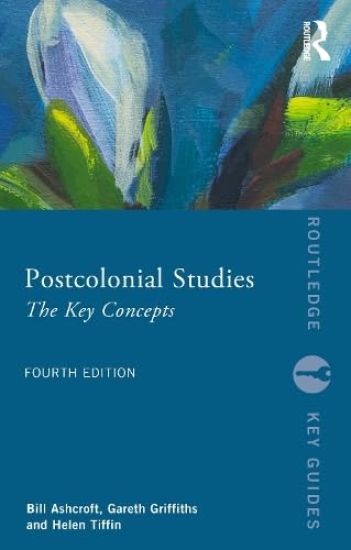
Postcolonial Studies

Postcolonial Studies

Bill Ashcroft; Gareth Griffiths; Helen Tiffin

TAYLOR FRANCIS LTD
2025
nidottu
Now in its fourth edition, this popular A-Z guide provides a comprehensive overview of the issues which characterize postcolonialism: explaining what it is, where it is encountered and the crucial part it plays in debates about race, gender, politics, language and identity.Fully revised and updated, the fourth edition contains more than 30 new entries, including:AnthropoceneBiopoliticsDecolonialityEcocriticismGlobal SouthPostcolonial sciencesTransnationalism.With substantial updates to the further reading, Postcolonial Studies: The Key Concepts remains an essential guide for anyone studying this vibrant field.
Postcolonial Studies

Postcolonial Studies

Bill Ashcroft; Gareth Griffiths; Helen Tiffin

TAYLOR FRANCIS LTD
2025
sidottu
Now in its fourth edition, this popular A-Z guide provides a comprehensive overview of the issues which characterize postcolonialism: explaining what it is, where it is encountered and the crucial part it plays in debates about race, gender, politics, language and identity.Fully revised and updated, the fourth edition contains more than 30 new entries, including:AnthropoceneBiopoliticsDecolonialityEcocriticismGlobal SouthPostcolonial sciencesTransnationalism.With substantial updates to the further reading, Postcolonial Studies: The Key Concepts remains an essential guide for anyone studying this vibrant field.
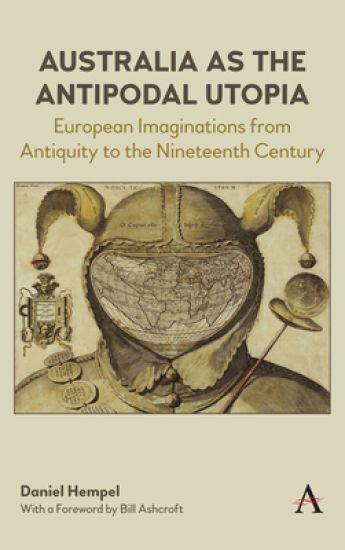
Australia as the Antipodal Utopia

Australia as the Antipodal Utopia

Daniel Hempel; Bill Ashcroft

Anthem Press
2019
sidottu
Australia has a fascinating history of visions. As the antipode to Europe, the continent provided a radically different and uniquely fertile ground for envisioning places, spaces and societies. Australia as the Antipodal Utopia evaluates this complex intellectual history by mapping out how Western visions of Australia evolved from antiquity to the modern period. It argues that because of its antipodal relationship with Europe, Australia is imagined as a particular form of utopia – but since one person’s utopia is, more often than not, another’s dystopia, Australia’s utopian quality is both complex and highly ambiguous. Drawing on the rich field of utopian studies, Australia as the Antipodal Utopia provides an original and insightful study of Australia’s place in the Western imagination.
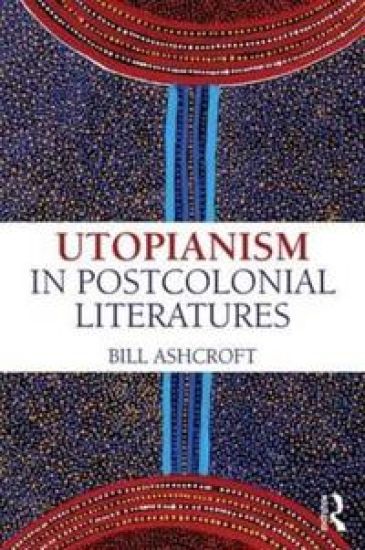
Utopianism in Postcolonial Literatures
Postcolonial Studies is more often found looking back at the past, but in this brand new book, Bill Ashcroft looks to the future and the irrepressible demands of utopia. The concept of utopia – whether playful satire or a serious proposal for an ideal community – is examined in relation to the postcolonial and the communities with which it engages. Studying a very broad range of literature, poetry and art, with chapters focussing on specific regions – Africa, India, Chicano, Caribbean and Pacific – this book is written in a clear and engaging prose which make it accessible to undergraduates as well as academics. This important book speaks to the past and future of postcolonial scholarship.
Utopianism in Postcolonial Literatures
Postcolonial Studies is more often found looking back at the past, but in this brand new book, Bill Ashcroft looks to the future and the irrepressible demands of utopia. The concept of utopia – whether playful satire or a serious proposal for an ideal community – is examined in relation to the postcolonial and the communities with which it engages. Studying a very broad range of literature, poetry and art, with chapters focussing on specific regions – Africa, India, Chicano, Caribbean and Pacific – this book is written in a clear and engaging prose which make it accessible to undergraduates as well as academics. This important book speaks to the past and future of postcolonial scholarship.
Post-Colonial Studies: The Key Concepts

Post-Colonial Studies: The Key Concepts

Bill Ashcroft; Gareth Griffiths; Helen Tiffin

Routledge
2013
sidottu
This hugely popular A-Z guide provides a comprehensive overview of the issues which characterize post-colonialism: explaining what it is, where it is encountered and the crucial part it plays in debates about race, gender, politics, language and identity. For this third edition over thirty new entries have been added including:CosmopolitanismDevelopmentFundamentalismNostalgiaPost-colonial cinemaSustainabilityTraffickingWorld Englishes.Post-Colonial Studies: The Key Concepts remains an essential guide for anyone studying this vibrant field.
Caliban's Voice

Caliban's Voice

Bill Ashcroft

Routledge
2008
sidottu
In Shakespeare’s Tempest, Caliban says to Miranda and Prospero: "...you taught me language, and my profit on’t Is, I know how to curse. "With this statement, he gives voice to an issue that lies at the centre of post-colonial studies. Can Caliban own Prospero’s language? Can he use it to do more than curse?Caliban’s Voice examines the ways in which post-colonial literatures have transformed English to redefine what we understand to be ‘English Literature’. It investigates the importance of language learning in the imperial mission, the function of language in ideas of race and place, the link between language and identity, the move from orature to literature and the significance of translation. By demonstrating the dialogue that occurs between writers and readers in literature, Bill Ashcroft argues that cultural identity is not locked up in language, but that language, even a dominant colonial language, can be transformed to convey the realities of many different cultures. Using the figure of Caliban, Ashcroft weaves a consistent and resonant thread through his discussion of the post-colonial experience of life in the English language, and the power of its transformation into new and creative forms.
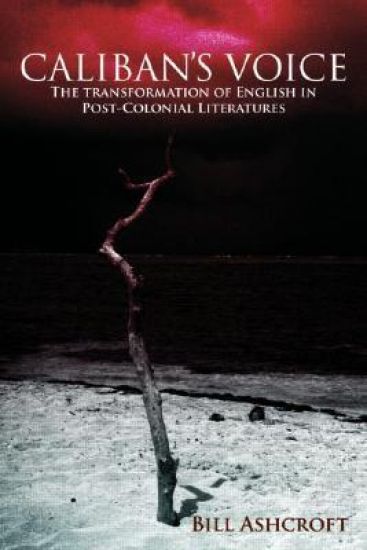
Caliban's Voice

Caliban's Voice

Bill Ashcroft

Routledge
2008
nidottu
In Shakespeare’s Tempest, Caliban says to Miranda and Prospero: "...you taught me language, and my profit on’t Is, I know how to curse. "With this statement, he gives voice to an issue that lies at the centre of post-colonial studies. Can Caliban own Prospero’s language? Can he use it to do more than curse?Caliban’s Voice examines the ways in which post-colonial literatures have transformed English to redefine what we understand to be ‘English Literature’. It investigates the importance of language learning in the imperial mission, the function of language in ideas of race and place, the link between language and identity, the move from orature to literature and the significance of translation. By demonstrating the dialogue that occurs between writers and readers in literature, Bill Ashcroft argues that cultural identity is not locked up in language, but that language, even a dominant colonial language, can be transformed to convey the realities of many different cultures. Using the figure of Caliban, Ashcroft weaves a consistent and resonant thread through his discussion of the post-colonial experience of life in the English language, and the power of its transformation into new and creative forms.
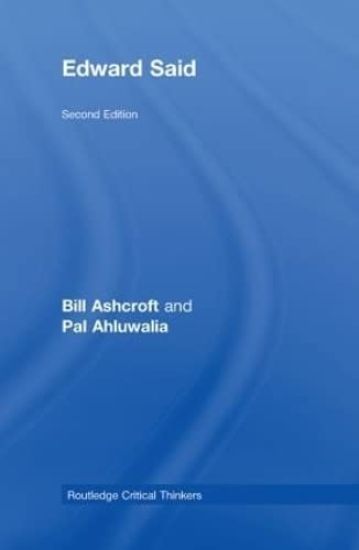
Edward Said

Edward Said

Bill Ashcroft; Pal Ahluwalia

Routledge
2008
sidottu
Edward Said is perhaps best known as the author of the landmark study Orientalism, a book which changed the face of critical theory and shaped the emerging field of post-colonial studies, and for his controversial journalism on the Palestinian political situation.Looking at the context and the impact of Said's scholarship and journalism, this book examines Said's key ideas, including:the significance of 'worldliness', 'amateurism', 'secular criticism', 'affiliation' and 'contrapuntal reading' the place of text and critic in 'the world' knowledge, power and the construction of the 'Other' links between culture and imperialismexile, identity and the plight of Palestinea new chapter looking at Said's later work and style This popular guide has been fully updated and revised in a new edition, suitable for readers approaching Said's work for the first time as well as those already familiar with the work of this important theorist. The result is the ideal guide to one of the twentieth century's most engaging critical thinkers.
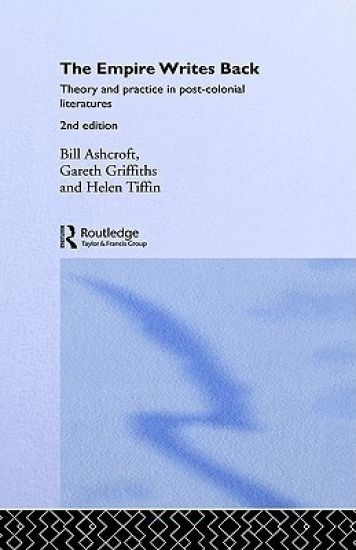
The Empire Writes Back

The Empire Writes Back

Bill Ashcroft; Gareth Griffiths; Helen Tiffin

Routledge
2002
sidottu
The experience of colonization and the challenges of a post-colonial world have produced an explosion of new writing in English. This diverse and powerful body of literature has established a specific practice of post-colonial writing in cultures as various as India, Australia, the West Indies and Canada, and has challenged both the traditional canon and dominant ideas of literature and culture.The Empire Writes Back was the first major theoretical account of a wide range of post-colonial texts and their relation to the larger issues of post-colonial culture, and remains one of the most significant works published in this field. The authors, three leading figures in post-colonial studies, open up debates about the interrelationships of post-colonial literatures, investigate the powerful forces acting on language in the post-colonial text, and show how these texts constitute a radical critique of Eurocentric notions of literature and language. This book is brilliant not only for its incisive analysis, but for its accessibility for readers new to the field. Now with an additional chapter and an updated bibliography, The Empire Writes Back is essential for contemporary post-colonial studies.
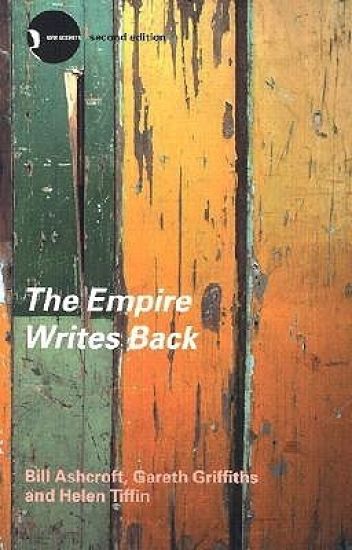
The Empire Writes Back

The Empire Writes Back

Bill Ashcroft; Gareth Griffiths; Helen Tiffin

Routledge
2002
nidottu
The experience of colonization and the challenges of a post-colonial world have produced an explosion of new writing in English. This diverse and powerful body of literature has established a specific practice of post-colonial writing in cultures as various as India, Australia, the West Indies and Canada, and has challenged both the traditional canon and dominant ideas of literature and culture.The Empire Writes Back was the first major theoretical account of a wide range of post-colonial texts and their relation to the larger issues of post-colonial culture, and remains one of the most significant works published in this field. The authors, three leading figures in post-colonial studies, open up debates about the interrelationships of post-colonial literatures, investigate the powerful forces acting on language in the post-colonial text, and show how these texts constitute a radical critique of Eurocentric notions of literature and language. This book is brilliant not only for its incisive analysis, but for its accessibility for readers new to the field. Now with an additional chapter and an updated bibliography, The Empire Writes Back is essential for contemporary post-colonial studies.
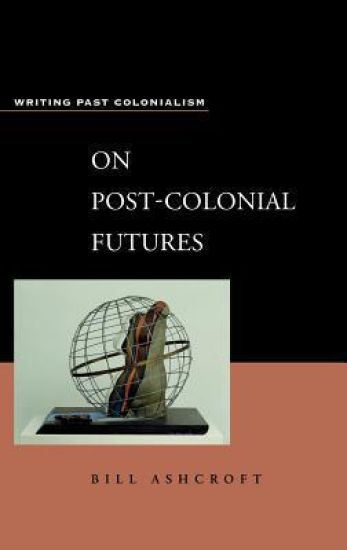
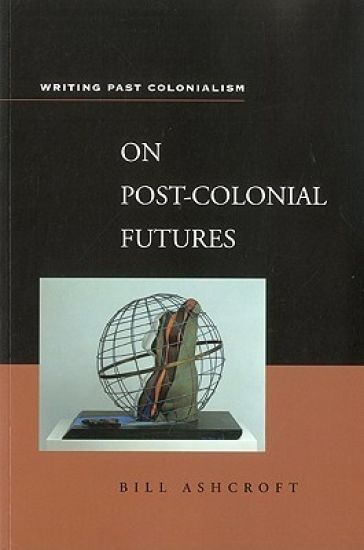
On Post-Colonial Futures

On Post-Colonial Futures

Bill Ashcroft

Continuum International Publishing Group Ltd.
2001
sidottu
In this groundbreaking work, Bill Ashcroft extends the arguments posed in The Empire Writes Back to investigate the transformative effects of postcolonial resistance and the continuing relevance of colonial struggle. He demonstrates the remarkable capacity for change and adaptation emanating from postcolonial cultures both in everyday life and in the intellectual spheres of literature, history and philosophy. The transformations of postcolonial literary study have not been limited to a simple rewriting of the canon but have also affected the ways in which all literature can be read and have led to a more profound understanding of the network of cultural practices that influence creative writing.
On Post-Colonial Futures

On Post-Colonial Futures

Bill Ashcroft

Continuum International Publishing Group Ltd.
2001
nidottu
In this groundbreaking work, Bill Ashcroft extends the arguments posed in The Empire Writes Back to investigate the transformative effects of postcolonial resistance and the continuing relevance of colonial struggle. He demonstrates the remarkable capacity for change and adaptation emanating from postcolonial cultures both in everyday life and in the intellectual spheres of literature, history and philosophy. The transformations of postcolonial literary study have not been limited to a simple rewriting of the canon but have also affected the ways in which all literature can be read and have led to a more profound understanding of the network of cultural practices that influence creative writing.
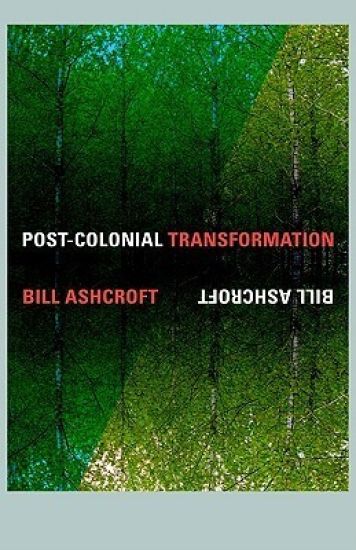
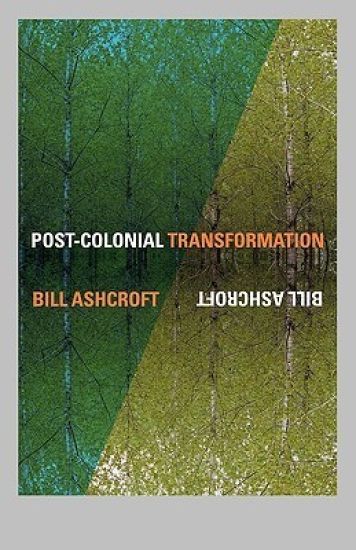
Post-Colonial Transformation

Post-Colonial Transformation

Bill Ashcroft

Routledge
2001
sidottu
In his new book, Bill Ashcroft gives us a revolutionary view of the ways in which post-colonial societies have responded to colonial control.The most comprehensive analysis of major features of post-colonial studies ever compiled, Post-Colonial Transformation:* demonstrates how widespread the strategy of transformation has been* investigates political and literary resistance* examines the nature of post-colonial societies' engagement with imperial language, history, allegory, and place* offers radical new perspectives in post-colonial theory in principles of habitation and horizonality.Post-Colonial Transformation breaks new theoretical ground while demonstrating the relevance of a wide range of theoretical practices, and extending the exploration of topics fundamentally important to the field of post-colonial studies.
Post-Colonial Transformation

Post-Colonial Transformation

Bill Ashcroft

Routledge
2001
nidottu
In his new book, Bill Ashcroft gives us a revolutionary view of the ways in which post-colonial societies have responded to colonial control.The most comprehensive analysis of major features of post-colonial studies ever compiled, Post-Colonial Transformation:* demonstrates how widespread the strategy of transformation has been* investigates political and literary resistance* examines the nature of post-colonial societies' engagement with imperial language, history, allegory, and place* offers radical new perspectives in post-colonial theory in principles of habitation and horizonality.Post-Colonial Transformation breaks new theoretical ground while demonstrating the relevance of a wide range of theoretical practices, and extending the exploration of topics fundamentally important to the field of post-colonial studies.