

Kirjailija
Bill Ellis
Kirjat ja teokset yhdessä paikassa: 14 kirjaa, julkaisuja vuosilta 1997-2025, suosituimpien joukossa Mission Minded English. Vertaile teosten hintoja ja tarkista saatavuus suomalaisista kirjakaupoista.
14 kirjaa
Kirjojen julkaisuhaarukka 1997-2025.


Women Who Won: Stories of Courage, Confidence, Vision and Determination
Bill Ellis
Big Bill's Books
2017
sidottu
A source of learning, inspiration and motivation delivered through the true life stories of women who wonWomen Who Won is an invaluable compendium of inspiring and motivating examples of achievement. Profiling 28 women from around the world - some of whom are absolute icons and others who will be new to many readers - all bring a life story that is compelling and intriguing. More importantly, every story delivers profound insights for us to learn from and apply in our lives - no matter our gender. Winning is not about being the most talented, it's about being the most determined and Women Who Won helps us understand that if we embrace and commit to our dreams, set a goal, and find a way to do better than we've ever done before, we can all be winners.Facing challenges as diverse as their respective backgrounds, cultures, nationalities and eras, each of these extraordinary women accomplished extraordinary things. From Maya Angelou to Ingrid Vanderveldt to Judge Judy to Maggie Doyne, there is no single classification for these powerful, inspiring, and high achieving individuals - except they are all women who won.The stories also include insightful takeaways by author Bill Ellis, an expert on personal branding, who extracts practical tips from each story to help us to face whatever challenge or adversity, and still get things done.Women Who Won is a book that can be read from cover to cover in one sitting, or savoured story by story. It is a book that is relevant to every woman - and man - wanting to live their best life and achieve their greatest dream. A great gift for ourselves or for anyone we want to support in achieving their own dreams, this book should be included on every library, office and personal bookshelf. There is no doubt that Women Who Won will change our lives for the better.

A source of learning, inspiration and motivation delivered through the true life stories of women who won Women Who Won is an invaluable compendium of inspiring and motivating examples of achievement. Profiling 28 women from around the world - some of whom are absolute icons and others who will be new to many readers - all bring a life story that is compelling and intriguing. More importantly, every story delivers profound insights for us to learn from and apply in our lives - no matter our gender. Winning is not about being the most talented, it's about being the most determined and Women Who Won helps us understand that if we embrace and commit to our dreams, set a goal, and find a way to do better than we've ever done before, we can all be winners. Facing challenges as diverse as their respective backgrounds, cultures, nationalities and eras, each of these extraordinary women accomplished extraordinary things. From Maya Angelou to Ingrid Vanderveldt to Judge Judy to Maggie Doyne, there is no single classification for these powerful, inspiring, and high achieving individuals - except they are all women who won. The stories also include insightful takeaways by author Bill Ellis, an expert on personal branding, who extracts practical tips from each story to help us to face whatever challenge or adversity, and still get things done.Women Who Won is a book that can be read from cover to cover in one sitting, or savoured story by story. It is a book that is relevant to every woman - and man - wanting to live their best life and achieve their greatest dream. A great gift for ourselves or for anyone we want to support in achieving their own dreams, this book should be included on every library, office and personal bookshelf. There is no doubt that Women Who Won will change our lives for the better

Stirling Plantation is historical fiction that tells the story of a Virginia plantation through the experiences of multiple generations of two families that lived in the Manor House: The white family that owned the estate and the black slave family that worked as cook, housekeeper and in latter times as steward. The story shows the effect of wars, slave revolts, the abolitionist movement and the women's movement on the plantation. The period covered is from 1625 through the 1960s. Unlike most white slave owners, the Stirling family evolves into a benevolent catalyst in the 20th century for equal treatment of the descendants of its former slaves.

Far from mere idle tales, rumors are a valuable window into our anxieties and fears. In The Global Grapevine, two leading authorities on rumor, folklore, and urban legend-Gary Alan Fine and Bill Ellis-shed light on what contemporary rumors can tell us about the fears and pressures of globalization. In particular, they examine four major themes that emerge over and over again: rumors about terrorism, about immigration, about international trade, and about tourism. The authors analyze how various rumors underscore American reactions to perceived global threats, show how we interpret our changing world, and highlight fears, fantasies, and cherished beliefs about our place in the world. These rumors, the authors argue, are the visible tip of a vast iceberg of hidden anxieties. Illuminating the most widely circulated rumors in America in recent years, The Global Grapevine offers an invaluable portrait of what these tales reveal about contemporary society.


Soon after 9/11, wild rumors began to spread: that Arab-Americans were celebrating publicly, that some people had been warned, that politicians knew all along. The Global Grapevine reveals how-through our everyday thoughts and conversations, and the rumors we spread--we grapple with the new global world. Drawn from diverse sources, the book illuminates urban legends like the claim that a certain t-shirt with a Chinese pictogram brands the wearer as a prostitute, conspiracy theories such as the "9/11 Truth Movement," or stories of tourists infected with AIDS by locals. These rumors, the authors argue, reflect our anxieties and fears about contact with foreign cultures--how we believe foreign competition to be poisoning the domestic economy and foreign immigration to be eroding American values. Focusing on the threat posed by terrorism, the impact of immigration, the risks involved in international trade, and the dangers faced by naive tourism, the book provides a broad survey of the most widely circulated rumors and examines what these tales reveal about contemporary society.

There is no hero's welcome for combat veteran, Jim Montgomery, when he returns from World War II to a family in disarray. His father is dying; his mother threatens to leave; and, their Colorado cattle ranch has fallen on hard times. Jim's younger brother, Massey, and sister, Samantha, seek an easier lifestyle than working on the family ranch. Eventually this leaves only Jim's youngest brother, Randy, as his one loyal sibling. Jim must devote his life to Randy and to the ranch, with no time to recover from the war. Romance blooms when he meets a beautiful widow who "inspires" him. And in his "senior" years, Jim is enthralled by a struggling Indian woman and her daughter. Yet, for every step forward, there are steps backwards as his deserting siblings return to demand more from Jim's ranch profits. Worse, when fortune evolves from Jim's hard work, his estate is threatened by Massey and Samantha. In spite of the odds, Jim strives to be a good man to all who come his way.

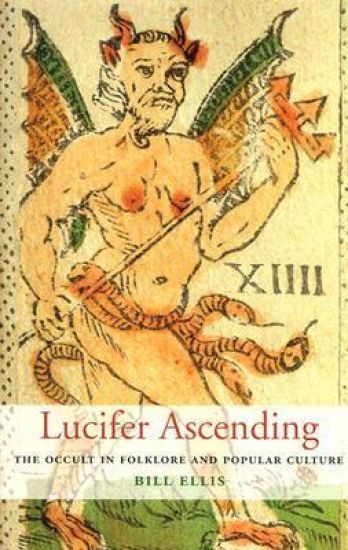
Despite their centuries-old history and traditions, witchcraft and magic are still very much a part of modern Anglo-American culture. In Lucifer Ascending, Bill Ellis looks at modern practices that are universally defined as "occult," from commonplace habits such as carrying a rabbit's foot for good luck or using a Ouija board, to more esoteric traditions, such as the use of spell books. In particular, Ellis shows how the occult has been a common element in youth culture for hundreds of years. Using materials from little known publications and archives, Lucifer Ascending details the true social function of individuals' dabbling with the occult. In his survey of what Ellis terms "vernacular occultism," the author is poised on a middle ground between a skeptical point of view that defines belief in witchcraft and Satan as irrational and an interpretation of witchcraft as an underground religion opposing Christianity. Lucifer Ascending examines the occult not as an alternative to religion but rather as a means for ordinary people to participate directly in the mythic realm.
In late May, a Pennsylvania high school hums with the rumor that a Satanic cult plans on killing the first four couples through the door on prom night. A horror writer in the Catskills is overcome with grief, alienated from his wife, unable to write, and suffering from recurring thoughts of physical and sexual indignities he has no words to describe. He concludes he has been abducted by aliens. In a Pizza Hut in Ohio, employees refuse to close alone because the ghost of a hanged man haunts the refrigerator. Tales such as these are the subject of Bill Ellis's Aliens, Ghosts, and Cults: Legends We Live. In the book, he explores the complex relationship between ordinary life and outlandish but oft-told legends. What he finds is startling. In multiple case studies legends become part of life. Officials take action in answer to each story's weird details, and people adjust their behavior to avoid or to experience aliens and ghosts. Written for both the cultural studies expert and the reader fascinated with reactions to extraordinary phenomena, Aliens, Ghosts, and Cults pursues motivations for why people tell these ""true stories, heard from a friend of a friend."" Ellis shows legends creating a sense of community in a multi-ethnic institutional camp. He traces some contemporary scares to such old tales as the vanishing hitchhiker and murderous gang initiations. In analyzing some newly emerging legend types, such as alien abductions and computer virus warnings, Ellis discovers connections between earlier types of religious experience and supposed witchcraft. Finally, the book reveals how legends can inspire people to actions, ranging from playful visits to haunted spots to horrifying threats of violence. Legends rely on active discussion to spread and mutate. This book considers them to be a social process, not a kind of narrative with a fixed form. People worldwide may tell a legend or one person to whom the event allegedly occurred may ""own"" the story. Individuals may relate an event as something strongly believed or as something laughable. Legends may be very new or have roots in old folklore. But when high schools, law enforcement agencies, city governments, and individuals take action, the story becomes one of the legends we live. Bill Ellis is an associate professor of English and American studies at Penn State University, Hazleton campus. His previous books include Raising the Devil: Satanism, New Religions, and the Media, and he has been published in Psychology Today, Skeptical Inquirer, Journal of American Folklore, and Journal of Popular Literature.
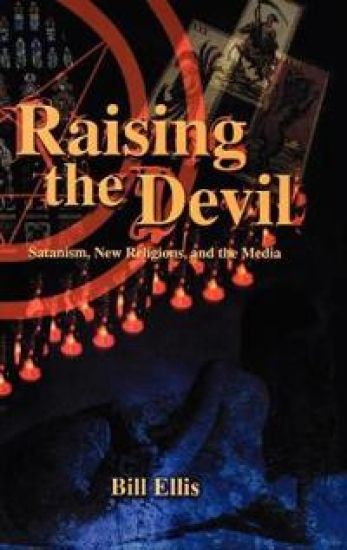
Raising the Devil reveals how the Christian Pentecostal movement, right-wing conspiracy theories, and an opportunistic media turned grassroots folk traditions into the Satanism scare of the 1980s. During the mid-twentieth century, devil worship was seen as merely an isolated practice of medieval times. But by the early 1980s, many influential experts in clinical medicine and in law enforcement were proclaiming that satanic cults were widespread and dangerous. By examining the broader context for alleged "cult" activity, Bill Ellis demonstrates how the image of contemporary Satanism emerged during the 1970s. Blaming a wide range of mental and physical illnesses on in-dwelling demons, a faction of the Pentecostal movement became convinced that their gifts of the spirit were being opposed by satanic activities. They attributed these activities to a "cult" that was the evil twin of true Christianity. In some of the cases Ellis considers, common folk beliefs and rituals were misunderstood as evidence of devil worship. In others, narratives and rituals themselves were used to combat satanic forces. As the media found such stories more and more attractive, any activity with even remotely occult overtones was demonized in order to fit a model of absolute good confronting evil. Ellis's wide-ranging investigation covers ouija boards, cattle mutilation, graveyard desecration, and "diabolical medicine"--the psychiatric community's version of exorcism. He offers a balanced view of contentious issues such as demonic possession, satanic ritual abuse, and the testimonies of confessing "ex-Satanists." A trained folklorist, Ellis seeks to navigate a middle road in this dialog, and his insights into informal religious traditions clarify how the image of Satanism both explained and created deviant behavior.

This book is part of the Archive Photographs series, which uses old photographs and archived images to show the history of various local areas in Great Britain, through their streets, shops, pubs, and people.