Kirjojen hintavertailu. Mukana 12 390 323 kirjaa ja 12 kauppaa.

Kirjailija

Bill J. Leonard

Kirjat ja teokset yhdessä paikassa: 13 kirjaa, julkaisuja vuosilta 1990-2024, suosituimpien joukossa Remembering Antônia Teixeira. Vertaile teosten hintoja ja tarkista saatavuus suomalaisista kirjakaupoista.

Mukana myös kirjoitusasut: Bill J Leonard

13 kirjaa

Kirjojen julkaisuhaarukka 1990-2024.

Remembering Antônia Teixeira

Remembering Antônia Teixeira

Mikeal C Parsons; João B Chaves; Bill J Leonard

WILLIAM B EERDMANS PUBLISHING CO
2023
sidottu
Uncover the truth about the scandal that shook the Texas Baptist community, buried for over a century. In 1894 Steen Morris raped Ant nia Teixeira. Both had been guests in the house of Baylor University president Rufus Burleson. The assault took place in Burleson's backyard and was the first of a series of assaults that eventually left the young Baylor student pregnant. Rather than hold the guilty party accountable, Rufus Burleson and other prominent members of the Baptist community in Waco launched a campaign of intimidation, victim-blaming, and cover-up to preserve the virtuous image of their institution. In Remembering Ant nia Teixeira, Mikeal C. Parsons and Jo o B. Chaves painstakingly peel back the layers of concealment that have accumulated over a century of enforced silence about the case. Beginning with Antonia's father Ant nio Teixeira, a priest who had renounced Catholicism and become a pillar of the Baptist community in Brazil, Parsons and Chaves uproot romanticized and hagiographical accounts of the Southern Baptist Convention's foreign missions. They then follow Ant nia's journey north, her assault, and the subsequent scandal that shook Texas--until it was intentionally erased. Iconoclastic and meticulous, Remembering Ant nia Teixeira calls attention to how religious institutions have used selective memory to maintain power. In doing so, this book takes a first step toward dismantling those structures of oppression.
James M. Dunn and Soul Freedom

James M. Dunn and Soul Freedom

Bill J Leonard; Aaron Douglas Weaver

Smyth Helwys,U.S.
2015
pokkari
A self-described "Texas-bred, Spirit-led, Bible-teaching, revival-preaching, recovering Southern Baptist," James Milton Dunn, over the last fifty years, has been the most aggressive Baptist proponent for religious liberty in the United States. Soul freedom-voluntary uncoerced faith and an unfettered individual conscience before God-is the basis of his understanding of church-state separation and the historic Baptist basis of religious liberty.Through his ministry as a pastor, ethicist, and activist, James Dunn developed a distinctly Baptist approach to politics, showing fellow Baptists how to apply their Christianity in the public square on social and church-state issues in a manner consistent with the historic Baptist commitment to freedom. This ethic of political engagement promoted by Dunn was motivated by a loving concern for others and a commitment to the common good.
Appalachian Mountain Christianity

Appalachian Mountain Christianity

Bill J. Leonard; Mitchell G. Reddish

UNIVERSITY OF GEORGIA PRESS
2024
sidottu
Appalachian Mountain Christianity examines the beliefs and practices of certain Protestant religious groups, primarily Baptists and Holiness Pentecostals, whose history is shaped in and by the Central Appalachian context. Particular attention is given to Primitive and Old Regular Baptists as well as certain denominationally connected or independent Pentecostal communions. Bill J. Leonard explores the ways in which Appalachian cultural and religious transitions and upheavals impact these traditional faith communities; the style and significance of their rituals including preaching, worship, baptism, foot washing, and glossolalia; their varied approaches to scripture and doctrine as evident in their views on salvation and women’s roles in church and home; and in the dramatic nonconformity of two specific Appalachian traditions, the Pentecostal Serpent Handlers and the Primitive Baptist Universalists. Through his examination, Leonard suggests that the ideas and actions of these Appalachian Christians reflect the spirituality of otherness. This is not the otherness of inferiority or ignorance by which Appalachians and their churches are often caricatured but the otherness of religious experiences that focus on encounters with the Divine and contribute to individual and collective spiritual insight and “inwardness.” Those traditions and the spirituality that centers them are worth exploring, even for those who do not join them.
Appalachian Mountain Christianity

Appalachian Mountain Christianity

Bill J. Leonard; Mitchell G. Reddish

UNIVERSITY OF GEORGIA PRESS
2024
pokkari
Appalachian Mountain Christianity examines the beliefs and practices of certain Protestant religious groups, primarily Baptists and Holiness Pentecostals, whose history is shaped in and by the Central Appalachian context. Particular attention is given to Primitive and Old Regular Baptists as well as certain denominationally connected or independent Pentecostal communions. Bill J. Leonard explores the ways in which Appalachian cultural and religious transitions and upheavals impact these traditional faith communities; the style and significance of their rituals including preaching, worship, baptism, foot washing, and glossolalia; their varied approaches to scripture and doctrine as evident in their views on salvation and women’s roles in church and home; and in the dramatic nonconformity of two specific Appalachian traditions, the Pentecostal Serpent Handlers and the Primitive Baptist Universalists. Through his examination, Leonard suggests that the ideas and actions of these Appalachian Christians reflect the spirituality of otherness. This is not the otherness of inferiority or ignorance by which Appalachians and their churches are often caricatured but the otherness of religious experiences that focus on encounters with the Divine and contribute to individual and collective spiritual insight and “inwardness.” Those traditions and the spirituality that centers them are worth exploring, even for those who do not join them.
Word of God Across the Ages

Word of God Across the Ages

Bill J Leonard

Smyth Helwys Publishing, Incorporated
2015
pokkari
In this third, enlarged edition of Word of God Across the Ages: Using Christian History in Preaching, Leonard returns to the roots of the Christian story to find in the lives of our faithful forebears examples of the potent presence of the gospel. Bill J. Leonard has always specialized in insightful exegesis of Christian history that vividly demonstrates the power of personal story to communicate the Word of God. Through these stories, those who preach today will be challenged and inspired as they pursue the divine Word in human history through the ages.Bill J. Leonard served as the James and Marilyn Dunn Professor of Baptist Studies and Professor of Church History at Wake Forest University Divinity School. Leonard's research focuses on church history with particular attention to American religion, Baptist studies, and Appalachian religion. In addition to a variety of articles in journals and monographs, he is the author or editor of some 22 books.
A Sense of the Heart

A Sense of the Heart

Bill J. Leonard

Abingdon Press
2014
sidottu
Whether like Paul's experience on the road to Damascus or Wesley's "strangely warmed heart," the desire to meet or be met by God is as old as humanity. But America has been the fertile seed bed for what William James famously called "varieties of religious experience." These experiences cover a wide spectrum from classic mysticism to revivalist conversion to a contemporary pursuit of spirituality. A Sense of the Heart traces the nature of religious experience from the colonial era to the present, defining its nature while describing common and distinct approaches in the work of various writers and practitioners. A Sense of the Heart offers a historical review of representative types of religious experience, the nature of such experiences and its impact on the American religious and cultural context as evident in awakenings, controversies, denominations, and new religious communities.
Can I Get a Witness?

Can I Get a Witness?

Bill J. Leonard

Mercer University Press
2013
nidottu
As the twenty-first century muddles along, perhaps the phrase “Can I get a witness?” will sharpen our thinking about the current state of religion in American culture, particularly for Protestants. Indeed, the permanent transition that characterises American religious life offers an opportunity to revisit the word “witness” and its meaning for the future. The materials in this volume survey issues in American religious communities developed through academic research, classroom teaching, sermons, and years of working with ministerial students. A final section is a collection of representative columns written for Associated Baptist Press, addressing questions in American religio-cultural life, past, and present. Each essay reflects responses to a time in which old systems of organization and identity are changing, reforming, declining, and disappearing from the ecclesiastical landscape. Thus methods for offering Christian witness are undergoing significant reexamination by denominations, congregations and individuals. The witness of the church remains a work in progress as faith communities celebrate shared identity through tradition, worship, instruction and care of souls, while refining specific ministries in response to location, conscience or a specific historical moment. If the essays in this volume facilitate a reexamination of the nature of Christian and ecclesial witness in twenty-first-century America, they will have done their duty.
The Challenge of Being Baptist

The Challenge of Being Baptist

Bill J. Leonard

Baylor University Press
2010
nidottu
The largest Protestant denomination in the United States is in the midst of a serious identity crisis; many Baptists are revisiting or turning away from the tradition, leaving others to become increasingly uncertain that the denomination can remain viable. Here, however, noted Baptist historian Bill Leonard wades through the murky waters of the Baptist past and explores the historic commitments of this unique people - all in an effort to shed light on its contemporary dilemmas and evaluate the prospects for a Baptist future. While encouraging members of the faith to thoroughly and fairly evaluate their heritage - and its many blunders along the way - Leonard ultimately argues that the Baptists' contentious ""audacious witness"" shown throughout its history still has a worthy role to play in the twenty-first century.
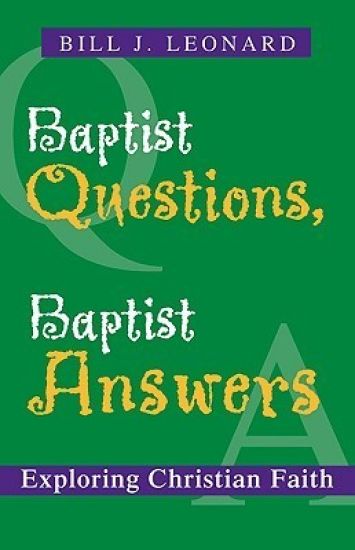
Baptist Questions, Baptist Answers

Baptist Questions, Baptist Answers

Bill J. Leonard

Westminster/John Knox Press,U.S.
2009
nidottu
Respected Baptist historian and theologian Bill Leonard takes readers through the theological and practical questions that are important to Baptists. In a clear style and with great sensitivity to the varieties of beliefs among Baptist bodies, Leonard considers the big questions of faith. These include Baptist beliefs about God, Jesus Christ, the Bible, salvation, and the Christian life, among others. Drawing on historic statements of Baptist belief, contemporary history, and his own background and deep scholarship, Leonard provides reliable and accessible discussions of these issues. His work will be highly illuminating for Baptists of all denominational groupings as well as for others interested in the core of Baptist theological convictions and their various expressions. Leonard's is a strong and trusted voice, and this book will be a welcome resource.
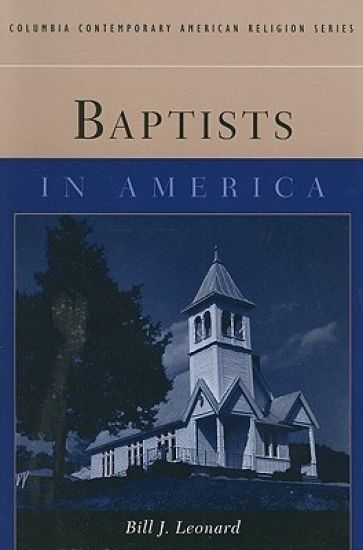
Baptists in America

Baptists in America

Bill J. Leonard

Columbia University Press
2007
pokkari
Baptists are a study in contrasts. From Little Dove Old Regular Baptist Church, up a hollow in the Appalachian Mountains, with its 25-member congregation, to the 18,000-strong Saddleback Valley Church in Orange County, California, where hymns appear on wide-screen projectors; from Jerry Falwell, Jesse Helms, and Tim LaHaye to Martin Luther King Jr., Jesse Jackson, Bill Clinton, and Maya Angelou, Baptist churches and their members have encompassed a range of theological interpretations and held a variety of social and political viewpoints. At first glance, Baptist theology seems classically Protestant in its emphasis on the Trinity, the incarnation of Jesus Christ, the authority of Scripture, salvation by faith alone, and baptism by immersion. Yet the interpretation and implementation of these beliefs have made Baptists one of the most fragmented denominations in the United States. Not surprisingly, they are often characterized as a people who "multiply by dividing." Baptists in America introduces readers to this fascinating and diverse denomination, offering a historical and sociological portrait of a group numbering some thirty million members. Bill J. Leonard traces the history of Baptists, beginning with their origins in seventeenth-century Holland and England. He examines the development of Baptist beliefs and practices, offering an overview of the various denominations and fellowships within Baptism. Leonard also considers the disputes surrounding the question of biblical authority, the ordinances (baptism and the Lord's Supper), congregational forms of church governance, and religious liberty. The social and political divisions among Baptists are often as dramatic, if not more so, than the theological divides. Leonard examines the role of Baptists in the Fundamentalist and Social Gospel movements of the early twentieth century. The Civil Rights movement began in African American Baptist churches. More recently, Baptists have been key figures in the growth of the Religious Right, criticizing the depravity of American popular culture, supporting school prayer, and championing other conservative social causes. Leonard also explores the social and religious issues currently dividing Baptists, including race, the ordination of women, the separation of church and state, and sexuality. In the final chapter Leonard discusses the future of Baptist identity in America.
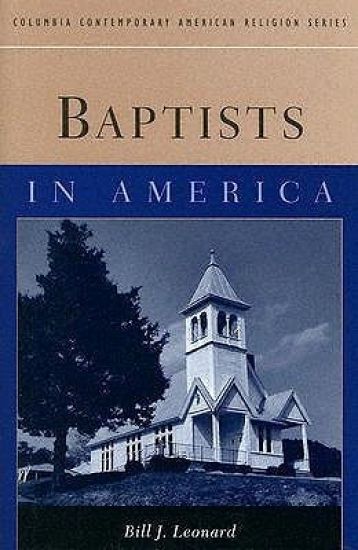
Baptists in America

Baptists in America

Bill J. Leonard

Columbia University Press
2005
sidottu
Baptists are a study in contrasts. From Little Dove Old Regular Baptist Church, up a hollow in the Appalachian Mountains, with its 25-member congregation, to the 18,000-strong Saddleback Valley Church in Orange County, California, where hymns appear on wide-screen projectors; from Jerry Falwell, Jesse Helms, and Tim LaHaye to Martin Luther King Jr., Jesse Jackson, Bill Clinton, and Maya Angelou, Baptist churches and their members have encompassed a range of theological interpretations and held a variety of social and political viewpoints. At first glance, Baptist theology seems classically Protestant in its emphasis on the Trinity, the incarnation of Jesus Christ, the authority of Scripture, salvation by faith alone, and baptism by immersion. Yet the interpretation and implementation of these beliefs have made Baptists one of the most fragmented denominations in the United States. Not surprisingly, they are often characterized as a people who "multiply by dividing." Baptists in America introduces readers to this fascinating and diverse denomination, offering a historical and sociological portrait of a group numbering some thirty million members. Bill J. Leonard traces the history of Baptists, beginning with their origins in seventeenth-century Holland and England. He examines the development of Baptist beliefs and practices, offering an overview of the various denominations and fellowships within Baptism. Leonard also considers the disputes surrounding the question of biblical authority, the ordinances (baptism and the Lord's Supper), congregational forms of church governance, and religious liberty. The social and political divisions among Baptists are often as dramatic, if not more so, than the theological divides. Leonard examines the role of Baptists in the Fundamentalist and Social Gospel movements of the early twentieth century. The Civil Rights movement began in African American Baptist churches. More recently, Baptists have been key figures in the growth of the Religious Right, criticizing the depravity of American popular culture, supporting school prayer, and championing other conservative social causes. Leonard also explores the social and religious issues currently dividing Baptists, including race, the ordination of women, the separation of church and state, and sexuality. In the final chapter Leonard discusses the future of Baptist identity in America.
Christianity in Appalachia

Christianity in Appalachia

Bill J. Leonard

University of Tennessee Press
1999
nidottu
Religion has long been a source of identity for many Southerners, and the Appalachian areas in particular have proven to be a virtual fortress protecting faith and culture. Yet, in a region popularly thought to be religiously homogeneous, congregations reflect a wide range of doctrinal differences over such issues as conversion, ministerial leadership, and the authority on which a church bases its core beliefs.Profiling the prominent Christian traditions in southern Appalachia, this book brings together contributions by twenty scholars who have long studied the religious practices found in the region’s cities, small towns, and rural communities. These authors provide insights into not only the independent mountain churches that are strongly linked to local customs but also the mainline and other religious bodies that have a significant presence in Appalachia but are not strictly associated with it. The essays explore the nature of ministry within these various churches, show the impact of broader culture on religion in the region, and consider the question of whether previously isolated, tradition-based churches can retain their distinctiveness in a changing world.One group of chapters focuses on elements of mountain religion as seen in the beliefs and practices of mountain Holiness folk, serpent handlers, and various Baptist traditions. Later chapters review the history and activities of other denominations, including Southern Baptist, Presbyterian, Wesleyan/Holiness, Church of God, and Roman Catholic. Also considered are the economic history of the region, popular religiosity, and the role of church-affiliated colleges. Taken together, these essays offer a richly nuanced understanding of Christianity in Appalachia.The Editor: Bill J. Leonard is dean of the Divinity School at Wake Forest University. His other books include Out of One, Many: American Religion and American Pluralism and God's Last and Only Hope: The Fragmentation of the Southern Baptist Convention.The Contributors: Monica Kelly Appleby, Donald N. Bowdle, Mary Lee Daugherty, Melvin E. Dieter, Howard Dorgan, Anthony Dunnavant, Gary Farley, Samuel S. Hill, Loyal Jones, Helen Lewis, Charles H. Lippy, Bill J. Leonard, Deborah Vansau McCauley, Lou F. McNeil, Marcia Clark Myers, Bennett Poage, Ira Read, James Sessions, Barbara Ellen Smith, H. Davis Yeuell.
Becoming Christian

Becoming Christian

Bill J. Leonard

Westminster/John Knox Press,U.S.
1990
nidottu
Drawing upon the perspectives of Christian education, biblical studies, worship, ethics, the arts, the role of women, the role of minorities, sexuality, and vocation, this book provides a multifaceted picture of the meaning of spirituality. Becoming Christian is an accessible text that introduces readers to the important issues involved in being a Christian.