Kirjojen hintavertailu. Mukana 12 268 524 kirjaa ja 12 kauppaa.

Kirjailija

Bill Meissner

Kirjat ja teokset yhdessä paikassa: 10 kirjaa, julkaisuja vuosilta 2004-2024, suosituimpien joukossa Circling Toward Home. Vertaile teosten hintoja ja tarkista saatavuus suomalaisista kirjakaupoista.

10 kirjaa

Kirjojen julkaisuhaarukka 2004-2024.

The Wonders of the Little World

The Wonders of the Little World

Bill Meissner

Stephen F. Austin State University Press
2024
pokkari
A novel that, like a journey down the midway of a colourful carnival filled with mystery, magic, and surprise, The Wonders of the Little World will delight the reader like a free-wheeling thrill ride that leads straight to the heart. With its unforgettable main characters trying to discover their place in the world, the story explores the thin lines between truth and lies, between who someone is and who they want to be. Part road trip across America, part love story, and part illumination of a family struggling to heal itself, this novel immersed readers into an entertaining and, ultimately, enlightening world.
Summer of Rain, Summer of Fire

Summer of Rain, Summer of Fire

Bill Meissner

Stephen F. Austin State University Press
2022
nidottu
With its roots in a true but little-known incident involving the aerial bombing of a Midwest powder production plant in 1969, Summer of Rain, Summer of Fire illuminates the battle between conservative and liberal, between conformity and independent thought. It portrays the effects of a war that was fought not only on foreign soil, but in living rooms in the middle of America. Above all, Summer of Rain, Summer of Fire is an illumination of the timeless conflicts on the battlefield of the human heart. It’s the spring of 1967, during the turbulent protest days of the Vietnam War. Eighteen-year-old Phil Keyhoe takes a summer job mowing lawns at the Strongs Ammunition Plant, a place that manufactures powder for use in the Vietnam War. When Phil’s World War II hero father has a medical crisis, Phil is forced to put his college plans with Mariah, a rebellious new love interest, on hold and work full time in the gunpowder production lines. Meanwhile, Mariah joins a radical anti-war group and becomes involved with its charismatic leader. As her commitment against the war intensifies, she plans to orchestrate a major protest against the Strongs Plant. Phil is caught in a web of indecision and must choose between his loyalty to his father and his feelings for Mariah. The choice he finally makes not only affects him, but his father, the plant, and the entire town.
The Mapmaker's Dream

The Mapmaker's Dream

Bill Meissner

Finishing Line Press
2019
pokkari
In "The Mapmaker and His Woman," the mapmaker narrator travels, in a few short hours, to Budapest, Salamanca, Punta Cana and Dusseldorf, but always returns home to the woman he loves. In another poem, Harry Houdini's critics attempt to suppress his opinions and negate his magical powers. In "The Groundskeeper's Teenage Daughters," young girls speak out against their domineering, controlling father. A prize-winning poem features the haunting voice of the ghost of Marilyn Monroe, who talks about her image appearing in her favorite mirror and how it effects the men who see it. The poems take you to variety of unique places: to a small Mexican village in the Yucatan, to the treacherous Gulf waters between Cuba and Florida, to a traveling carnival, to Bob Dylan's north country back roads, to outer space, a million miles from earth, then back to the isolated county roads in the rural heartland. Many poems focus on personal experiences, including childhood incidents and relationships with mothers, fathers and lovers. One section of the book, entitled "Borders: In Some Other Country," throws a spotlight on political and social issues, with wry and poignant poems about the repression of free speech, the use of nuclear weapons, gender roles, and the prevalence of gun violence. Another section in the collection features characterizations of famous American icons such as Albert Einstein, Elvis Presley, Bob Dylan, James Dean, and the 19th century classic poet, Walt Whitman. These poems reverberate beyond the celebrities to make unique comments about American life and culture. Sometimes comic, sometimes poignant, the poems in The Mapmaker's Dream take you on journeys to places you never expected to go, and to characters you never dreamed you'd meet.
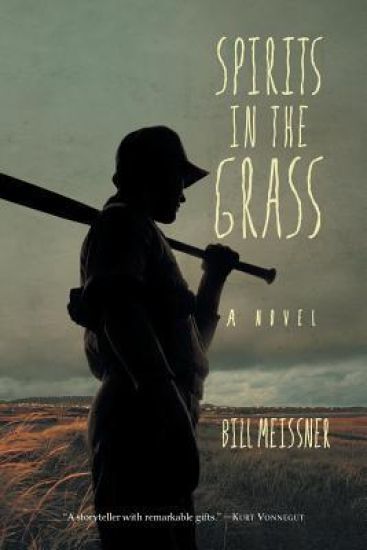
Spirits in the Grass

Spirits in the Grass

Bill Meissner

University of Notre Dame Press
2008
nidottu
When Bill Meissner's collection of short stories Hitting into the Wind was published in 1994, it was called "a quiet masterpiece of baseball writing" by the Greensboro, North Carolina, News and Record. The Seattle Post-Intelligencer said, "Bill Meissner captures baseball with all its crystalline beauty—the remarkable reverberation of time and space and character." And The New York Times Book Review said, "Just about every tale here recalls those precious years when a chance to play in the majors was all a boy could ask from life." Now, in his first novel, Bill Meissner again uses baseball as a window to his characters. In Spirits in the Grass, we meet Luke Tanner, a thirty-something ball player helping to build a new baseball field in his beloved hometown of Clearwater, Wisconsin. Luke looks forward to trying out for the local amateur team as soon as possible. His chance discovery of a small bone fragment on the field sets in motion a series of events and discoveries that will involve his neighbors, local politicians, and the nearby Native American reservation. Luke's life, most of all, will be transformed. His growing obsession with the ball field and what's beneath it threatens his still fragile relationship with his partner, Louise, and challenges Luke's assumptions about everyone, especially himself. Spirits in the Grass rings true with small-town Midwestern values. The characters, including Luke's independent partner Louise, grapple with their passion and their identities. In this beautiful and haunting novel, baseball serves as a metaphor for life itself, with its losses and defeats, its glories and triumphs.
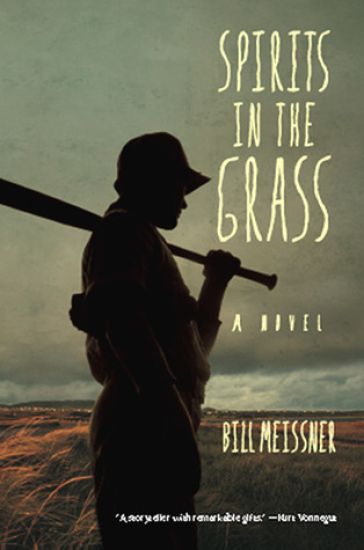
Spirits in the Grass

Spirits in the Grass

Bill Meissner

University of Notre Dame Press
2008
sidottu
When Bill Meissner's collection of short stories Hitting into the Wind was published in 1994, it was called "a quiet masterpiece of baseball writing" by the Greensboro, North Carolina, News and Record. The Seattle Post-Intelligencer said, "Bill Meissner captures baseball with all its crystalline beauty—the remarkable reverberation of time and space and character." And The New York Times Book Review said, "Just about every tale here recalls those precious years when a chance to play in the majors was all a boy could ask from life." Now, in his first novel, Bill Meissner again uses baseball as a window to his characters. In Spirits in the Grass, we meet Luke Tanner, a thirty-something ball player helping to build a new baseball field in his beloved hometown of Clearwater, Wisconsin. Luke looks forward to trying out for the local amateur team as soon as possible. His chance discovery of a small bone fragment on the field sets in motion a series of events and discoveries that will involve his neighbors, local politicians, and the nearby Native American reservation. Luke's life, most of all, will be transformed. His growing obsession with the ball field and what's beneath it threatens his still fragile relationship with his partner, Louise, and challenges Luke's assumptions about everyone, especially himself. Spirits in the Grass rings true with small-town Midwestern values. The characters, including Luke's independent partner Louise, grapple with their passion and their identities. In this beautiful and haunting novel, baseball serves as a metaphor for life itself, with its losses and defeats, its glories and triumphs.
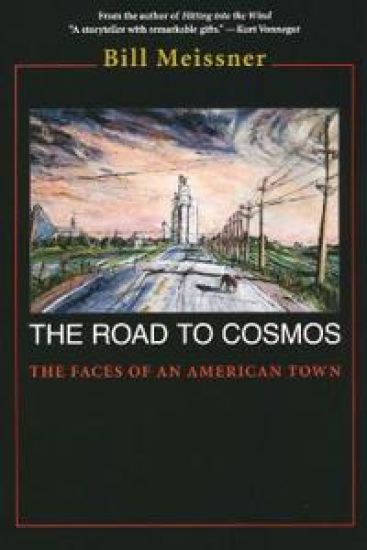
Road to Cosmos

Road to Cosmos

Bill Meissner

University of Notre Dame Press
2006
nidottu
In his second short story collection, Bill Meissner explores the consciousness of Cosmos, U.S.A, a small town that is anything but ordinary. Though it has its share of residents intent on keeping the world on an even keel, Cosmos is blessed with a healthy number of eccentrics who are chasing their dreams, idiosyncratic as they may be, or struggling to distinguish themselves as individuals. We meet Duane, hoping to build a replica of Stonehenge with salvaged cars; Norm, the local weatherman, longing to be the first person to film the inside of a tornado; Elmo, a groundskeeper, seeking perfection on his baseball field; and Dolores—convinced Elvis is still alive—attempting to overcome the pain of her husband's desertion. Threaded through the collection are poignant childhood memories told through the voice of Skip Carrigan, a native son, who left and returned years later. Skip's stories chronicle a sometimes tender, sometimes stormy relationship with his father; through Skip's mature perspective, Meissner artfully comments on the growth and change of America itself during recent decades. The residents of Cosmos orbit the town like planets, some of them pulling away, others moving ever closer to its center. Cosmos, though a small Midwestern town, contains universal characters, each of them struggling to find order, love, and identity amid the chaos of their lives.
American Compass

American Compass

Bill Meissner

University of Notre Dame Press
2004
sidottu
American Compass, Bill Meissner's fourth book of poetry, is a collection that steers the reader on a varied, memorable journey down the American highway. Like the four points of a compass, each of the book's four sections has a distinct direction. "First Corners" features poems about childhood and the realizations of early adulthood. "Breaking Dreams" illuminates the myths and realities of popular American icons, with portraits of James Dean, Thomas Edison, Elvis Presley, and Joe DiMaggio. The baseball poems in "Taking the Curve" become subtle metaphors for the game of life. In the "Soul Highway" poems, the author concludes the book with a series of poignant personal experiences that will leave the reader thinking more deeply about his or her life. American Compass is a personal comment on growing up in America as well as a political comment on the state of American culture, with its heroes and everyday people, its hopes and failures, its winners and losers.
American Compass

American Compass

Bill Meissner

University of Notre Dame Press
2004
nidottu
American Compass, Bill Meissner's fourth book of poetry, is a collection that steers the reader on a varied, memorable journey down the American highway. Like the four points of a compass, each of the book's four sections has a distinct direction. "First Corners" features poems about childhood and the realizations of early adulthood. "Breaking Dreams" illuminates the myths and realities of popular American icons, with portraits of James Dean, Thomas Edison, Elvis Presley, and Joe DiMaggio. The baseball poems in "Taking the Curve" become subtle metaphors for the game of life. In the "Soul Highway" poems, the author concludes the book with a series of poignant personal experiences that will leave the reader thinking more deeply about his or her life. American Compass is a personal comment on growing up in America as well as a political comment on the state of American culture, with its heroes and everyday people, its hopes and failures, its winners and losers.