Kirjojen hintavertailu. Mukana 12 657 676 kirjaa ja 12 kauppaa.

Kirjailija

Bill O'Neal

Kirjat ja teokset yhdessä paikassa: 43 kirjaa, julkaisuja vuosilta 1987-2025, suosituimpien joukossa Frontier Forts of Texas. Vertaile teosten hintoja ja tarkista saatavuus suomalaisista kirjakaupoista.

43 kirjaa

Kirjojen julkaisuhaarukka 1987-2025.

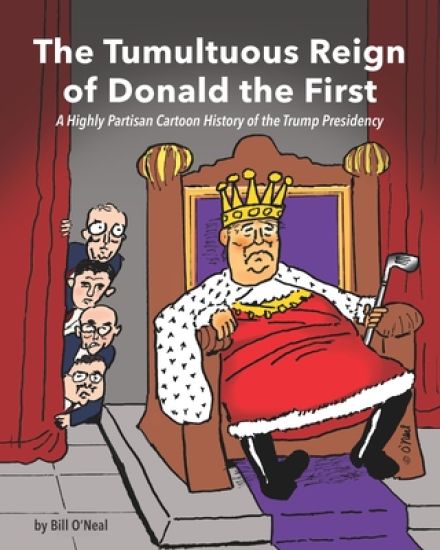
The Tumultuous Reign of Donald the First: A Highly Partisan Cartoon History of the Trump Presidency
This sardonic cartoon history chronicles the presidency of Donald Trump, from his first inaugural tweets to his bizarre final days in office. Trump's many personas are on full display, including Trumpzilla, Tariffman, World's Greatest Diplomat and, of course, King Donald the First. Each of the book's 150 cartoons is accompanied by a commentary providing historical context. The cartoons, in turn, provide the political bite.
Billy and Olive Dixon

Billy and Olive Dixon

Bill O'Neal

Eakin Press
2019
pokkari
Billy Dixon triggered the most celebrated shot in the history of the West at the Battle of Adobe Walls in 1874. A few months later, while serving as an army scout, Billy earned a Medal of Honor during an even more desperate engagement, as one of six men battling for their lives against a band of 125 warriors at the Buffalo Wallow Fight. Both of these actions took place in the Texas Panhandle, where Dixon became an icon of heroism.Billy ran away to the West during boyhood, eagerly seeking adventure on the frontier. He worked as a woodchopper, a trapper, a bullwhacker and a muleskinner. Dixon became a buffalo hunter, displaying exceptional skills as a sharpshooter. After almost a decade as an army scout, Dixon returned to Adobe Walls to establish a bachelor home on the sparsely-settled plains.A fellow adventure-seeker, Olive King, came to the Panhandle from back East to visit her cowboy brothers. She became a frontier schoolmarm and she met her famous neighbor, Billy Dixon. Billy and Olive fell in love, married, and had eight children. Olive persuaded Billy to dictate his memoirs to her, and the result was a classic frontier biography, Life of "Billy" Dixon: Plainsman, Scout and Pioneer. During a long widowhood Olive Dixon became a major force in Panhandle history, helping to establish the Panhandle-Plains Museum, writing and speaking about her own pioneer experiences as well as Billy's, and erecting impressive monuments at Adobe Walls and at Buffalo Wallow.
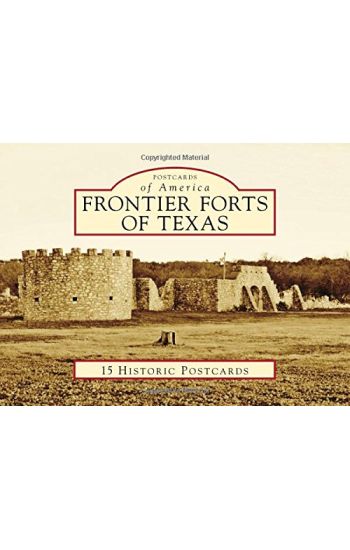
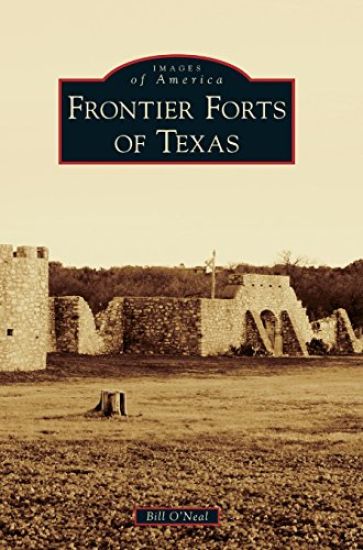
Frontier Forts of Texas

Frontier Forts of Texas

Bill O'Neal

Arcadia Publishing (SC)
2018
irtolehti
These mailable vintage-photograph postcards document the frontier period in Texas, where more combat events transpired between Native American warriors and Anglo soldiers and settlers than any other state or territory. The US Army, therefore, erected more military outposts in Texas, a tradition begun by Spanish soldados and their presidios. Settlers built blockhouses and even stockades, the most famous of which was Parker's Fort, the site of an infamous massacre in 1836. Successive north to south lines of Army forts attempted to screen westward-moving settlers from war parties, while border posts stretched along the Rio Grande from Fort Brown on the Gulf of Mexico to Fort Bliss at El Paso del Norte. Texas was the site of the first US Cavalry regiment employed against horseback warriors, as well as the experimental US Camel Corps. From Robert E. Lee to Albert Sidney Johnston to Ranald Mackenzie, the Army's finest officers served out of Texas forts, and 61 Medals of Honor were earned by soldiers campaigning in the Lone Star State.
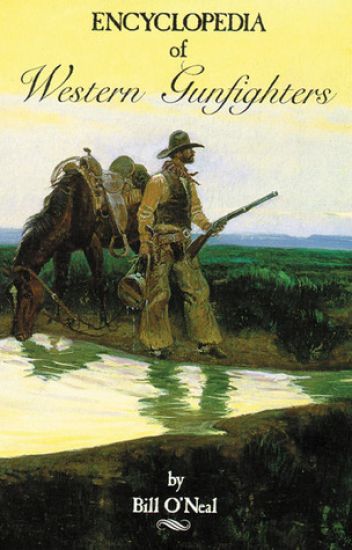
Encyclopedia of Western Gunfighters

Encyclopedia of Western Gunfighters

Bill O'Neal

University of Oklahoma Press
1991
nidottu
Much information (some of it factual, a lot of it fictional) is available about the famous gunfighters of the Old West - the Jameses, Billy the Kid, Wild Bill Hickok, Wyatt Earp, John Wesley Hardin, and that latter-day folk idol, Butch Cassidy. Dozens of less-well-known but sometimes even more murderous gunslingers - such men as Cullen Baker, Harvey Logan, Longhaired Jim Courtright, and Mysterious Dave Mather - have received only scant mention in scattered accounts.This encyclopedia - a who's who of the gunfighting West-provides a compilation of facts, sifted myths, folklore, and outright lies, about the lives and deaths of 255 men, both the famous and the all but forgotten. Also included are detailed accounts of the almost six hundred gunfights the men took part in, mostly between the end of the Civil War and the turn of the century.Each entry follows a concise and useful format: an alphabetical listing of the gunman; nicknames or aliases; dates and places of birth and death, is known; the occupations the man pursued; a brief biography; and, in chronological order, accounts of the verified gunfights in which he participated. In the Introduction, from the information he amassed in this volume, Bill O'Neal provides a fascinating summary of the data and offers new insights into the nature of the western gunmen and of the feuds and fights that bloodied the West. For example, he relates how a large number of the gunfighters used guns as tools of their trades, legitimate and otherwise - lawmen and detectives, buffalo hunters, army scouts, thieves, hired killers, and the like. Of the gunfighters included here 108 served as law officers at some time in their careers. The average lifespan, including those who died of natural causes, was forty-seven years, and more than 50 percent of the gunmen died from gunshot wounds.Encyclopedia of Western Gunfighters offers a unique compilation of information about these men - a comprehensive and reliable source.
Miles City

Miles City

Bill O'Neal

Eakin Press
2025
pokkari
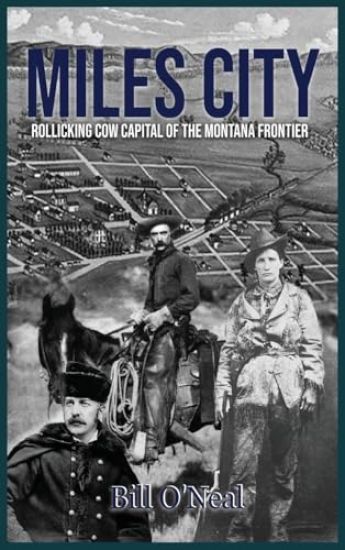
During its heyday as a cattle town, Miles City called itself the "Cow Capital of the World." Later, after adjacent Fort Keogh was converted to an army remount depot, Miles City proudly shared its identity: "This is Uncle Sam's horse ranch. The employees are all civilians, and the wranglers are cowpunchers and expert riders." Later still, a wild method of gathering and selling horses off the range produced the most recognized nickname of all: "The World Famous Miles City Bucking Horse Sale." In 1884 the Montana Stockgrowers Association was organized in Miles City, which hosted the event for thirty-four years. Stock thieves plagued open range ranchers, and young Theodore Roosevelt impulsively called for "a war against rustlers." But pioneer Montana cattleman Granville Stuart already was quietly organizing deadly retaliation, and soon his fourteen "Stuart's Stranglers" killed nineteen rustlers in the countryside. Fort Keogh at its height boasted a garrison and civilian employees totaling nearly 1,000 men. Every night the troopers caroused at the saloons and parlor houses of Miles City. There were frequent brawls involving fists and boots, but deadly encounters were rare. There was one fatal shooting, one throat-cutting, and one lynching. Otherwise, troopers and civilians enjoyed hard-drinking fun. Fort Keogh became known as a party post, complete with balls and parties for officers and ladies - including a memorable evening with John Philip Sousa and his US Marine Band. Meanwhile, Miles City became famous as a good time town, with street dances and frequent parades. Miles City remains a fun-loving town today, with the "World Famous Miles City Bucking Horse Sale" still its most famous event. The Range Riders Museum displays a wealth of artifacts from the Wild West days, and throughout the town venerable buildings prove that historic architecture is our most tangible reminder of the past. Miles City still is a Western town for cowboys and cowgirls.
John S. "Rip" Ford

John S. "Rip" Ford

Bill O'Neal

Eakin Press
2023
pokkari
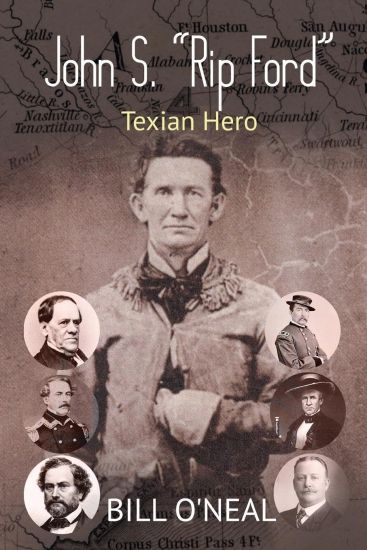
Rip Ford was a bold, fearless combat leader, an expert pistoleer, and a master tactician who led hard-hitting cavalry charges against foes with far greater numbers. Ford was a ferocious warrior against the enemies of his beloved Texas, and from his first arrival in the Lone Star Republic, he volunteered eagerly for militia companies. During the Mexican War, he battled his way through the jungles and mountains of Mexico as a regimented adjutant alongside fellow Texians. During the 1850s, Rip Ford was called upon to lead Rangers in defense of frontier Texas. Usually, he campaigned against raiders and stock thieves along the Rio Grande, but in 1858, he planned and executed a dangerous attack north into Comancheria against horseback war parties. Ford defended the Rio Grande and its valuable cotton trade during the Civil War. He formed a rugged regiment known as the Cavalry of the West, and he led his men to a Confederate victory in the final battle of the Civil War - one month after Lee's surrender. But Old Rip did not confine himself to soldiering. He was a man of many parts, a Renaissance man of early Texas. He came to Texas from Tennessee as a young physician. He read for the law in San Augustine and learned the surveyor's trade. He became a journalist, sharing his strong views as the owner-editor of several Texas newspapers. He was elected to the State of Texas's legislative bodies and the Lone Star Republic. He was mayor of Austin and of Brownsville. He served as the innovative superintendent of the Texas Asylum for the Deaf and Dumb. Ford wrote a lengthy account of nineteenth-century Texas history, and he was a founding member of the Texas State Historical Association. But this giant of a Texian (a term he embraced) is increasingly overlooked in the twenty-first century. Hopefully, the readers of this book will become better acquainted with an adventurous, heroic Texian.
John S. "Rip" Ford

John S. "Rip" Ford

Bill O'Neal

Eakin Press
2023
sidottu
Rip Ford was a bold, fearless combat leader, an expert pistoleer, and a master tactician who led hard-hitting cavalry charges against foes with far greater numbers. Ford was a ferocious warrior against the enemies of his beloved Texas, and from his first arrival in the Lone Star Republic, he volunteered eagerly for militia companies. During the Mexican War, he battled his way through the jungles and mountains of Mexico as a regimented adjutant alongside fellow Texians. During the 1850s, Rip Ford was called upon to lead Rangers in defense of frontier Texas. Usually, he campaigned against raiders and stock thieves along the Rio Grande, but in 1858, he planned and executed a dangerous attack north into Comancheria against horseback war parties. Ford defended the Rio Grande and its valuable cotton trade during the Civil War. He formed a rugged regiment known as the Cavalry of the West, and he led his men to a Confederate victory in the final battle of the Civil War - one month after Lee's surrender. But Old Rip did not confine himself to soldiering. He was a man of many parts, a Renaissance man of early Texas. He came to Texas from Tennessee as a young physician. He read for the law in San Augustine and learned the surveyor's trade. He became a journalist, sharing his strong views as the owner-editor of several Texas newspapers. He was elected to the State of Texas's legislative bodies and the Lone Star Republic. He was mayor of Austin and of Brownsville. He served as the innovative superintendent of the Texas Asylum for the Deaf and Dumb. Ford wrote a lengthy account of nineteenth-century Texas history, and he was a founding member of the Texas State Historical Association. But this giant of a Texian (a term he embraced) is increasingly overlooked in the twenty-first century. Hopefully, the readers of this book will become better acquainted with an adventurous, heroic Texian.Eakin Press is honored to have John S. "Rip" Ford - Texian Hero, accepted into the Texas Ranger Hall of Fame and Museum's Texas Ranger Bicentennial(TM) Publications Program. For more information, visit www.TexasRanger.org.
Texas Country Music Hall of Fame

Texas Country Music Hall of Fame

Bill O'Neal; Tommie Ritter Smith

Eakin Press
2022
sidottu
When it comes to music, Texas has a rich history, but especially in the world of country music. The genre was born out of the trials and tribulations of the working man and includes a number of influences that include the blues, Southern gospel, folk music, western and more. Many of the biggest names in the genre have hailed from the Lone Star State including the likes of Willie Nelson, Jim Reeves, George Jones and Tanya Tucker, just to name a few of the many icons.The Texas Country Music Hall of Fame came about due to the hard work and visionary thinking of the folks in Carthage, Texas, which is where the Hall of Fame is located. Carthage and Panola County is the hometown of several county music stars including Tex Ritter, Jim Reeves and Linda Davis. The effort to establish the Texas Country Music Hall of Fame was initiated in 1998 to celebrate the contributions of Texans to the country music profession. The project highlights those individuals, living or dead, who are recognized nationally as outstanding in their field. The museum has grown into a multi-million-dollar, state of the art facility that allows visitors to celebrate and explore the rich and vibrant history of country music.
The Texas Country Music Hall of Fame

The Texas Country Music Hall of Fame

Bill O'Neal; Tommie Ritter Smith

Eakin Press
2022
nidottu
When it comes to music, Texas has a rich history, but especially in the world of country music. The genre was born out of the trials and tribulations of the working man and includes a number of influences that include the blues, Southern gospel, folk music, western and more. Many of the biggest names in the genre have hailed from the Lone Star State including the likes of Willie Nelson, Jim Reeves, George Jones and Tanya Tucker, just to name a few of the many icons.The Texas Country Music Hall of Fame came about due to the hard work and visionary thinking of the folks in Carthage, Texas, which is where the Hall of Fame is located. Carthage and Panola County is the hometown of several county music stars including Tex Ritter, Jim Reeves and Linda Davis. The effort to establish the Texas Country Music Hall of Fame was initiated in 1998 to celebrate the contributions of Texans to the country music profession. The project highlights those individuals, living or dead, who are recognized nationally as outstanding in their field. The museum has grown into a multi-million-dollar, state of the art facility that allows visitors to celebrate and explore the rich and vibrant history of country music.
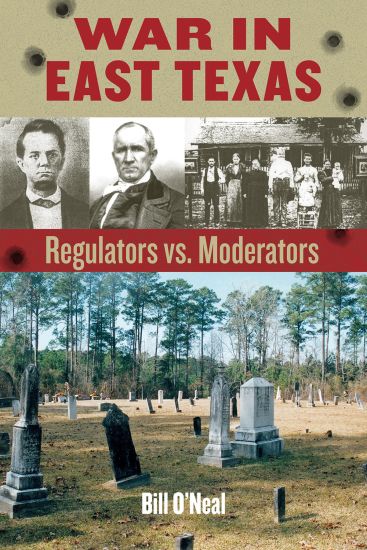
War in East Texas

War in East Texas

Bill O'Neal

University of North Texas Press,U.S.
2018
nidottu
From 1840 through 1844 East Texas was wracked by murderous violence between Regulator and Moderator factions. More than thirty men were killed in assassinations, lynchings, ambushes, street fights, and pitched battles. The sheriff of Harrison County was murdered, and so was the founder of Marshall, as well as a former district judge. Senator Robert Potter, a signer of the Texas Declaration of Independence, was slain by Regulators near his Caddo Lake home. Courts ceased to operate and anarchy reigned in Shelby County, Panola District, and Harrison County. Only the personal intervention of President Sam Houston and an invasion of the militia of the Republic of Texas halted the bloodletting.The Regulator-Moderator War was the first and largest of the many blood feuds of Texas. Bill O'Neal includes rosters of names of the Regulator and Moderator factions arranged by the counties in which the individuals were associated, along with a roster of the victims of the war.
The Pacific Coast League 1903-1988

The Pacific Coast League 1903-1988

Bill O'Neal

Eakin Press
2018
pokkari
The Pacific Coast League is one of the oldest baseball leagues and has a rich and colorful history. Bill O'Neal's exhaustive research brings back forgotten players and moments in history. The list of players that came up through the ranks of the Pacific League and found fame in the majors reads like a who's who in baseball. Joe DiMaggio. Ted Williams and Gaylord Perry are just a few of the many Pacific League players whose careers led to their induction into the National Baseball Hall of Fame.O'Neal brings a unique perspective that includes his experiences as a coach, writer, and historian. From the birth of the league in 1903, through the Great Depression and into the modern era, O'Neal tells the stories of the players and the teams. Some failed, some prospered, but all are remembered in The Pacific Coast League 1903-1988.
John Chisum

John Chisum

Bill O'Neal

Eakin Press
2018
pokkari
John Chisum was a legendary figure of the Old West cattle frontier. At thirteen he migrated with his family from Tennessee to the Republic of Texas. During the 1850s Chisum recognized opportunity in the fledgling range cattle industry, and within a few years his herds numbered in the tens of thousands. Chisum soon owned more cattle than any other individual in America, and his Jinglebob herds were the only cattle in the West known by an earmark rather than by a famous brand.Chisum was a true pioneer, seeking open range grass farther and farther and still farther to the west. During three decades on a succession of frontier ranches, Chisum endured Indian raids, stock thievery, drought, financial reverses, and the murderous Lincoln County War. Chisum had courage, a taste for adventure, a shrewd head for business, and he confidently operated his risky frontier profession on an enormous scale.His last ranch was the biggest, stretching for 200 miles along the Pecos River and grazing as many as 80,000 head of Jinglebob cattle. He built a headquarters complex worthy of a cattle king, relishing the role of host to one and all. After thirty spectacular years as a western rancher, Chisum died at sixty, just as his beloved open range was being enclosed by barbed wire. But he was known throughout cow country as the "Jinglebob King," the "Cattle King of the Pecos," and the "Cattle King of the West."
Frontier Forts of Texas

Frontier Forts of Texas

Bill O'Neal

Arcadia Publishing Library Editions
2018
sidottu
These mailable vintage-photograph postcards document the frontier period in Texas, where more combat events transpired between Native American warriors and Anglo soldiers and settlers than any other state or territory. The US Army, therefore, erected more military outposts in Texas, a tradition begun by Spanish soldados and their presidios. Settlers built blockhouses and even stockades, the most famous of which was Parker's Fort, the site of an infamous massacre in 1836. Successive north to south lines of Army forts attempted to screen westward-moving settlers from war parties, while border posts stretched along the Rio Grande from Fort Brown on the Gulf of Mexico to Fort Bliss at El Paso del Norte. Texas was the site of the first US Cavalry regiment employed against horseback warriors, as well as the experimental US Camel Corps. From Robert E. Lee to Albert Sidney Johnston to Ranald Mackenzie, the Army's finest officers served out of Texas forts, and 61 Medals of Honor were earned by soldiers campaigning in the Lone Star State.