Kirjojen hintavertailu. Mukana 12 595 353 kirjaa ja 12 kauppaa.

Kirjailija

Bill Ransom

Kirjat ja teokset yhdessä paikassa: 15 kirjaa, julkaisuja vuosilta 2001-2019, suosituimpien joukossa Jaguar. Vertaile teosten hintoja ja tarkista saatavuus suomalaisista kirjakaupoista.

15 kirjaa

Kirjojen julkaisuhaarukka 2001-2019.

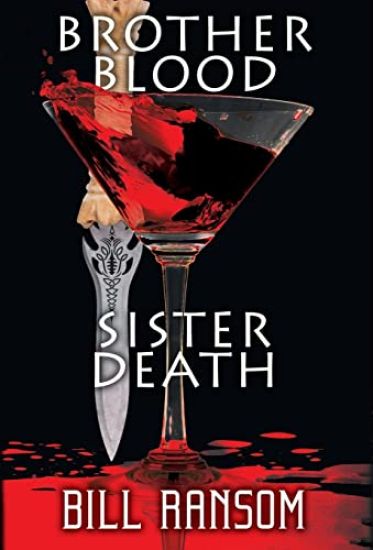
Brother Blood Sister Death

Brother Blood Sister Death

Bill Ransom

Wordfire Press
2019
sidottu
Hybrid vampires Daniel and Diana feel technology's cold, uncountable tendrils hunting them. Daniel scientifically satisfies his needs. Diana, his twin sister, hunts in the old-school way, leaving patches of greasy, scorched earth or mutilated bodies for her brother to take care of.Daniel created Matrix, a face pack for beauty shops, which pulls blood through skin, leaves blissful clients, kills and alerts no one. He prefers milking to butchering. Daniel cultivates his human side; Diana mocks him. Impatient, she hunts out of spite as much as need.Daniel finally understands that his twin sister will get him killed, and his life's hardest decision is at hand: To milk? Or to butcher?
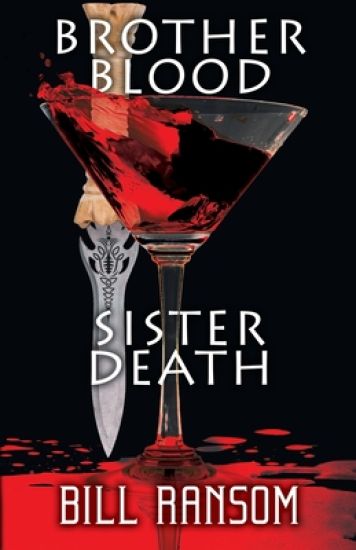
Brother Blood Sister Death

Brother Blood Sister Death

Bill Ransom

Wordfire Press
2019
pokkari
Twin hybrid vampires Daniel and Diana feel technology's cold, uncountable tendrils hunting them. Sergeant Tom Aldrich hunts missing persons. Tom's girlfriend, Marie, owns a beauty shop whose clients, and Marie, become Daniel's lab rats. Diana considers them, and Marie's son James, fair prey.
The Lazarus Effect

The Lazarus Effect

Frank Herbert; Bill Ransom

WordFire Press
2015
sidottu
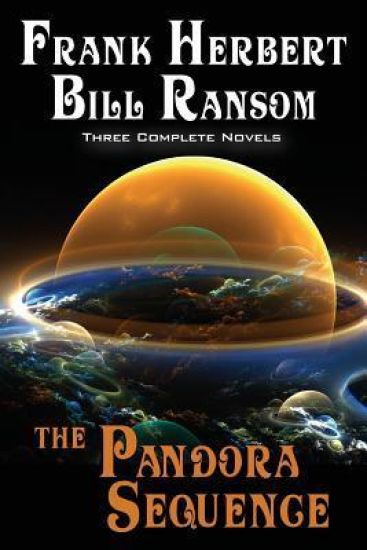
In The Jesus Incident Herbert and Ransom introduced Ship, an artificial intelligence that believed it was God, abandoning its unworthy human cargo on the all-sea world of Pandora. Now centuries have passed. The descendants of humanity, split into Mermen and Islanders, must reunite ... because Pandora's original owner is returning to life Book 2 in Herbert & Ransom's Pandora Sequence.
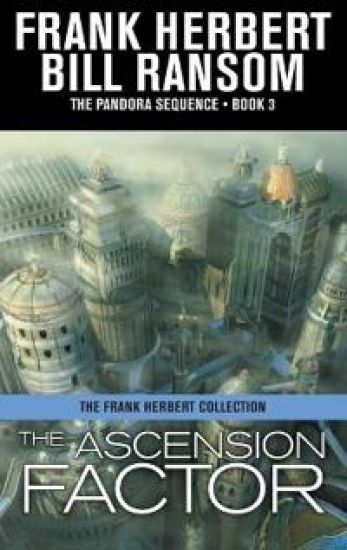
The Ascension Factor

The Ascension Factor

Frank Herbert; Bill Ransom

WordFire Press
2015
sidottu
Pandora's humans have been recovering land from its raging seas at an accelerated pace since The Lazarus Effect. The great kelp of the seas, sentient but electronically manipulated by humans, buffers Pandora's wild currents to restore land and facilitate the booming sea trade. New settlements rise overnight, but children starve in their shadows. An orbiting assembly station is near completion of Project Voidship, which is the hope of many for finding a better world. Pandora is under the fist of an ambitious clone from hibernation called The Director, who rules with a sadistic security force led by the assassin Spider Nevi. Small resistance groups, like the one led by Twisp Queets and Ben Ozette, have had little effect on his absolute power. The Director controls the transportation of foodstuffs; uprisings are punished with starvation. The resistance fighters' main hope is Crista Galli, a woman believed by some to be the child of God. Crista pools her talents with Dwarf MacIntosh, Beatriz Tatoosh, and Rico LaPush to transcend the barriers between the different species and overthrow The Director and the sinister cabal with which he rules. Book 3 in Herbert & Ransom's Pandora Sequence.
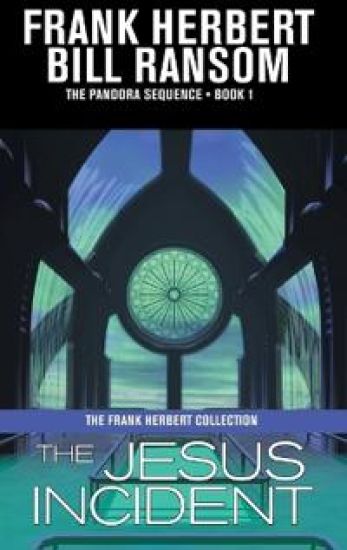
The Jesus Incident

The Jesus Incident

Frank Herbert; Bill Ransom

WordFire Press
2014
sidottu
The Jesus incident by Frank Herbert & Bill Ransom: A sentient Ship with godlike powers (and aspirations) delivers the last survivors of humanity to a horrific, poisonous planet, Pandora-rife with deadly Nerve-Runners, Hooded Dashers, airborne jellyfish, and intelligent kelp. Chaplain/Psychiatrist Raja Lon Flattery is brought back out of hybernation to witness Ship's machinations as well as the schemes of human scientists manipulating the genetic structure of humanity. Sequel to Frank Herbert's Destination: Void. Book 1 in Herbert & Ransom's Pandora Sequence.
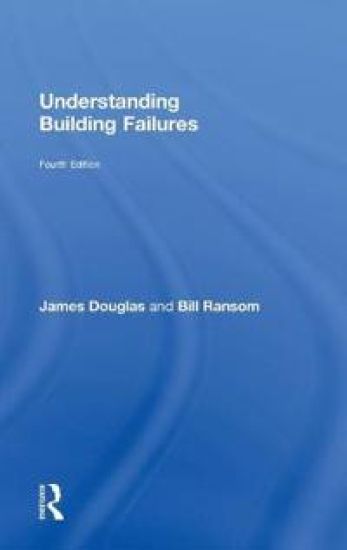
Understanding Building Failures

Understanding Building Failures

James Douglas; Bill Ransom

Routledge
2013
nidottu
Building defects still continue to plague the construction industry. The lessons learned over the last forty years have not been fully applied. Many new or refurbished buildings still leak or crack. Lack of awareness by designers and installers as to the main mechanisms that trigger such failures remains a problem for the industry.Investigating and rectifying building failures form a major part of building surveyors’ bread and butter work. This book provides guidance on this work for typical residential, commercial and industrial buildings – with advice on how to diagnose a wide range of defects with an emphasis on evidence based practice throughout. It considers both modern and older construction methods, together with new and traditional materials. The particular problems of alteration and renovation work are also discussed.The first four chapters provide information and guidance on the methodology for investigating failures – how to prepare for and conduct an investigation into a building defect and subsequently diagnose its cause in a logical manner.This fourth edition has been updated and expanded to cover the latest diagnostic procedures and research. It also includes Appendices and a new Bibliography, and provides an extensive list of books on building pathology and related topics in the UK and North America. It is essential reading for all students and practitioners interested in building surveying and building conservation.
Understanding Building Failures

Understanding Building Failures

James Douglas; Bill Ransom

Routledge
2013
sidottu
Building defects still continue to plague the construction industry. The lessons learned over the last forty years have not been fully applied. Many new or refurbished buildings still leak or crack. Lack of awareness by designers and installers as to the main mechanisms that trigger such failures remains a problem for the industry.Investigating and rectifying building failures form a major part of building surveyors’ bread and butter work. This book provides guidance on this work for typical residential, commercial and industrial buildings – with advice on how to diagnose a wide range of defects with an emphasis on evidence based practice throughout. It considers both modern and older construction methods, together with new and traditional materials. The particular problems of alteration and renovation work are also discussed.The first four chapters provide information and guidance on the methodology for investigating failures – how to prepare for and conduct an investigation into a building defect and subsequently diagnose its cause in a logical manner.This fourth edition has been updated and expanded to cover the latest diagnostic procedures and research. It also includes Appendices and a new Bibliography, and provides an extensive list of books on building pathology and related topics in the UK and North America. It is essential reading for all students and practitioners interested in building surveying and building conservation.