

Kirjailija
Bill Reed
Kirjat ja teokset yhdessä paikassa: 51 kirjaa, julkaisuja vuosilta 2006-2026, suosituimpien joukossa The Leonard Reed Story. Vertaile teosten hintoja ja tarkista saatavuus suomalaisista kirjakaupoista.
51 kirjaa
Kirjojen julkaisuhaarukka 2006-2026.

We cannot blame Charles Dickens for not meeting our national treasure Philip P. Pirip, but: go blame yr rottern Fate; whos flushs beat yr faces straights It could be said, though, Dickens did lend his major characters to Philip P. Pirip, although 'lend' might not be the best word; rather freedom opened the door to its wide-open spaces to allow them to escape and give vent to their grievances with their famous author, seeing as to how he never once mentioned the fabulous Surnevv diamonds that they once had their hands on and now wanted back at whatever cost to literature. Eye-opening royalties might have been Charles Dickens's lot but the diamonds were the only avenue for riches beyond creative writing for Miss Haversham, Estella, Mister Jaggers, Compeyson, Orlick, Biddy and a cast of naked 'actrusses' who now demanded their jewel dues and were willing to kill for them. That escape fell to them after 'Great Expectations' found its way onto one of the heaps in the rubbish tip that was beloved of Pirip and in fact the location of his Tiphome, a dump in itself. From that fact, it was only a short fictional distance for the Dickens's characters to land on Pirip's lap with a vengeance. They came to lap but I stukk out tongue, 'take thapt' How our poetic national treasure struggles with these become-villains might not be in any history books but, in universal artistic circles, it set the standard for the license to cull.

Ihe the wolfman must search for the last remaining Tasmanian Wolf he just knows has to be hiding from the human hunter somewhere in Australia and the world. But, always, the human pot shots or their four-by-fours keep coming. Yet the wolfman and his archly human rival will chase each other down long after Extinction has shot its bolt.


Ed: following is the Thomas-Nelson-Australia's 1977 blurb for the original edition, but here annotated, in italics, by the author for this reprint.'Bill Reed's first novel is a celebration of the Australian language. 'Dogod' employs a language that uses our sounds, our national images, our landscapes and our slang to examine our rhythms and forms of speech. Leading back through the images-as-words of Joyce, Carroll, Thackeray and Shakespeare...'(I thought I was the one making with the jokes here?)'... here is a lament for the human condition as it is affected in modern times.'(I lamented a bit over the manuscript too. All I know was it was a neat pile of typescript pages but next morning it had paws marks all over it.)'As a bone to a dog, so are we as toys to the gods. Hence Dog-god - a chaotic deity tossing and pouncing with bestial delight on His/Its favourite human plaything, Jelf. A walking disaster area, Jelf hardly needs Dogod's assistance to attract the natural and unnatural contempt of his associates as he lurches on his apocalyptic journey...'( 'apocalyptic' is first-class; with his allotted dog pass, Jelf travels Economy)'... through Australia's visible and invisible landscapes.'''Dogod' is both funny and profound. It is an examination of the comic-tragedy that is within each of us, and within our society. Its wit, its humour and its deeper purposes are brilliantly sustained. Its challenge is for you the reader.'(At least putting reader, singular, was spot on.)(NB: Also, there's nothing about the plot here. I remember distinctly that there was one - as in Jelf chasing Alyce chasing Quilty chasing Henry chasing a whole host of others or vice versa, while the Australian dream - really doggedly -- chases them all and keeps spoiling the plot like the real hound it is.)---------About the authorBill Reed is a playwright, novelist and short-story wroughtist. He dangles, shaken, hanging from the pelt.

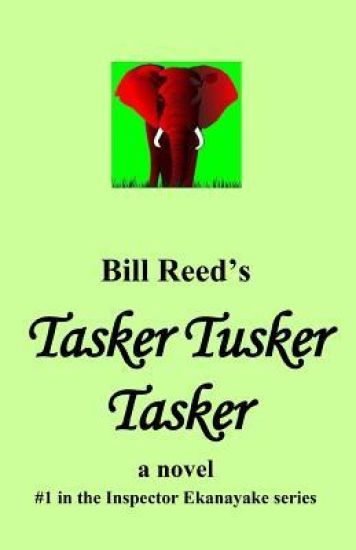
"This secretive load I have shuffled around with..."----------John Tasker is a divided, but enjoined, man. Physically he is running from the law while hunting down his own father, just as his father used to track down the wild tuskers in Sri Lanka. At the same time, mentally, he is tracking down his murderous brother's enemies, imaginably or not, with a deadly efficiency.Adding to his confusion is how his indolent lawyer's job in the Attorney-General's Department has itself suddenly become fraught with danger for his own personal safety. The resultant clash that erupts between his fervently-adopted Australia and his fervently-rejected Sri Lanka isn't helping the mental chaos he is thrown into on an otherwise perfectly-acceptable day.One trouble is his state of being so enjoined. Through his own mind's-eye he sees how his own milieu has been drawing him inevitably towards the cliff's edge. Also through his-and-his-brother's mind's-eye he sees too much of the terrorizing worldwide Tamil organizations, and from a close-up much too gory. And through his-and-his-father's mind's-eye he sees no good nurture purpose to his existence, except the sighing and dying and the leavings from him.He can see how it's all so willfully like his father's wild snared tuskers endeavouring to escape, trying to drag the lines dragging the antler'd sambhur's skulls through the hopelessly impossible bush. On top of all this, he has the living scaffold of the Sri Lankan Inspector Ekanayake now-and-ever looming over him. The Inspector doesn't care a hoot about any mind's-eye or mind's-eyes, 'bloody ****ing hell sorry'. He only cares for the hunt's conclusion, and how John Tasker should know it.What is the Inspector doing in Canberra and asking so many pointed questions? What might he know about the shadowy and murderous Tasker twin brother with, apparently, the justified alias of Tusker? All John Tasker can now see is how his world and the manic world of his fearsome brother are being forced to converge so suddenly and so bizarrely.
They were the first to cross the Asian land bridge. Then they were the first to cross the land bridge to Tasmania. There, they stayed isolate for upwards of 6000 years. By the time the colonists started to drop their anchors in the Derwent, they were some 10,000 strong... perhaps as many as 20,000 people.A shockingly mere 20 years later their number was below any hope of avoiding extinction. Overall, as a distinct race of people they were brutalized out of existence. They were the pure-blood Tasmanian Aborigines. The last of their number they called Truganinni. The last male they called King Billy. They joked of them being royalty. After 1876, when Truganinni died, there was no joke left. On her people's annihilation, a shameful silence strangely descended and has thickened even until today. It is a silenceE that doesn't seem to need to speak out.

W We cannot blame Charles Dickens for not meeting our national Arts treasure Philip P. Pirip, but: go blame yr rottern Fate; whos flushs beat yr faces straights It could be said, though, Dickens did lend his major characters to Philip P. Pirip, although 'lend' might not be the best word; rather freedom opened the door to its wide-open spaces to allow them to escape and give vent to their grievances with their famous author, seeing as to how he never once mentioned the fabulous Surnevv diamonds that they once had their hands on and now wanted back at whatever cost to literature. Fabulous royalties might have been Charles Dickens's lot but the diamonds were the only avenue for riches beyond creative writing for Miss Haversham, Estella, Mister Jaggers, Compeyson, Orlick, Biddy and a whole cast of actors and naked 'actrusses' who now demanded their jewel dues and were willing to kill for them. That escape fell to them after 'Great Expectations' found its way onto one of the heaps in the rubbish tip that was beloved of Pirip and in fact the location of his Tiphome, a dump in itself. From that fact, it was only a short fictional distance for the Dickens's characters to land on Pirip's lap with a vengeance. They came to lap but I stukk out tongue, 'take thapt' How our hero struggles with them might not be in any universal history books but, in artistic circles, it set the standard for the license to cull.------------------------------Bill Reed is an Australian playwright, novelist and short story writer who has won national awards in each of these categories. He has also been the Publisher in three of the country's leading book publishers.
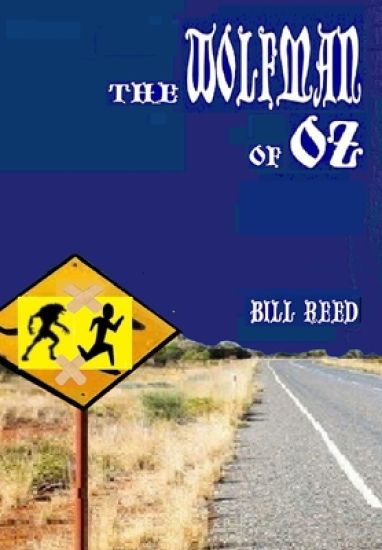
Ihe the wolfman might be a dud, but he must search for the last remaining Tasmanian Wolf he just knows has to be hiding from the human hunter somewhere in Australia and the world. But, always, the human pot shots or their four-by-fours keep coming. Yet the wolfman and his archly human rival will chase each other down long after Extinction has shot its bolt.Ihe the wolfman might be a dud, but he must search for the last remaining Tasmanian Wolf he just knows has to be hiding from the human hunter somewhere in Australia and the world. But, always, the human pot shots or their four-by-fours keep coming. Yet the wolfman and his archly human rival will chase each other down long after Extinction has shot its bolt.
The Storyteller's Shadows: Live-Acted Shadow Plays for Today
Bill Reed
Reed Independent
2018
nidottu
The live-acted shadow play of today uses live actors to evoke fantasy combined with realism to illustrate a fully-rounded play narrated by a storyteller sitting in full audience view.It is not a puppet show. It does not demand actors contort themselves into amazing shapes like trees of elephants. It is a play-behind that theatrically lies in the unfurrowed field between mime and the theatre we conventionally know today. It has hardly, if ever, been attempted in a full play's setting until now.The modern live-acted shadow play can be seen (at least conceptually) to need two directors working in unison - one to conduct how the shadow play portion of the performance can be welded into an amusing and poetic distillation of the storyteller's tale; the other to take care of the overall dramatic interaction between the storyteller and the shadow play behind him or her.Here are 14 pioneering live-acted shadow plays especially written for wholesale professional stage production, or for 'picking-and-choosing' by workshoppers and educators. Three of them are world classics by Gogol, Morton and Runyon especially adapted by Bill Reed; the others are of his own making. Each contains probably a deliberate over-fullness of shadow-play directions, but only to give the director the widest choice of possibilities to get his shadow play to keep pace with the story, even if it's not really practical to wholly keep up with every narrative twist and turn.What each play has in common are elements of the fantastical and the magical threading through the down-to-earth, a blending that only the shadow play can evoke in any sort of encompassing harmony.In its dynamic interplay of shadow acting and voice, the live-acted shadow play of today almost represents a new form of theatrical genre.


Come unto these yellow sands, And then take hands;Curtsied when you have and kiss'd, The wild waves whist. He was so good at Serious Matters but the trouble was people never took him seriously, let alone kept dying around him. Nor did it help that he was the wrong person in his body, such that the precocious girl-child who claimed to be the better fit kept nagging him while they bobbed along the shipping lanes of the Indian Ocean. He shouldn't have shouted 'Left ' when it should have been 'Right ' to send his Humvee into an Afghani roadside bomb. He shouldn't have left his darling wife and bubba-to-be alone in their Queenslander while he dabbled in giving witness to the whole of Sydney's woes. He should have honoured his Sri Lankan heritage and his becoming-Australian more. He should have popped some pill or whatever to get rid of the Bard. He shouldn't have married himself to the problem of the Australian Aborigines in its sexier form and its sweeter siren songs, only to find there are no words left -- only the shuffle within the dandruff drifts of falling cigarette ash. His Petey-the-clown's plaffy shoes didn't help his image, either. In fact, he wasn't embedded in anything at all. He was merely bobbing along with the washes. And, concerning calm surfaces, very sloppily too. Plus, there were too many snakes in the world.

'Don't let them cut me up Bury me behind the mountains '------------------------Fear, violence and race prejudice are themes with which we are all sadly familiar. Bill Reed's three plays-on-a-theme, based on the life and times of Truganinni -- the supposed last Tasmanian Aborigine and, at the end, so socially visible -- develop these themes based on the dispossession and final degradation of the Tasmanian original people. In her own lifetime, Truganinni lived through the devastating years of her people's decimation and virtually sealed off her own bat the last chapter of the massacre of a unique race of people. She witnessed horrific personal and family-clan tragedy and the raw-boned racial society of the time... the killing diseases, the outright butcheries, the set-squares of despise that literally made her people prefer dying to living under the White colony. Yet Truganinni survived to become one of most recognisable and colourful characters. She came to enjoy her 'Queen-Victorian' walks through the town's streets as much as her daily pot of ale. She was thought to be the last of her race after the reputed last male William Lanne, or King Billy, died an alcoholic and had his body mutilated in the name of science. It was little wonder she had such dread of dying and pleaded not to be carved up too. But it took only a few years before her body was removed from its grave to be displayed in the Hobart Museum alongside the skeletons of 'scientifically-interesting' animals. It took a further 125 years after her death in 1876 for her ashes to be finally scattered upon the waters of her beloved Derwent.


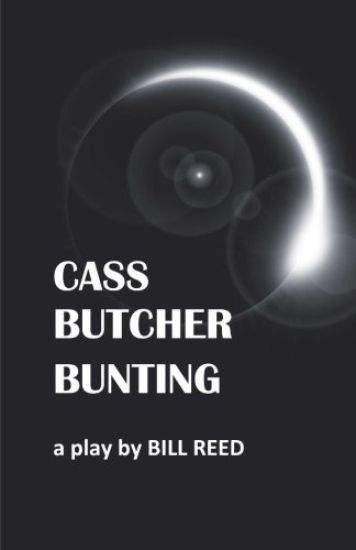
'Cass Butcher Bunting' begins with an explosion and a cave in down a mine shaft. Three miners are trapped there; Cass, the local golden boy, Butcher, the mentally-heavy, stay-at-home product of a small mining community, and Bunting, the old-timer, the 'humpy'.The setting of the action deep in the bowels of the earth places so-called civilised man back in a primordial situation, in a closed-off cave, his only mental and moral buffer lying in having to fall back on his ownself, his own primitiveness -- and where he can only play out his own tragedy as death becomes increasingly inevitable. Man's fundamental inhumanity to man is a major theme explored in this play. The exchanges between Cass and Butcher and their varying reactions to each other can be seen as subtle revelations of aspects of this inhumanity in a situation as extreme as imaginable. Bunting's ravings are reminders that in the modern world this selfsame inhumanity is most often expressed in cruelty. Unarguably it is in the face of this impending end that man, with nothing more to lose, can step out from behind his everyday mask and reveal his needs and his weaknesses, acknowledge and accept his failures. Between the simple social comment suggested by one reviewer as a 'powerful expos of a small community' and the consideration of death ('it's simply about dying') put forward by the playwright lie a number of layers of meaning which the individual member of the audience or reader will find for himself.(Mary Lord, convener, Alexander Playwriting Competition, Monash University)--------------Bill Reed is an award-winning novelist, playwright and short-story writer who lived within the Australian literary and publishing worlds. He now lives outside its gates, mainly in Sri Lanka

This is an introduction to the spicier, kinky side of life. This book explores various kinks in a how to approach them with an emphasis on safety. If you have ever had kinky thoughts or wanted to explore new things in a safe manner, this is a good starting point. Everything is covered from meeting someone for the first time to strap-on play and scene etiquette.
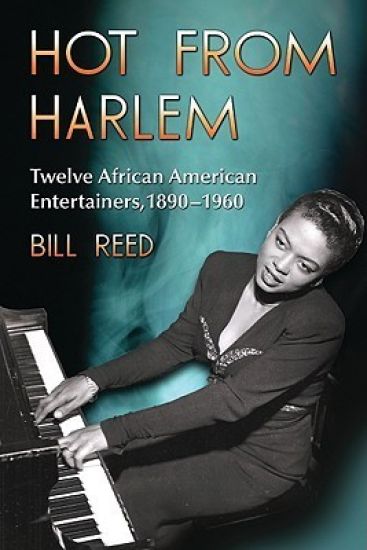
From the early days of minstrelsy to Black Broadway, this book is the story of African American entertainment as seen through the eyes of some of its most famous as well as others of its practitioners. The book moves from the beginning of African American participation in show business up through the present age. Will Marion Cook and Billy McClain are discovered in action at the very dawn of black parity in the entertainment field; six chapters later, the young Sammy Davis, Jr., breaks through the invisible ceiling that has kept those before him "in their place." In between, the likes of Valaida Snow, Nora Holt, Billy Strayhorn, Hazel Scott, Dinah Washington, and others are found making contributions to the fight against racism both in and out of "the business."