

Kirjailija
Bill Schwarz
Kirjat ja teokset yhdessä paikassa: 8 kirjaa, julkaisuja vuosilta 2011-2025, suosituimpien joukossa Conversations with Stuart Hall. Vertaile teosten hintoja ja tarkista saatavuus suomalaisista kirjakaupoista.
8 kirjaa
Kirjojen julkaisuhaarukka 2011-2025.

Restomods: The New World Order of Handcrafted Cars celebrates the thrilling world of super-refined and highly personalised automobile restoration. Fusing classic design with cutting edge technology requires an almost impossible level of imagination, creativity and workmanship, resulting in models that frequently test the technical boundaries of vehicle design and engineering. Restomods collects over 50 companies who are at the forefront of this world, among them Singer, Eagle, Tuthill & Alfaholics. Each of the featured firms has contributed directly to these pages, supplying specifications, quotes and the very highest quality professional photographs. The result is a spectacular volume that showcases the new world order of personalised car restoration. Restomods: The New World Order of Handcrafted Cars is the first volume in the Cars Reimagined series, showcasing the cars and their creators who are pushing motor vehicles to the next level. This slipcased edition is signed, numbered, and limited to 200 copies.
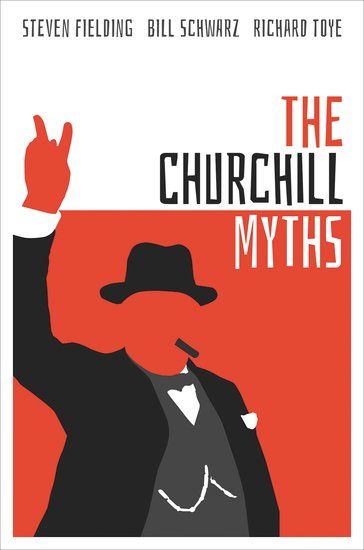
The Churchill Myths
Steven Fielding; Bill Schwarz; Richard Toye
Oxford University Press
2020
sidottu
This is not a book about Winston Churchill. It is not principally about his politics, nor his rhetorical imagination, nor even about the man himself. Instead, it addresses the varied afterlives of the man and the persistent, deeply located compulsion to bring him back from the dead, capturing and explaining the significance of the various Churchill myths to Britain's history and current politics. The authors look at Churchill's portrayal in social memory. They demonstrate the ways in which politicians have often used the idea of Churchill as a means of self-validation - using him to show themselves as tough and honest players. They show the man dramatized in film and television - an onscreen persona that is often the product of a gratuitous mixing of fact and fantasy, one deliberately shaped to meet the preferences of the presumed audience. They discuss his legacy in light of the Brexit debate - showing how public figures on both sides of the Leave/Remain debate were able to use elements of Churchill's words and character to argue for their own point-of-view.

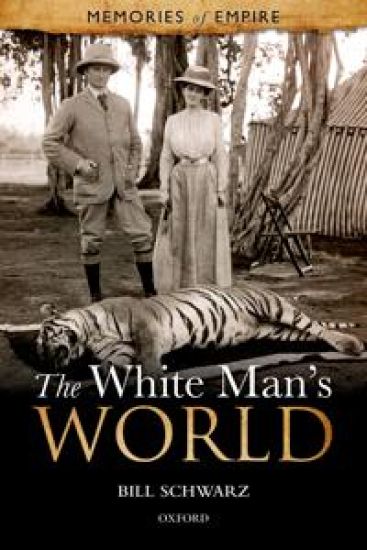
The Memories of Empire trilogy explores the complex and subterranean political currents that emerged in English society during the years of post-war decolonization. Just as the empire ended, when white princesses waltzed with new black heads of state in celebration of independence from colonial rule, the registers of racial whiteness in the home society quickened, and racial segregation - the colour bar - became ever more pronounced. Where are the connections to be located between the racial dimensions of decolonization overseas, and the colonial dimensions of race at home? Working back from the peak of Enoch Powell's influence in 1968-1970, Memories of Empire seeks to illuminate the impact of decolonization on the political life of the old metropole. Decisive in this respect is the question of race, or more particularly the shifting dispositions of racial whiteness. The long colonial ordering of the idea of the white man, and of its various derivatives, constituted a powerful component in the ways that the empire came to be remembered: far from disappearing, the figures of white Englishmen and Englishwomen took on new force in the immediate aftermath of decolonization. The volumes track this story across many different times and spaces: the settler colonies, the Caribbean, in the phenomenon of West Indian migration to England, and the England of Powell and Margaret Thatcher, where these contrary histories did much to shape the political life of a nation. Through the medium of memory, the empire was to continue to possess strange afterlives long after imperial rule itself had vanished.
Memories of Empire is a trilogy which explores the complex, subterranean political currents which emerged in English society during the years of postwar decolonization. Bill Schwarz shows that, through the medium of memory, the empire was to continue to possess strange afterlives long after imperial rule itself had vanished. The White Man's World, the first volume in the trilogy, explores ideas of the white man as they evolved during the time of the British Empire, from the mid-nineteenth century to the mid-twentieth century, looking particularly at the transactions between the colonies and the home society of England. The story works back from the popular response to Enoch Powell's 'Rivers of Blood' speech in 1968, in which identifications with racial whiteness came to be highly charged. Driving this new racial politics, Bill Schwarz proposes, were unappeased memories of Britain's imperial past. The White Man's World surveys the founding of the so-called white colonies, looking in particular at Australia, South Africa, and Rhodesia, and argues that it was in this experience that contemporary meanings of racial whiteness first cohered. These colonial nations - 'white men's countries', as they were popularly known - embodied the conviction that the future of humankind lay in the hands of white men. The systems of thought which underwrote the ideas of the white man, and of the white man's country, worked as a form of ethnic populism, which gave life to the concept of Greater Britain. But if during the Victorian and Edwardian period the empire was largely narrated in heroic terms, in the masculine mode, by the time of decolonization in the 1960s racial whiteness had come to signify defeat and desperation, not only in the colonies but in the metropole too. Identifications with racial whiteness did not disappear in England in the moment of decolonization: they came alive again, fuelled by memories of what whiteness had once represented, recalling the empire as a lost racial utopia.

"This fine collection of essays represents an important contribution to the rediscovery of Baldwin's stature as essayist, novelist, black prophetic political voice, and witness to the Civil Rights era. The title provides an excellent thematic focus. He understood both the necessity, and the impossibility, of being a black 'American' writer. He took these issues 'Beyond'---Paris, Istanbul, various parts of Africa---but this formative experience only returned him to the unresolved dilemmas. He was a fine novelist and a major prophetic political voice. He produced some of the most important essays of the twentieth century and addressed in depth the complexities of the black political movement. His relative invisibility almost lost us one of the most significant voices of his generation. This welcome 'revival' retrieves it. Close call." ---Stuart Hall, Professor Emeritus, Open University This interdisciplinary collection by leading writers in their fields brings together a discussion of the many facets of James Baldwin, both as a writer and as the prophetic conscience of a nation. The core of the volume addresses the shifting, complex relations between Baldwin as an American—“as American as any Texas GI” as he once wryly put it—and his life as an itinerant cosmopolitan. His ambivalent imaginings of America were always mediated by his conception of a world “beyond” America: a world he knew both from his travels and from his voracious reading. He was a man whose instincts were, at every turn, nurtured by America; but who at the same time developed a ferocious critique of American exceptionalism. In seeking to understand how, as an American, he could learn to live with difference—breaking the power of fundamentalisms of all stripes—he opened an urgent, timely debate that is still ours. His America was an idea fired by desire and grief in equal measure. As the authors assembled here argue, to read him now allows us to imagine new possibilities for the future.With contributions by Kevin Birmingham, Douglas Field, Kevin Gaines, Briallen Hopper, Quentin Miller, Vaughn Rasberry, Robert Reid-Pharr, George Shulman, Hortense Spillers, Colm Tóibín, Eleanor W. Traylor, Cheryl A. Wall, and Magdalena Zaborowska.

"This fine collection of essays represents an important contribution to the rediscovery of Baldwin's stature as essayist, novelist, black prophetic political voice, and witness to the Civil Rights era. The title provides an excellent thematic focus. He understood both the necessity, and the impossibility, of being a black 'American' writer. He took these issues 'Beyond'---Paris, Istanbul, various parts of Africa---but this formative experience only returned him to the unresolved dilemmas. He was a fine novelist and a major prophetic political voice. He produced some of the most important essays of the twentieth century and addressed in depth the complexities of the black political movement. His relative invisibility almost lost us one of the most significant voices of his generation. This welcome 'revival' retrieves it. Close call." ---Stuart Hall, Professor Emeritus, Open University This interdisciplinary collection by leading writers in their fields brings together a discussion of the many facets of James Baldwin, both as a writer and as the prophetic conscience of a nation. The core of the volume addresses the shifting, complex relations between Baldwin as an American—“as American as any Texas GI” as he once wryly put it—and his life as an itinerant cosmopolitan. His ambivalent imaginings of America were always mediated by his conception of a world “beyond” America: a world he knew both from his travels and from his voracious reading. He was a man whose instincts were, at every turn, nurtured by America; but who at the same time developed a ferocious critique of American exceptionalism. In seeking to understand how, as an American, he could learn to live with difference—breaking the power of fundamentalisms of all stripes—he opened an urgent, timely debate that is still ours. His America was an idea fired by desire and grief in equal measure. As the authors assembled here argue, to read him now allows us to imagine new possibilities for the future.With contributions by Kevin Birmingham, Douglas Field, Kevin Gaines, Briallen Hopper, Quentin Miller, Vaughn Rasberry, Robert Reid-Pharr, George Shulman, Hortense Spillers, Colm Tóibín, Eleanor W. Traylor, Cheryl A. Wall, and Magdalena Zaborowska.