Kirjojen hintavertailu. Mukana 12 595 353 kirjaa ja 12 kauppaa.

Kirjailija

Bill Wright

Kirjat ja teokset yhdessä paikassa: 11 kirjaa, julkaisuja vuosilta 2005-2026, suosituimpien joukossa Mimi. Vertaile teosten hintoja ja tarkista saatavuus suomalaisista kirjakaupoista.

11 kirjaa

Kirjojen julkaisuhaarukka 2005-2026.

Mimi

Mimi

Bill Wright

Texas Christian University Press
2026
pokkari
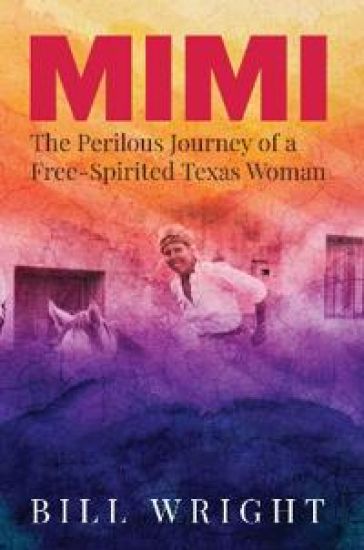
Mimi: The Perilous Journey of a Free-Spirited Texas Woman tells the extraordinary true story of a Texas debutante who lived a life few could imagine. A niece of Texas Senator John Tower, Mimi’s journey takes her from tragedy and privilege to the dangerous heart of the Mexican drug trade. After losing her mother at a young age and surviving a horrific lake accident, Mimi pursued her studies in California before settling in Dallas with her first husband. She earned degrees in art history and ceramics from Southern Methodist University and later made her mark in Houston, organizing a groundbreaking sculpture exhibition that drew national acclaim in the 1970s. A 1976 trip to Big Bend with future governor Ann Richards deepened her love for Far West Texas and led her to purchase a ranch in Mexico near Lajitas, Texas. There, Mimi’s path took a darker turn. Her romances with drug dealers, including the notorious Pablo Acosta Villareal, pulled her into a dangerous world of smuggling and violence. When Acosta was killed in a dramatic shoot-out, Mimi’s own life was at risk. Reinventing herself once again, she fled to California, where she worked as a casting agent before eventually returning to her beloved Terlingua, where she now runs a coffee shop and hotel. A gripping story of reinvention, survival, and resilience, Mimi blends Texas history, border intrigue, and the complexities of a fearless woman’s life. It is both a cautionary tale and a celebration of strength in the face of peril.
Celia Hill's Headin' West

Celia Hill's Headin' West

Celia Hill; Bill Wright; Marianne Wood

Texas Christian University Press
2023
nidottu
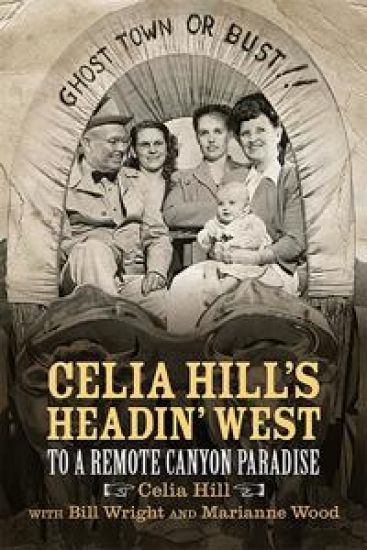
Celia Smith Hill’s journal provides a glimpse of hardscrabble life in far West Texas during the first half of the twentieth century. Hill’s family moved to Texas from Tennessee in the late 1800s. After her death, Bill Wright and Marianne Wood researched the history of the area and interviewed family and friends to provide context for Hill’s colorful tale of endurance in an unforgiving landscape. Hill’s family suffered lean times during the Depression before cinnabar—mercury ore—was discovered on her family’s property. During World War II, the Fresno Mines supplied one tenth of all the mercury produced in the United States. After graduating college, Celia began a peripatetic teaching career that lasted decades, marrying and losing two husbands along the way. Finally, living alone along the most remote western border of Texas, Celia spent her later years selling snacks to the occasional visitor. Bill Wright met Celia at her La Junta General Store in Ruidosa, where she told him about her unfinished journal. With this book Bill fulfills his promise to share her courageous and fascinating life with others.
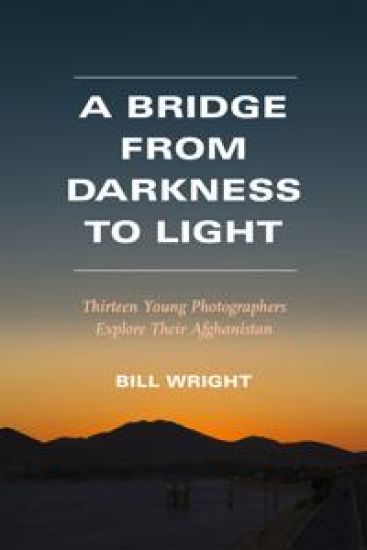
A Bridge from Darkness to Light

A Bridge from Darkness to Light

Bill Wright

Texas Christian University Press,U.S.
2021
pokkari
In 2006, Texas businessman, historian, and photographer Bill Wright was encouraged—though not officially invited—by the US Department of State to teach a class in digital photography to young Afghans in Kabul. The course was sponsored by an Afghan Non-Governmental Organization, ASCHIANA, which helps to support “working children and their families.” This book records Wright’s experiences and celebrates the creativity he saw flourish at the heart of a war zone.For thirty-five years Wright owned and managed a petroleum marketing company. After selling his company to his employees in 1987, he has devoted his time to writing, photography, and public service for a number of nonprofit organizations including the National Council for the Humanities, the Texas Council of the Humanities, and most recently as a commissioner on the Texas Commission for the Arts.
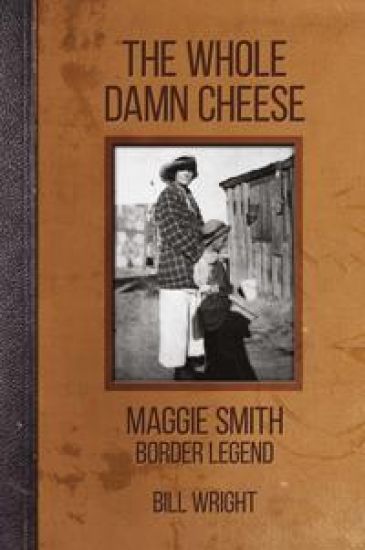
The Whole Damn Cheese

The Whole Damn Cheese

Bill Wright

Texas Christian University Press,U.S.
2018
nidottu
Anecdotes about Maggie Smith abound, but Bill Wright's The Whole Damn Cheese is the first book devoted entirely to the woman whose life in Big Bend country has become the stuff of legend. For more than twenty years—from 1943 until her death in 1965—Maggie Smith served folks on both sides of the border as doctor, lawyer, midwife, herbalist, banker, self-appointed justice of the peace, and coroner. As she put it, she was “the whole damn cheese” in Hot Springs, Texas. She was also an accomplished smuggler with a touch of romance as well as larceny in her heart.Maggie's family history is virtually a history of the Texas frontier, and her story outlines the beginnings and early development of Big Bend National Park. Her travels between Boquillas, San Vicente, Alpine, and Hot Springs define Maggie's career and illustrate her unique relationships with the people of the border. Capturing the rough individualism and warm character of Maggie Smith, author Bill Wright demonstrates why this remarkable frontier woman has become an indelible figure in the history of Texas.
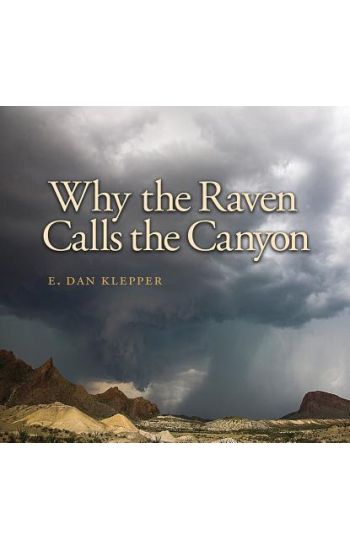
Why the Raven Calls the Canyon

Why the Raven Calls the Canyon

E. Dan Klepper; Bill Wright

Texas A M University Press
2017
sidottu
Fresno Ranch, an abandoned horse and mule operation located in a remote stretch of the Rio Grande River bordering Mexico, gives evidence of a human presence spanning centuries. The ranch saw a period of entrepreneurial mule breeding and ranching, and ownership by Texas artist and publishing heiress Jeanne Norsworthy, who built an off-the-grid, hand-constructed adobe studio on the premises. Photographer and freelance writer E. Dan Klepper spent seven years, off and on, living and working at Fresno Ranch. By 2008, when the 7,000-acre property was acquired by the Texas Parks and Wildlife Department to become part of Big Bend Ranch State Park, the adobe studio dwelling and its associated structures had been sitting vacant for almost ten years—many rugged miles from the nearest electrical power line or municipal water system. Between 2006 and 2013, Klepper assisted his friend Rodrigo Trevizo, park ranger and caretaker for the property, with the various chores required to keep the ranch in operating condition. The two excavated and repaired the primary water network, cared for the livestock, cleared brush, and maintained a small, solar-powered electrical system. Days of 110-degree heat, boiling water for washing and cooking, and keeping a wary eye out for rattlesnakes alternated with evenings spent in the flicker of kerosene lanterns, listening to the rasping of the ravens as they scoured the canyon in the gathering dark. In vivid images and well-considered prose, Klepper reflects on his experiences at Fresno Ranch, “witnessing the unfolding of a natural world unfettered by the overpowering human footprint that has dominated so many of our remaining wild places.” For aficionados of fine art photography, cultural and natural history enthusiasts, and fans of the Big Bend region and its austere beauty, Why the Raven Calls the Canyon offers a provocative visual journal of off-the-grid living that celebrates the unique landscape of the Big Bend.
Fort Phantom Hill

Fort Phantom Hill

Bill Wright

State House Press
2013
nidottu
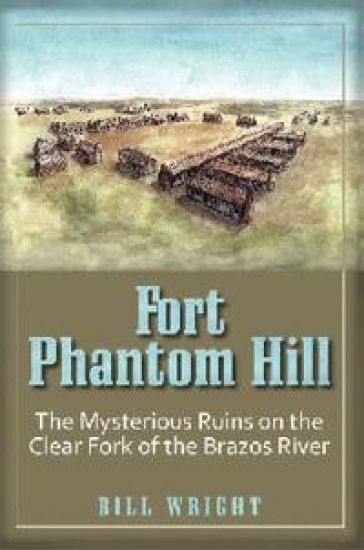
The history of Fort Phantom Hill is an interesting saga of defense, a story of both political necessity and individual hubris, and a tale of human perseverance and shortsightedness. The story of the “Post on the Brazos River” has all the elements that characterize human activity with its triumphs and tragedies, victories and defeats.As time passed, circumstances dictated changing uses for the structures at Fort Phantom Hill, from military outpost to stage station to hunter’s outpost. Eventually, opportunities for adaptation ran their course and the stone structures fell into neglect. The frontier was occupied by new immigrants who possessed a more modern technology. The threat of Indians was replaced by the hard daily work of living in a semi-desert environment.In Fort Phantom Hill: The Mysterious Ruins on the Clear Fork of the Brazos River, Bill Wright weaves the threads of this story into the larger warp and weft of western history and shows how this small fort was conceived, lived, and died as an important part of the “winning of the West.”
Authentic Texas

Authentic Texas

Marcia Hatfield Daudistel; Bill Wright

University of Texas Press
2013
nidottu
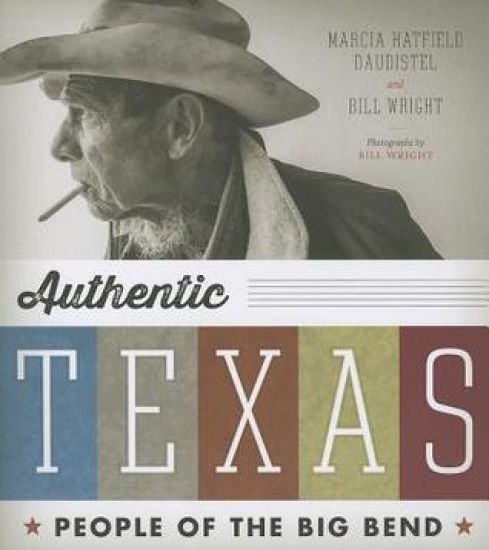
Winner, Southwest Book Award, Border Regional Library Association, 2015The Texas of vast open spaces inhabited by independent, self-reliant men and women may be more of a dream than a reality for the state’s largely urban population, but it still exists in the Big Bend. One of the most sparsely settled areas of the United States, the Big Bend attracts people who are willing to forego many modern conveniences for a lifestyle that proclaims “don’t fence me in.” Marcia Hatfield Daudistel and Bill Wright believe that the character traits exemplified by folks in the Big Bend-including self-sufficiency, friendliness, and neighborliness-go back to the founding of the state. In this book, they introduce us to several dozen Big Bend residents-old and young, long-settled and recently arrived, racially diverse-who show us what it means to be an authentic Texan.Interviewing people in Marathon, Big Bend National Park, Terlingua, Redford, Presidio, Alpine, Marfa, Valentine, Balmorhea, Limpia Crossing, and Fort Davis, Daudistel and Wright discover the reasons why residents of the Big Bend make this remote area of Texas their permanent home. In talking to ranchers and writers, entrepreneurs and artists, people living off the grid and urban refugees, they find a common willingness to overcome difficulties through individual skill and initiative. As one interviewee remarks, you have to have a lot of “try” in you to make a life in the Big Bend. Bill Wright’s photographs of the people and landscapes are a perfect complement to the stories of these authentic Texans. Together, these voices and images offer the most complete, contemporary portrait of the Texas Big Bend.
The Texas Outback

The Texas Outback

Bill Wright; Elmer Kelton

Texas A M University Press
2005
sidottu
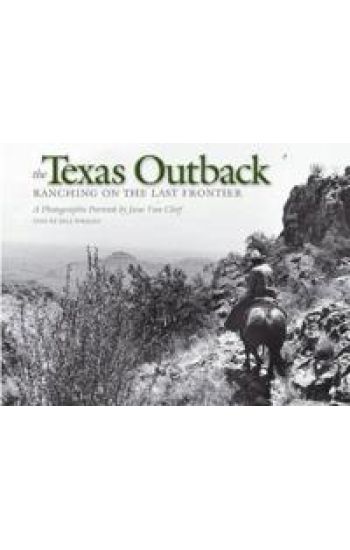
Surrounded by the spectacular setting of the Big Bend's rugged mountains, deep canyons, and arid pasturelands, a hardy group of settlers and their descendants have forged a livelihood and a way of life. Through vivid images and interviews with these men and women at home and at work, June Redford Van Cleef and Bill Wright offer a glimpse into this remnant of Texas' corner of the Old West. Stories handed down from grandparents and great-grandparents tell of roping bears and mountain lions as well as cattle and goats, of drought years and gully washers, of homes across the Mexican border and homes built from the earth itself, of suffering and triumph, family bonds and loneliness. How they came to this remote area, why they stayed, what they hoped for - these are the human elements in a region better known for its natural elements. In dramatic photographs, the leathery, lined faces of men and women who have spent a lifetime working cattle in the desert sun offer visual contrast to the sheer rock cliffs and barbed wire fences behind them. Light and shadow, earth and sky play through the vistas where little else is play. Sheriffs, homemakers, herders, store owners, and cattle ropers people the spaces. Features familiar to Big Bend aficionados, as well as remote areas usually seen only by those who live there, provide memorable scenes where the heat and even the silences almost emanate from the page. The old ranches of the region are breaking up; new landowners have come for different reasons and will put the land to different uses. But before the culture of rugged individualism and stoic stewardship of the land disappears completely, Wright and Van Cleef have captured it as a record of, and tribute to those who dared its challenges.